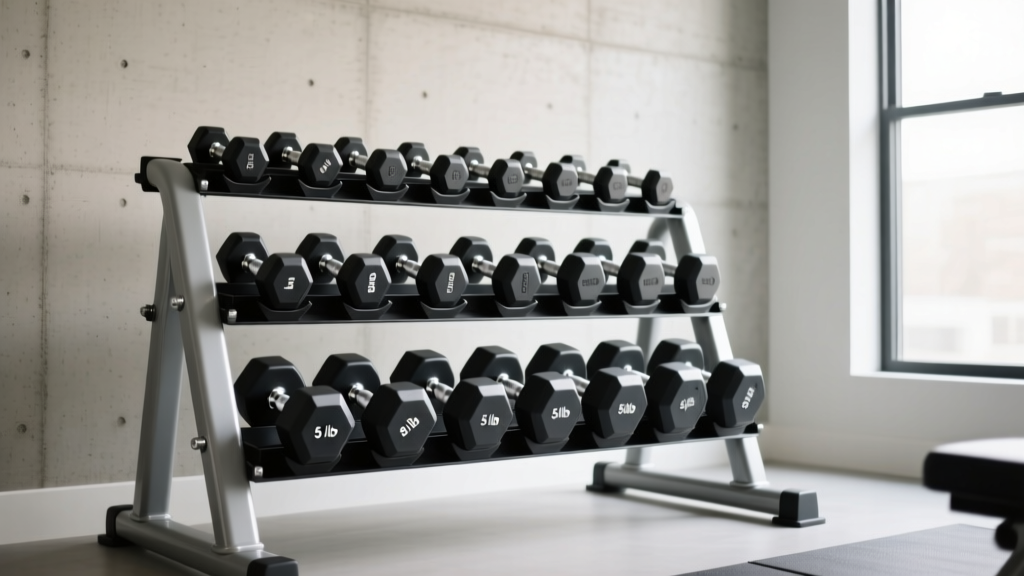
Dumbbell Rack Budget Guide: Storing Weights for Lateral Dumbbell Rows
Analyze dumbbell rack budgets, comparing 3-tier, vertical, and A-frame storage to optimize your gym for lateral dumbbell rows and heavy compound lifts.

The Hidden Economics of Dumbbell Storage
When outfitting a home or commercial gym, lifters often pour their entire budget into the weights themselves, treating the storage solution as an afterthought. However, as we move through 2026, the fitness equipment market has seen a massive divergence in rack quality, pricing, and structural integrity. A poorly designed dumbbell rack doesn't just clutter your space; it creates a severe safety hazard, accelerates the degradation of your expensive rubber or urethane dumbbells, and disrupts the biomechanical flow of your workout.
Whether you are setting up a dedicated corner for heavy pressing or organizing mid-range weights for high-rep isolation movements like lateral dumbbell rows, the way you store and access your equipment directly impacts your training efficiency. This comprehensive budget breakdown analyzes the true cost-per-tier, structural failure modes, and ergonomic value of the most popular dumbbell rack styles on the market today.
Ergonomic Insight: According to guidelines from the National Institute for Occupational Safety and Health (NIOSH), repetitive lifting from below knee level significantly increases shear force on the lumbar spine. Proper rack tiering isn't just about organization; it's a critical injury-prevention strategy for your lower back.2026 Rack Market Breakdown: Horizontal vs. Vertical vs. A-Frame
To understand where your money is best spent, we must evaluate the three dominant rack archetypes. The table below outlines the current market pricing, physical footprint, and material specifications for standard 10-50 lb capacity racks.
| Rack Model / Style | Avg. Price | Capacity | Footprint | Material / Gauge |
|---|---|---|---|---|
| Rogue 3-Tier Horizontal | $325.00 | 15 Pairs (10-50 lbs) | 43" W x 22" D | 11-Gauge Steel + UHMW |
| Titan Fitness 3-Tier | $149.00 | 15 Pairs (10-50 lbs) | 44" W x 23" D | 14-Gauge Steel |
| Powerline Vertical Tower | $130.00 | 5 Pairs (10-50 lbs) | 27" W x 21" D | 12-Gauge Tubular |
| CAP Barbell A-Frame | $65.00 | 5 Pairs (10-50 lbs) | 24" W x 14" D | Thin Tubular Steel |
1. The 3-Tier Horizontal Rack (The Gold Standard)
The 3-tier horizontal rack is the undisputed champion of commercial and serious home gyms. By utilizing an angled shelf design, these racks allow you to read the weight markings from a standing position while keeping the center of gravity low to the ground. Premium options, such as those from Rogue Fitness, utilize 11-gauge steel and feature UHMW (Ultra-High Molecular Weight) polyethylene liners. These liners are crucial; they prevent the metal casing of your dumbbells from scraping against the steel rack, which is a primary cause of rust and coating degradation over time.
Value Analysis: At roughly $325 for a 15-pair rack, you are paying approximately $21.66 per stored pair. While the upfront cost is high, the cost-per-year of use drops to pennies given that a properly welded 11-gauge rack will easily outlast a decade of heavy abuse.
2. Vertical Storage Towers (The Space-Saver)
Vertical racks store dumbbells on stacked pegs or small cradles. They are ideal for garage gyms where floor space is at a premium, occupying less than 4 square feet. However, they suffer from a severe ergonomic flaw: loading and unloading heavy dumbbells (40+ lbs) from the top pegs requires awkward shoulder flexion and grip contortions, while the bottom pegs require deep squatting. Furthermore, vertical racks have a high center of gravity. If placed on uneven rubber matting, a fully loaded vertical rack can become a tipping hazard.
3. A-Frame Racks (The Budget Trap)
A-frames are ubiquitous in big-box sporting goods stores, often bundled with cheap vinyl dumbbell sets. They are inexpensive and require minimal assembly. However, from a value and safety perspective, they are a trap. The narrow base and high center of gravity create a severe tipping risk. If a user aggressively pulls a 40 lb dumbbell from the top tier, the dynamic shift in weight can easily overturn the entire unit. They are only recommended for very light, neoprene-coated dumbbells under 20 lbs.
Strategic Tier Loading: Optimizing for Exercise Flow
Buying the right rack is only half the battle; how you load it dictates the fluidity of your training sessions. A well-organized rack minimizes transition time between compound movements and isolation exercises. Here is the optimal loading strategy for a standard 3-tier horizontal rack:
- Bottom Tier (55 lbs - 100+ lbs): Reserve this heavy-duty tier for your primary compound lifters. The thick steel crossbars on the bottom tier are designed to handle the massive point-load stress of 100 lb hex dumbbells without bowing. Keep these near your bench or squat rack.
- Middle Tier (30 lbs - 50 lbs): This is your transitional tier. Ideal for heavy goblet squats, unilateral lunges, and high-rep chest presses. This tier sits at roughly knee-to-thigh height, allowing for a safe, hip-hinged pickup.
- Top Tier (10 lbs - 25 lbs): This waist-height tier is critical for isolation work. When performing high-volume posterior chain and shoulder work, such as lateral dumbbell rows—where you hinge at the hips and row with a wide, lateral elbow flare to target the rear delts and rhomboids—you need rapid access to the 15-25 lb range. Storing these lighter weights on the top tier eliminates repetitive lumbar flexion between sets, keeping your lower back fresh and maintaining your heart rate in the target zone.
Failure Modes: Where Budget Racks Snap and Bend
When analyzing budget racks, it is vital to look past the marketing photos and examine the manufacturing techniques. The price discrepancy between a $150 rack and a $325 rack is almost entirely driven by welding quality and material thickness.
"The most common failure point on budget A-frame and entry-level horizontal racks isn't the steel bending—it's the spot welds snapping under dynamic loading. When a user drops a 50 lb dumbbell onto a cradle from a height of just three inches, the momentary impact force can exceed 150 lbs of localized pressure. Continuous MIG welds distribute this force; spot welds simply tear away from the tubing."
Additionally, budget manufacturers often skip the powder-coating curing process, leading to flaking paint that mixes with sweat and creates a corrosive paste on your gym floor. They also omit UHMW plastic liners, meaning the bare metal rack acts like a cheese grater against the rubber casing of your dumbbells, eventually exposing the inner iron core to moisture and rust.
Cost-Per-Pound Storage Metric
To truly evaluate value, smart gym owners use the Cost-Per-Pound (CPP) storage metric. If you buy a 15-pair rack (holding 900 lbs of total dumbbell weight) for $150, your CPP is $0.16. If you buy a 5-pair rack (holding 300 lbs) for $65, your CPP is $0.21. Counterintuitively, the larger, more expensive rack often provides better mathematical value per pound of stored weight, alongside vastly superior safety and ergonomics.
Final Budget Allocation Strategy
If your total equipment budget is constrained, do not sacrifice rack quality to afford a slightly heavier pair of dumbbells. A $149 entry-level 3-tier rack from brands like Titan Fitness offers the best middle-ground value in 2026, providing 14-gauge steel and a wide, stable footprint without the premium price tag of boutique fitness brands.
For lifters focusing on hypertrophy and high-rep isolation routines, prioritizing a 3-tier horizontal rack ensures that your transition from heavy presses to targeted movements like lateral dumbbell rows is seamless, safe, and ergonomically sound. Invest in the storage first, and build your dumbbell collection over time; your spine, your equipment, and your workout flow will thank you.
More gear to consider
All reviews
Dig Deeper Shaun T Workout Dumbbell Tracker: Olympic vs Standard
EZ Bar vs Straight Bar: Budget & Dumbbell Calf Raises
Dumbbell Stiff-Leg Deadlift Wear: Rubber Hex vs Urethane
EZ Bar vs Straight Bar: Care, Longevity & Dumbbell Butterfly Raise

Home Gym Setup: Barbell Knurling & Gorilla Rows with Dumbbells
