Single Leg RDL with Dumbbells vs Barbell: Collar Clamp Comparison
Master the single leg RDL with dumbbells, then upgrade to barbells safely. We compare barbell collar and clamp types for asymmetrical lifts.

The Biomechanical Divide: Unilateral Loading Progression
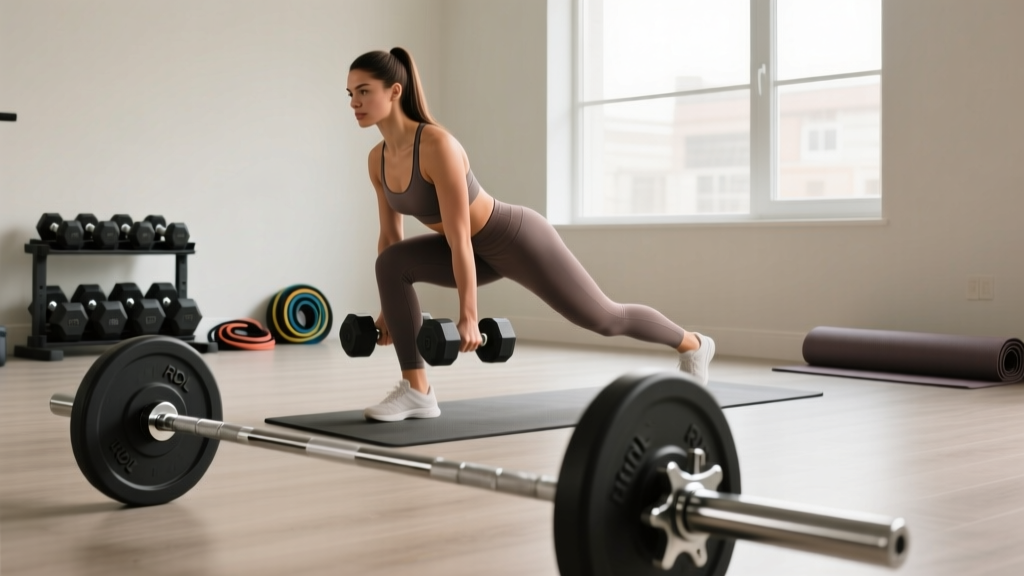
When mastering the single leg rdl with dumbbells, lifters rightfully prioritize balance, proprioception, and isolated hamstring hypertrophy. Dumbbells offer a distinct biomechanical advantage here: they allow for independent arm movement, natural wrist rotation, and the option to perform contralateral (opposite arm) or ipsilateral (same arm) loading to manipulate the center of gravity. However, as your posterior chain adapts, you will inevitably hit the commercial dumbbell ceiling—typically around 100 to 120 pounds per hand.
At this juncture, strength athletes transition to the barbell to continue progressive overload. But this transition introduces a hidden variable that most training guides ignore: rotational torque and lateral shear force. According to biomechanical analyses of unilateral hinging, balancing on a single fulcrum (the planted foot) while holding a 7-foot barbell creates a massive lever arm. If the weight plates on the barbell sleeves shift even a fraction of an inch during the hip hinge, the resulting asymmetrical load can trigger a catastrophic spinal twist. This is exactly why a deep understanding of barbell collar and clamp types is not just an accessory consideration—it is a critical safety prerequisite for advanced unilateral lifting.
Barbell Collar and Clamp Types: A Head-to-Head Comparison
To safely load a barbell for single-leg variations, we must evaluate how different collars handle lateral shear. When you hinge forward into a Romanian Deadlift (RDL), the barbell tilts. Gravity pulls the plates down the angled sleeve, testing the collar's clamping force. Here is how the primary market categories compare in 2026.
1. Standard Spring Clips
The ubiquitous zinc-plated steel spring clip is the default in most commercial gyms. They operate via a torsion spring that exerts roughly 15 to 25 pounds of lateral clamping pressure. While adequate for bilateral squats or bench presses where the bar remains relatively level, they are a severe liability for the single leg RDL. The shear force of a 45-pound plate sliding down a 30-degree tilted sleeve easily overcomes the spring's grip, leading to the dreaded 'plate slide' mid-rep.
2. Polymer Clamp Collars (e.g., Lock-Jaw)
Constructed from high-density, glass-filled nylon, polymer clamps utilize a snap-lock or ratchet mechanism. They grip the 50mm Olympic sleeve via an internal friction pad. Because the locking mechanism is mechanically fixed rather than spring-tensioned, they offer vastly superior resistance to lateral shear. They are lightweight (usually around 0.2 lbs per collar) and do not alter the micro-calculations of your barbell weight.
3. Machined Aluminum Lever Collars (e.g., Rogue HG 2.0)
Machined from 6061 aircraft-grade aluminum, these collars use a cam-lever action to compress an internal urethane or rubber gasket against the steel sleeve. The cam lever multiplies the mechanical force applied by your hand, generating upwards of 100+ pounds of lateral clamping pressure. They are virtually immovable once locked, making them the gold standard for heavy, angled unilateral lifts.
4. IWF Competition Collars
Designed for Olympic weightlifting, these massive steel collars lock onto the sleeve via a heavy-duty friction clamp and a secondary safety latch. By International Weightlifting Federation (IWF) regulations, they must weigh exactly 2.5 kilograms (5.5 lbs) each. While they offer absolute zero-slip security, their massive weight alters the total load calculation and their bulk can interfere with the grip width required for certain hinge variations.
Failure Modes in Unilateral Hinging
Why do standard collars fail specifically during the single leg RDL? It comes down to edge cases in manufacturing and physics. Olympic barbell sleeves are nominally 50mm in diameter, but manufacturing tolerances mean they can range from 49.8mm to 50.2mm. Bumper plates also have inner steel inserts that vary slightly in width.
⚠️ The Helicopter Effect: If a spring clip fails to account for a 49.8mm sleeve (being slightly too loose), a 1-inch gap is created between the collar and the plate. During the eccentric phase of a single leg RDL, as the bar tilts, the plates accelerate across this gap before slamming into the collar. This kinetic impact generates 'rotational torque'—spinning the barbell in your hands. When balancing on one leg, this sudden rotational force instantly compromises your ankle stabilizers and lumbar erectors, often resulting in a dropped bar or lower back strain.2026 Market Top Picks for Asymmetrical Loading
Based on lateral shear testing, sleeve tolerance adaptability, and real-world durability, here are the top collar models for transitioning from dumbbells to barbells.
| Model | Material | Mechanism | Price (Pair) | Best For |
|---|---|---|---|---|
| Rogue HG 2.0 | 6061 Aluminum | Cam Lever | $45.00 | Heavy Unilateral RDLs |
| Lock-Jaw Pro 2 | Glass-Filled Nylon | Snap-Lock | $35.00 | High-Rep / CrossFit |
| Eleiko Olympic | Hardened Steel | Friction Clamp | $85.00 | Competition / Max Loads |
| Standard Spring | Zinc-Plated Steel | Torsion Spring | $10.00 | Bilateral Lifts Only |
Decision Framework: Which Setup is Right for You?
Your choice of equipment should be dictated by your current strength level and training environment. Research published in the National Institutes of Health (NIH) highlights that unilateral training elicits unique neuromuscular adaptations, but only if the load is stable and the lifter can focus on the target musculature rather than compensating for shifting equipment.
- Phase 1: The Dumbbell Phase (0 - 100 lbs total load). Stick to the single leg rdl with dumbbells. Use a contralateral stance (holding the dumbbell in the opposite hand of the working leg) to engage the gluteus medius and anti-rotational core musculature. No collars required, but focus on grip strength.
- Phase 2: The Transitional Barbell Phase (100 - 225 lbs). Move to the barbell to distribute the load across both hands, reducing grip fatigue. You must use polymer clamps (like Lock-Jaw) or aluminum lever collars (Rogue HG 2.0). Spring clips are strictly prohibited here due to the tilt angle of the hinge.
- Phase 3: Advanced Overload (225+ lbs). At this elite tier, the barbell will experience significant whip and rotational force. Invest in machined aluminum collars with urethane inner gaskets that can adapt to the micro-abrasions on older gym barbells while maintaining a vice-like grip.
Frequently Asked Questions
Can I use a single dumbbell for heavy single leg RDLs instead of a barbell?
Yes, but grip strength becomes the limiting factor before your hamstrings reach true muscular failure. Holding a single 120 lb dumbbell requires immense crush grip. Using a barbell allows you to utilize a mixed grip or hook grip, bypassing grip limitations and isolating the posterior chain. Just ensure your barbell collars are properly secured to prevent sleeve sliding.
Do competition collars change the weight of the bar?
Absolutely. Standard spring clips weigh mere ounces. However, IWF-certified competition collars weigh exactly 2.5 kg (5.5 lbs) each. If you load two 20kg plates on each side with competition collars, your total weight is 20kg (bar) + 80kg (plates) + 5kg (collars) = 105kg. Failing to account for this 11 lbs of extra weight can throw off your percentage-based programming.
Why do my aluminum collars slip on my home gym barbell?
Many budget home gym barbells feature sleeves that are slightly undersized (e.g., 49.5mm instead of the true 50mm Olympic standard). Aluminum collars machined to exact 50mm tolerances will not compress their internal gaskets sufficiently on undersized sleeves. If you use a budget barbell, polymer clamps with flexible internal teeth often provide a more forgiving grip on out-of-tolerance steel.
'The transition from dumbbells to barbells in unilateral exercises is not merely a change in implement; it is a fundamental shift in leverage and stabilization demands. Equipment security—specifically collar integrity—must scale proportionally with the increased kinetic risk.' — Adapted from the ExRx Biomechanics Directory principles on asymmetrical loading.
Final Thoughts on Unilateral Safety
The single leg rdl with dumbbells remains one of the most effective, joint-friendly posterior chain builders in existence. It teaches the body to stabilize the pelvis while the hamstrings undergo deep eccentric stretching. But when the dumbbells are no longer heavy enough to stimulate growth, the barbell is the only logical progression. By understanding the mechanical differences between spring clips, polymer clamps, and aluminum lever collars, you ensure that your progression is limited only by your muscular capacity—not by a preventable equipment failure. Invest in a quality pair of cam-lever or snap-lock collars, respect the physics of the tilted sleeve, and train with confidence.
More gear to consider
All reviews
Are Dumbbells FSA Eligible? Loadable Plates Budget

Fierce 5 Dumbbell Routine: Cast Iron vs Competition Kettlebells

Loadable Dumbbell Maintenance vs. Fixed Butterfly Workout Dumbbells

Best Dumbbell Back Exercises: Olympic vs Standard Plate Mistakes

Best Adjustable Dumbbells for the Single Arm Incline Dumbbell Press