Rubber Hex vs Urethane: Value for Jumping Squats with Dumbbells
Discover the true cost of rubber hex vs urethane dumbbells for jumping squats with dumbbells. We break down 5-year value, drop-test survival, and safety.

The Hidden Costs of High-Impact Plyometrics
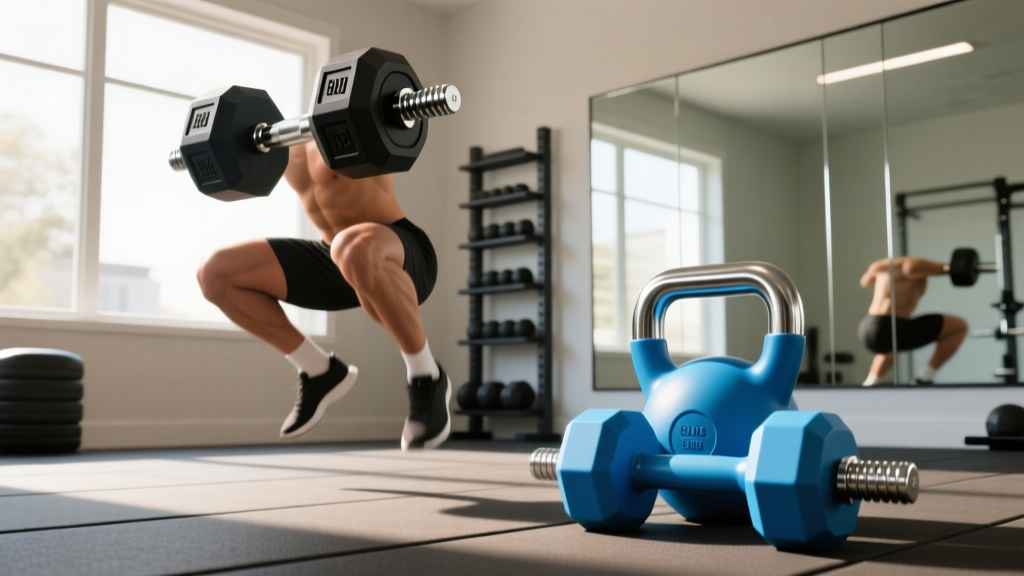
When athletes and home-gym owners incorporate jumping squats with dumbbells into their conditioning or power-building routines, the focus is usually on ground reaction forces, fast-twitch muscle fiber recruitment, and cardiovascular output. However, an often-overlooked variable in this explosive movement is the equipment's ability to survive the inevitable drop. Whether you are fatiguing on the final rep or safely bailing out of a failed jump, the dumbbells you hold will eventually meet the floor from a height of three to four feet.
In 2026, the free weight market is dominated by two primary coated options: vulcanized rubber hex dumbbells and injection-molded urethane dumbbells. While rubber hex is the undisputed king of budget-friendly garage gyms, urethane remains the premium standard for commercial facilities. But how do these two materials actually compare when subjected to the violent, repetitive impacts of plyometric training? This budget breakdown and value analysis will dissect the true cost of ownership, safety hazards, and material failure modes to help you decide which dumbbell type earns a spot in your rack.
Material Science: Rubber Hex vs. Urethane
To understand the value proposition, we must first look at how these dumbbells are manufactured and how their molecular structures react to blunt force trauma.
Rubber Hex Dumbbells: The Budget Baseline
Most budget rubber hex dumbbells (such as the widely distributed CAP Barbell ST-150 series or generic Amazon imports) are manufactured by encasing a cast-iron core in a vulcanized rubber mold. The hexagonal head is designed to prevent rolling, which is a crucial safety feature when setting weights down between sets of jumping squats with dumbbells.
- Cost per Pound (2026 Average): $1.50 to $2.20
- Shore A Hardness: Typically 75-85 (Medium-Hard)
- Odor Profile: High off-gassing initially due to sulfur compounds used in vulcanization; requires weeks of outdoor airing.
- Primary Failure Mode: 'Hex Corner Blowout.' The sharp corners of the hexagonal mold are the thinnest points of rubber. When dropped repeatedly on concrete or hard rubber mats, the cast-iron core eventually shifts or fractures the rubber corner, exposing the raw iron.
Urethane Dumbbells: The Premium Investment
Urethane (polyurethane) is a synthetic elastomer that bridges the gap between rubber and hard plastic. Premium models, like the Rogue Urethane Dumbbells or the Rep Fitness Urethane Series, are injection-molded directly onto a solid steel or chrome-plated handle, creating a permanent chemical bond.
- Cost per Pound (2026 Average): $4.00 to $6.50
- Shore A Hardness: Typically 85-90 (Firm, yet energy-absorbent)
- Odor Profile: Virtually odorless straight out of the box; ideal for indoor home gyms and apartment workouts.
- Primary Failure Mode: 'Cold-Weather Micro-Cracking.' While highly resistant to UV degradation and sweat, urethane can become brittle in unheated environments. Dropping a 50lb urethane dumbbell on concrete in a 30°F garage can cause cosmetic chipping.
5-Year Cost of Ownership Matrix
The initial price tag of rubber hex is undeniably attractive, but value analysis requires us to project long-term costs. The following matrix models a 5-to-50lb dumbbell set (10 pairs, 550 total lbs) used by an athlete who frequently performs high-impact exercises like jumping squats with dumbbells and occasionally drops the weights from a standing height.
| Cost Factor | Rubber Hex Set (5-50 lbs) | Urethane Set (5-50 lbs) |
|---|---|---|
| Initial Purchase Price | $950 - $1,100 | $2,400 - $2,800 |
| Replacement Rate (Drops) | 2-3 pairs per year ($180/yr) | 0 pairs (Lifetime durability) |
| Floor Damage Risk | High (Exposed iron chips tiles/wood) | Low (Absorbs and disperses force) |
| 5-Year Total Cost | $1,850 - $2,000 | $2,400 - $2,800 |
| Resale Value (Year 5) | $150 (Scrap iron value) | $1,200 - $1,500 |
The Information Gain: When you factor in the resale value of premium urethane on the secondary market, the net 5-year cost of ownership narrows to less than $500 difference. For athletes executing explosive plyometrics, urethane is not just a luxury; it is a financially sound asset that retains equity.
Step-by-Step: Inspecting Used Rubber Hex for Core Separation
If you are buying second-hand rubber hex dumbbells to save money on your home gym buildout, you must inspect them for internal core separation. The American Council on Exercise (ACE) emphasizes the importance of equipment integrity during dynamic movements to prevent asymmetric loading and joint injuries. Here is how to inspect a used rubber hex dumbbell in under 30 seconds:
- The Squeeze Test: Grip the rubber head firmly and attempt to twist it against the handle. If you hear a clicking or grinding sound, the internal cast-iron core has separated from the rubber mold.
- The Corner Press: Press your thumb hard into the sharpest corners of the hexagon. If the rubber feels spongy or gives way easily, the iron core has shifted inward, leaving a hollow void that will puncture upon the next drop.
- The Spin Test: Lay the dumbbell on a flat table and spin the handle. A wobbling handle indicates a bent steel shaft, usually caused by dropping the weight from overhead or shoulder height.
The Verdict: Which Should You Buy?
The decision between rubber hex and urethane ultimately hinges on your training environment, budget, and exercise selection.
Choose Rubber Hex If:
- Your budget is strictly capped under $1,000 for a full set.
- You primarily perform controlled, slow-eccentric movements (e.g., goblet squats, Romanian deadlifts) where the weights are gently placed on the floor.
- Your gym is in a detached, unheated shed where urethane's cold-weather brittleness would be a liability.
Choose Urethane If:
- Your programming heavily features jumping squats with dumbbells, drop-sets, or AMRAP conditioning where weights are frequently dropped from standing height.
- You are outfitting an indoor space, spare bedroom, or apartment where rubber off-gassing and noise transmission are concerns.
- You view your fitness equipment as a long-term investment and plan to recoup costs via resale if you ever upgrade or move.
"In 2026, the gap between commercial and home-gym equipment has never been smaller. While rubber hex will always have a place in budget-conscious garages, the kinetic demands of modern plyometric training make urethane the undisputed champion of safety and long-term value."
Frequently Asked Questions
Can I just use horse-stall mats to protect my floor from rubber hex drops?
Yes, 3/4-inch vulcanized horse-stall mats are the gold standard for garage gym flooring and will absorb a significant amount of impact. However, mats do not prevent the 'hex corner blowout' failure mode of the dumbbell itself, nor do they eliminate the dangerous, unpredictable bounce-back that rubber hex exhibits upon impact. If you are doing jumping squats with dumbbells, the bounce hazard remains a threat to your shins regardless of the flooring.
Does urethane degrade from sweat and UV exposure?
Unlike natural and vulcanized rubbers, which break down, become sticky, and degrade when exposed to UV light and the acidic pH of human sweat, urethane is highly resistant to both. You can leave urethane dumbbells in a sunlit room or use them outdoors without fearing the material will dry-rot or flake onto your hands.
Are neoprene or vinyl-coated dumbbells viable for jumping squats?
Absolutely not. Neoprene and vinyl are merely thin cosmetic sleeves designed for light aerobic work. They offer zero shock absorption. Dropping a neoprene-coated cast-iron dumbbell from a squat jump will instantly shatter the coating, dent the iron, and severely damage your flooring. Stick to thick vulcanized rubber or solid urethane for any explosive, high-impact lifting.
More gear to consider
All reviews
Master the 90 Pound Dumbbell Bench Press & EZ vs Straight Bar

EZ Bar vs Straight Bar: Value & Back Workouts with Dumbbells
EZ Curl Bar vs Straight Bar for the Dumbbell Hang Clean and Jerk

Budget Dumbbell Rack Storage for Your Dumbbell Step Ups Alternative
Rubber Hex vs Urethane: Top Picks for Weighted Dumbbell Curls
