Rubber Hex vs Urethane: Maintenance & Dumbbell Press Muscles Worked
Compare rubber hex vs urethane dumbbells for longevity. Learn maintenance tips, material durability, and how the dumbbell press muscles worked impacts wear.

The Intersection of Biomechanics and Equipment Longevity
When outfitting a home gym or commercial facility in 2026, the debate between rubber hex dumbbells and urethane dumbbells is a staple of equipment procurement. While most buying guides focus solely on price and aesthetics, few address the intersection of biomechanics and material degradation. Specifically, when analyzing the dumbbell press muscles worked and the physical mechanics of the movement, it becomes clear that your dumbbells endure unique rotational torques, sweat exposure, and impact stresses that dictate their lifespan.
Understanding how to maintain your free weights requires looking past the surface. This guide dives deep into the material science of rubber versus urethane, provides exact maintenance protocols, and explains how the physiological demands of heavy pressing movements accelerate wear and tear on your gear.
The Biomechanics of the Press: Why Equipment Stress Matters
To understand why dumbbells fail, we must first look at the dumbbell press muscles worked and the kinetic chain of the exercise. According to the ACE Fitness Exercise Library, the primary movers in the dumbbell chest press are the pectoralis major (sternal and clavicular heads), the anterior deltoids, and the triceps brachii. However, unlike a fixed barbell, dumbbells require intense stabilization from the rotator cuff, serratus anterior, and core musculature.
This independent stabilization creates specific stress patterns on the equipment:
- Converging Path Friction: As the pectorals contract to bring the dumbbells together at the peak of the movement, the medial heads of the dumbbells frequently clank or grind against one another.
- Eccentric Micro-Drops: Heavy eccentric loading (lowering the weight) often results in controlled 'micro-drops' onto the floor or rack, testing the shock absorption of the dumbbell heads.
- Sweat Corrosion: The high metabolic demand of stabilizing heavy loads leads to profuse sweating, dripping highly acidic human sweat (pH 4.5 to 5.5) directly onto the knurling and the seam where the handle meets the rubber or urethane head.
Material Breakdown: Rubber Hex vs. Urethane
Not all elastomers are created equal. The molecular structure of your dumbbell heads determines how they will react to the UV light, ozone, sweat, and impacts inherent in a busy gym environment.
Rubber Hex Dumbbells (The Budget Workhorse)
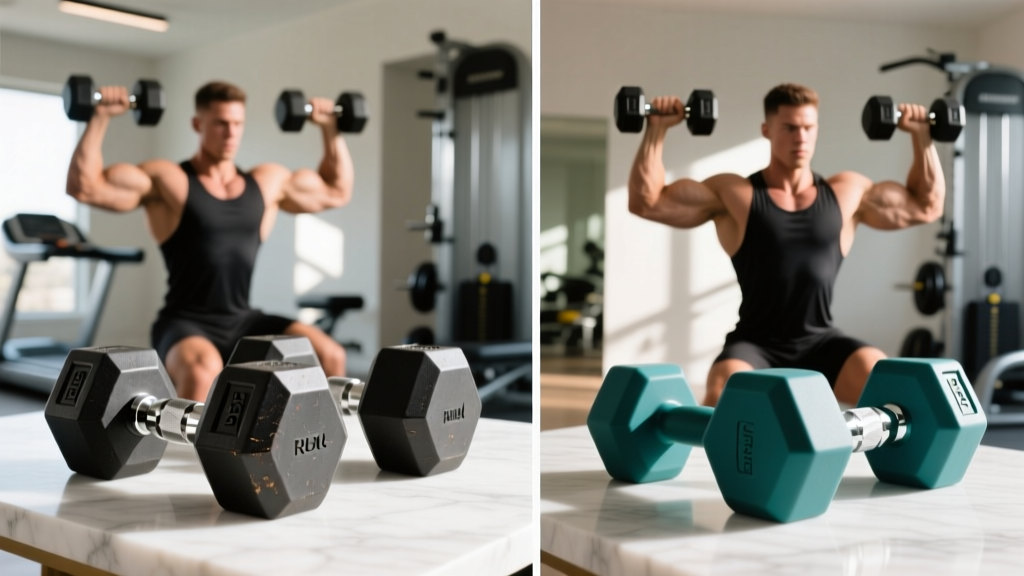
Rubber hex dumbbells, typically priced between $1.20 and $1.80 per pound in 2026, are usually manufactured from recycled tire rubber or virgin rubber compounds. The hexagonal shape prevents rolling, making them a favorite for floor exercises and heavy renegade rows.
Failure Modes: Rubber is highly susceptible to UV degradation and ozone cracking. Over time, the plasticizers in the rubber evaporate, leading to 'dry rot.' Furthermore, cheap recycled rubber relies on a glued or friction-fit steel insert. Under the heavy torque of a 100+ lb dumbbell press, these inserts can slowly work themselves loose, creating a dangerous wobble.
Urethane Dumbbells (The Commercial Standard)
Polyurethane (urethane) is a premium elastomer that commands a higher price point, generally ranging from $2.20 to $3.50+ per pound. As noted by industry experts at Garage Gym Reviews, urethane is the gold standard for commercial gyms because it is virtually odorless, highly resistant to UV light, and boasts a Shore A hardness rating of 85-90A, making it incredibly dense and durable.
Failure Modes: While urethane doesn't dry rot like rubber, it is slightly more rigid. If dropped from shoulder height onto concrete at extreme angles, the edges can chip. Additionally, urethane can become brittle in unheated garages during freezing winter months, increasing the risk of cracking upon impact.
Comparative Longevity & Maintenance Matrix
| Feature | Rubber Hex Dumbbells | Urethane Dumbbells |
|---|---|---|
| UV & Ozone Resistance | Low (Requires UV protectants) | High (Inherently resistant) |
| Drop Tolerance | High (Softer, absorbs shock) | Moderate (Dense, can chip on sharp edges) |
| Sweat/Chemical Resistance | Low (Degrades with harsh cleaners) | High (Impervious to most gym cleaners) |
| Odor Off-gassing | High (Recycled) / Low (Virgin) | None (Zero VOC off-gassing) |
| Handle Insert Bond | Friction/Glue (Prone to loosening) | Over-molded/Steel Pin (Permanent) |
| Avg. Cost per Pound (2026) | $1.20 - $1.80 | $2.20 - $3.50+ |
Step-by-Step Maintenance Protocols
To maximize the ROI on your free weights, you must implement a maintenance routine tailored to the specific material. Biomechanical studies, such as those published in the National Center for Biotechnology Information (NCBI), highlight the immense forces generated during pressing movements; your equipment must be structurally sound to handle these loads safely.
Caring for Rubber Hex Dumbbells
- Cleaning: Never use bleach, Lysol, or ammonia-based cleaners on rubber. These chemicals strip the natural oils and accelerate dry rot. Instead, use a 10:1 diluted solution of Simple Green and water, applied to a microfiber cloth (never spray directly onto the head to avoid liquid seeping into the handle seam).
- Conditioning: Every 6 months, apply a light coat of 303 Aerospace Protectant to the rubber heads. This replaces lost plasticizers and provides a UV-blocking barrier.
- Insert Checks: Quarterly, grip the handle and attempt to twist the rubber head. If you feel any rotational give or hear a clicking sound, the internal bond has failed. Retire the dumbbell immediately to prevent a catastrophic head-detachment during a press.
Caring for Urethane Dumbbells
- Cleaning: Urethane is highly chemical resistant. You can safely use neutral-pH gym wipes or a mild isopropyl alcohol solution (70% or less) to sanitize the heads after heavy, sweat-drenched sets.
- Temperature Control: If your gym is in an unclimate-controlled garage, avoid dropping urethane dumbbells when the ambient temperature is below 40°F (4°C). The elastomer loses its elasticity in the cold and is prone to shattering.
- Edge Inspection: Inspect the hexagonal corners for micro-chips. While purely cosmetic, deep chips can expose the inner steel core to moisture, leading to rust jacking (where rust expansion cracks the urethane from the inside out).
The muscles worked during the dumbbell press require a vice-like grip, meaning your hands deposit acidic sweat directly into the knurling of the handle. If you have chrome-plated handles, wipe them down with a dry brush after every session and apply a single drop of 3-IN-ONE Mineral Oil weekly. Avoid WD-40, which strips factory lubricants and attracts abrasive gym dust, effectively turning your knurling into sandpaper that will tear your calluses during heavy eccentric lowering phases.
Real-World Edge Cases: When to Retire Your Dumbbells
Even with meticulous maintenance, all equipment reaches the end of its lifecycle. Recognizing the signs of terminal wear is critical for safety, especially when lying under heavy loads.
The 'Rubber Flake' Hazard
As rubber hex dumbbells undergo UV degradation, the surface begins to oxidize and flake. While this might seem like a mere annoyance, it becomes a severe hazard during the dumbbell press. When you bring the weights together over your face and torso, microscopic rubber flakes and oxidized dust can dislodge and fall directly into your eyes or mouth. If your rubber dumbbells leave a black, sooty residue on your hands after a light wipe, they have dry-rotted and must be replaced.
Urethane Bubbling and Delamination
Though rare in high-quality commercial sets, lower-tier urethane dumbbells can suffer from poor over-molding. If you notice soft spots, bubbling, or a hollow sound when tapping the head with a plastic mallet, the urethane has delaminated from the steel core. This compromises the structural integrity of the drop-test rating and warrants immediate removal from your pressing rotation.
Final Verdict for the Home Gym Owner
If your training heavily features the dumbbell press and you routinely push near failure, the mechanical stress and sweat exposure demand a resilient material. While rubber hex dumbbells offer an accessible entry point, their susceptibility to chemical degradation and insert failure makes them a higher-maintenance liability over a 5-year span. Urethane dumbbells, despite the steeper upfront investment, offer a 'buy-it-for-life' durability that withstands the converging impacts, acidic sweat, and heavy eccentric drops inherent to serious pressing mechanics. Treat your gear with the same respect you give your training programming, and it will safely support your gains for decades.
More gear to consider
All reviews
100kg Dumbbell Guide: Neoprene Sets for Home Use

Collar Types Compared: Secure Your Incline Dumbbell Bicep Curl Setup

Beyond the Dumbbell Ladder Workout: Olympic vs Standard Plates
EZ Bar vs Straight Bar: Incline Dumbbell Press Machine Pairings

What Do Dumbbell Curls Work? Adjustable Dumbbell Review & Fixes