
Bumper vs Iron Plates: Rack Setup for Overhead Dumbbell Extension
Expert hands-on review comparing top bumper and iron plates for your power rack, optimizing space for squats and the overhead dumbbell extension.

Outfitting a home gym power rack requires balancing heavy compound lifting needs with the spatial realities of isolation accessory work. When deciding between bumper plates and traditional cast iron plates, most lifters focus solely on drop tolerance and noise. However, as a senior equipment reviewer for FitGearPulse, I have found that plate thickness dramatically alters your rack's interior ecosystem—directly impacting your ability to perform movements like the seated overhead dumbbell extension safely and effectively inside the rig.
In this 2026 hands-on review, we break down the exact specifications, pricing, and failure modes of the top bumper and iron plates on the market. More importantly, we analyze how your choice of weight plates dictates rack clearance, floor protection, and overall training versatility.
The Core Differences: Bumper vs. Cast Iron Plates
Before diving into specific model reviews, it is crucial to understand the physical and material differences between these two plate categories. According to equipment guidelines from Eleiko, the primary divergence lies in the diameter consistency and material density.
| Feature | Competition Bumper Plates | Traditional Cast Iron Plates |
|---|---|---|
| Material | Virgin or recycled rubber with steel hub | Cast iron or machined steel |
| 45lb Plate Thickness | 3.15' to 3.50' | 1.20' to 1.50' |
| Diameter (10lb - 45lb) | Uniform 450mm (17.7') | Variable (12' to 14.5') |
| Drop Tolerance | High (Designed for Olympic drops) | Low (Will crack flooring or chip) |
| Avg. Cost Per Pound (2026) | $1.85 - $2.50 | $1.20 - $1.90 |
Hands-On Review: Top Bumper Plates for Home Gyms
Bumper plates are essential if your training involves Olympic weightlifting, high-rep deadlift drops, or functional fitness circuits. Here are our top tested picks for 2026.
1. Rogue Echo Bumper Plates V2
The Rogue Echo V2 remains the gold standard for garage gyms. Featuring a durometer rating of 88-90 Shore A for the 15lb and 25lb plates, and a slightly softer 85 Shore A for the 35lb, 45lb, and 55lb plates, these bumpers offer an exceptional balance of dead bounce and durability.
- Price: ~$2.20 per pound
- Thickness (45lb): 3.25 inches
- Pros: Minimal bounce, IWF-standard 450mm diameter, incredibly durable steel hub inserts.
- Cons: The recycled rubber can emit a strong odor for the first 3-4 weeks in an unventilated garage.
Expert Insight: If you drop these from shoulder height onto a standard 3/4-inch horse stall mat, you will notice virtually zero lateral bounce. However, dropping them on the edge of a platform can cause 'tacoing' (warping) over time, a common failure mode with all recycled rubber bumpers.
2. REP Fitness Equalizer Bumpers
For lifters on a stricter budget, the REP Equalizer bumpers provide outstanding value. Constructed from virgin rubber, they lack the harsh chemical smell of recycled options and feature a flawless matte finish that resists scuffing. As noted in REP Fitness's equipment guides, virgin rubber offers superior longevity against UV degradation if your gym is in a sunlit space.
- Price: ~$1.95 per pound
- Thickness (45lb): 3.15 inches
- Pros: Virgin rubber (no smell), color-coded for easy identification, excellent dead bounce.
- Cons: The steel hub is slightly more prone to cosmetic scratching than Rogue's zinc-coated inserts.
Hands-On Review: Top Iron Plates for Traditionalists
If you do not perform Olympic lifts and prioritize maximizing your barbell's sleeve capacity, machined steel and cast iron plates are the superior choice.
1. Rogue Deep Dish Iron Plates
The Deep Dish plates are a nostalgic nod to classic York barbell plates but with modern CNC machining precision. The weight tolerance is an impressive +/- 1%, and the raised lip design makes them significantly easier to grip and load from the floor compared to flat plates.
- Price: ~$1.75 per pound
- Thickness (45lb): 1.35 inches
- Pros: Exceptional grip, highly accurate weight, allows for massive loading on standard sleeves.
- Cons: Enamel coating can chip if plates are slammed together aggressively, leading to surface rust in humid environments.
2. York Legacy Cast Iron Plates
York Legacy plates are the workhorse of commercial gyms. They are cast iron, finished with a semi-gloss black enamel. While they lack the precision machining of the Rogue Deep Dish, they are virtually indestructible and significantly cheaper.
- Price: ~$1.30 per pound
- Thickness (45lb): 1.40 inches
- Pros: Budget-friendly, classic aesthetic, widely available used.
- Cons: Weight variance can be up to +/- 3%, and the center holes are not perfectly machined, occasionally causing a slight rattle on the barbell sleeve.
Spatial Dynamics: Rack Clearance and the Overhead Dumbbell Extension
This is where the choice between bumpers and iron plates transitions from a flooring issue to a biomechanical one. Modern power racks are multi-use ecosystems. You aren't just squatting; you are utilizing the interior footprint for bench work, pull-ups, and isolation movements.
The Clearance Math: Why Plate Thickness Matters
Consider a standard power rack with an interior width of 49 inches. Most lifters store their loaded plates on the uprights or rear storage pegs. Let's look at how storing four 45lb plates on each side impacts your usable interior space:
- Bumper Plates (4x 45lb Echo V2 per side): 13 inches of protrusion per side. Usable interior width drops to 23 inches.
- Iron Plates (4x 45lb Deep Dish per side): 5.4 inches of protrusion per side. Usable interior width remains 38.2 inches.
Why does this matter? Consider the overhead dumbbell extension. When performing this tricep isolation movement seated on a low bench inside the rack (often utilizing the rack's safety straps or a low cable attachment for resistance bands), proper form requires significant lateral elbow flare and a deep stretch behind the head.
If you are using a bulky set of bumper plates stored on the uprights, a 23-inch interior clearance will physically impede your elbows during the eccentric phase of the overhead dumbbell extension. You will be forced to tuck your elbows unnaturally, shifting the tension away from the long head of the tricep and placing undue shear stress on the elbow joint. Conversely, the slim profile of iron plates preserves the 38-inch clearance, allowing for a full, unobstructed range of motion during deep overhead dumbbell extensions and other wide-grip accessory movements.
'Your power rack is a three-dimensional workspace. Always calculate the stored footprint of your plates, not just their drop-rating, to ensure your isolation movements remain biomechanically sound.' - FitGearPulse Lab Notes, 2026
Floor Protection and Acoustic Dampening
Beyond spatial awareness, your subfloor dictates your plate choice. If you are lifting in a garage with a bare concrete slab, dropping iron plates will eventually cause micro-fractures in the concrete, regardless of how thick your rubber mats are.
For iron plate users, we mandate a minimum of two layers of protection: a base layer of 1/2-inch plywood to distribute point loads, topped with 3/4-inch vulcanized rubber mats. Bumper plate users can typically get away with a single layer of 3/4-inch horse stall mats, provided they are not dropping loads exceeding 300 lbs from the shoulder. Acoustically, iron plates generate a high-frequency 'clack' that easily penetrates drywall and floor joists, making them a poor choice for second-story home gyms or shared residential spaces. Bumpers absorb the kinetic energy, translating the impact into a low-frequency thud that is far less likely to disturb neighbors.
Expert Verdict: Which Should You Buy?
There is no universally superior plate; there is only the right plate for your specific training environment and movement repertoire.
Buy Bumper Plates If:
- You perform Olympic lifts (cleans, snatches) or high-volume CrossFit-style deadlift drops.
- Your gym is located on a floor with poor sound insulation or a fragile concrete slab.
- You primarily use the outside of the rack for barbell work and rarely perform wide-stance or wide-elbow isolation movements inside the rig.
Buy Iron Plates If:
- You are a powerlifter or bodybuilder focused on heavy squats, bench presses, and controlled eccentrics.
- You need to maximize sleeve capacity for 500+ lb deadlifts.
- You heavily utilize the interior of your power rack for accessory work, requiring maximum lateral clearance for exercises like the overhead dumbbell extension, wide-grip lat pulldowns, or seated lateral raises.
By understanding the exact dimensions, material properties, and spatial impacts of your weight plates, you can build a highly optimized training environment that supports everything from maximal squats to precise tricep isolation work.
More gear to consider
All reviews
Standing Oblique Crunch with Dumbbell: Rubber Hex vs Urethane Care
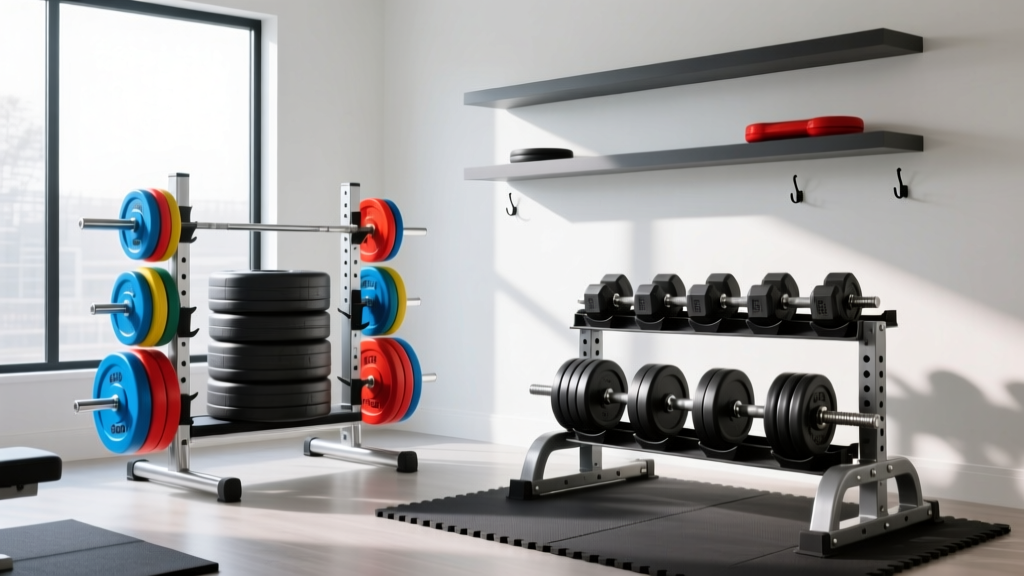
150kg Dumbbell Set Storage: Bumper vs Iron Plates

EZ Bar vs Straight Bar Longevity: Dumbbell Zercher Squat Care
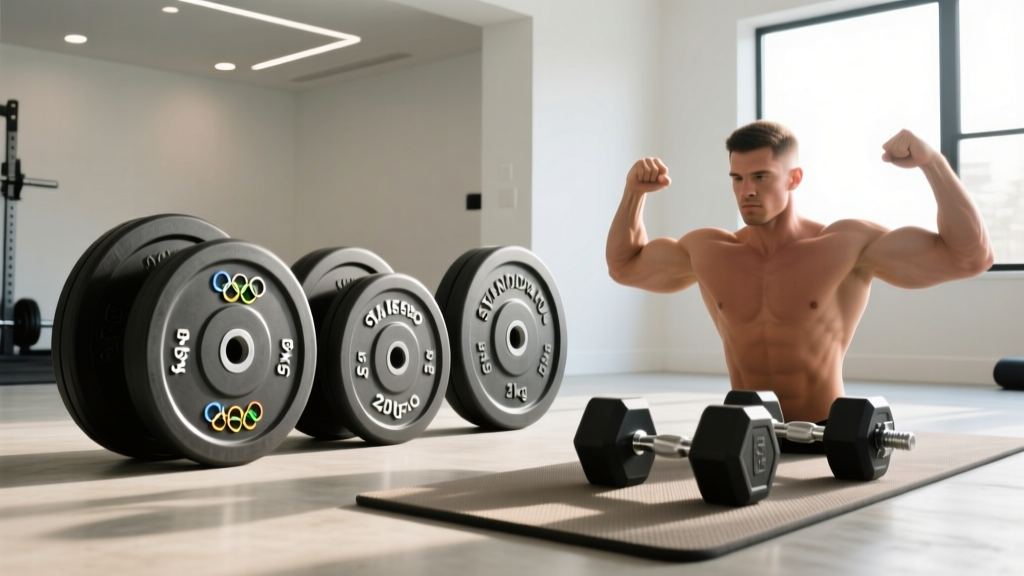
Olympic vs Standard Plates: Best for Dumbbell Chest Exercises

Beyond Starting Dumbbell Weight: Barbell Collar Clamp Mistakes
