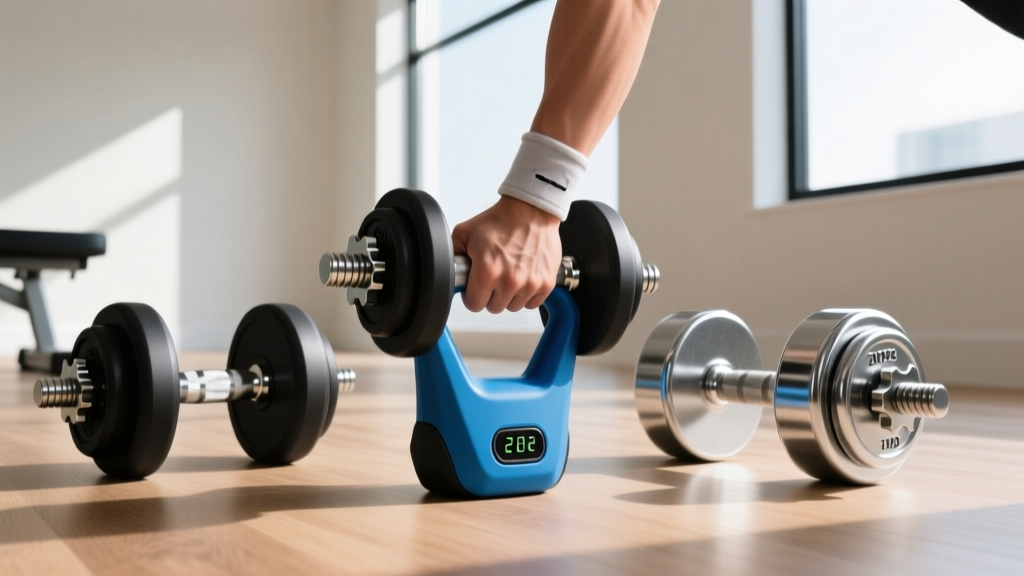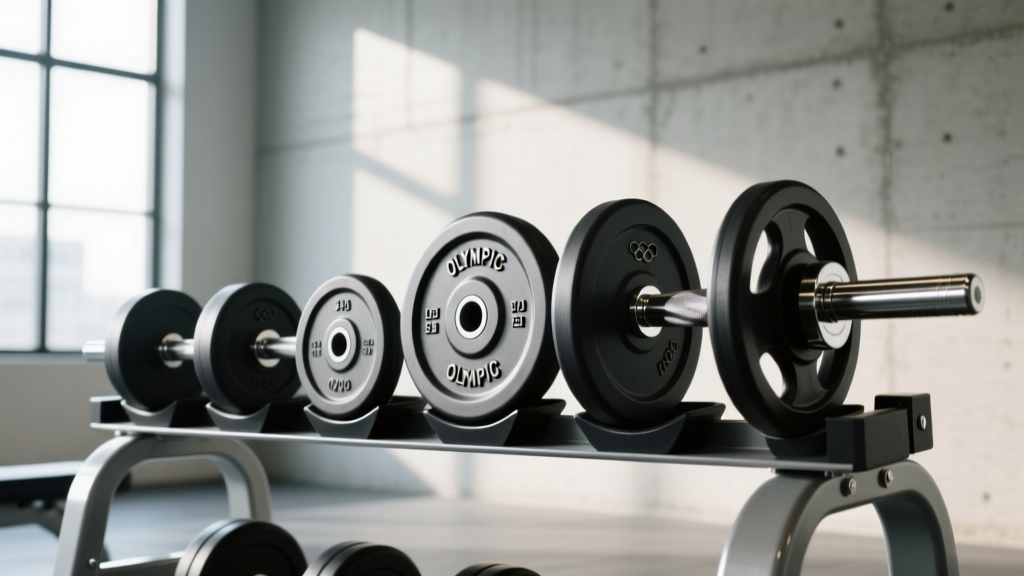
Olympic vs Standard Plates: Setup for Quads Exercises with Dumbbells
Compare Olympic vs standard weight plates to build the ultimate leg day setup, optimizing your rack for heavy squats and quads exercises with dumbbells.

The Core Conflict: Olympic vs Standard Weight Plates
When outfitting a home gym or commercial facility in 2026, the decision between Olympic and standard weight plates extends far beyond simple aesthetics. It dictates your entire barbell ecosystem, influences your storage footprint, and ultimately shapes how you program accessory movements. While the barbell remains the king of bilateral loading, a complete lower-body hypertrophy block requires strategic supplementation. Understanding the mechanical differences between plate types is the first step in building a versatile rack capable of handling heavy squats and targeted quads exercises with dumbbells.
Quick Spec Breakdown
- Standard Plates: 1-inch (25.4mm) center hole, typically paired with solid steel or hollow chrome bars.
- Olympic Plates: 2-inch (50.8mm) center hole, designed for high-tensile steel bars with rotating sleeves.
- Weight Tolerance: Standard gear maxes out safely around 200-250 lbs; Olympic gear routinely handles 1,000+ lbs.
Dimensional Deep Dive: Why the 2-Inch Hole Matters
The 50.8mm center hole of an Olympic plate is not an arbitrary measurement; it is a standardized specification governed by international weightlifting bodies to ensure compatibility across global competitions. This 2-inch diameter allows for a thicker, stronger barbell sleeve. More importantly, it accommodates the internal mechanics of the barbell itself—specifically, the bushings or needle bearings that allow the sleeves to rotate independently of the shaft.
Standard plates, with their 25.4mm (1-inch) holes, are restricted to much thinner bars. These bars lack the internal architecture for rotating sleeves. When you perform explosive movements like power cleans or heavy squats where the bar flexes (whip), a standard bar transfers all that rotational torque directly to your wrists and elbows. Over time, this not only increases injury risk but also causes the 1-inch sleeves to warp, making it physically difficult to slide plates on and off.
The Diameter Discrepancy and Floor Pulls
One of the most overlooked failure modes of standard plates is their outer diameter. A true Olympic 45 lb plate (and standard bumper plate) adheres to the 450mm (17.7-inch) diameter standard. Conversely, many standard cast-iron 45 lb plates measure only 14 to 15 inches across. This 2-to-3-inch difference drastically alters the mechanics of floor-based pulls like deadlifts or rack pulls. Using undersized standard plates artificially increases the range of motion, forcing you to pull from a deficit, which frequently leads to lumbar rounding and compromised mechanics at the bottom of the lift.
Programming Leg Day: Barbell Foundations and Accessory Work
Your plate and barbell ecosystem forms the foundation of your heavy compound lifts. However, according to strength and conditioning principles outlined by the National Strength and Conditioning Association (NSCA), relying solely on bilateral barbell movements often masks and exacerbates unilateral strength imbalances. This is where the synergy between your heavy rack setup and your free weight accessories becomes critical.
After exhausting the central nervous system with heavy Olympic-loaded barbell back squats or front squats, the spine requires a break from axial loading. This is the exact juncture where you transition to targeted quads exercises with dumbbells. Movements such as Bulgarian split squats, dumbbell goblet squats, and weighted walking lunges allow you to isolate the rectus femoris and vastus lateralis without compressing the vertebrae. Biomechanical databases like ExRx highlight that these unilateral dumbbell variations are essential for maximizing hypertrophy and correcting left-to-right force production deficits that a barbell simply cannot address.
For example, a proven 2026 hypertrophy protocol involves working up to a heavy 5-rep max on the barbell back squat using your Olympic plates, followed immediately by three working sets of 8-12 reps per leg on the Bulgarian split squat. Holding 50 lb to 75 lb hex dumbbells, you target the vastus medialis oblique (VMO) through a deep stretch at the bottom of the movement. This specific combination leverages the mechanical tension of the barbell and the metabolic stress of the dumbbell isolation, a dual-threat approach that yields maximum cross-sectional muscle growth.
Head-to-Head Comparison Matrix
| Feature | Standard (1-Inch) | Olympic (2-Inch) |
|---|---|---|
| Center Hole Diameter | 25.4 mm (1 inch) | 50.8 mm (2 inches) |
| 45 lb Plate Diameter | 14 - 15 inches (Varies) | 17.7 inches (450mm Standard) |
| Max Safe Load (Bar + Plates) | 200 - 250 lbs | 1,000 - 1,500+ lbs |
| Sleeve Mechanics | Fixed (High Torque Transfer) | Rotating (Bushings/Bearings) |
| 2026 Average Cost (Cast Iron) | $1.10 - $1.50 / lb | $1.80 - $2.50 / lb |
| Resale Value & Liquidity | Low (Niche Market) | High (Universal Demand) |
2026 Market Pricing & Material Degradation
The fitness equipment market has evolved significantly. In 2026, the cost of raw materials and shipping has stabilized, but the price gap between standard and Olympic gear remains distinct due to manufacturing tolerances. Standard cast iron plates are typically poured in basic sand molds, resulting in rough edges, inaccurate weight tolerances (often off by 5-10%), and a propensity to rust if the enamel coating chips.
Olympic plates, particularly those from premium manufacturers like Rogue Fitness, are machined to much stricter tolerances. Rubber-coated Olympic plates, often imported in bulk, suffer from a distinct off-gassing odor that can take months to dissipate in a poorly ventilated garage gym. Furthermore, cheap rubber degrades and flakes when exposed to direct sunlight or extreme temperature fluctuations. Urethane, while commanding a premium of $3.50 to $5.00 per pound, is virtually impervious to environmental damage, making it the superior choice for outdoor rigs or unclimate-controlled spaces.
Storage Ecosystems: Trees, Racks, and A-Frames
The physical footprint of your plates dictates your gym layout. Standard plates are often stored on flimsy A-frame racks that bow under the weight of a 300 lb set. Because standard plates lack uniform diameter sizing, stacking them on horizontal pegs often results in a jumbled, unstable mess that poses a toe-crushing hazard.
Olympic weight trees, featuring vertical 2-inch steel pegs, allow gravity to seat the plates flush against the central spine. Modern wall-mounted plate storage solutions, which bolt directly into wall studs using heavy-duty lag screws, free up valuable floor space for your dumbbell work. When planning your layout, ensure you leave at least 36 inches of clearance around your storage tree to safely load and unload your barbell without colliding with nearby equipment.
Real-World Failure Modes & Edge Cases
- The Standard Bar Bend: Loading a standard 1-inch bar past 200 lbs causes plastic deformation. The bar will permanently bend, ruining the structural integrity and making it dangerous for overhead pressing or squatting.
- Collar Slippage: Standard spring collars lack the tension required to hold heavy plates securely during dynamic movements. If you attempt heavy lunges or step-ups with a standard bar, plates can shift, creating a severe tipping hazard.
- Storage Incompatibility: Most modern commercial and high-end home gym storage solutions (weight trees, wall-mounted racks, and A-frames) are built with 2-inch pegs. Adapters exist to store standard plates on Olympic trees, but they introduce wobble and wear down the adapter sleeves over time.
Final Verdict: The Buyer's Decision Matrix
If your training strictly involves light resistance, rehabilitation, or occasional high-rep endurance work under 150 lbs, a standard plate setup remains a budget-friendly entry point. However, for 95% of lifters in 2026, Olympic plates are the mandatory standard. The ability to safely load heavy bilateral squats, combined with the structural integrity required to support a comprehensive leg day that transitions seamlessly into targeted quads exercises with dumbbells, makes the Olympic ecosystem a non-negotiable investment. Buy Olympic plates, invest in a high-tensile barbell, and allocate the remaining budget to a premium set of adjustable dumbbells to complete your lower-body arsenal.
More gear to consider
All reviews
Bumper vs Iron Plate Care: Beyond the Dumbbell Women Beginner Phase

Collar Clamp Guide: Barbell Deadlift with Dumbbells
Best Dumbbell Weight for Beginners: Rubber vs Urethane 2026 Trends
Loadable Dumbbell Care for Your Heavy Push Day Dumbbell Workout

EZ Curl Bar vs Straight Bar Care & Dumbbell vs Resistance Band Life