Dumbbells vs Kettlebells: Space Optimization With Loadable Plates
Discover how loadable dumbbells with interchangeable plates beat kettlebells for space optimization. Expert layout designs and 2026 gear specs inside.

The Spatial Dilemma: Fixed Weights vs. Modular Systems
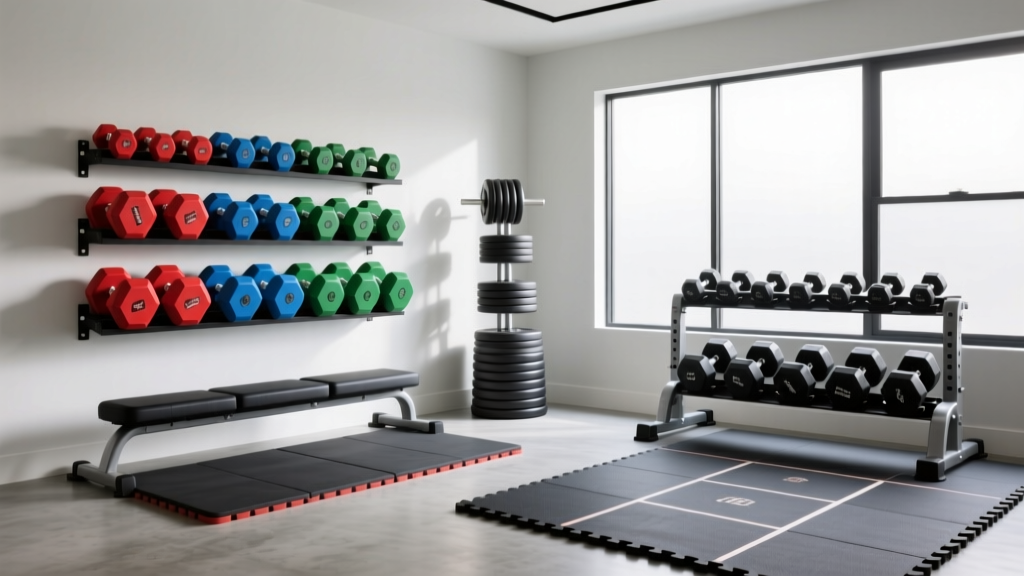
When designing a compact home gym or apartment workout space in 2026, the classic debate of dumbbells vs kettlebells usually centers on biomechanics, grip strength, and muscle activation. However, from a spatial design and layout optimization perspective, this conversation requires a radical shift. Fixed-weight collections—whether a rack of hex dumbbells or a lineup of cast-iron kettlebells—are notorious space hogs. As urban living spaces shrink and micro-gyms dominate the fitness landscape, the loadable dumbbell with interchangeable plates has emerged as the undisputed champion of high-density strength training.
A loadable dumbbell system consists of a pair of heavy-duty handles with extended sleeves, allowing you to slide on standard or Olympic weight plates. This modular approach completely disrupts the traditional footprint of free weights, offering progressive overload from 5 pounds to over 100 pounds per hand while occupying a fraction of the square footage required by fixed alternatives.
Footprint Analysis: Loadable Dumbbells vs Kettlebells
To understand why loadable systems win the spatial efficiency war, we must quantify the floor and rack real estate required for comparable weight ranges. The following data matrix compares a standard intermediate kettlebell set against a high-capacity loadable dumbbell setup.
| Equipment Configuration | Weight Range | Floor/Rack Footprint | Storage Hardware | Est. Cost (2026) |
|---|---|---|---|---|
| Kettlebell Set (6 pieces) | 35 lbs - 70 lbs | 6 to 8 linear feet | Heavy-duty 3-tier rack | $550 - $750 |
| Fixed Hex Dumbbell Set | 10 lbs - 50 lbs | 12 to 15 linear feet | Commercial A-frame rack | $800 - $1,200 |
| Loadable Dumbbells + Plates | 5 lbs - 105 lbs | 2 ft x 2 ft (Vertical) | Single vertical plate tree | $350 - $500 |
Top Loadable Dumbbell Handles for Tight Layouts
Not all loadable handles are created equal. The sleeve diameter (1-inch standard vs. 2-inch Olympic) and overall length dictate which plates you can use and how the dumbbells balance during unilateral movements. Here is a breakdown of the top-tier loadable handles dominating the 2026 market.
1. Ironmaster Quick-Lock V2 Loadable Handles (Standard 1-Inch)
For apartments and tight spaces where standard cast-iron plates are preferred for their compact diameter, the Ironmaster Quick-Lock V2 remains the gold standard. Machined from solid steel, these handles feature a 15-inch overall length and a 1-inch peg. The proprietary square-head locking screw ensures zero plate rattle, a critical safety feature when performing heavy floor presses in confined spaces where a dropped weight could damage subflooring.
- Price: ~$189 per pair (handles only)
- Sleeve Length: 6.5 inches of loadable space per side
- Best For: Micro-gyms utilizing space-saving standard cast iron or urethane plates.
2. Titan Fitness Olympic Loadable Dumbbell Handles
If your gym already utilizes 2-inch Olympic bumper plates, the Titan Fitness Loadable Handles offer an aggressive price-to-performance ratio. At 14.5 inches in total length, they are slightly more compact than competitors, making them ideal for narrow hallways or tight clearance zones between a power rack and a wall.
- Price: ~$89.99 per pair
- Sleeve Diameter: 2 inches (Olympic)
- Drawback: The shorter sleeve limits maximum loading to about 70 lbs per hand if using thick bumper plates.
3. Rogue Loadable Dumbbell Handles
Rogue's offering is engineered for serious lifters who demand aggressive knurling and precise sleeve tolerances. At 15.25 inches long, they accommodate a massive amount of weight, provided you use machined steel plates or thin urethane fractional plates rather than bulky rubber bumpers.
- Price: ~$145 per pair
- Knurling: Deep, volcano-pattern knurl for secure grip during heavy renegade rows.
- Best For: Garage gyms with existing Olympic plate collections and heavy progressive overload goals.
Designing Your Micro-Gym Layout: Clearance and Flow
According to facility design guidelines published by the National Strength and Conditioning Association (NSCA), adequate clearance is vital for safety and biomechanical efficiency. When integrating loadable dumbbells into a small room, you must design for the 'Triangle of Motion'.
- The Loading Zone (2x2 ft): Position your vertical plate tree in a corner or directly adjacent to your folding squat rack. This centralizes the heavy lifting of plates, preventing you from carrying loaded handles across the room.
- The Execution Zone (6x6 ft minimum): Free weight exercises like Bulgarian split squats or dumbbell lunges require forward and lateral momentum. Ensure a minimum of 36 inches of clearance between the edge of your workout bench and any walls or mirrors.
- The Drop Zone: Unlike adjustable dial dumbbells, loadable steel dumbbells can be safely dropped on thick rubber flooring. Designate a specific 4x4 foot area with 3/4-inch vulcanized rubber mats to absorb the impact of dropping heavy Olympic-loaded handles.
Plate Storage Solutions to Maximize Floor Space
The true secret to winning the dumbbells vs kettlebells space debate lies in how you store the interchangeable plates. Horizontal plate storage is a relic of commercial gyms with endless square footage. For home layouts, verticality is key.
Vertical Plate Trees with Integrated Dumbbell Cradles
Many modern plate trees feature a top tier with angled cradles specifically designed to hold loadable dumbbell handles. This keeps the handles off the floor, prevents tripping hazards, and consolidates your entire free-weight system into a single, movable 2x2 foot footprint. Look for trees with a wide, weighted base to prevent tipping when fully loaded with 300+ pounds of iron.
Wall-Mounted Plate Pegs
If your floor space is entirely consumed by a cardio machine or a functional trainer, wall-mounted plate storage is the ultimate 2026 layout hack. By mounting 2-inch steel pegs directly into wall studs (using a reinforced wooden backing board), you can store your interchangeable plates vertically on the wall. This completely eliminates the floor footprint of the weight system, leaving only the dumbbell handles to be tucked under a bench.
'The transition from fixed weights to modular loadable systems is not just a financial decision; it is an architectural one. By shifting the mass of your gym vertically onto trees and walls, you reclaim the floor for actual movement.' — Home Gym Engineering Report, 2025
Frequently Asked Questions
Can I use loadable dumbbells for fast-paced HIIT circuits?
Loadable dumbbells with threaded screw collars or bolt-on locks are not ideal for rapid weight changes during HIIT circuits. If your programming requires dropping from 50 lbs to 25 lbs in under 15 seconds, a dial-adjustable dumbbell or a kettlebell is superior. Loadable systems excel in traditional hypertrophy and strength blocks where rest periods allow for 60-90 seconds of plate manipulation.
Do loadable dumbbell handles fit inside standard power racks?
Yes, but sleeve length matters. If you plan to use them inside a compact power rack for floor presses or rack pulls, ensure the overall length of the handle (typically 14 to 16 inches) does not exceed the internal width of your rack's uprights. Most standard racks have an internal width of 42 to 49 inches, easily accommodating loadable handles.
Are standard 1-inch plates or Olympic 2-inch plates better for small spaces?
Olympic 2-inch plates offer a wider variety of space-saving materials, such as thin machined steel and calibrated urethane, which allow for massive weight loads in a compact sleeve space. Standard 1-inch cast iron plates are cheaper but often thicker and prone to chipping. For long-term spatial efficiency and durability, a 2-inch Olympic loadable system paired with a vertical tree is the superior layout choice.
More gear to consider
All reviews
Power Rack vs Squat Rack vs Stand: Compound Dumbbell Routine Guide

Olympic Barbell Weight & Knurling: Setup for Single-Arm Dumbbell Rows
Cast Iron vs Competition Kettlebells & 120 Pound Dumbbell Value

Home Gym Setup Walkthrough: Integrating a 45 lb Dumbbell Pair
Standing Dumbbell Kickbacks: Power Rack vs Squat Rack vs Stand