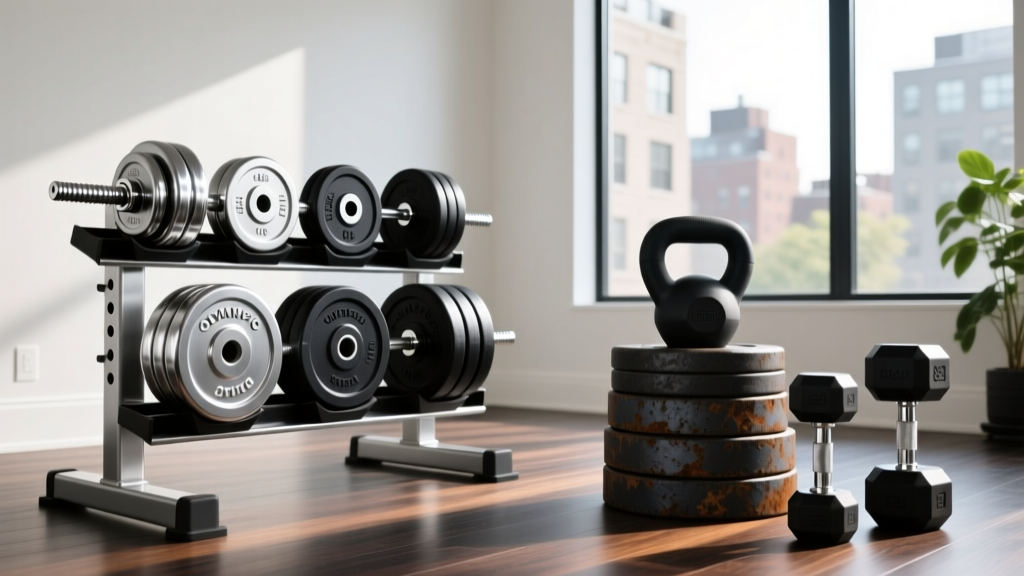
Olympic vs Standard Plates: Heavy Lifts & Biceps Using Dumbbells
Compare Olympic vs standard weight plates for your 2026 home gym. Discover which setup is best for heavy barbell lifts and biceps using dumbbells.

The 50mm vs 25mm Divide: Understanding the Core Geometry
When outfitting a home gym in 2026, the foundational decision you will make isn't which barbell to buy, but which weight plate ecosystem to commit to. The weight plate market is strictly bifurcated into two categories: Olympic and Standard. This isn't merely a branding distinction; it is a fundamental difference in engineering, load capacity, and biomechanical application.
Olympic plates feature a center hole measuring exactly 50.8mm (2 inches), designed to slide onto the thick, rotating sleeves of Olympic barbells. Standard plates, conversely, utilize a 25.4mm (1-inch) center hole—though many cheap cast-iron variants drill this out to 28mm to accommodate poorly machined standard bars. According to equipment safety guidelines published by the National Strength and Conditioning Association (NSCA), matching plate tolerances to barbell sleeve diameters is critical to prevent uneven load distribution and sleeve degradation over time.
Head-to-Head Comparison Matrix
| Feature | Olympic Weight Plates | Standard Weight Plates |
|---|---|---|
| Center Hole Diameter | 50.8mm (2 inches) | 25.4mm - 28mm (1 inch) |
| Max Load Capacity | 500 lbs to 1,500+ lbs | 150 lbs to 300 lbs (bar dependent) |
| Plate Materials | Cast Iron, Rubber Grip, Urethane, Bumper | Primarily Cast Iron, Vinyl-filled |
| Footprint & Storage | Larger diameter, requires heavy-duty racks | Compact, fits on lightweight A-frame stands |
| 2026 Avg. Cost (Iron) | $1.80 - $2.50 per lb | $1.20 - $1.60 per lb |
The Loadable Dumbbell Dilemma: Range of Motion and Biomechanics
Where the Olympic vs. Standard debate gets highly nuanced is in isolation exercises. Many lifters utilize loadable dumbbell handles to save space and money, swapping plates to adjust the weight. However, the physical geometry of the plates you choose drastically alters your mechanics when training biceps using dumbbells.
If you are using standard 14-inch spin-lock dumbbell handles (like the CAP Barbell 1-inch models), you are limited to standard plates. A standard 10lb cast iron plate has a relatively small diameter (roughly 6.5 inches). This compact profile allows you to achieve a deep, unobstructed stretch at the bottom of a bicep curl without the plate colliding with your forearm or thigh.
Conversely, Olympic loadable dumbbell handles (such as the Rogue Loadable Dumbbell Handles, priced around $125 per pair) accept 50mm plates. The problem? Olympic plates are scaled for barbell clearance. A 25lb Olympic grip plate often measures over 10 inches in diameter. When you attempt to isolate your biceps using dumbbells loaded with these wider Olympic plates, the increased girth can prematurely halt your range of motion at the bottom of the curl, robbing you of the eccentric stretch vital for hypertrophy.
⚠️ Biomechanical Warning: When training biceps using dumbbells with Olympic loadable handles, stick to fractional plates, 5lb, and 10lb Olympic grip plates. Attempting heavy curls with 25lb or 45lb Olympic plates will force you to widen your stance and alter your elbow tracking to avoid the plates hitting your legs, shifting the tension away from the bicep brachii.Material Science: Cast Iron, Rubber Grip, and Urethane
The Standard plate ecosystem is almost entirely limited to bare cast iron or concrete-filled vinyl casings. While the Titan Fitness catalog and other budget retailers still sell standard iron, the material is prone to rust, chipping, and loud clanking that can crack garage concrete.
Olympic plates offer a vastly superior material hierarchy:
- Cast Iron: The traditional choice. Machined to tight tolerances, painted or e-coated to resist oxidation. Best for lifters who prioritize feel and acoustic feedback.
- Rubber Grip: Features a steel ring insert with a vulcanized rubber exterior. Excellent for dampening sound and protecting floors during deadlift drops.
- Virgin Urethane: The premium standard for commercial and high-end home gyms. Urethane resists UV degradation, doesn't off-gas foul odors like cheap rubber, and survives extreme temperature fluctuations.
- Bumper Plates: Solid rubber with a 50mm steel insert, all sharing the same 450mm diameter regardless of weight (from 10lbs to 55lbs). Essential for Olympic weightlifting and CrossFit-style drops.
2026 Pricing Realities: Cost Per Pound and Long-Term Value
Upfront cost is the primary driver that pushes beginners toward Standard plates. A 300lb standard cast iron set can often be sourced for under $400. However, the hidden cost of Standard plates lies in their structural limitations.
Standard barbells are notorious for permanent bending (taking a 'set') once loaded past 200 lbs. Furthermore, the 1-inch center holes of standard plates are known to crack or warp if dropped from shoulder height. When you factor in the inevitable need to upgrade to an Olympic barbell and new plates once you surpass the beginner stage, the Standard route becomes a sunk cost.
According to current market data from Rogue Fitness and other top-tier manufacturers, Olympic cast iron plates average $1.80 to $2.50 per pound, while premium urethane options push $4.00 to $6.00 per pound. While the initial investment for a 300lb Olympic iron set hovers around $600, the equipment will easily outlast the user, retaining high resale value on the secondary market.
Final Verdict: Building Your Plate Arsenal
If your training strictly involves light resistance work, physical therapy, or you are operating in a highly space-constrained environment with zero intent to lift heavy, Standard plates remain a viable, budget-friendly entry point.
However, for 95% of lifters, Olympic plates are the undisputed champion. The 50mm standard ensures compatibility with virtually every high-quality barbell, specialty bar, and attachment on the market. Just remember to manage your plate diameters carefully when transitioning from heavy barbell compounds to isolation movements like training biceps using dumbbells, ensuring your equipment supports your biomechanics rather than hindering it.
Frequently Asked Questions
Can I use an adapter to put Olympic plates on a Standard bar?
Yes, plastic or aluminum sleeve adapters (50mm to 25mm) exist, but they are strongly discouraged. They add 2-3 inches of unusable sleeve length on each side, drastically reducing the amount of weight you can load, and they introduce a dangerous amount of lateral slop during dynamic movements.
Are bumper plates only for Olympic lifting?
No. While designed for dropping from overhead, bumper plates are incredibly useful for general fitness. Because all bumper plates share a 450mm diameter, even a 10lb bumper plate protects your barbell sleeves and flooring during deadlifts, whereas a 10lb standard iron plate is tiny and forces the barbell to sit dangerously close to the floor, ruining your starting mechanics.
Why do some Standard plates have a 28mm hole instead of 25mm?
Many budget import bars are manufactured with slightly thicker 28mm or 30mm sleeves to increase their weight capacity without upgrading the steel quality. Plate manufacturers drill standard holes slightly larger (28mm) to ensure these cheap plates fit on these cheap bars, but this results in a loose, rattling fit on true 25.4mm standard bars.
More gear to consider
All reviews
Collar Comparison: Fixing Shifts in Dumbbell Romanian Deadlifts
Kettlebell Value: Cast Iron vs Competition & Seated Alternating Dumbbell Curl

Barbell Collar Setup for a Safe Dumbbell Workout Program

Standing Bent Over Dumbbell Rows: Top Adjustable Dumbbells

2026 Adjustable Dumbbell Guide for a Dumbbell and Bench Workout Plan
