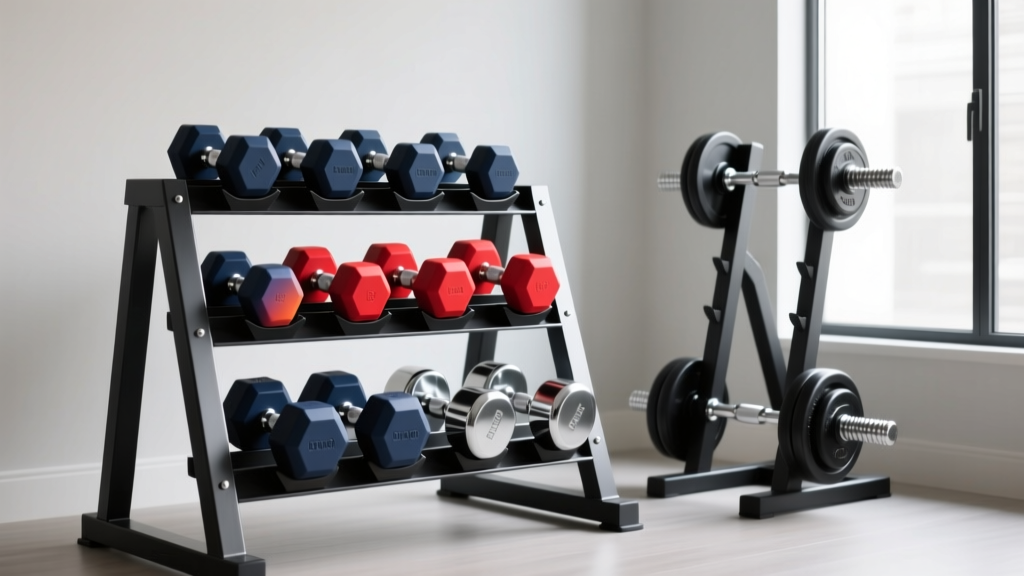
Essential Gym Dumbbells Accessories: Rack Maintenance & Storage Care
Maximize the lifespan of your gym dumbbells accessories. Learn expert maintenance tips for 3-tier racks, A-frames, and weight storage solutions.

The Overlooked Cornerstone of Free Weight Longevity
When outfitting a commercial facility or a high-end garage gym, buyers often obsess over the knurling on their hex dumbbells or the urethane coating on their weight plates, but completely overlook the gym dumbbells accessories that house them. Dumbbell racks and storage solutions are subjected to immense dynamic loading, abrasive friction, and constant exposure to corrosive sweat. Yet, they are rarely included in standard facility maintenance protocols.
A premium 3-tier rack, such as the Rogue DR-3T or the Rep Fitness A-Frame, represents a significant capital investment—often ranging from $450 to over $1,200 depending on the configuration and capacity. Neglecting the maintenance of these storage units doesn't just degrade the rack itself; it actively damages the dumbbells resting on it. In 2026, with commercial gym equipment prices continuing to climb due to raw steel and logistics costs, preserving your storage infrastructure is a critical financial imperative.
⚠️ CRITICAL SAFETY WARNING: A-Frame Tipping HazardsA-frame dumbbell racks possess a high center of gravity. If heavy dumbbells (e.g., 100+ lbs) are stored on the top tier while the bottom tier is empty, the rack becomes dangerously top-heavy. Always load A-frames from the bottom up, and anchor the rear stabilizer feet to the floor using 3/8-inch wedge anchors if the rack is placed in a high-traffic commercial zone.
The Anatomy of Rack Degradation
To properly maintain your storage solutions, you must understand the three primary failure modes of steel weight racks:
- Abrasive Wear: The repeated sliding of cast iron or rubber-coated dumbbells across the saddle rails strips away protective coatings.
- Corrosive Oxidation: Human sweat has a pH ranging from 4.5 to 7.0. When it pools in the crevices of the rack's welds, it initiates rapid galvanic corrosion, especially on cheaper imported racks with thin zinc plating.
- Hardware Loosening: The micro-vibrations caused by dropping heavy dumbbells onto adjacent tiers travel through the steel frame, gradually backing out structural bolts over time.
UHMW Saddle Liners: The First Line of Defense
The most vital of all gym dumbbells accessories for rack preservation is the UHMW (Ultra-High Molecular Weight) polyethylene saddle liner. This dense plastic strip sits on the steel rails where the dumbbells rest. It serves a dual purpose: it protects the dumbbell's knurled handles from metal-on-metal scraping, and it absorbs the acoustic shock of racking heavy weights.
Over time, UHMW liners will gouge, crack, or peel. If a liner fails and exposes the bare steel rail beneath, the steel will aggressively chew through the handles of your dumbbells within weeks. Proactive Replacement: Inspect UHMW strips monthly. If you see deep grooves exceeding 1/16th of an inch, it is time to replace them. You can order custom-cut adhesive-backed UHMW tape from industrial suppliers like McMaster-Carr for approximately $35 to $50 per 33-foot roll, which is enough to resurface multiple 3-tier racks.
The Ultimate Rack Maintenance Matrix
Implementing a structured maintenance schedule ensures your storage solutions remain safe and visually appealing. Facility managers should adapt this matrix based on their daily foot traffic.
| Frequency | Maintenance Task | Tools & Materials Required |
|---|---|---|
| Daily | Wipe down saddle lips and uprights to remove sweat and chalk residue. | Microfiber cloths, pH-neutral cleaner (e.g., Simple Green diluted 1:10). |
| Weekly | Inspect UHMW plastic liners for deep gouging, peeling, or displacement. | Visual inspection, utility knife for trimming frayed edges. |
| Monthly | Check all structural bolts and gusset plates for loosening or rust jacking. | 1/2-inch drive torque wrench, socket set, wire brush. |
| Bi-Annually | Apply automotive-grade paste wax to powder-coated uprights to seal micro-pores. | Carnauba paste wax, applicator pads. |
Powder Coat Preservation and Rust Mitigation
Modern commercial racks are finished with epoxy-polyester hybrid powder coats. While highly durable, these finishes are not impervious to chemical degradation. According to guidelines from the Powder Coating Institute, harsh alkaline cleaners and bleach-based disinfectants will break down the resin binders in the powder coat, causing it to chalk, fade, and eventually flake off, exposing the raw steel to oxygen and moisture.
"Never use ammonia or undiluted bleach on gym equipment frames. The chemical reaction strips the clear top-layer of the powder coat. Stick to mildly acidic or pH-neutral enzymatic cleaners that break down the proteins in human sweat without attacking the epoxy resins."
Addressing Micro-Rust and Touch-Ups
If you spot surface-level oxidation (micro-rust) on the saddle rails or bolt heads, act immediately. Use a brass wire brush to gently remove the oxidation without scratching the surrounding intact powder coat. Once the area is bare and clean, apply a cold-galvanizing compound or a high-quality rust-inhibitive enamel like Rust-Oleum Professional. For black racks, a matte black engine enamel provides a near-factory color match and withstands high friction.
Structural Torque and Weld Inspections
The dynamic shock of a 120-pound dumbbell being forcefully returned to a tier generates a kinetic ripple through the rack's frame. Over a 12-month period, this repetitive shock loading can cause standard hex bolts to back out of their threaded inserts, leading to frame wobble and catastrophic structural fatigue at the weld joints.
Bolt Torque Specifications
Do not simply "tighten" bolts by feel. Over-torquing can strip the threads or snap the bolt head, while under-torquing allows for destructive frame movement. Use a calibrated torque wrench to ensure hardware is secured to the manufacturer's exact specifications. While you should always consult your specific rack's manual, standard industry torque specs for heavy-duty storage racks are:
- M8 Bolts (Accessory attachments, UHMW retaining screws): 15 - 20 ft-lbs
- M10 Bolts (Saddle brackets, cross-members): 30 - 40 ft-lbs
- M12 Bolts (Main upright base plates, heavy structural gussets): 60 - 80 ft-lbs
During your monthly inspections, pay close attention to the welds connecting the saddle brackets to the main uprights. Look for "rust jacking"—a phenomenon where rust forms in a microscopic crack, expands, and forces the weld apart. If you spot a hairline fracture in a weld, the rack must be taken out of service immediately and repaired by a certified TIG welder.
Optimizing Your Storage Environment
Longevity isn't just about physical maintenance; it's about environmental control. The International Health, Racquet & Sportsclub Association (IHRSA) emphasizes that facility climate control plays a massive role in equipment lifespan. Steel racks stored in unclimate-controlled garage gyms or humid basement facilities will oxidize at an accelerated rate, regardless of how often they are cleaned.
Keep your free weight zone at a stable humidity level between 40% and 50%. If you operate a garage gym in a humid climate, invest in a commercial-grade dehumidifier and apply a light coat of 3-in-One silicone spray to all exposed, unpinned steel hardware (like adjustment pins on adjacent adjustable dumbbell sets) every 90 days to displace ambient moisture.
Final Thoughts on Equipment Stewardship
Treating your storage solutions as an afterthought is a costly mistake. By integrating these gym dumbbells accessories into your daily and monthly maintenance routines, you protect your broader equipment investment. Replacing a $40 roll of UHMW tape and spending 15 minutes a month with a torque wrench will easily add a decade of functional life to a premium steel rack, ensuring your free weight zone remains safe, aesthetically pleasing, and structurally uncompromised for years to come.
More gear to consider
All reviews
Top Neoprene Dumbbells for Dumbbell Weight Lifting at Home (2026)

Barbell Clamp Comparison: Safety Beyond Dumbbell Exercises Images

Space-Saving Incline Dumbbell Hex Press: Rubber vs Urethane Hex Bells

Budgeting a Chest Muscle Workout with Dumbbells: Hex vs Urethane

Best Neoprene Dumbbells & Hooks for Dumbbells (2026)
