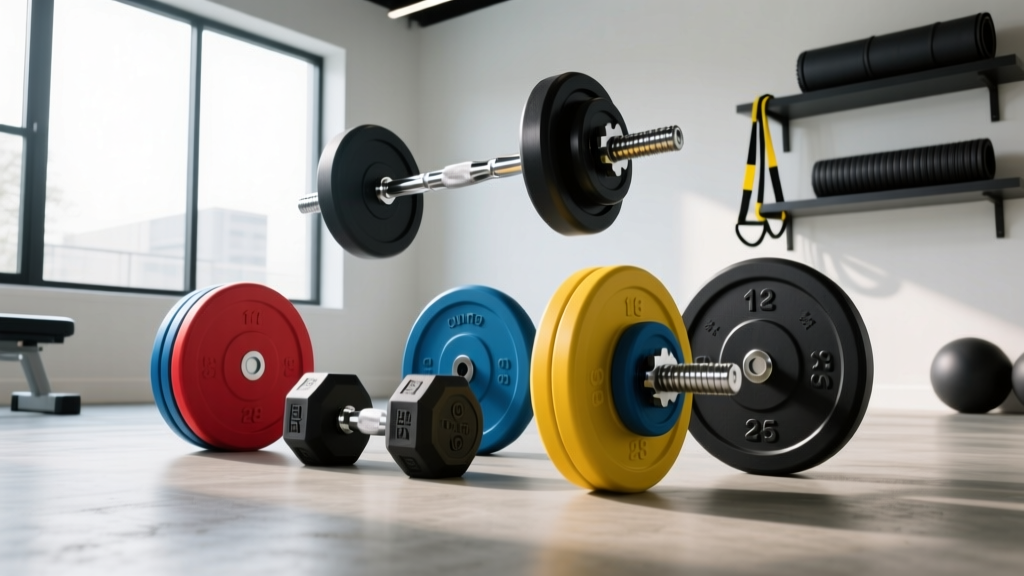
Olympic vs Standard Plates: Shoulder Workouts with Dumbbells at Home
Discover the crucial differences between Olympic and standard weight plates to build the perfect home gym for effective shoulder workouts with dumbbells.

The Home Gym Crossroads: Setting Up for Success
Building a home gym is one of the most rewarding investments you can make for your long-term health. If your primary focus is upper-body hypertrophy and mastering shoulder workouts with dumbbells at home, you might assume that a simple set of adjustable dumbbells is all you need. However, a truly comprehensive home gym requires a barbell for heavy foundational movements like overhead presses, deadlifts, and rows. This brings every beginner to their first major equipment crossroads: choosing between Olympic and standard weight plates.
Making the wrong choice here can bottleneck your progress, waste your budget, and even create safety hazards. In this step-by-step guide, we will break down the exact mechanical differences, real-world failure modes, and 2026 pricing realities of weight plates so you can build a safe, scalable foundation for your home training space.
Step 1: Decode the Sleeve Diameter (The 1-Inch vs 2-Inch Rule)
The entire debate between standard and Olympic equipment comes down to a single measurement: the diameter of the hole in the center of the plate, which must match the sleeve (the loading end) of your barbell or dumbbell handle.
- Standard Plates: Feature a center hole of exactly 1 inch (25.4 mm). These are designed to fit lightweight, often solid-steel or basic tubular barbells and plate-loaded dumbbell handles found in big-box sporting goods stores.
- Olympic Plates: Feature a center hole of exactly 2 inches (50.8 mm). These are the global standard for commercial gyms, powerlifting, and Olympic weightlifting, designed to fit high-tensile steel bars with rotating sleeves.
Beginner Rule of Thumb: Once you buy a barbell or a set of plate-loaded adjustable dumbbells, you are permanently locked into that specific sleeve diameter. You cannot safely or effectively mix the two systems without using adapters (which we strongly advise against for heavy lifting).
Step 2: Compare the Specs (Standard vs Olympic)
To visualize the differences, let us look at the raw data. According to comprehensive equipment testing by BarBend, the physical footprint and load capacities vary drastically between the two formats.
| Feature | Standard Weight Plates | Olympic Weight Plates |
|---|---|---|
| Center Hole Diameter | 1 inch (25.4 mm) | 2 inches (50.8 mm) |
| Barbell Sleeve Length | 10 to 12 inches | 15 to 16.5 inches |
| Max Barbell Capacity | 200 - 300 lbs (typically) | 700 - 1,500+ lbs |
| Plate Weight Accuracy | +/- 5% to 10% variance | +/- 1% to 3% variance (calibrated) |
| Resale Value | Very Low (hard to sell used) | High (holds value exceptionally well) |
Step 3: Understand the "Whip and Bend" Failure Mode
Why do serious lifters universally recommend Olympic plates? The answer lies in material science and structural engineering. Standard barbells are typically made from lower-grade steel. When you load a standard barbell past 200 lbs, the bar experiences plastic deformation—meaning it bends under the weight and does not return to its original straight shape.
This bending creates a severe safety hazard. As the bar bows, the angle of the sleeves changes, causing the 1-inch standard plates to slide outward and potentially fall off the ends mid-lift. Olympic barbells, constructed from high-tensile spring steel (often with a yield strength of 190k to 215k PSI), are engineered to flex (or "whip") and return to center, keeping your heavy plates securely in place. When performing heavy seated overhead presses or barbell shrugs, this structural integrity is non-negotiable.
Step 4: Budgeting Your Iron (2026 Pricing Realities)
While standard plates are cheaper upfront, they are a "dead-end" investment. Here is what you can expect to pay for cast iron and coated plates in the current market, based on industry leaders like Rogue Fitness and Rep Fitness:
- Standard Cast Iron: $1.20 to $1.80 per pound. (A 200 lb set will cost roughly $240 - $360).
- Olympic Cast Iron: $2.00 to $3.50 per pound. (A 200 lb set will cost roughly $400 - $700).
- Olympic Urethane/Rubber: $4.50 to $7.00+ per pound. (Premium, odorless, and floor-friendly).
Pro-Tip for Beginners: If budget is your primary constraint, buy used Olympic cast iron plates. Because Olympic gear holds its value and is built to last decades, the secondary market is flooded with high-quality iron selling for $1.00 to $1.50 per pound. Standard plates, however, are rarely worth buying used due to their poor durability and lack of resale demand.
Step 5: Integrating Plates with Shoulder Workouts with Dumbbells at Home
You might be wondering: "If my main goal is shoulder workouts with dumbbells at home, why do I care about barbell plates?"
The answer is progressive overload and equipment synergy. Dumbbells are phenomenal for targeting the medial and rear deltoids through movements like lateral raises and face pulls. However, the anterior (front) deltoid and the overall shoulder girdle require heavy, bilateral loading to achieve maximum strength adaptations. This is where the barbell overhead press comes in.
Furthermore, if you are utilizing plate-loaded adjustable dumbbells (such as the Ironmaster Quick-Lock or traditional spin-lock handles) for your home shoulder routines, the quality of your plates directly impacts your workout experience. Olympic-compatible plate-loaded dumbbell handles feature knurled grips and secure locking mechanisms that prevent plates from shifting during dynamic movements like Arnold presses or dumbbell snatches. Standard spin-lock dumbbells often suffer from loose collars, causing the plates to clank and shift, which ruins your balance and mind-muscle connection during strict isolation work.
⚠ Safety Warning: The Adapter Trap
You will find cheap plastic or metal "Olympic to Standard" sleeve adapters sold online. Do not use these for heavy lifting. Adapters introduce a secondary point of failure, add unnecessary length to the sleeve (altering the bar's balance), and can crack under heavy shear stress. If you have Olympic plates, buy an Olympic barbell. If you have standard plates, it is time to upgrade your entire ecosystem.
Step 6: Storage and Floor Protection
When outfitting your space for intense shoulder workouts with dumbbells at home, you will inevitably be dropping weights or setting them down on the floor. Olympic plates—specifically rubber bumper plates or urethane-coated irons—are designed to be dropped from overhead or the shoulder. Standard cast iron plates will crack your concrete garage floor or shatter upon impact. Always pair your Olympic plate investment with 3/4-inch thick horse stall mats or dedicated high-density rubber gym flooring to protect both your iron and your foundation.
Frequently Asked Questions
Can I use Olympic plates on a standard barbell?
No. The 2-inch hole of an Olympic plate will not fit onto a 1-inch standard barbell sleeve. Conversely, standard plates will slide right off an Olympic bar unless you use a specialized adapter, which is unsafe for heavy loads.
Are bumper plates necessary for home shoulder workouts?
If your shoulder workouts involve high-repetition Olympic lifting variations (like push presses or dumbbell snatches) where you might need to drop the weight, rubber bumper plates are essential. For strict, controlled hypertrophy work like seated dumbbell presses and lateral raises, standard cast iron or urethane-coated Olympic plates are perfectly adequate and more cost-effective.
How many plates do I need to start?
For a beginner building a home gym, a standard "starter set" should include: (2) 45 lb plates, (2) 25 lb plates, (2) 10 lb plates, and (4) 5 lb plates. This allows for precise micro-loading, which is critical when progressing on smaller muscle group exercises like shoulder raises and presses.
By choosing the Olympic standard from day one, you future-proof your home gym, ensuring that your equipment can safely support your journey from beginner lateral raises to elite-level overhead presses.
More gear to consider
All reviews
Beginner Dumbbell Workout Routine: Rubber Hex vs Urethane Budget

2026 Rack Market: Storage for Curling 100 Pound Dumbbells
EZ Curl vs Straight Bar Care & Standing Dumbbell Chest Fly Tips
Clear Floor Space for the Dumbbell Glute Bridge March: Rack Guide

Standard vs Olympic Plates: Optimizing the Dumbbell Triceps Pushdown
