Bumper vs Iron Plates & Dumbbell Hammer Curls: 2026 Trends
Explore the 2026 free weight market: a deep-dive bumper plate vs iron plate comparison, plus trends in adjustable dumbbells for hammer curls.

2026 Free Weight Market Overview: The Compound vs. Isolation Divide
The fitness equipment market in 2026 is defined by a distinct bifurcation in consumer spending. On one end, commercial and premium home gym owners are heavily scrutinizing the bumper plate vs iron plate comparison to optimize their deadlift platforms and Olympic lifting zones. On the other end, the accessory market is experiencing a massive surge in specialized isolation work, heavily driven by the biomechanical demands of movements like dumbbell hammer curls. As supply chains have fully stabilized and material science has advanced, the pricing, durability, and ergonomic profiles of free weights have shifted dramatically. This trend report analyzes the macro-economics of weight plates and the micro-trends shaping adjustable dumbbell purchases for targeted arm hypertrophy.
The Economics of Cast Iron: The Traditionalist's ROI
Cast iron plates remain the undisputed champion of cost-efficiency and spatial economy. In 2026, the average market price for high-quality, machined cast iron plates hovers between $1.60 and $2.40 per pound. Brands like Rogue Fitness (Deep Dish Cast Iron) and Titan Fitness (Cast Iron Grip Plates) continue to dominate this sector. The primary advantage of iron is its thin profile. A 45-pound cast iron plate typically measures between 1.25 and 1.5 inches in thickness, allowing lifters to load upwards of 500 pounds on a standard barbell sleeve without running out of real estate.
Failure Modes and Edge Cases
While virtually indestructible under normal use, iron plates are not without their market drawbacks. The primary failure mode is environmental degradation. Unless coated in baked enamel, rubber, or urethane, raw cast iron is highly susceptible to oxidation in humid environments. Furthermore, the acoustic impact and kinetic energy transfer of dropped iron plates routinely destroy standard residential flooring, necessitating expensive subflooring or specialized horse-stall matting. For lifters strictly performing powerlifting movements (squat, bench, deadlift) where dropping the bar from overhead is prohibited, iron remains the most logical capital expenditure.
The Bumper Plate Boom: Material Science and Pricing
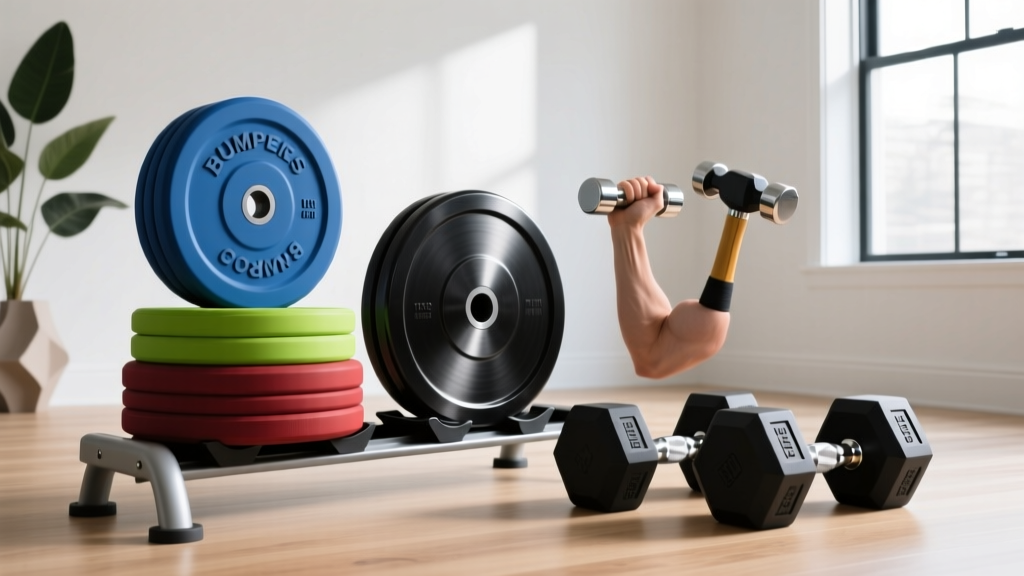
The functional fitness and CrossFit boom permanently altered the market, making bumper plates a household staple. However, the 2026 market is highly segmented by rubber durometer (hardness) and manufacturing processes. The bumper plate vs iron plate comparison ultimately comes down to drop tolerance and noise mitigation.
- Virgin Rubber (High Durometer, 85-90 Shore A): Models like the Rogue Echo Bumpers offer a 'dead bounce,' meaning they absorb kinetic energy and stay put when dropped from overhead. They are thinner than recycled bumpers and resist tearing around the steel insert.
- Crumb/Recycled Rubber (Low Durometer, 70-75 Shore A): Plates like the Rep Fitness CR-1 are budget-friendly ($3.00 - $3.80/lb) but suffer from a 'live bounce,' which can be dangerous in crowded gym environments. They are also significantly thicker, limiting sleeve capacity.
2026 Weight Plate Comparison Matrix
| Plate Type | Avg. Cost (per lb) | Thickness (45lb) | Drop Tolerance | Best Use Case |
|---|---|---|---|---|
| Machined Cast Iron | $1.60 - $2.40 | 1.3 - 1.5 inches | Low (Do Not Drop) | Powerlifting, Heavy Squats |
| Virgin Rubber Bumper | $4.00 - $5.50 | 3.0 - 3.2 inches | High (Overhead OK) | Olympic Lifts, CrossFit |
| Crumb Rubber Bumper | $3.00 - $3.80 | 3.8 - 4.5 inches | Medium (High Bounce) | Budget Home Gyms |
| Urethane Coated Iron | $4.50 - $6.00 | 1.4 - 1.6 inches | Medium (Low Drop) | Commercial Gyms, DB Rows |
Accessory Market Synergy: Dumbbell Hammer Curls & Grip Ergonomics
While the bumper plate vs iron plate comparison dictates the foundation of a gym's heavy compound zone, the 2026 accessory market reveals a fascinating micro-trend: the optimization of adjustable dumbbells for specific isolation movements, most notably dumbbell hammer curls. According to biomechanical guidelines from the American Council on Exercise (ACE), the neutral grip utilized in dumbbell hammer curls shifts the primary load from the biceps brachii to the brachioradialis and brachialis muscles, crucial for overall arm thickness and grip strength.
Why is this relevant to the broader free weight market? Because the surge in popularity of dumbbell hammer curls has exposed critical design flaws in early-generation adjustable dumbbells. When performing hammer curls, the lifter's hands are in a neutral, vertical position. If the dumbbell handle is too short, or if the weight block housing is excessively bulbous, the plates collide with the lifter's thighs or restrict the natural arc of the movement.
The Adjustable Dumbbell Evolution for Hammer Curls
In response to consumer demand for better isolation ergonomics, 2026's leading adjustable dumbbell manufacturers have redesigned their handle geometries. The Nuobell 80lb system, with its 15.7-inch knurled steel handle and streamlined weight blocks, has become the gold standard for dumbbell hammer curls. Unlike the older Bowflex SelectTech 552, which features a bulky plastic dial housing that interferes with the neutral grip path at the bottom of the curl, the Nuobell and PowerBlock Elite EXP models allow for a full, unobstructed range of motion. Lifters focused on hypertrophy are now cross-referencing plate purchases with adjustable dumbbell handle specs, ensuring their isolation tools match the quality of their compound racks.
'The brachioradialis is highly active during neutral-grip pulling and curling. Equipment that restricts the natural wrist alignment during dumbbell hammer curls not only limits hypertrophy but increases the risk of lateral epicondylitis.' - Strength and conditioning principles outlined by the National Strength and Conditioning Association (NSCA).
2026 Buyer’s Decision Matrix: Outfitting Your Gym
To navigate the current free weight landscape, buyers must align their equipment purchases with their specific training modalities. Use this framework to allocate your budget effectively:
- Step 1: Assess Your Drop Zone. If your programming includes Olympic weightlifting (cleans, snatches) or high-rep functional fitness drop-sets, bypass iron entirely. Invest in Virgin Rubber Bumpers (85+ Shore A) to protect your platform and barbell bearings.
- Step 2: Maximize Sleeve Real Estate. If you are a powerlifter chasing a 600lb deadlift, cast iron or urethane-coated iron plates are mandatory. Bumpers are simply too thick to accommodate the required number of 45lb plates on a standard 16.3-inch barbell sleeve.
- Step 3: Audit Your Accessory Ergonomics. When purchasing adjustable dumbbells for isolation work, physically test the neutral grip clearance. If dumbbell hammer curls and neutral-grip dumbbell rows are staples in your programming, prioritize brands with extended, unobstructed steel handles over compact, dial-based plastic models.
Expert Verdict & Future Projections
The 2026 free weight market is no longer a one-size-fits-all ecosystem. The bumper plate vs iron plate comparison is ultimately a question of physics and flooring: bumpers manage kinetic energy for overhead drops, while iron maximizes spatial density for pure load progression. Meanwhile, the accessory market continues to mature, with equipment designers finally recognizing that movements like dumbbell hammer curls require specific handle geometries to prevent joint strain and maximize muscle recruitment. By understanding the material science of your plates and the ergonomic requirements of your dumbbells, you can build a highly optimized, future-proof training environment that supports both maximal strength and targeted hypertrophy.
More gear to consider
All reviews
Flat Dumbbell Press vs Olympic Barbell: Weight & Knurling Buying Guide

Bent-Over Rows with Dumbbells: Rubber Hex vs Urethane Value Analysis

Beyond the 1000 Pound Dumbbell Myth: Bumper vs Iron Plate Trends 2026

12 Practical DIY Plunge Pool Ideas You Can Build in Under 8 Weeks

Cast Iron vs Competition Kettlebells & 60lbs Dumbbell Space Layouts