Why Is It Called a Dumbbell? History & Loadable Plate Maintenance
Discover why it is called a dumbbell and learn expert maintenance tips to maximize the lifespan of your loadable dumbbell handles and interchangeable plates.

If you have ever paused mid-set to wonder, why is it called a dumbbell, you are not alone. The term traces back to 17th-century England. According to historical fitness retrospectives, church bell ringers needed a way to practice their craft without disturbing the neighborhood. They created silent practice instruments by removing the clappers from heavy church bells, rendering them 'dumb' (mute). These lead-weighted ropes and silent bells eventually evolved into the handheld wooden and iron weights we recognize today.
While the original 'dumb' bells were fixed-weight, single-piece instruments, modern home gyms overwhelmingly favor loadable dumbbells with interchangeable plates. This modular design carries on the legacy of space-saving, home-friendly training. However, unlike fixed rubber or urethane dumbbells, loadable systems introduce mechanical joints—sleeves, threading, bushings, and locking collars. This modularity demands a rigorous, specialized maintenance protocol to ensure longevity and safety.
Expert Insight: A high-quality Olympic loadable handle, like the Rogue Fitness Loadable Dumbbell Handles (retailing around $95 per pair), uses bronze bushings and precision-machined sleeves. Cheap standard 1-inch spinlock handles use plastic bushings or bare metal-on-metal friction. Your maintenance routine must adapt to the metallurgy of your specific equipment.The Anatomy of a Loadable Dumbbell: What You Are Actually Maintaining
Before applying oil or a wire brush, you must understand the failure points of a plate-loaded dumbbell. The system is divided into three critical zones:
- The Handle & Knurling: The grip area, vulnerable to sweat-induced oxidation and chalk buildup.
- The Sleeve & Bushing: The cylindrical end that holds the plates. High-end 2-inch Olympic handles rotate on bronze bushings; cheaper 1-inch standard handles are often static or use low-grade nylon washers.
- The Locking Mechanism: Spinlock threading (typically 1'-8 UNC pitch for standard bars), lever-lock clamps, or spring collars. This is the most common point of catastrophic failure.
Step-by-Step Maintenance Routine for Handles and Sleeves
To maximize the lifespan of your interchangeable plate system, implement this bi-weekly maintenance schedule. This prevents the corrosive 'chalk-sweat paste' from seizing moving parts.
1. Knurling and Shaft Deep Clean (Bi-Weekly)
Sweat is highly saline and will pit the zinc or chrome plating on your dumbbell shaft. Use a stiff nylon or brass wire brush to agitate the knurling. Spray a light mist of Simple Green or a dedicated barbell cleaner, scrub, and wipe completely dry with a microfiber cloth. Never leave the shaft damp.
2. Sleeve and Bushing Lubrication (Monthly)
If your loadable handles rotate (essential for Olympic lifting movements like dumbbell snatches), the internal bushings require lubrication.
- For Bronze Bushings: Apply 3 to 5 drops of 3-IN-ONE multi-purpose oil or a specialized barbell oil to the seam where the sleeve meets the shaft. Rotate the sleeve 20 times to work the oil into the pores of the bronze.
- For Nylon/Plastic Washers (Standard 1-inch): Avoid petroleum-based oils, which can degrade certain plastics. Use a dry PTFE (Teflon) spray instead. Spray onto a Q-tip and apply directly to the friction ring.
3. Threading and Spinlock Care
Cross-threading is the death of a standard loadable dumbbell. Always spin the star nut on by hand for the first three rotations before tightening. Once a month, wipe the male threading on the sleeve with a dry cloth and apply a microscopic dab of white lithium grease to prevent the nut from seizing due to iron oxide buildup.
Troubleshooting Common Loadable Dumbbell Failures
Even with meticulous care, interchangeable plate systems experience wear. Use this diagnostic matrix to identify and resolve issues before they compromise your safety.
| Failure Mode | Affected Component | Diagnostic Sign | Exact Repair Protocol |
|---|---|---|---|
| Stripped Spinlock | Male Sleeve Threading | Star nut slips or grinds when tightened past 40 lbs. | Re-tap the sleeve using a 1'-8 UNC die, or replace the handle if the steel is too soft. |
| Sleeve Seizure | Internal Bushing | Sleeve refuses to rotate during a clean; squeaking sound. | Disassemble the handle (if possible), flush with WD-40 to remove grit, then re-lubricate with white lithium grease. |
| Plate Rattle | Collar/Plate Interface | Audible clanking during pressing movements; micro-movements. | Discard standard star nuts. Upgrade to heavy-duty O-ring lined spinlocks or use 2.5lb clamp collars over the spinlock. |
| Lever-Lock Slippage | Cam Mechanism | Lever pops open under heavy eccentric loads. | Clean the cam teeth with a toothbrush and isopropyl alcohol; tighten the tension bolt with a 4mm Allen key. |
Extending the Lifespan of Your Interchangeable Plates
The handle is only half the equation. The interchangeable plates themselves—whether cast iron, rubber-coated, or urethane—require specific environmental controls to prevent degradation.
Cast Iron and Machined Steel Plates
Raw or painted cast iron plates are prone to surface rust, especially in humid garage gyms. Wipe them down with a silicone-impregnated cloth (like a gun cleaning cloth) once a month. This leaves a microscopic hydrophobic barrier that repels ambient moisture without leaving a greasy residue that transfers to your hands.
Rubber and Urethane Bumper Plates
If you are loading rubber bumpers onto Olympic dumbbell handles for floor work, UV exposure is your primary enemy. Ultraviolet light breaks down the sulfur bonds in vulcanized rubber, leading to dry rot, flaking, and a permanent foul odor. Store rubber plates indoors, away from direct sunlight, and clean them only with mild soap and water—never use bleach or harsh degreasers, which strip the factory protective coating.
Critical Warning on Dropping Loadable Dumbbells: Unlike fixed commercial dumbbells that feature internal shock-absorbing cores, most loadable dumbbell handles are secured by a single transverse pin or end-cap. Dropping a loaded handle from overhead onto a hard surface transfers massive shear force directly to this pin, which can snap the sleeve off entirely. Always lower loadable dumbbells under control, or invest in specialized crash pads if performing high-rep drop sets.
The Economics of Maintenance: Loadable vs. Fixed
Why invest time in maintaining loadable systems? The financial and spatial efficiency is unmatched. A full set of commercial-grade fixed urethane dumbbells (5 to 50 lbs) can easily exceed $1,500 and requires a massive 6-tier rack. In contrast, two pairs of premium Olympic loadable handles ($190) and 200 lbs of precision-machined steel plates ($350) will cost roughly $540, take up two square feet of floor space, and, with the maintenance protocols outlined above, will outlive the user. According to etymological records, the 'dumb' bell was invented for convenience and space-saving; the modern loadable plate system is the ultimate realization of that original 18th-century intent.
Frequently Asked Questions
Can I use WD-40 to clean my loadable dumbbell handles?
Standard WD-40 is a solvent and water-displacer, not a long-term lubricant. It is excellent for flushing out chalk and sweat from the sleeve seam or removing surface rust from iron plates. However, it will strip away existing lubricants. Always follow a WD-40 flush with a proper lubricant like 3-IN-ONE oil or white lithium grease to protect the internal bushings.
How tight should a spinlock collar be?
Hand-tight plus a quarter-turn with a rubber mallet is sufficient for loads under 50 lbs. For heavier loads, use a specialized spinlock wrench or pliers with rubber-dipped jaws to avoid gouging the zinc plating on the star nut. Always ensure the collar is seated flush against the plate to prevent lateral shifting during incline presses.
Why do my 1-inch standard plates wobble on the sleeve?
Standard 1-inch plates often have casting tolerances of +/- 2mm on the center hole, while the sleeve might be exactly 1.05 inches to allow for paint and chrome. This gap causes wobble. The fix is to wrap the base of the sleeve with a single layer of athletic tape or use rubber O-rings to center the plate before tightening the spinlock nut.
More gear to consider
All reviews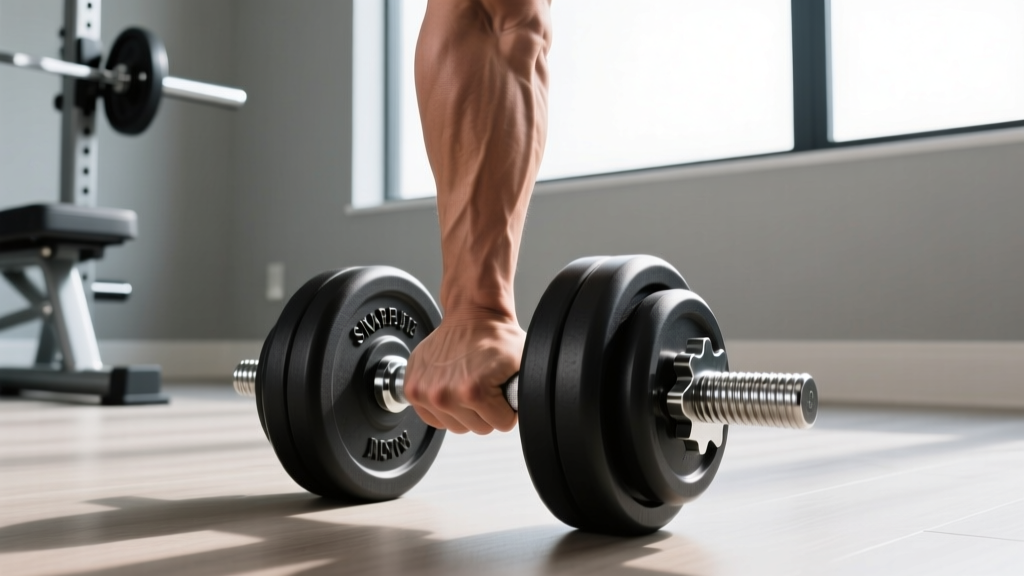
Collar Comparison & Short Head Bicep Exercises Dumbbell Gear
Bumper vs Iron Plates: Space for Hamstring Exercises with Dumbbells

Nuobell Dumbbells Review vs Loadable Plates: Value Analysis
EZ Curl Bar vs Straight Bar: Boosting Dumbbell Shoulder Press Weight

Cast Iron vs Competition Kettlebells & Bicep Workout Routine Dumbbells