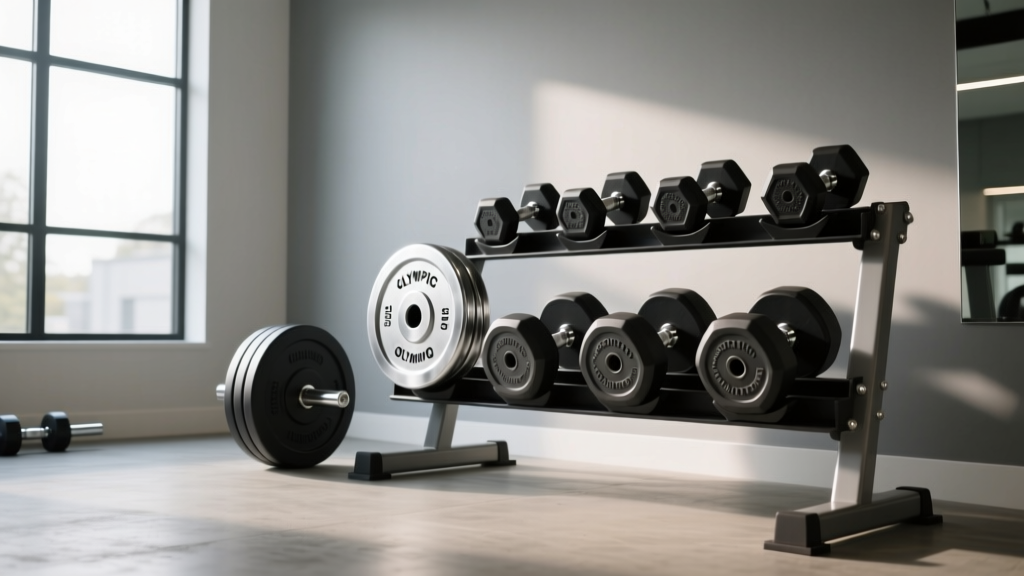
Olympic vs Standard Plates: Mistakes for Dumbbell Kickbacks & Lifts
Troubleshoot home gym mismatches. Learn the critical differences between Olympic vs standard weight plates and how they affect dumbbell kickbacks.

The 1-Inch vs. 2-Inch Catastrophe: Understanding the Core Difference
Building a home gym in 2026 often begins with a well-intentioned but fundamentally flawed purchase: the 'standard' weight plate starter kit. Many beginners assume all weight plates are universal, leading to a cascade of equipment mismatches, safety hazards, and severe limitations in exercise selection. The root of this issue lies in the center hole diameter and the corresponding barbell sleeve specifications.
According to the International Weightlifting Federation Technical Rules, true Olympic equipment mandates a precise 50mm (1.9685-inch) sleeve and plate hole. Standard equipment, largely a relic of mid-century budget manufacturing, utilizes a 1-inch (technically 1.0625-inch) aperture. This seemingly small dimensional variance dictates the entire trajectory of your strength training setup.
| Specification | Standard Plates | Olympic Plates |
|---|---|---|
| Center Hole Diameter | ~1.06 inches | 1.9685 inches (50mm) |
| Bar Sleeve Compatibility | 1-inch solid steel | 50mm machined steel |
| Weight Tolerance | +/- 5% to 10% | +/- 1% (Calibrated) |
| Max Load Capacity | ~300 lbs (before bar bend) | 1,500+ lbs |
| Average 2026 Cost | $1.20 - $1.50 / lb | $2.50 - $5.00 / lb |
The Isolation Trap: Troubleshooting Dumbbell Kickbacks
The most glaring troubleshooting nightmare involving standard plates arises not during heavy deadlifts, but during small-range isolation movements—specifically, dumbbell kickbacks. When beginners purchase a budget home gym bundle, it typically includes a standard barbell and a pair of 14-inch standard plate-loaded dumbbell handles. Attempting to use these handles for triceps kickbacks exposes severe biomechanical and clearance flaws.
The Standard Plate Forearm Strike
Proper dumbbell kickback form requires the torso to be hinged parallel to the floor, with the upper arm pinned tightly to the ribcage. As you extend the elbow into the concentric phase, the weight travels backward. A standard 14-inch dumbbell handle loaded with two 10-lb standard cast iron plates (which measure roughly 7.5 inches in diameter) creates a massive medial overhang. During full extension, the inner plate inevitably collides with your forearm, triceps, or latissimus dorsi. This collision forces the lifter to externally rotate the shoulder or flare the elbow, completely nullifying the isolation of the triceps long head and increasing the risk of rotator cuff impingement.
Why Olympic Dumbbell Handles Are Overkill
Realizing the standard handles are inadequate, some lifters attempt to upgrade to Olympic dumbbell handles. However, an empty Olympic dumbbell handle weighs between 12 and 15 lbs and features a thick 2-inch sleeve. For a targeted isolation exercise like the dumbbell kickback, where optimal working weights for many lifters range from 10 to 25 lbs, the empty handle's baseline weight is too high. Furthermore, the 2-inch sleeves require Olympic fractional plates to make micro-progressions, which are expensive and difficult to secure on short dumbbell sleeves without specialized locking collars.
Troubleshooting Fix for Kickbacks
If your home gym is anchored by standard plates for barbell work, do not use the included plate-loaded handles for dumbbell kickbacks. Instead, allocate $60-$90 to purchase a dedicated pair of fixed-weight urethane hex dumbbells (10-20 lbs) or invest in a compact adjustable system like the Nuobell 50lb set. The compact profile of fixed hex bells or block-style adjustables ensures zero medial clearance issues, allowing for a true, unobstructed peak contraction.
Barbell Sleeve Capacity and the 'Thick Plate' Bottleneck
Beyond isolation exercises, the most common structural mistake with standard weight plates is miscalculating barbell sleeve capacity. Standard barbells typically feature loadable sleeve lengths of only 11 to 13 inches. Because standard cast iron plates are exceptionally thick—a standard 25-lb plate can be up to 1.2 inches thick—you will physically run out of sleeve space long before you max out your physical strength.
For example, loading a standard bar with 200 lbs requires multiple thick plates per side, often leaving less than an inch of sleeve for the collar. If the collar slips during a heavy bench press, the plates will cascade off one side, causing a catastrophic bar flip. In contrast, as detailed in the Rogue Fitness Echo Bumper Plate specifications, high-density Olympic rubber and urethane plates are engineered to maximize weight-to-width ratios, allowing lifters to load 400+ lbs onto a standard 16.3-inch Olympic sleeve with ample room for a secure clamp.
Material Degradation and Wobble Troubleshooting
When troubleshooting equipment wobble and noise, the material composition of your plates is usually the culprit.
- Standard Painted Cast Iron: Prone to oxidation. As the paint chips, the iron rusts, leading to flaking debris on your gym floor. More importantly, the 1-inch center holes are often poorly machined, resulting in a 'wobble' effect when the plate spins on the barbell sleeve during dynamic movements like bent-over rows.
- Olympic Urethane: Urethane is a premium polymer that resists scratching, UV degradation, and moisture. High-quality Olympic plates feature press-fit steel inserts in the center hole. This steel-on-steel connection with the barbell sleeve eliminates wobble, reduces noise, and prevents the center hole from warping over years of heavy dropping.
- Standard Rubber-Coated: Often mistakenly sold as 'premium' standard plates, these feature a thin rubber shell over a concrete or low-grade iron core. They are notorious for emitting a persistent chemical off-gassing odor in enclosed home gyms and are highly susceptible to tearing at the center hole.
The 2026 Home Gym Plate Decision Matrix
To avoid buyer's remorse and equipment mismatches, use this troubleshooting matrix before finalizing your weight plate purchase:
- The 'Apartment Lifter' (Noise & Space Restricted): Avoid standard cast iron entirely. Purchase Olympic Urethane Plates. The dead-bounce and noise-dampening properties of urethane will save your flooring and neighborly relations, while the 50mm hole ensures compatibility with premium deadlift bars.
- The 'Budget Beginner' (Under $300 Total Budget): If you must buy Standard Cast Iron to afford a rack and bench, immediately plan your exit strategy. Use the standard plates for foundational pressing and squatting, but buy fixed hex dumbbells for accessory work like dumbbell kickbacks to bypass the clearance issues of standard handles.
- The 'CrossFit / Functional Fitness' Athlete: You need Olympic Bumper Plates. Standard plates will shatter your floor and your equipment when dropped from overhead. Ensure you are buying virgin rubber bumpers with a stainless steel insert to prevent the collar from tearing out during high-impact drops.
Final Verdict: Standardize Your System Early
The most expensive mistake in home gym ownership is buying into a 'dead-end' ecosystem. Standard weight plates offer a low barrier to entry but impose a hard ceiling on your progression, safety, and exercise versatility. By understanding the precise dimensional differences and recognizing how standard equipment fails during specific movements like dumbbell kickbacks, you can troubleshoot your current setup and make informed, biomechanically sound upgrades for your training future.
More gear to consider
All reviews
Cast Iron vs Competition Kettlebells Over an Aesthetic Dumbbell Set

Best Adjustable Dumbbells for a Hamstring Dumbbell Workout (2026)
Best Neoprene Dumbbells for Pull Day Dumbbell Workouts (2026)
Adjustable Dumbbells vs DIY Spray Paint Dumbbells: 2026 Review

Beginner Dumbbell Home Exercise Guide Using Neoprene Weights
