Olympic vs Standard Plates: 5kg Dumbbells & Bar Mistakes
Avoid costly home gym errors. Our troubleshooting guide covers Olympic vs standard plates, 5kg dumbbells compatibility, and barbell sleeve failures.

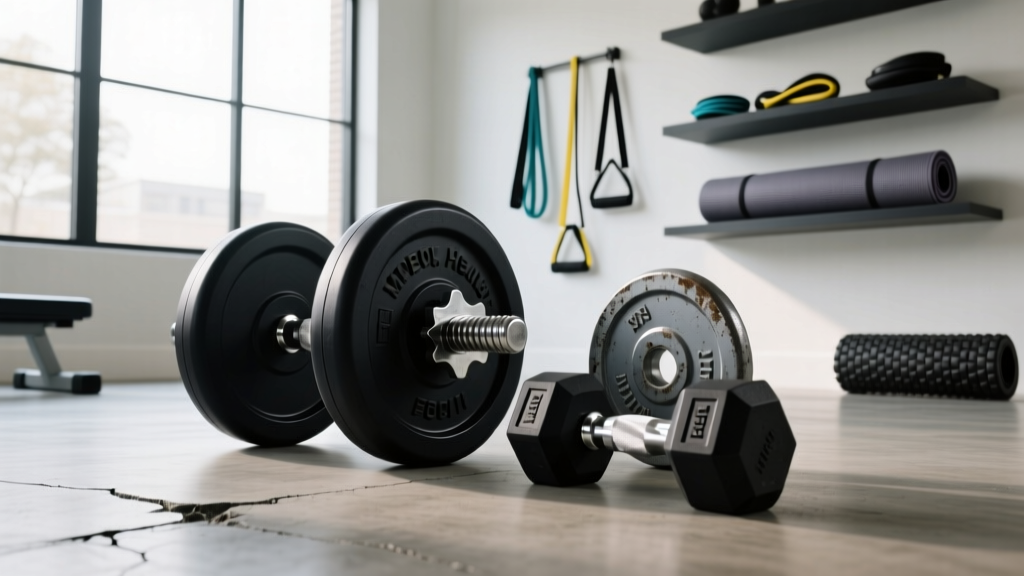
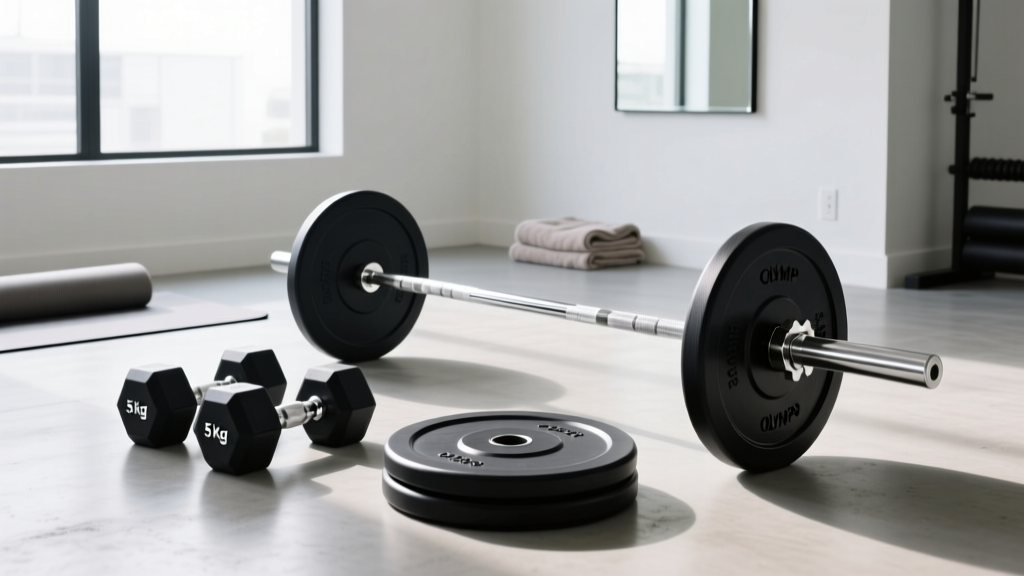
Building a home gym often starts with a seemingly simple purchase: a barbell and some weight plates. However, the fitness equipment industry is plagued by a confusing naming convention that leads to thousands of dollars in wasted, incompatible gear every year. The most common point of failure for beginners and intermediate lifters alike is misunderstanding the difference between Olympic and standard weight plates. This confusion becomes especially problematic when scaling down to lighter, precision implements—such as assembling DIY adjustable 5kg dumbbells for rehabilitation or isolation work.
In this troubleshooting guide, we will dissect the most frequent equipment mismatches, explain the metallurgy behind barbell failures, and provide actionable frameworks to fix your mismatched gear.
The "Standard" Misnomer: Decoding Hole Sizes
The root of 90% of home gym compatibility issues lies in the industry's use of the word "Standard." In the commercial and competitive lifting world, Olympic gear is the actual global standard. What retail stores label as "Standard" is essentially a legacy, budget-friendly size that lacks universal regulation.
💡 The Sizing Breakdown:• "Standard" Plates & Bars: Feature a 1-inch center hole. In reality, these bars usually measure exactly 25mm (0.98 inches) or 28mm (1.1 inches) depending on the manufacturer.
• Olympic Plates & Bars: Feature a 2-inch center hole. According to the International Weightlifting Federation (IWF) technical regulations, Olympic bar sleeves must measure exactly 50mm (1.96 inches) to ensure uniformity across global competitions.
Because "Standard" is not governed by a strict international body, a 1-inch plate from a budget Amazon brand might have a 26mm hole, while a cheaper solid steel bar might be a true 28mm. This results in a frustratingly tight fit or dangerous wobbling during lifts.
Mistake #1: The DIY 5kg Dumbbells Sleeve Clearance Failure
Many lifters rehabbing an injury or starting targeted isolation work need precise 5kg dumbbells (approximately 11 lbs). Buying a pair of fixed 5kg rubber hex dumbbells costs around $40 to $60 in 2026. To save money, lifters often opt for spinlock dumbbell handles and loose plates. This is where the standard vs. Olympic mistake ruins the setup.
The Clearance Math Problem
Let’s look at a real-world scenario. You purchase a standard 14-inch spinlock dumbbell handle (like the widely available CAP Barbell models, priced around $18). The usable sleeve space on each side of the handle is exactly 4.5 inches.
- A standard 1-inch cast iron 5kg plate is roughly 1.3 inches thick.
- You can fit three 5kg plates per side, plus the 1.5kg handle, giving you a maximum of 16.5kg per dumbbell.
The Mistake: You accidentally buy Olympic 5kg plates (50mm hole) thinking they will fit your standard 1-inch spinlock handle. They will not. Conversely, if you buy 2-inch Olympic dumbbell handles (like the Titan Fitness Olympic Spinlock pairs, ~$65), the sleeves are much longer (often 8 to 10 inches), but the thick steel collars take up significant space. If you try to use a 2-inch to 1-inch sleeve adapter to fit your cheap standard plates onto an Olympic handle, the adapter adds 1.5 inches of dead space, making it physically impossible to thread the spinlock collar securely.
⚠️ Troubleshooting Fix: If you are building adjustable 5kg dumbbells for light, high-rep work, commit entirely to the 1-inch Standard ecosystem. Buy 1-inch handles and 1-inch plates. Do not attempt to mix adapters into short spinlock sleeves; the loss of threading clearance will cause the collar to strip mid-set.Mistake #2: Overloading 1-Inch Bars (The Yield Point)
Another catastrophic mistake is buying "Standard" 1-inch weight plates for a 1-inch barbell, then attempting to lift heavy compound movements like squats or deadlifts.
According to safety guidelines outlined by the National Strength and Conditioning Association (NSCA), equipment must be rated for the loads it bears. Standard 1-inch barbells are typically made from lower-grade solid steel or hollow tubular steel.
"Hollow-core standard bars begin to exhibit plastic deformation (permanent bending) at loads as low as 150 lbs. Solid 1-inch steel bars will typically yield and bend permanently between 200 lbs and 250 lbs."
Once a 1-inch bar bends, it will never return to true center. This causes the bar to roll unpredictably on the floor and creates uneven loading on your joints. If you plan to lift more than 180 lbs, you must upgrade to an Olympic barbell (like the Rogue Ohio Bar, which boasts a 190,000 PSI tensile strength and handles over 1,500 lbs without permanent deformation).
Compatibility & Troubleshooting Matrix
Use this matrix to diagnose your current gear and identify exactly where your compatibility chain is broken.
| Equipment Type | Hole / Sleeve Size | Max Safe Load | Best Used For |
|---|---|---|---|
| Standard 1" Barbell | 25mm - 28mm | 200 lbs (Solid) | Light floor presses, youth lifting |
| Olympic Barbell | 50mm (2") | 700 - 1500+ lbs | Heavy squats, deadlifts, Olympic lifts |
| Standard Spinlock Handle | 25mm - 28mm | 45 lbs per handle | DIY 5kg dumbbells, light curls |
| Olympic Dumbbell Handle | 50mm (2") | 150+ lbs per handle | Heavy farmer walks, heavy rows |
Mistake #3: Ignoring Bumper Plate Drop Dynamics on Adapters
A frequent troubleshooting query we receive involves lifters trying to use Olympic bumper plates on standard 1-inch bars by using 2-inch to 1-inch sleeve adapters.
Why this fails: Bumper plates are designed to be dropped from overhead. The kinetic energy of a dropped 20kg bumper plate is absorbed by the dense rubber and dispersed through the 50mm Olympic sleeve and the bar's internal needle bearings. When you use a plastic or lightweight steel adapter to shrink a 50mm plate down to a 25mm standard bar, you create a massive leverage gap. The adapter acts as a fulcrum. Dropping bumper plates with adapters will snap the standard bar, shatter the adapter, and potentially crack the center hub of your expensive bumper plates. For a deeper biomechanical breakdown of load dispersion during drops, refer to the kinesiology archives at ExRx.net.
How to Salvage Mismatched Gear
If you have already made the mistake of buying mismatched Olympic plates and standard bars (or vice versa), here is your step-by-step triage plan:
- Assess the Adapter Route (For Static Lifts Only): If you have an Olympic bar but standard plates, you can buy 1-inch to 2-inch sleeve adapters (typically $25-$35 per pair). Rule: Only use these for controlled, static lifts like bench presses or floor presses. Never use adapters for dynamic movements or drops.
- Sell and Reinvest: If you own a 1-inch standard barbell and standard plates, but your goal is to squat or deadlift over 200 lbs, do not waste money on adapters. Sell the standard gear on local marketplaces (it holds high resale value for beginners) and invest in a certified Olympic bar and calibrated plates.
- Isolate the Dumbbell Ecosystem: Keep your standard 1-inch plates strictly dedicated to your 14-inch spinlock handles for building those precise 5kg dumbbells. Keep them in a separate storage bin to prevent accidental mixing with your Olympic floor gear.
Frequently Asked Questions
Can I drill out the center of a standard 1-inch plate to fit an Olympic bar?
Technically, yes, using a 2-inch diamond-tipped hole saw. Practically, no. Cast iron plates are brittle; drilling them at home often causes micro-fractures that lead to the plate shattering when dropped. Furthermore, the metal shavings will destroy the knurling and bearings of your Olympic bar. It is far more cost-effective to sell the standard plates and buy proper Olympic plates.
Are all 5kg dumbbells the same physical size?
No. A fixed 5kg rubber-coated hex dumbbell is compact and roughly 8 inches long. However, if you build a 5kg dumbbell using a 1-inch spinlock handle and two 2.5kg standard cast iron plates, the implement will be 14 inches long. This length discrepancy alters the moment arm during exercises like lateral raises, making the DIY version feel significantly heavier and more cumbersome than the fixed version.
What is the best storage solution for mixed gear?
If your home gym contains both ecosystems, invest in a dual-tier weight tree. Store Olympic plates on the top, heavy-duty 2-inch pegs, and standard plates on the lower 1-inch pegs. Never stack 1-inch plates directly against 50mm plates on the floor, as the uneven weight distribution can warp the cheaper standard plates over time.
More gear to consider
All reviews
Best Neoprene Incline Chest Press Dumbbells for Home Use
Cast Iron vs Competition Kettlebells & Dumbbell One Arm Push Press

Biceps and Triceps Workouts with Dumbbells: 2026 Urethane vs Rubber Hex Trends
Pull Up Alternative with Dumbbells: Neoprene vs. Hex in 2026

Olympic Barbell Knurling & Seated Dumbbell Triceps Extension Errors