Hex vs Urethane for the Dumbbell Rear Foot Elevated Split Squat
Optimize your home gym layout for the dumbbell rear foot elevated split squat. Compare rubber hex vs urethane for space, drop zones, and grip clearance.

The Spatial Demands of the Rear Foot Elevated Split Squat
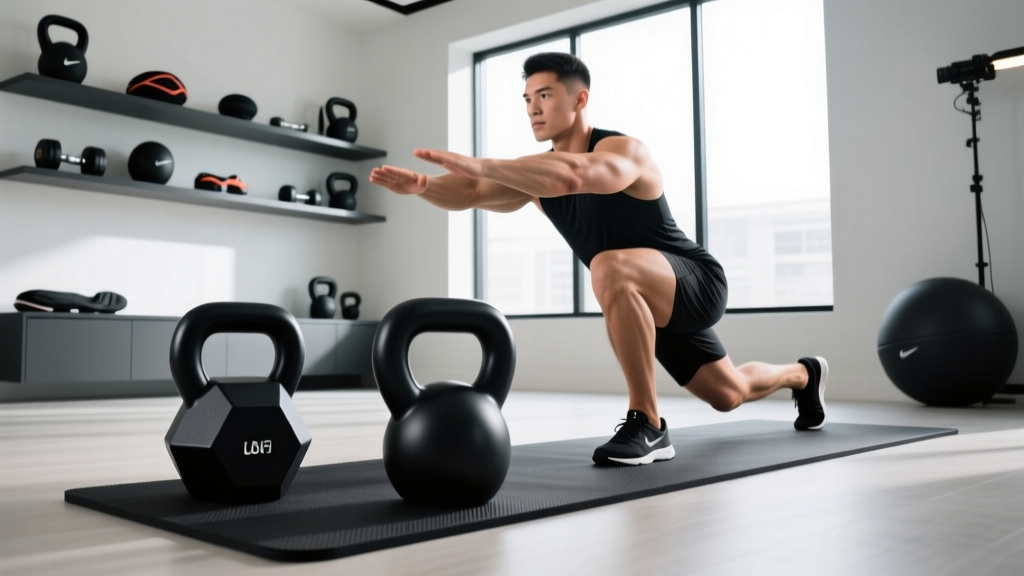
When designing a space-optimized home gym, every square inch of your floor plan matters. This is especially true when programming for high-footprint, unilateral movements. The dumbbell rear foot elevated split squat (often called the Bulgarian split squat) is a staple for building unilateral leg strength, but it demands a highly specific spatial layout. According to ExRx.net's biomechanical breakdown, this movement requires a stable elevated surface (usually a 16-to-18-inch flat bench) placed roughly two to three feet behind the working foot, alongside ample lateral clearance for heavy dumbbells.
But the layout challenge doesn't stop at the bench. The dumbbells you choose dictate your rack footprint, your drop-zone flooring requirements, and your lateral clearance during the eccentric phase of the lift. As of 2026, the debate between rubber hex and urethane dumbbells is no longer just about budget versus durability; it is fundamentally a question of spatial efficiency and biomechanical clearance in tight environments.
Rubber Hex vs. Urethane: Dimensional & Storage Footprint
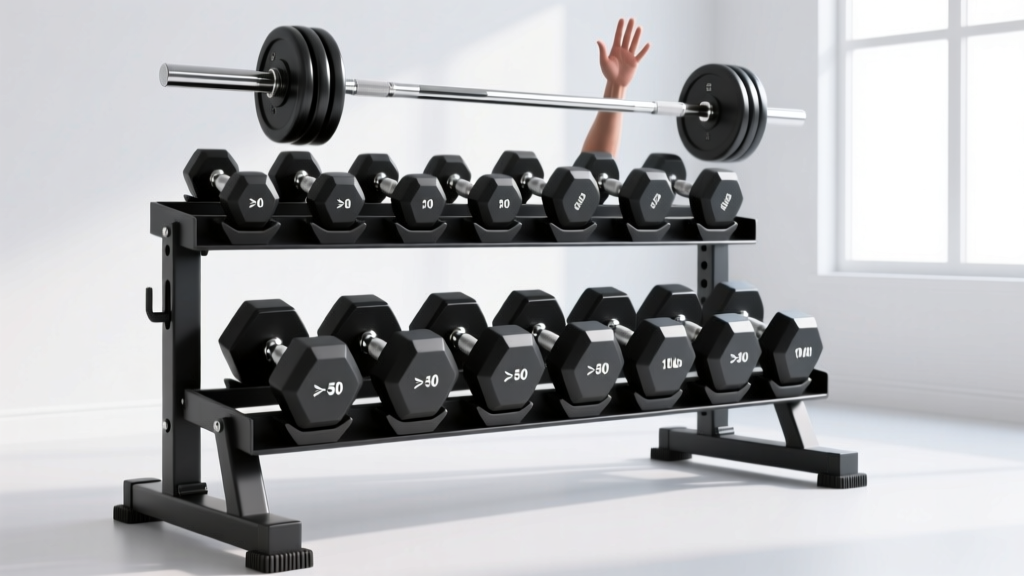
If you are outfitting a 10x10 spare bedroom or a narrow garage bay, the physical dimensions of your dumbbell heads will determine the size of the storage rack you need, which in turn impacts your walking paths and bench placement. Rubber hex dumbbells are notorious for their bulky, oversized heads. Urethane, by contrast, is a denser material, allowing manufacturers to mold significantly more compact heads for the exact same weight.
| Feature | Rubber Hex (e.g., Rogue / CAP) | Urethane (e.g., Rep Fitness / Rogue) |
|---|---|---|
| 2026 Average Price per Pound | $1.60 - $1.90 | $2.80 - $3.50 |
| Head Width (50 lb pair) | ~7.5 inches per head | ~6.2 inches per head |
| Rack Space (5-50lb Set, 3-Tier) | ~34 to 36 inches wide | ~28 to 30 inches wide |
| Drop Durability on 3/4" Mats | Moderate (Prone to tearing) | Exceptional (Virtually indestructible) |
| Odor / Off-Gassing | High (Requires weeks of airing out) | None (Zero VOCs) |
By choosing a premium urethane set, you can shave up to 6 inches off the width of your dumbbell rack. In a micro-gym layout, saving half a foot of rack width allows you to angle your bench at 45 degrees for the rear foot elevated split squat without blocking the doorway or impeding access to your power rack.
Biomechanics Meets Equipment: Grip Width and Shin Clearance
The intersection of equipment design and human biomechanics is where many home gym owners make costly mistakes. When performing the dumbbell rear foot elevated split squat with heavy loads (e.g., 70 to 100+ lbs per hand), you must hold the weights in a neutral grip at your sides.
💡 The Clearance Problem: If you are using bulky rubber hex dumbbells, the wide lateral profile of the 80lb or 90lb heads can physically graze your lateral thigh, knee, or shin during the deep eccentric stretch of the split squat. This forces the lifter to artificially flare the dumbbells outward or widen their stance, shifting the center of mass and reducing glute and quad engagement.Urethane dumbbells, such as those found in Rogue's Urethane line, feature a much tighter, streamlined profile. This compact design allows your arms to hang naturally, maintaining a plumb line directly through your shoulder and hip joints. For lifters with narrower hips or those who prefer a close, tucked stance to target the quads, urethane is functionally superior because it eliminates equipment-to-body interference at the bottom of the movement.
Designing the Drop Zone: Flooring and Layout
Let's address the reality of heavy unilateral training: when you reach failure on a heavy set of split squats, you are not going to gently place 90-pound dumbbells on the floor. You are going to drop them. The layout of your "drop zone" must be planned around the material properties of your gear.
Failure Modes: Hex vs. Urethane on Impact
- Rubber Hex Failure Mode: The vulcanized rubber used in budget hex dumbbells (like Rogue's standard Rubber Hex models) is susceptible to tearing at the steel-handle junction when dropped from waist height repeatedly. Over a 3-year period in a home gym, heavy drop-zone impacts will cause the rubber to separate, creating a wobbling hazard and ruining the aesthetic of your space.
- Urethane Resilience: Urethane is a high-density polyurethane elastomer. It absorbs kinetic energy and disperses it without tearing. You can drop 100lb urethane dumbbells from shoulder height onto 3/4" rubber stall mats hundreds of times with only minor cosmetic scuffing.
Layout Blueprint: For a dedicated split squat station, lay down a dedicated 4x6 foot, 3/4-inch thick vulcanized rubber mat directly in front of your bench. Position your dumbbell rack exactly one arm's length away from the edge of this mat. This ensures that when you pick up and drop the weights, you are doing so on the reinforced drop zone, protecting your subfloor or concrete slab from spalling.
Step-by-Step Layout Blueprint for a 10x10 Room
If you are optimizing a small 10x10 room for this specific movement, follow this spatial hierarchy to maximize flow and safety:
- Anchor the Rack: Place a compact 3-tier dumbbell rack against the longest unbroken wall. If using urethane, a 28-inch wide rack will suffice, leaving ample wall space for a mirror (crucial for tracking knee valgus during the split squat).
- Position the Drop Mat: Lay a 4x6' horse stall mat in the center of the room, offset slightly toward the rack to minimize carrying heavy weights over unprotected flooring.
- Align the Bench: Place a 12-inch wide, 48-inch long flat bench directly behind the drop mat. Ensure there is at least 24 inches of clearance behind the bench so you can easily walk around it to retrieve a dropped dumbbell without tripping.
- Verify Lateral Swing: Stand on the mat, hold your heaviest dumbbells, and simulate the split squat descent. Ensure you have at least 18 inches of lateral clearance on your left and right to account for natural arm swing and balance corrections.
Frequently Asked Questions: Space & Gear
Can I use adjustable dumbbells for the rear foot elevated split squat to save space?
Adjustable dumbbells (like Nuobell or PowerBlock) are the ultimate space-savers, eliminating the need for a rack entirely. However, they are generally not recommended for heavy drop-zone work. If you fail a rep at 80 lbs and must drop the weight, the internal plastic and steel pin mechanisms of adjustable dumbbells will shatter. If you choose adjustables to save space, you must commit to strict, controlled eccentrics and never drop them.
Does the hex shape actually prevent rolling better than round urethane?
Historically, yes. The hex shape was designed to stop dumbbells from rolling away on uneven garage floors. However, modern premium urethane dumbbells often feature a slightly flattened bottom edge or a multi-gon (12-sided) profile that prevents rolling just as effectively while maintaining a much smaller spatial footprint than a traditional wide hex.
Final Verdict: Which Material Wins for Space-Optimized Gyms?
If your primary constraint is strict budget and you have a large, unheated garage where off-gassing odors won't bother you, rubber hex dumbbells remain a viable, cost-effective workhorse. However, for the dedicated home gym owner optimizing a tight indoor space, urethane dumbbells are the undisputed champion.
The denser profile of urethane saves vital inches on your storage rack, the lack of VOCs keeps your indoor air quality pristine, and the superior drop-durability ensures your flooring layout remains intact. Most importantly, when you are deep in the hole of a heavy dumbbell rear foot elevated split squat, the compact heads of a urethane bell will clear your knees and thighs, allowing your biomechanics—not your equipment—to dictate the quality of your workout.
More gear to consider
All reviews
Best Neoprene Dumbbells for a Dumbbell Bench Press at Home 2026
Cast Iron vs Competition Kettlebells & Incline Dumbbell Row Angle
2026 Dumbbell Rack Trends: Storage for Men's Health Dumbbell Exercises
Heavy-Duty Storage & Racks for the Dumbbell Push Press Exercise

Neoprene Dumbbells: Incline Dumbbell Fly Muscles Worked & Guide
