Olympic Barbell Buying Guide: Weight, Knurling & the Dumbbells Candy Color Trend
Complete Olympic barbell buying guide covering weight specs, knurling patterns, tensile strength, and how the dumbbells candy color trend reshaped barbell finishes in 2026.

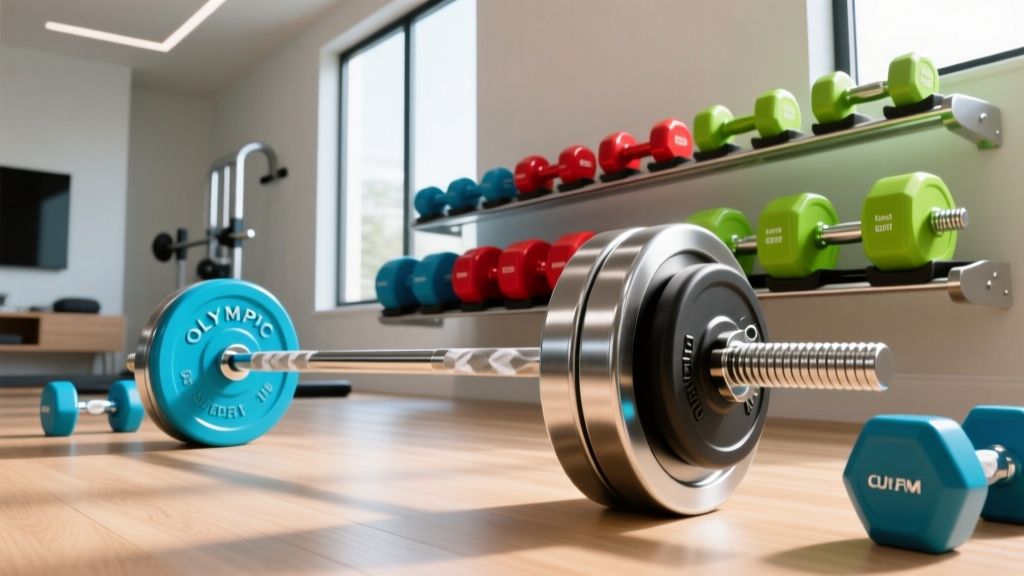
The free weights market has undergone a visual revolution. What started with the dumbbells candy trend — brightly colored neoprene and urethane-coated dumbbells in pastel pinks, electric blues, and vibrant purples — has cascaded into every corner of strength equipment. Today, Olympic barbells are no longer just chrome or black oxide. Cerakote finishes in candy-apple red, tungsten gray, and even magenta are mainstream options from major manufacturers. But beneath the aesthetic shift, the fundamentals of barbell selection remain rooted in weight tolerance, knurling precision, and tensile engineering.
This guide dissects every technical specification you need to evaluate before purchasing an Olympic barbell in 2026, whether you are outfitting a home gym or upgrading a commercial facility.
Olympic Barbell Weight Standards: What the Numbers Actually Mean
Every Olympic barbell sold by a reputable manufacturer must conform to dimensional tolerances established by the International Weightlifting Federation (IWF) or the International Powerlifting Federation (IPF). However, "Olympic" in the consumer market simply refers to the 50mm sleeve diameter — not necessarily competition certification.
Key Distinction: A bar stamped "Olympic" from a budget brand may have 50mm sleeves but fail every other IWF specification — including shaft diameter, sleeve length, and weight tolerance. Always verify the spec sheet, not the marketing label.Standard Weight Classes
| Bar Type | Nominal Weight | Shaft Diameter | Shaft Length | Sleeve Length | Total Length |
|---|---|---|---|---|---|
| Men's Olympic (IWF) | 20 kg / 44 lbs | 28 mm | 1310 mm | 415 mm | 2200 mm |
| Women's Olympic (IWF) | 15 kg / 33 lbs | 25 mm | 1310 mm | 320 mm | 2010 mm |
| Powerlifting (IPF) | 20 kg / 44 lbs | 29 mm | 1320 mm | 430 mm | 2200 mm |
| Junior / Technique | 10 kg / 22 lbs | 25 mm | Varies | Varies | 1500–1800 mm |
| Curl / Short Bar | 6–10 kg | 25–28 mm | Varies | Varies | 1200 mm |
Weight tolerance is where quality separates from mediocrity. Competition-certified bars from Eleiko and Uesaka guarantee ±10 grams of stated weight. Mid-range bars from Rogue and American Barbell typically hold ±50 grams. Budget bars under $200 can deviate by 200–500 grams — a meaningful difference when you are tracking progressive overload over months of training.
Knurling Patterns Decoded: Volcano, Mountain, and Hill
Knurling is the crosshatched pattern machined into the bar shaft that provides grip traction. It is arguably the single most tactile specification on any barbell, and personal preference plays a massive role. However, understanding the three dominant knurl geometries will help you narrow options before ever touching a bar.
The Three Knurl Profiles
Volcano Knurling features sharp, pointed peaks with deep valleys between them. Each individual diamond point bites into the skin aggressively. This pattern delivers maximum grip with minimal surface area contact, which paradoxically makes it feel less abrasive than you would expect — the sharpness grabs quickly without needing to squeeze harder. The Rogue Ohio Power Bar and the Kabuki Strength New Gen Power Bar both use volcano knurling. It is the gold standard for powerlifting where chalk-heavy, max-effort pulls demand absolute grip security.
Mountain Knurling has flattened peaks — imagine a volcano with its top sliced off. The broader contact surface distributes pressure across more skin, creating a "grippy but not punishing" sensation. This is the preferred pattern for high-volume training, Olympic weightlifting complexes, and any programming where your hands endure hundreds of reps per session. The Eleiko Sport Training Bar and American Barbell California Bar exemplify mountain knurling.
Hill Knurling (sometimes called "soft" or "mild" knurling) has very shallow, rounded peaks with minimal depth. It feels almost smooth to the touch. You will find this on technique bars, beginner bars, and bars designed for exercises where the bar contacts sensitive areas — think hip thrusts or front squats with a clean-grip position. The Rogue Bella Bar 15kg uses a moderately mild knurl that borders on hill geometry.
⚠️ Knurl Depth Warning: Knurl aggressiveness is not just about pattern type — depth of cut matters equally. A volcano knurl cut at 0.5mm depth will feel radically different from one cut at 1.2mm. Manufacturers rarely publish cut depth, so user reviews and hands-on testing remain the best verification method. Ask your retailer if they have a display bar you can grip before purchasing.Center Knurl: To Have or Not to Have
The center knurl is a 120–150mm band of knurling at the midpoint of the shaft. Its purpose is to grip the upper back during back squats and prevent the bar from sliding during front squats. IPF-specification power bars mandate a center knurl. IWF weightlifting bars do not include one, as the bar never rests on the back during competition lifts.
- Powerlifters: Center knurl is essential — it prevents bar slip during low-bar squats with loads exceeding 400 lbs.
- Olympic Weightlifters: Skip it. The center knurl will abrade the collarbone during front squats and cleans.
- General Fitness / CrossFit: A passive (mild) center knurl offers squat grip without tearing up your chest during front-rack work.
Tensile Strength, Yield Strength, and Why Whip Matters
Tensile strength measures the maximum stress the bar steel can withstand before fracturing, expressed in PSI (pounds per square inch). Yield strength measures the stress at which the bar permanently deforms — bends and does not return to straight. Both numbers matter, but they serve different evaluation purposes.
| Tensile Strength Range | Classification | Typical Use Case | Example Bars |
|---|---|---|---|
| Below 150,000 PSI | Budget / Entry | Light recreational lifting | Generic Amazon bars under $150 |
| 150,000–180,000 PSI | Mid-Range | Home gyms, moderate loads | Rep Fitness Excalibur, Titan Olympic |
| 180,000–210,000 PSI | High Performance | Serious training, heavy loads | Rogue Ohio Bar, American Barbell SS |
| 210,000+ PSI | Competition Grade | Elite powerlifting / weightlifting | Eleiko Competition, Uesaka Certified |
Whip refers to the elastic oscillation of the bar during dynamic lifts. A bar with high whip bends noticeably during the pull phase of a clean or deadlift and then rebounds, storing and releasing kinetic energy. Weightlifting bars intentionally use thinner shafts (25mm women's, 28mm men's) and specific steel alloys to maximize whip. Powerlifting bars use thicker shafts (29mm) and stiffer alloys to minimize whip — because oscillation during a heavy squat is destabilizing and dangerous.
If you train both Olympic lifts and powerlifts and can only buy one bar, target a 28.5mm shaft with 190,000 PSI tensile strength. This "multi-purpose" specification provides moderate whip suitable for cleans without being dangerously bouncy during squats. The Rogue Ohio Bar at $295–$345 has dominated this category for years and remains a benchmark purchase in 2026.
The Dumbbells Candy Color Effect: Barbell Finishes in 2026
The dumbbells candy aesthetic — vivid, saturated colors that transformed utilitarian gym equipment into visually striking pieces — has fundamentally altered consumer expectations for barbell finishes. In 2026, the finish options available on Olympic barbells extend far beyond the traditional chrome and black oxide.
Finish Comparison Matrix
| Finish Type | Corrosion Resistance | Aesthetic Options | Typical Price Premium | Durability Rating |
|---|---|---|---|---|
| Bare Steel | Very Low | Raw silver (patinas over time) | None (base price) | ★★☆☆☆ |
| Black Oxide | Low–Moderate | Matte black | +$0–$20 | ★★★☆☆ |
| Hard Chrome | High | Bright silver | +$30–$60 | ★★★★☆ |
| Decorative Chrome | Moderate | Mirror silver | +$10–$30 | ★★☆☆☆ |
| Zinc (Clear / Black) | Moderate–High | Silver or dark gray | +$20–$40 | ★★★☆☆ |
| Cerakote | Very High | 30+ colors (candy red, magenta, tungsten, etc.) | +$50–$120 | ★★★★★ |
| Stainless Steel (Shaft) | Very High | Natural silver, brushed finish | +$80–$150 | ★★★★★ |
Cerakote — a ceramic-polymer coating originally developed for firearms — has become the dominant premium finish in the barbell market, directly fueled by consumer demand for the candy-color aesthetic that started with dumbbells. Rogue Fitness now offers the Ohio Bar in over 15 Cerakote color options, including "Rogue Red," "Tungsten," and "Basil Green." The coating adds negligible thickness (0.001 inches) and does not fill in knurling, preserving grip quality while providing exceptional rust resistance even in humid garage gyms.
For buyers specifically chasing the dumbbells candy look in their barbell setup, Cerakote shafts paired with hard chrome sleeves offer the best visual-to-performance ratio. The contrast between a brightly colored shaft and polished silver sleeves creates a striking aesthetic without sacrificing the smooth sleeve rotation needed for Olympic lifts.
Bushing vs. Bearing: Sleeve Rotation Systems
The rotation system inside the barbell sleeve determines how smoothly the bar spins during dynamic movements. This specification is critical for Olympic weightlifting but largely irrelevant for powerlifting.
Bronze Bushings are self-lubricating cylindrical inserts that provide moderate, controlled sleeve rotation. They are durable, low-maintenance, and cost-effective. Bushing bars suit lifters who perform a mix of pressing, squatting, and occasional Olympic work. The Rep Fitness Double Bend Bar and Titan Fitness Olympic Bar both use bronze bushings and retail in the $170–$250 range.
Needle Bearings are small cylindrical rollers that allow extremely fast, low-friction sleeve rotation. They are the standard for competition weightlifting bars because the bar must spin rapidly during the turnover phase of cleans and snatches. Bearing bars cost significantly more — expect $500–$1,200 for quality models. The Eleiko NX Gen Training Bar and Rogue WL Bar use needle bearing assemblies.
Expert Insight: For 90% of home gym owners who are not competing in Olympic weightlifting, a quality bushing bar provides more than adequate sleeve rotation. Spending an extra $300+ on needle bearings is only justified if you regularly perform full snatch and clean-and-jerk cycles with loads above 80% of your one-rep max.
Practical Decision Framework: Which Bar Should You Buy?
Rather than defaulting to the most expensive or most popular option, use this three-question framework to narrow your selection:
Question 1: What Is Your Primary Training Modality?
- Powerlifting (squat, bench, deadlift): 29mm shaft, volcano knurling, center knurl, stiff whip, bushing or bearing. Budget: $280–$450. Top pick: Rogue Ohio Power Bar ($395).
- Olympic Weightlifting (snatch, clean & jerk): 28mm shaft (men) or 25mm (women), mountain knurling, no center knurl, high whip, needle bearings. Budget: $500–$1,100. Top pick: Eleiko Sport Training Bar ($725).
- CrossFit / General Fitness: 28.5mm shaft, moderate knurling, passive or no center knurl, moderate whip, bushings. Budget: $250–$350. Top pick: Rogue Ohio Bar ($295).
- Beginner / Technique Work: 25mm shaft, mild knurling, 15kg weight, bushings. Budget: $170–$280. Top pick: Rogue Bella Bar ($265).
Question 2: What Is Your Maximum Expected Load?
If you anticipate loading the bar beyond 500 lbs regularly, prioritize tensile strength above 190,000 PSI and verify the manufacturer's stated static load rating. Bars rated below 700 lbs static load should be avoided by any intermediate-to-advanced lifter. Budget bars with tensile strength below 150,000 PSI have been documented bending permanently under loads as low as 315 lbs when dropped from rack height — a failure mode reported in multiple independent barbell reviews by BarBend.
Question 3: What Is Your Storage Environment?
Garage gyms, basement setups, and any space without climate control demand high corrosion resistance. Bare steel and black oxide finishes will develop surface rust within weeks in environments with humidity above 60%. Cerakote and stainless steel are essentially rust-proof in residential conditions. If you are investing in the candy-color aesthetic through Cerakote, you are simultaneously solving your corrosion problem — a dual benefit that explains why this finish has captured over 40% of the premium barbell market by 2026.
Pricing Landscape: What You Should Actually Pay
| Tier | Price Range | Tensile Strength | Weight Tolerance | Finish Quality | Recommended For |
|---|---|---|---|---|---|
| Budget | $100–$199 | 120,000–150,000 PSI | ±200g or worse | Basic chrome or oxide | Light recreational use only |
| Value | $200–$349 | 150,000–190,000 PSI | ±50–100g | Zinc or Cerakote options | Serious home gyms |
| Performance | $350–$599 | 190,000–210,000 PSI | ±20–50g | Cerakote, hard chrome | Advanced lifters, small gyms |
| Competition | $600–$1,200+ | 210,000+ PSI | ±10g (IWF/IPF cert) | Premium Cerakote, stainless | Competitive athletes, commercial facilities |
The sweet spot for most buyers in 2026 is the Value-to-Performance overlap — bars in the $280–$400 range that offer 190,000 PSI tensile strength, Cerakote finish options, and ±50g weight tolerance. The Rogue Ohio Bar, American Barbell California Bar, and Rep Fitness Double Bend Bar all occupy this range and represent the highest value-to-quality ratio currently available.
✅ Bottom Line: Do not let the dumbbells candy color trend distract you from fundamentals. A Cerakote finish in your favorite color is a legitimate upgrade for corrosion resistance and aesthetics — but only after you have verified the knurling pattern, tensile strength, and rotation system match your training needs. Form follows function, even when the form looks spectacular.Frequently Asked Questions
Can I use a 20kg power bar for Olympic weightlifting?
Technically yes, but the 29mm shaft diameter and stiff whip make cleans and snatches uncomfortable and inefficient. The thicker shaft is harder to hook-grip, and the lack of whip removes the elastic energy assist during the pull phase. Dedicated weightlifters should invest in a 28mm bearing bar.
Does Cerakote affect knurling feel?
Cerakote coating thickness is approximately 0.001 inches (25 microns), which is thin enough to preserve knurling geometry completely. You will not notice any difference in grip feel between a Cerakote-finished shaft and the same shaft in bare steel. This is a verified specification from Cerakote's industrial application guidelines.
How often should I maintain my barbell?
Brush the knurling with a stiff nylon brush every 2–4 weeks to remove chalk buildup and skin debris. For bare steel and black oxide bars, apply a light coat of 3-in-1 oil monthly. Cerakote and stainless steel bars require only brushing — no oiling needed. Inspect sleeve end caps quarterly for loosening.
Are colored Cerakote bars just a trend, or will the finish last?
Cerakote was originally engineered for military firearms and is rated to withstand extreme temperature, chemical exposure, and abrasion. On a barbell, the finish will outlast the functional life of the bar itself under normal training conditions. The color will not chip, fade, or peel from standard use. It is a permanent finish, not a cosmetic overlay.
More gear to consider
All reviews
Olympic vs Standard Plates & How to Squat with Dumbbells for Glutes
Rubber Hex vs Urethane Dumbbells for Dumbbell Reverse Crunches
How to Train Forearms With Dumbbells & Barbell Collar Types
Best Loadable Dumbbells for Back Flys: 2026 Hands-On Review
Olympic vs Standard Plates: Best Brachialis Exercises with Dumbbells