Power Rack vs Squat Rack vs Stand for Compound Dumbbell Exercises
Compare power racks, squat racks, and squat stands for compound dumbbell exercises. Find the best 2026 setup for your home gym space, safety, and budget.

The Home Gym Evolution: Beyond the Barbell
As we navigate the fitness landscape in 2026, the home gym has evolved from a collection of folding benches and cheap resistance bands into a high-performance training sanctuary. While barbell training often dominates the conversation around weight racks, a massive subset of lifters are prioritizing heavy, unilateral, and bilateral compound dumbbell exercises. Whether you are programming heavy dumbbell step-ups, deficit reverse lunges, or supported single-arm rows, the structural backbone of your gym matters immensely.
But when it is time to invest in a rig, the terminology can be paralyzing. What exactly is the difference between a power rack, a squat rack, and a squat stand? More importantly, how do these three distinct structures impact your safety, footprint, and ability to perform compound dumbbell exercises effectively? This in-depth buying guide breaks down the engineering, safety profiles, and real-world applications of each setup.
Defining the Contenders
Before comparing specifications, we must establish clear definitions. The fitness industry often uses these terms interchangeably, but from an engineering and safety standpoint, they are entirely different beasts.
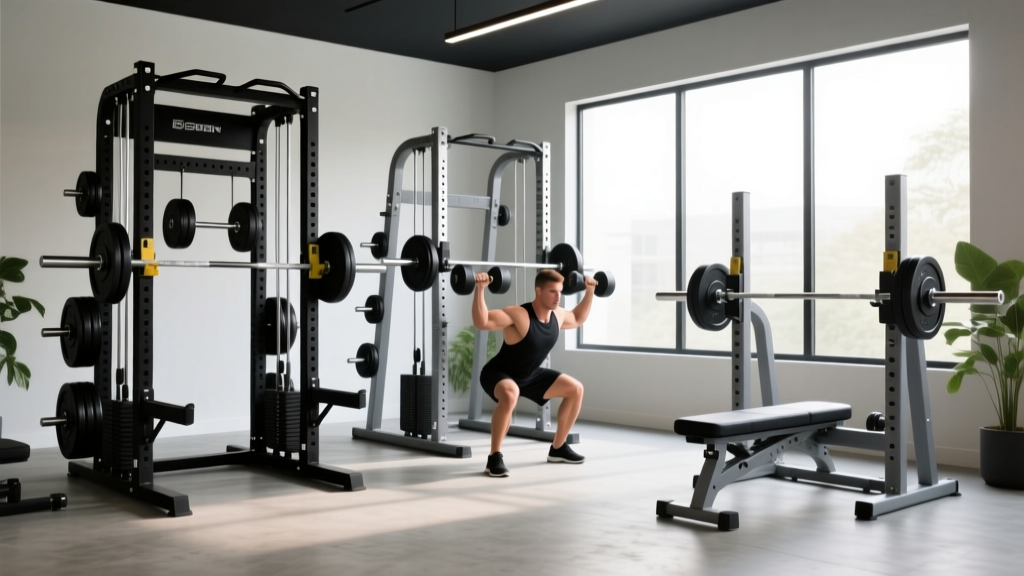
- Power Rack (Full Cage): A four-upright steel cage that fully encloses the lifter. It features adjustable J-cups for racking weights and safety spotter arms or straps that catch dropped loads inside the cage.
- Squat Rack (Half Rack): Typically a two-upright main frame with a rear stabilizing base and weight storage horns. It utilizes front-facing spotter arms that extend outward to catch missed lifts.
- Squat Stand: A minimalist setup consisting of two independent (or lightly braced) uprights. It lacks an integrated rear base or cage structure, relying heavily on floor bolting or rear plate storage for counterbalance.
The Secret Weapon for Compound Dumbbell Exercises
Most lifters assume racks are exclusively for barbell squats and bench presses. However, according to biomechanics principles highlighted by the National Strength and Conditioning Association (NSCA), the setup and execution of heavy dumbbell movements pose a unique risk to the lumbar spine during the pickup phase.
Expert Insight: The Waist-Height Pickup Trick
When performing compound dumbbell exercises like heavy walking lunges or Bulgarian split squats with 100+ lb dumbbells, picking the weights up from the floor to start your set places immense shear force on the lumbar discs. By utilizing a power rack or squat rack, you can set your J-cups to waist height, rest the dumbbells on the cups, and simply stand up with them. This eliminates the dangerous floor-clean and preserves your lower back for the actual working set.
Furthermore, racks provide essential anchor points for supported movements. Heavy single-arm dumbbell rows can be performed using the uprights for bracing, and rack pulls can be adapted for dumbbells by setting the safety pins just below the knee, allowing for a massive overload of the posterior chain without the grip limitations of pulling from the floor.
Head-to-Head Comparison Matrix
Below is a structured comparison of how these three rig types perform across critical metrics for the modern home gym owner.
| Feature | Power Rack | Squat Rack (Half) | Squat Stand |
|---|---|---|---|
| Average Footprint | 48 x 48 inches | 48 x 36 inches | 24 x 24 inches |
| 2026 Price Range | $500 - $2,500+ | $450 - $1,200 | $250 - $450 |
| Safety Mechanism | Internal Spotter Arms/Straps | External Catch Arms | Minimal / Spotter Arms |
| Attachment Ecosystem | Massive (Cables, Pulleys, Dip Bars) | Moderate (Pull-up bars, Band pegs) | Very Limited |
| Bolt-Down Required? | Recommended, but often freestanding | Highly Recommended | Absolutely Mandatory |
Deep Dive: Power Racks (The Full Cage)
Power racks are the gold standard for safety and versatility. In 2026, the baseline for a quality power rack is 11-gauge 3x3 inch steel with 5/8-inch hole spacing. Models like the Titan T-3 Power Rack (approx. $550) and the Rep Fitness PR-4000 (approx. $700) dominate the market due to their compatibility with cross-brand attachments.
Pros for Dumbbell Training
- Unmatched Safety: If you fail a heavy dumbbell floor press or a steep incline dumbbell press, the internal safety straps catch the weights without requiring a spotter.
- Cable Integration: Modern power racks often feature integrated cable crossover systems, allowing you to superset compound dumbbell exercises with constant-tension cable flyes or tricep extensions without moving across the gym.
- Weight Storage: Rear uprights double as plate storage, keeping heavy dumbbells and plates organized and acting as a counterbalance to stabilize the rig.
The Drawbacks
The primary limitation is spatial. A full cage requires a minimum ceiling height of 84 to 92 inches and consumes a significant portion of a standard garage. Furthermore, stepping into a cage can feel restrictive for sprawling movements like heavy dumbbell walking lunges, requiring you to step out of the rig to complete the exercise.
Deep Dive: Squat Racks (Half Racks)
Half racks offer a compelling middle ground. They provide the open-air feel of a stand with the stability and storage of a full cage. The Rogue RM-6 MonsterMini is a prime example of a premium half rack that utilizes heavy-duty 3x3 uprights and a robust rear plate storage base.
Pros for Dumbbell Training
- Open Floor Space: The open front allows for seamless transitions. You can grab your dumbbells from the waist-height J-cups and immediately drop into a set of goblet squats or front-rack lunges without navigating around cage uprights.
- Integrated Plate Storage: The rear weight horns are essential for balancing the rack when you are loading heavy dumbbells on and off external benches positioned just outside the rig.
The Drawbacks
External spotter arms can be a tripping hazard if left extended when not in use. Additionally, half racks generally lack the overhead cross-members required to mount heavy lat pulldown or cable crossover attachments, limiting your exercise library compared to a full cage.
Deep Dive: Squat Stands (The Minimalist Approach)
Squat stands, such as the Rogue SML-2C (approx. $395) or foldable wall-mounted options like the PRx Profile, are designed for severe space constraints. They consist of two uprights and a small footplate.
Critical Safety Warning
According to equipment safety analyses by Garage Gym Reviews, squat stands are inherently unstable if not bolted to a concrete slab. When performing compound dumbbell exercises where you might need to dump a weight backward or sideways, an unbolted squat stand can tip over, leading to catastrophic injury. Always use heavy-duty concrete wedge anchors or upgrade to a stand with a massive rear plate-loading base.
Pros for Dumbbell Training
- Maximum Freedom: With only two uprights, you have 360 degrees of open space. This is ideal for dynamic compound dumbbell exercises like alternating lateral lunges or multi-directional step-ups where spatial awareness is key.
- Portability: If you are building a gym in a multi-use space (like a shared garage or basement), stands can be folded away or moved into a corner in seconds.
The Drawbacks
Zero attachment compatibility, minimal safety catching mechanisms, and the absolute requirement for floor bolting. They are strictly for lifters who prioritize open space over modular gym expansion.
The 2026 Buying Decision Framework
To select the right rig for your compound dumbbell exercises, run your specific situation through this decision matrix:
- Evaluate Your Ceiling and Floor: If your ceiling is under 84 inches, eliminate standard power racks and look at short-frame squat stands or half racks. If you cannot drill into concrete, eliminate standard squat stands immediately.
- Assess Your Dumbbell Weight: If you routinely press or lunge with dumbbells exceeding 80 lbs per hand, the waist-height pickup trick is mandatory to protect your spine. This requires a rig with adjustable J-cups (all three types offer this, but power racks offer the safest drop zones if you fail).
- Consider Future Attachments: If you plan to add a cable pulley system for tricep and back isolation work within the next two years, you must purchase a power rack with 3x3 uprights and standard 5/8-inch or 1-inch hole spacing to ensure compatibility with the broader Rogue Fitness and Titan attachment ecosystems.
Final Thoughts on Rig Selection
Choosing between a power rack, a squat rack, and a squat stand is not just about where you put your barbell; it is about how you manage the biomechanics of your entire training program. For heavy compound dumbbell exercises, the ability to safely acquire the weight, perform the movement with spatial freedom, and safely dump the load if failure occurs is paramount. Invest in 11-gauge steel, respect the bolt-down requirements, and build a setup that supports your strength journey for decades to come.
More gear to consider
All reviews
EZ Bar vs Straight Bar: Value for a Whole Body Workout with Dumbbells

Are Dumbbells Enough? Top Neoprene Sets for Home Use (2026)
Barbell Collar Types Compared: Securing 10 Pound Dumbbell Plates

Barbell Collar & Clamp Types: Ivanko Dumbbells Set & Bar Safety

Olympic vs Standard Plates: Curing Wrist Pain From Dumbbell Curls
