
McGregor Dumbbell Troubleshooting: Fixing Collar Slip & Grip Errors
Fix common McGregor dumbbell issues. Learn to troubleshoot collar slippage, handle rotation friction, and loading mistakes for safer home gym lifts.

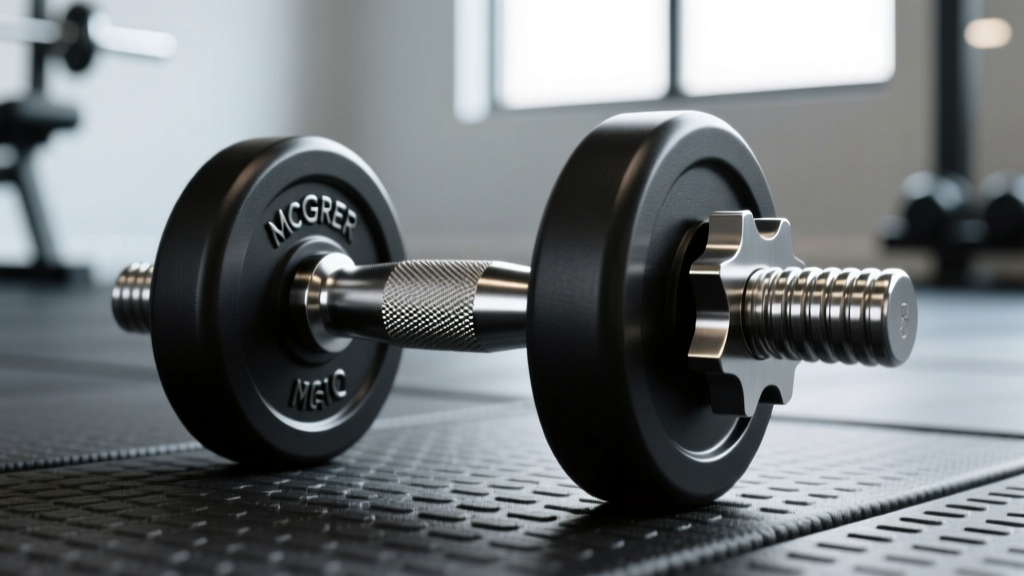
The McGregor dumbbell is highly regarded in specialty strength circles for its extended 18-inch loadable sleeve and ergonomic rotating grip. However, its boutique mechanical design introduces unique failure points that standard commercial hex dumbbells simply do not share. If you have noticed uneven rotation, collar slippage during heavy presses, or unexpected wrist strain during isolation movements, the issue rarely lies with your lifting form. Instead, it typically stems from improper maintenance of the internal bushing assembly or fundamental loading errors that alter the implement's center of mass. This guide provides exact, workshop-level troubleshooting protocols to restore your equipment to factory tolerances and correct the biomechanical mistakes compromising your lifts.
Mechanical Troubleshooting: Why Your McGregor Dumbbell Collar Slips
Unlike standard spring clips or bolt-on collars, the McGregor dumbbell utilizes a precision-threaded spin-lock mechanism backed by a high-density polyurethane friction ring. When this collar slips mid-set, it is almost never due to stripped threads. The culprit is usually microscopic chalk dust (magnesium carbonate) mixed with sweat, which forms an abrasive paste that degrades the friction ring and prevents the lock nut from seating flush against the weight plate.
Step-by-Step Collar Restoration
- Disassembly: Completely remove the spin-lock nut and the polyurethane friction ring from the sleeve.
- Solvent Bath: Submerge the lock nut in 90% isopropyl alcohol for 15 minutes to dissolve embedded oils and chalk binders.
- Thread Cleaning: Use a nylon thread-cleaning brush to scrub the male threads on the sleeve. Pay special attention to the root of the threads where dust accumulates.
- Friction Ring Inspection: Check the polyurethane ring for flat spots or compression set. If the ring measures less than 4.5mm in thickness (down from the factory 5.5mm), it must be replaced to maintain adequate clamping force.
- Reassembly: Wipe all components completely dry. Apply a micro-thin layer of dry graphite powder to the threads to reduce galling without attracting moisture.
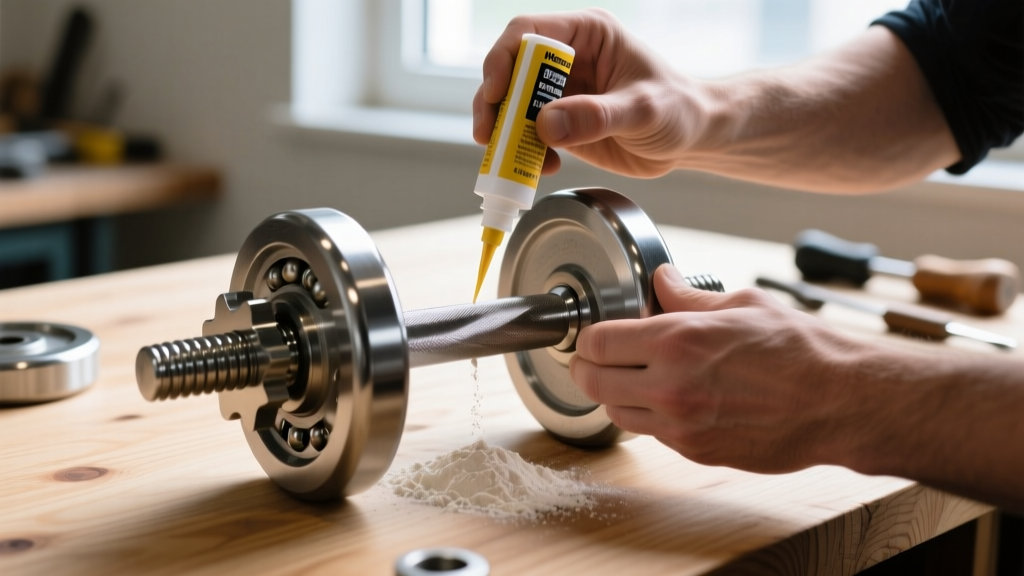
Rotating Handle Friction: Diagnosing the Bearing Assembly
The primary advantage of the McGregor dumbbell is its rotating handle, designed to reduce torque on the wrist during supination and pronation movements like hammer curls and Zottman curls. According to ExRx.net's kinesiology concepts, allowing the wrist to track naturally during rotational lifts significantly decreases the risk of triangular fibrocartilage complex (TFCC) injuries. However, when the handle seizes or feels 'gritty', lifters often make the critical mistake of spraying standard WD-40 into the sleeve gap.
Standard WD-40 is a solvent and water displacer, not a long-term lubricant. Worse, it leaves a sticky residue that acts as a magnet for airborne chalk dust, turning the internal bronze bushing into a grinding paste. To properly service a seized rotating handle, you must flush the assembly and use the correct dry lubricant.
The Proper Flushing and Lubrication Protocol
- Flush: Use a citrus-based degreaser or a dedicated brake parts cleaner sprayed directly into the gap between the rotating handle and the static sleeve. Rotate the handle continuously while spraying to expel the old, contaminated grease.
- Dry: Allow the assembly to air dry completely for at least two hours. Compressed air can accelerate this, but ensure the compressor has a moisture trap installed.
- Lubricate: Apply a PTFE (Teflon) dry lubricant spray. PTFE dries completely clean, leaving a microscopic friction-reducing film that will not attract chalk dust or pet hair from your gym floor.
Common Training Mistakes with the McGregor Dumbbell
Because the McGregor dumbbell features an extended 18-inch sleeve (compared to the standard 14-inch sleeve on most adjustable sets), the spatial distribution of weight changes dramatically. This altered center of mass requires specific loading strategies to prevent the 'pendulum effect' during pressing movements.
As noted in the Mayo Clinic's guidelines on resistance training safety, maintaining strict joint alignment and controlling the implement's center of gravity are paramount for preventing acute shoulder and elbow injuries. Below is a breakdown of the most frequent loading and handling errors.
| Common Mistake | Biomechanical Consequence | Actionable Correction |
|---|---|---|
| Loading large-diameter plates on the outer edges | Creates a wide pendulum effect, increasing rotational inertia and straining the rotator cuff during stabilization. | Load heavier, smaller-diameter plates (e.g., 5lb and 10lb iron) closest to the handle collar, placing larger bumper plates on the outside only if necessary. |
| Gripping off-center on the knurling | Causes asymmetric torque on the rotating bushing, leading to premature wear and uneven wrist loading. | Always align the webbing of your thumb with the center knurl mark. The extended grip area is for plate clearance, not for widening your hand placement. |
| Dropping the dumbbell on the collars | Bends the sleeve slightly (even by 1mm), causing the spin-lock nut to cross-thread and jam permanently. | Lower the dumbbell to the floor flat-side down. Never drop adjustable specialty dumbbells, regardless of the flooring material. |
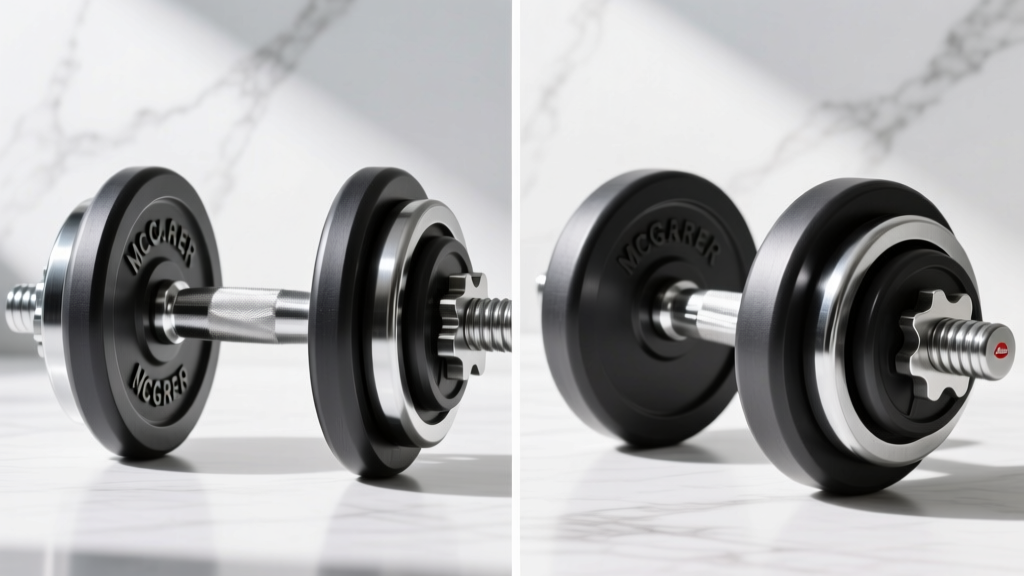
Preventative Maintenance Schedule
To ensure the longevity of your specialty equipment, implement this strict maintenance cadence. Commercial gyms often neglect adjustable implements, but in a home gym environment, a proactive schedule will keep the tolerances exact.
- Weekly (Post-Heavy Session): Wipe down the knurled handle with a damp microfiber cloth and a mild pH-neutral soap. This removes acidic sweat that accelerates zinc oxidation.
- Monthly: Inspect the polyurethane friction rings for compression set. Clean the male threads with a dry nylon brush to remove accumulated chalk.
- Bi-Annually: Perform the full PTFE flush and lubrication protocol on the rotating handle bearing assembly as detailed above.
- Annually: Check the sleeve for straightness by rolling it on a known flat surface (like a glass table or granite countertop). Any wobble exceeding 0.5mm indicates a bent sleeve requiring professional pressing or replacement.
Frequently Asked Questions
Can I use standard 1-inch Olympic plates on the McGregor dumbbell?
No. The McGregor dumbbell sleeve is machined to standard 1-inch (25.4mm) tolerances, designed for standard plates. Attempting to force 2-inch Olympic plates will damage the sleeve plating. If you require Olympic compatibility, you must use a specialized adapter sleeve, though this will drastically reduce the loadable sleeve length and alter the center of mass.
Why does my wrist still hurt if the handle rotates freely?
If the bearing is properly lubricated and rotating smoothly, wrist pain is likely a form issue rather than an equipment failure. Ensure you are not 'choking' the grip too tightly, which locks the carpal joints and prevents the wrist from naturally tracking the rotation. Relax your grip pressure slightly during the concentric phase of the lift to allow the rotating handle to do its intended biomechanical work.
How tight should the spin-lock collar be?
The collar should be tightened by hand until snug, followed by exactly one-quarter turn using a specialized spanner wrench or a firm grip with a rubber mallet. Over-tightening with metal tools will crush the polyurethane friction ring, causing it to lose its elasticity and fail to grip the weight plate securely.
More gear to consider
All reviews
Rack Setup: Beyond Exercises With Dumbbells To Lose Belly Fat

Urethane vs Rubber Hex: 2026 Gear for the NYT Dumbbell Workout

Nike Dumbbells vs Olympic & Standard Weight Plates: 2026 Guide
2026 Dumbbell Rack Trends: Storage and Dumbbell Hyperextension Flow
100lb Dumbbell Bench Press Plateaus: Olympic Barbell Knurling Guide
