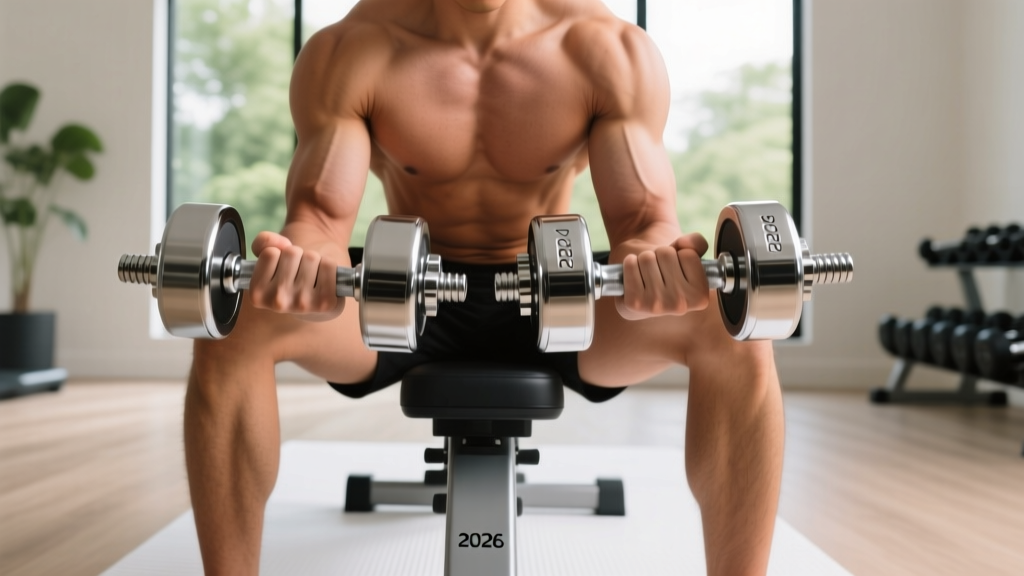
How to Use Dumbbells for Arms: Adjustable Setup & 2026 Review
Learn how to use dumbbells for arms with our complete adjustable setup walkthrough, 2026 model comparisons, and targeted bicep and tricep routines.

Building impressive arms at home requires more than just picking up any weight and curling. When learning how to use dumbbells for arms, the transition from fixed hex bells to space-saving adjustable models introduces unique biomechanical variables, setup requirements, and handling nuances. Adjustable dumbbells are engineering marvels, but their internal mechanisms demand proper installation and maintenance, especially when subjected to the high-rep, high-isolation demands of arm hypertrophy training.
In this comprehensive 2026 guide, we will walk you through the complete unboxing and installation process of premium adjustable dumbbells, compare the top models on the market, and provide expert biomechanical insights on how to adapt your bicep and tricep routines to accommodate adjustable handle designs.
The Complete Unboxing and Installation Walkthrough
Before you can execute a single bicep curl, your equipment must be correctly assembled and calibrated. The most common point of failure for adjustable dumbbells occurs during the initial setup, where users often overlook transit locks or misalign the base trays.
Step 1: Base Assembly and Transit Lock Removal
- Unboxing and Inspection: Carefully remove the dumbbells and cradles. Inspect the selector pins, dials, or pull-rods for any shipping damage.
- Removing Transit Security Ties: Models like the Nuobell 80 and PowerBlock Elite ship with heavy-duty zip-ties or steel pins locking the weight plates to the handle to prevent internal shifting during freight transit. Do not attempt to change the weight or lift the dumbbell before removing these locks. Forcing the selector mechanism while locked will strip the internal ABS plastic gears.
- Tray Calibration: If your model requires base assembly (common with Bowflex SelectTech 552), ensure the guide rails are free of debris. Snap the end-caps into place until you hear a definitive click. A misaligned tray will prevent the dumbbell from engaging the weight plates properly, causing a dangerous mid-rep plate drop.
Step 2: Selector Rod and Dial Testing
Place the dumbbell securely in the tray. Cycle through every weight increment from the lightest (usually 5 lbs) to the heaviest (50 to 80 lbs, depending on the model). Lift the dumbbell one inch off the tray at each increment to verify that all intended plates engage and no rogue plates are left behind. According to safety guidelines outlined by the American Council on Exercise (ACE), verifying equipment stability before isolation exercises is critical, as a dropped plate on a foot during a concentration curl can cause severe injury.
⚠️ Critical Setup Warning: Never drop adjustable dumbbells. Unlike solid cast-iron hex dumbbells, adjustable models contain precision alignment rods and plastic retaining clips. Dropping them, even from waist height during a heavy tricep extension failure, will bend the internal guide rods and permanently jam the weight selection mechanism.2026 Adjustable Dumbbell Comparison Matrix
Not all adjustable dumbbells are created equal, especially when it comes to arm training. The handle length, grip diameter, and weight block clearance drastically alter your range of motion (ROM). Below is our 2026 comparison of the top three models for arm isolation.
| Model | Max Weight / Pair Price (2026) | Handle Length & Design | Arm Training Suitability |
|---|---|---|---|
| Nuobell 80 | 80 lbs / ~$749 | 6.1' knurled steel, traditional profile | Excellent. Allows full supination and close-grip tricep work without block interference. |
| Bowflex 552 | 52.5 lbs / ~$399 | 5.5' grip, 16.9' total length | Moderate. The long total length causes weight blocks to collide during hammer curls and close-grip presses. |
| PowerBlock Elite USA | 50 lbs / ~$419 | 4.5' grip, enclosed cage design | Poor for wrists. The cage restricts wrist extension during skull crushers and overhead tricep extensions. |
Biomechanics: How to Use Dumbbells for Arms with Adjustable Models
Understanding the biomechanics of arm muscles is essential when adapting to adjustable equipment. The National Strength and Conditioning Association (NSCA) emphasizes that maximizing muscle fiber recruitment in the biceps brachii requires full supination (rotating the palm upward) during the concentric phase of a curl. However, the physical dimensions of adjustable dumbbells can either facilitate or hinder this movement.
Bicep Curls and the Supination Challenge
When performing twisting dumbbell curls, the weight blocks on longer adjustable models (like the Bowflex 552) can clash together at the top of the movement if your hands are close to your body. To adapt your technique and learn how to use dumbbells for arms effectively with longer models:
- Widen your starting stance and grip: Keep your elbows slightly flared or start with a wider shoulder-width gap to prevent the plastic housings from colliding at peak contraction.
- Utilize Unilateral Isolation: Perform one-arm preacher curls or concentration curls. This completely eliminates the spatial interference of the non-working dumbbell and allows you to focus purely on the brachioradialis and bicep peak contraction.
- Offset Grip Loading: If your adjustable model allows (like the Nuobell), grip the handle slightly off-center toward the pinky side. This increases the rotational torque on the bicep, forcing harder supination and greater muscle activation without needing heavier absolute loads.
Tricep Extensions and Cage Clearance
The triceps brachii make up roughly two-thirds of your upper arm mass. Targeting the long head of the tricep requires overhead extension movements. If you are using cage-style adjustable dumbbells (like PowerBlock), the enclosure can dig into your forearms or restrict wrist flexion during overhead extensions and skull crushers.
According to exercise biomechanics data cataloged by ExRx.net, the long head of the tricep is maximally stretched and activated when the shoulder is flexed overhead. If your dumbbell cage restricts the wrist from achieving a neutral or slightly extended position, you will inadvertently shift the load to the lateral head and elbow joint, reducing hypertrophic stimulus and increasing injury risk.
The Fix: For overhead tricep extensions with cage-style or bulky adjustable dumbbells, switch to a neutral-grip French press (holding one heavier dumbbell vertically with both hands) rather than attempting dual-dumbbell skull crushers. This bypasses the wrist clearance issue while maintaining high tension on the tricep long head.
Maintenance Protocols for Heavy Arm Training
Arm training often involves high-repetition drop sets and rapid weight changes, which accelerates wear on the selector mechanisms. To ensure your equipment survives your 2026 arm-blasting routines, implement the following maintenance schedule:
- Monthly Guide Rod Lubrication: Wipe down the stainless steel guide rods with a microfiber cloth and apply a light coat of 100% silicone spray. Do not use WD-40 or petroleum-based oils, as these will attract iron dust and degrade the internal ABS plastic retaining clips.
- Knurling Deep Clean: Sweat and chalk accumulate rapidly in the handle knurling during high-rep bicep sets. Use a stiff nylon brush and a mild degreaser weekly to prevent rust and maintain grip security during heavy hammer curls.
- Dial Tension Checks: If the adjustment dial feels loose or fails to click into the 2.5 lb micro-increments, check the base tray alignment. A warped tray causes the dial stem to bind against the housing.
Frequently Asked Questions
Can I do drop sets for arms with adjustable dumbbells?
Yes, adjustable dumbbells are arguably the best tool for arm drop sets. Because arm isolation exercises (like lateral tricep extensions or spider curls) require rapid weight reduction to push past muscular failure, the 2-to-3 second weight change time of models like the Nuobell or Bowflex allows you to maintain metabolic stress without leaving your bench to swap fixed dumbbells.
Why do my wrists hurt during hammer curls with adjustable dumbbells?
Wrist pain during hammer curls is often caused by the wider weight distribution of adjustable models compared to compact hex dumbbells. The extended length of the weight blocks shifts the center of gravity outward, increasing the lever arm and placing higher torque on the radiocarpal joint. To mitigate this, ensure your wrist remains strictly neutral (straight) and consider using wrist wraps for sets exceeding 40 lbs per hand.
Are adjustable dumbbells safe for heavy tricep kickbacks?
They are safe, but the bulky weight blocks can bump against your torso or ribs at the bottom of the movement arc. To fix this, hinge deeper at the hips and allow the dumbbell to travel slightly behind your ribcage before initiating the concentric squeeze, ensuring a full range of motion without physical obstruction.
More gear to consider
All reviews
Power Rack vs Squat Stand: Single Arm Dumbbell Lateral Raise Space

Olympic vs Standard Plates: Why Add a 30 lb Dumbbell Set?

Power Rack vs Squat Rack vs Squat Stand: Alternated Dumbbell Shoulder Press Guide
Beyond the Dumbbell Wall: EZ Curl Bar vs Straight Bar Comparison

Best Neoprene Sets to Curl 50 lb Dumbbells at Home (2026 Guide)
