
Loadable Dumbbells: Space Layouts & Lat Pulldown With Dumbbells
Maximize your home gym footprint with loadable dumbbells. Learn space-saving layouts, top interchangeable plate models, and the lat pulldown with dumbbells.

For home gym owners battling limited square footage, the traditional equipment paradigm is broken. A standard 5-to-50-pound fixed rubber hex dumbbell set requires a tiered rack that consumes over 12 square feet of floor space and weighs upwards of 550 pounds. Meanwhile, cable towers—essential for vertical pulling movements—demand a massive 4x6 footprint and a heavy counterweight base. As we navigate the home fitness landscape in 2026, the ultimate solution for high-density training is the loadable dumbbell with interchangeable plates. These systems compress an entire dumbbell rack into a 1.5-square-foot footprint, freeing up vital real estate for functional movement and specialized biomechanical setups.
In this guide, we will break down the spatial mathematics of interchangeable plate systems, review the top compact models on the market, and detail exactly how to engineer a compact layout that allows you to perform a biomechanically accurate lat pulldown with dumbbells—without needing a bulky cable pulley system.
The Footprint Math: Fixed vs. Interchangeable Plates
When designing a micro-gym or converting a spare bedroom, every inch matters. The primary advantage of a loadable dumbbell system is the decoupling of the handle from the mass. By utilizing interchangeable steel or urethane plates, you only store the exact weight you need for that specific set. Below is a comparative analysis of spatial requirements and 2026 market pricing for different back-day equipment setups.
| Equipment Type | Max Weight (Per Hand) | Floor Footprint | Approx. Cost (2026) |
|---|---|---|---|
| Fixed Hex Set (5-50 lbs) | 50 lbs | 12 - 15 sq ft | $800 - $1,200 |
| Loadable Dumbbell Kit (e.g., Ironmaster) | 45 - 120 lbs | 1.5 sq ft | $399 - $650 |
| Cable Tower / Functional Trainer | 200+ lbs stack | 24+ sq ft | $1,500 - $3,500 |
By switching to a loadable system, you reclaim up to 13 square feet of floor space. This reclaimed space is critical for setting up the specialized bench angles required for free-weight cable substitutions, such as the dumbbell lat pulldown.
Top Loadable Dumbbell Systems for Micro-Gyms
Not all interchangeable plate systems are created equal when it comes to spatial efficiency and plate-swapping mechanics. Based on current 2026 testing data and authoritative reviews from Garage Gym Reviews, here are the top contenders for tight layouts.
1. Ironmaster Quick-Lock V2 (The Heavy-Duty Standard)
The Ironmaster Quick-Lock V2 is the gold standard for durability. Measuring just 14.5 inches long, 8 inches wide, and 8 inches high, it mimics the footprint of a standard fixed dumbbell. It uses a screw-in locking pin mechanism that takes roughly 10-15 seconds to swap plates. While slightly slower than dial systems, the zero-fail mechanical lock allows for heavy floor work and drop-sets without fear of plates dislodging. The base 45lb kit starts around $399, with add-on kits pushing the capacity to 120 lbs per hand.
2. Nuobell 80lb Adjustable (The Traditional Feel)
Nuobell utilizes a twist-dial mechanism with genuine steel interchangeable plates. At 17 inches in length, it is slightly longer than the Ironmaster, which can occasionally interfere with tight rack positions or specific bilateral movements. However, the traditional rounded handle and knurling make it a favorite for high-rep hypertrophy work. Priced around $549 for the 80lb set, it offers rapid weight changes (under 2 seconds) which is ideal for tight rest-pause protocols in small spaces.
3. PowerBlock Elite EXP (The Ultra-Compact Block)
Measuring a mere 12 x 6 x 6 inches, the PowerBlock Elite EXP is the most spatially efficient loadable system on the market. The cage-like block design houses the interchangeable plates internally. While the blocky geometry restricts certain movements (like deep goblet squats), it is unparalleled for tight apartment gyms. The base model expands from 5-50 lbs, with expansion kits available up to 90 lbs.
Biomechanics: The Lat Pulldown With Dumbbells
The most common complaint from home gym owners ditching cable towers is the loss of vertical pulling. The latissimus dorsi functions primarily in shoulder extension (pulling the arm down from overhead) and shoulder adduction (pulling the arm in toward the torso). A cable lat pulldown relies on vertical adduction against upward resistance. Because gravity only pulls straight down, you cannot perform a true standing vertical pulldown with free weights. However, by manipulating your body angle relative to gravity, you can execute a highly effective lat pulldown with dumbbells.
Biomechanical Insight: According to exercise kinesiology principles outlined by the ExRx Kinesiology Directory, to mimic a vertical cable pull using free weights, the torso must be positioned parallel to the floor. This aligns the gravitational pull vector with the cable's resistance vector.
The Prone Incline Dumbbell Pulldown (Step-by-Step)
This is the closest biomechanical substitute for a cable lat pulldown using loadable dumbbells. It isolates the lats through shoulder extension while removing lower-back fatigue.
- Bench Setup: Set an adjustable bench (like the Rep Fitness AB-3100 2.0) to a 30-degree or 45-degree incline.
- Positioning: Lie chest-down (prone) on the bench. Let your arms hang straight down toward the floor holding your loadable dumbbells. This is your starting position.
- The Pull: Initiate the movement by driving your elbows up and back toward the ceiling, squeezing your shoulder blades together. Keep the dumbbells close to your ribcage.
- The Eccentric: Slowly lower the dumbbells back to the dead-hang position, feeling a deep stretch in the lats. Perform 3 sets of 10-12 reps.
The Heavy Dumbbell Pullover
For shoulder extension (the other primary function of the lats), the dumbbell pullover is unmatched. Lie perpendicular across a flat bench, supporting only your upper back. Grasp a single heavy loadable dumbbell (e.g., 60-80 lbs) by the inner plates with both hands. Lower the weight backward over your head until you feel a deep lat stretch, then pull it back over your chest using your lats, not your triceps. The American Council on Exercise (ACE) notes that pullovers engage the latissimus dorsi and serratus anterior heavily, making it a staple for free-weight back days.
Space Layout Pro-Tip: The 6x6 Compact Zone
To comfortably execute the Prone Incline Pulldown and heavy Pullovers, you need a dedicated 6x6 foot clear zone. Store your adjustable bench folded flat against the wall when not in use. Keep your loadable dumbbell handles and interchangeable plates on a low-profile steel storage tray (approx. 18" x 12") tucked under the bench. This keeps the center of the room entirely open for dynamic movements and ensures you never trip over loose steel plates.
Clearances and Safety for Interchangeable Plates
When designing your layout, you must account for the 'swap zone'. Unlike fixed dumbbells, loadable dumbbells require physical manipulation to change weights.
- Spin-Lock Handles: Require 3-4 inches of clearance on the ends of the handle to slide plates on and twist the collar. Ensure your storage tray is not pushed flush against a wall.
- Lever-Lock / Screw-Pin (Ironmaster): Requires overhead clearance to align the pin. Do not store these on high shelves where you cannot safely thread the locking mechanism.
- Drop Zones: Never drop loadable dumbbells. The interchangeable plates and locking pins can warp or shatter upon impact with hard flooring. Always invest in 3/4-inch thick horse stall mats to protect both your equipment and your subfloor.
Frequently Asked Questions
Can I use loadable dumbbells for drop sets?
Yes, but it requires spatial planning. If you are using a screw-pin system like Ironmaster, drop sets are slow. For rapid drop sets in a compact space, dial-based interchangeable systems like Nuobell or PowerBlock are superior, allowing you to shed 10-15 pounds in under two seconds without fumbling with loose plates on the floor.
Are loadable dumbbells safe for bench pressing?
Absolutely. High-quality loadable dumbbells with secure locking mechanisms (like the Ironmaster Quick-Lock V2) are rated for heavy bench pressing. However, because they cannot be dropped safely, ensure your adjustable bench is positioned in the center of your 6x6 layout so you can safely guide the dumbbells to your thighs at the end of a heavy set.
How much space do the loose plates take up?
A full set of interchangeable plates for a 45lb loadable kit typically fits onto a single compact storage peg or a small 12x12 inch steel tray. This is drastically smaller than the 4-foot tiered rack required for fixed hex dumbbells, making it the undisputed king of space optimization.
More gear to consider
All reviews
Shoulder Exercises with Dumbbells: Neoprene Home Mistakes & Fixes

2026 Gym Trends: Bumper vs Iron Plates and French Press Dumbbells
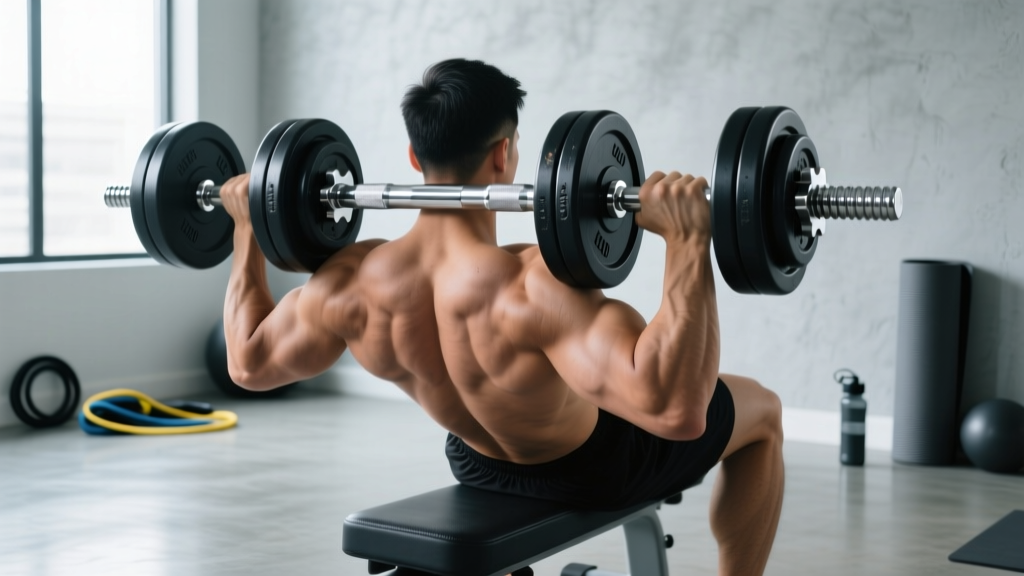
Best Trap Exercises With Dumbbells: Top Loadable Picks 2026
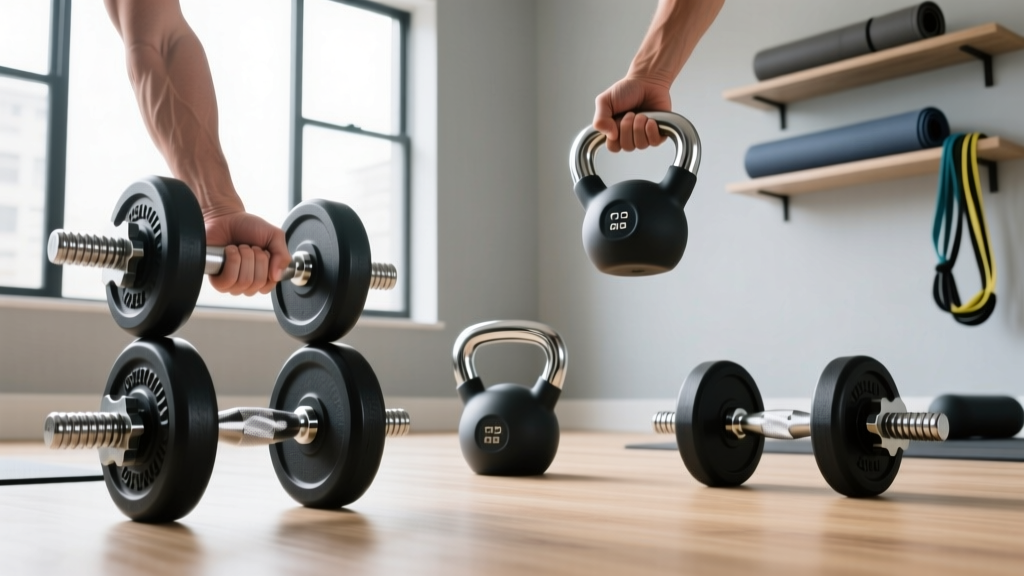
Dumbbell and Kettlebell Workout Upgrade: Barbell Weight & Knurling
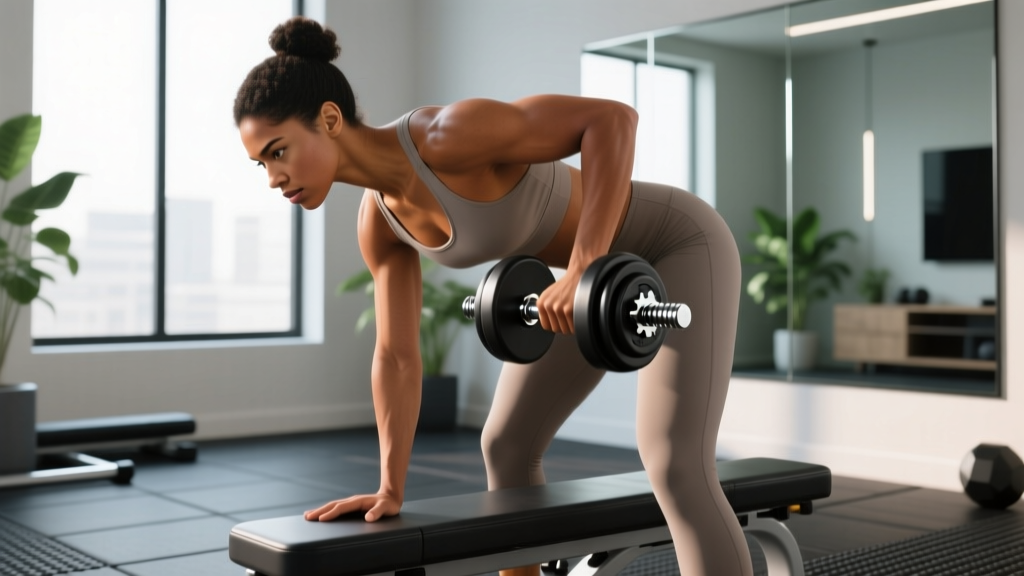
Dumbbell Row to Tricep Kickback: Adjustable Weight Mistakes & Fixes
