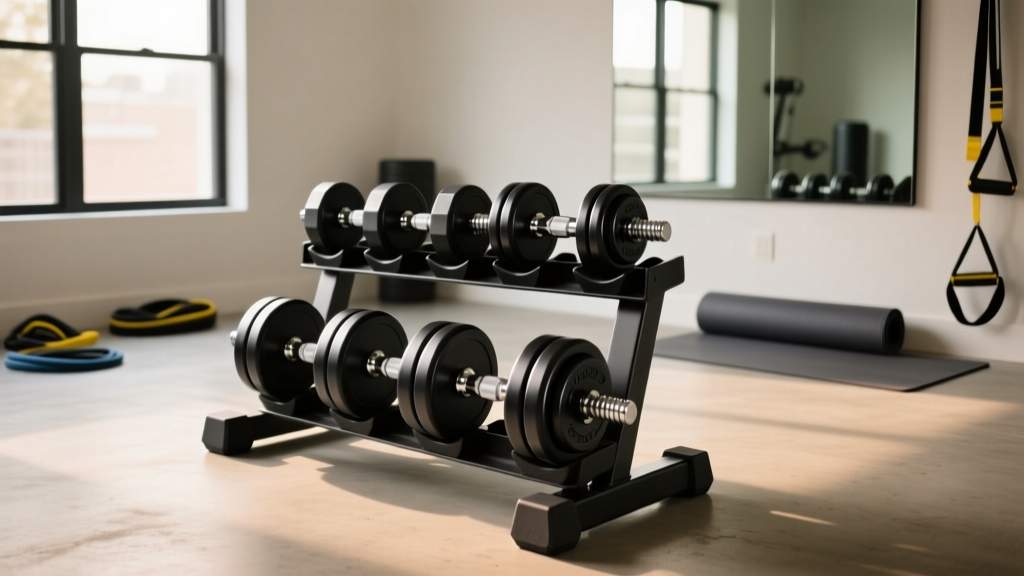
Loadable Dumbbell Care for Your Heavy Push Day Dumbbell Workout
Protect your gear during high-volume push day dumbbell workouts. Expert loadable dumbbell maintenance, rust prevention, and thread lubrication tips.

The Biomechanical and Environmental Toll of Push Day
When programming a high-volume push day dumbbell workout, the focus is usually on muscle hypertrophy, mechanical tension, and metabolic stress. You are likely cycling through incline presses, flat chest flyes, overhead shoulder presses, and tricep extensions. However, from an equipment longevity perspective, push day is arguably the most destructive session in a standard push/pull/legs split.
Unlike pull days, where your hands are primarily gripping and pulling, push day generates massive amounts of palmar sweat that drips directly onto the knurled handles of your dumbbells. Furthermore, the nature of push day programming often requires rapid load adjustments. If you are performing mechanical drop sets on lateral raises or stripping weight for rest-pause sets on the incline press, the collars and threads of your loadable dumbbells with interchangeable plates endure accelerated friction, cross-threading risks, and moisture exposure.
⚠️ Critical Warning: Sweat contains high concentrations of sodium chloride (salt) and urea. When left to dry on cast iron or steel knurling, it initiates an oxidation reaction that can cause irreversible pitting within 48 hours. According to equipment maintenance guidelines outlined by Garage Gym Reviews, failing to neutralize sweat acids is the number one cause of premature handle degradation in home gyms.Understanding Your Collar System: Spin-Lock vs. Quick-Lock
Loadable dumbbells generally fall into two categories, each requiring a distinct maintenance approach to survive a grueling push day dumbbell workout.
1. Traditional Spin-Lock Collars (e.g., Yes4All, CAP Barbell)
Spin-lock systems rely on a threaded steel bar and a matching threaded nut. They are highly affordable (typically $120–$160 for a 100lb pair) but are incredibly vulnerable during fast-paced drop sets. When you are rushing to strip 10lbs off each side for a burnout set of skull crushers, the temptation to force the collar on at an angle is high.
- Failure Mode: Cross-threading. Forcing a misaligned nut strips the zinc or chrome coating and damages the underlying steel threads, eventually rendering the dumbbell unsafe for heavy overhead pressing.
- Maintenance Fix: Apply a light coat of white lithium grease or 3-IN-ONE silicone spray to the bar threads once a month. Never use heavy motor oil, as it attracts dust and chalk, creating an abrasive paste that grinds down the threads.
2. Quick-Lock / Star-Lock Systems (e.g., Ironmaster Quick-Lock V2, Titan Fitness)
Premium loadable dumbbells like the Ironmaster Quick-Lock V2 (retailing around $349–$399) use a drop-in pin or a twisting star-lock mechanism. These are vastly superior for push day workouts because they allow for 5-second weight changes without threading.
- Failure Mode: Chalk and sweat buildup in the locking pin receptacles. Over time, the spring-loaded pins or the drop-in locking screws can become sticky, failing to seat fully. A loose locking screw during a heavy dumbbell chest press is a catastrophic safety hazard.
- Maintenance Fix: Use compressed air and a cotton swab dipped in isopropyl alcohol to clean the locking holes every two weeks. Lubricate the locking screw threads with a dry PTFE (Teflon) spray, which repels dust and chalk.
The Knurling Restoration Protocol
The knurling on loadable dumbbell handles is designed to bite into your skin for a secure grip during heavy presses. However, this same texture traps dead skin, chalk, and sweat. If you notice a reddish-brown dust forming in the valleys of your knurling, oxidation has begun.
'A wire brush is mandatory for knurling care, but the material of the bristles is critical. Never use a stainless steel brush on a chrome or zinc-coated dumbbell handle, as the harder steel will strip the protective coating. Always use a brass-bristle brush, which is softer than the steel handle but harder than the rust and debris.' — BarBend Equipment Care Guide
Step-by-Step Knurling Deep Clean
- Scrub: Use a brass wire brush to aggressively scrub the handle in a circular motion, dislodging embedded chalk and surface rust.
- Wipe: Use a microfiber towel dampened with a 50/50 mix of white vinegar and water to neutralize alkaline sweat residues.
- Protect: Apply 3-4 drops of mineral oil or a specialized rust inhibitor like Boeshield T-9 ($14 per can) to the handle. Rub it in with a dry cloth, ensuring no oily residue remains that could compromise your grip on your next push day dumbbell workout.
Loadable Dumbbell Maintenance Schedule
To ensure your interchangeable plate system lasts a lifetime, adhere to this structured maintenance matrix. This is especially critical if your home gym is located in a garage or basement where humidity fluctuates.
| Frequency | Maintenance Task | Target Area | Estimated Cost / Product |
|---|---|---|---|
| Post-Workout | Wipe down with microfiber and mild disinfectant | Handles, Plates, Collars | $8 (Microfiber pack) |
| Bi-Weekly | Brass brush scrubbing and chalk removal | Knurling, Locking pin holes | $7 (Brass brush) |
| Monthly | Thread lubrication and rust inhibition | Spin-lock threads, Quick-lock screws | $14 (Boeshield T-9 / PTFE Spray) |
| Bi-Annually | Inspect rubber/urethane plates for tearing or UV degradation | Interchangeable weight plates | $0 (Visual Inspection) |
Mid-Workout Adjustments: Protecting Threads During Drop Sets
A classic push day dumbbell workout often features 'run the rack' or mechanical drop sets. When using loadable dumbbells, you are manually playing the role of the dumbbell rack. To protect your equipment during these high-fatigue moments, adopt the following handling protocols:
The 'Two-Hand' Threading Rule
When your forearms are pumped and your grip is failing after a heavy set of dumbbell shrugs or overhead presses, your fine motor skills degrade. Never attempt to spin a collar on with one hand while holding the dumbbell handle with the other. Set the dumbbell on the floor or a bench, use one hand to guide the collar straight onto the thread, and use the other hand to spin it. This eliminates the lateral pressure that causes cross-threading.
Plate Sequencing for Quick Changes
If you are using a traditional spin-lock loadable dumbbell, organize your interchangeable plates by size rather than just throwing them on the bar. Place the largest diameter plates (e.g., 10lb or 25lb cast iron plates) closest to the handle collar, and the smaller fractional plates (e.g., 2.5lb or 5lb) on the outside. This lowers the center of gravity slightly and makes it easier to slide plates off rapidly without the smaller plates catching on the larger ones.
Environmental Controls and Storage Solutions
The longevity of your loadable dumbbell system is heavily dictated by your storage environment. According to Rogue Fitness equipment care standards, bare steel and cast iron require strict humidity control.
- Garage Gyms: If you train in an uninsulated garage, invest in a commercial-grade dehumidifier to keep ambient humidity below 50%. Store your dumbbell handles and plates off the concrete floor, which wicks moisture directly into the metal. Use a dedicated wooden or powder-coated steel dumbbell tree or rack.
- Urethane vs. Rubber Plates: Many loadable systems offer interchangeable plates in either rubber or urethane. Urethane plates (often found in premium commercial setups) are highly resistant to UV degradation and do not emit the strong 'off-gassing' odor associated with cheap recycled rubber. However, both materials should be kept out of direct sunlight to prevent the outer layers from becoming brittle and flaking off during heavy floor drops.
Frequently Asked Questions (FAQ)
Can I use WD-40 to clean my loadable dumbbell handles?
No. Standard WD-40 is primarily a solvent and water displacer, not a long-term lubricant or rust inhibitor. While it will remove surface rust and grime, it leaves the bare steel completely unprotected and highly susceptible to flash-rusting within hours. Always follow a WD-40 cleaning with a dedicated protectant like mineral oil, 3-IN-ONE, or Boeshield T-9.
How do I fix a spin-lock collar that is stuck or won't thread smoothly?
Do not force it with pliers, as this will crush the collar. Soak the collar in a penetrating oil like PB Blaster or Liquid Wrench for 24 hours. Once the debris is broken down, use a thread-chasing file or a specialized thread restorer tool to gently clean out the internal grooves. If the threads are physically stripped or flattened, you must purchase a replacement collar (usually $15–$25 from the manufacturer).
Are loadable dumbbells safe for heavy push day exercises like the incline press?
Yes, provided they are properly maintained and rated for the load. Premium systems like the Ironmaster Quick-Lock are tested to withstand drops from overhead and are completely safe for heavy incline presses. Budget spin-lock systems should be visually inspected before every heavy pressing session to ensure the collars are fully seated and the threads are not showing signs of metal fatigue or stripping.
More gear to consider
All reviews
Rubber Hex vs Urethane: Best for Dumbbell Straight Arm Pull Back?

EZ Curl vs Straight Bar & Tricep Press Down Dumbbell Swaps
Best Adjustable Dumbbells for Dumbbell Windmills: 2026 Review

Bumper vs Iron Plates: Best for Dumbbell Diagonal Lift?
Cast Iron vs Competition Kettlebells: Hamstring Curl Dumbbell Shift
