TSA Dumbbell Travel Rules & Home Gym Mistakes: Olympic vs Standard Plates
Avoid costly home gym mistakes. We troubleshoot Olympic vs standard weight plate mismatches and clarify TSA dumbbell travel rules for fitness enthusiasts.

The modern fitness landscape is split between two distinct lifestyles: the traveling athlete and the home-gym builder. On one hand, we see a surge in digital nomads and frequent flyers searching for a travel-friendly TSA dumbbell setup to maintain their routines on the road. On the other hand, millions of lifters are investing heavily in permanent home gym ecosystems. While these two worlds seem separate, they collide when enthusiasts make catastrophic purchasing errors regarding the foundational building blocks of their home gyms: weight plates.
The most expensive and frustrating mistake a home gym owner can make is misunderstanding the critical differences between Olympic and standard weight plates. Buying the wrong plates doesn't just waste money; it renders your barbells and dumbbell handles completely unusable, compromises your safety, and stalls your progressive overload. In this comprehensive troubleshooting guide, we will dissect the dimensional mismatches, calibration illusions, and material failures of standard vs. Olympic plates, while also clarifying the reality of traveling with free weights in 2026.
The Core Dimensions: 1-Inch vs. 2-Inch Center Holes
The most common troubleshooting ticket we receive at FitGearPulse involves lifters trying to force standard plates onto Olympic bars, or wondering why their new Olympic plates won't fit their cheap adjustable dumbbell handles. The issue boils down to strict dimensional standards.
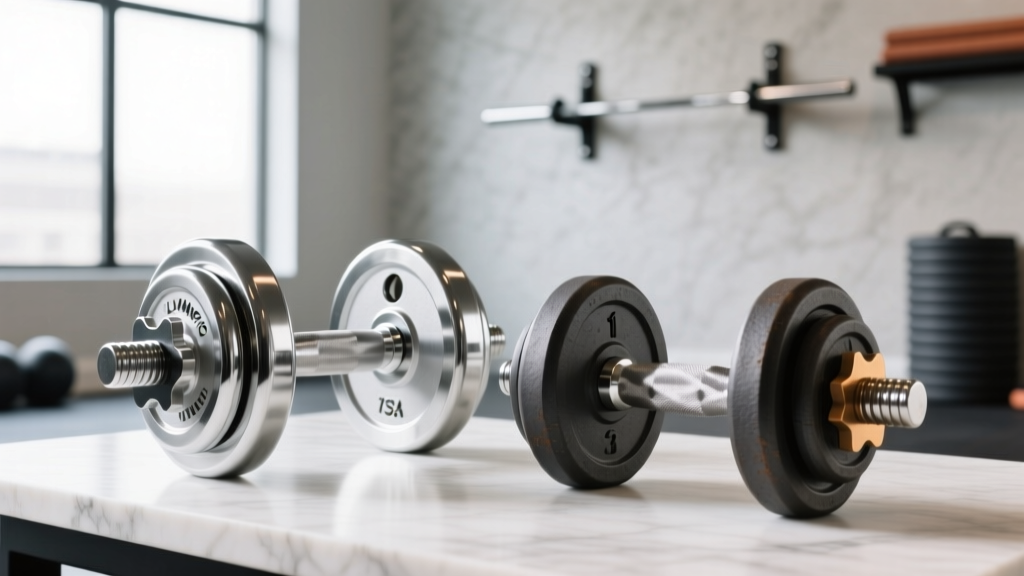
- Standard Plates: Feature a center hole diameter of exactly 1 inch (25.4mm). These are designed for entry-level, lightweight home gym equipment.
- Olympic Plates: Feature a center hole diameter of 2 inches (50.8mm). These are the global standard for commercial gyms, powerlifting, and serious home setups.
Common Mistake #1: Pairing Standard Plates with Olympic Dumbbell Handles
Many beginners start with a 100-pound standard cast-iron weight set from a big-box sporting goods store. When they decide to upgrade their dumbbell work, they purchase high-quality Olympic adjustable dumbbell handles, such as the Rogue Fitness Olympic Dumbbell Handles (priced around $95 per pair in 2026). The immediate, frustrating realization is that their entire collection of 1-inch standard plates is now useless scrap metal.
Standard plates simply cannot be adapted to fit a 2-inch Olympic sleeve safely. While you can buy adapters to step down an Olympic bar to accept standard plates, there is no safe, commercially viable adapter to step up a standard plate to fit an Olympic handle. Attempting to use duct tape, rubber shims, or drilling out the cast iron center hole compromises the structural integrity of the plate, creating a severe crushing hazard during overhead presses or bench presses.
Common Mistake #2: The Weight Calibration Illusion
Standard weight plates are notorious for their lack of manufacturing precision. Because they are mass-produced using basic sand-casting methods with minimal quality control, a standard 45-pound plate can easily weigh anywhere from 41 to 48 pounds. When you load a barbell for a heavy deadlift, a 6-pound discrepancy between the left and right sides can cause the bar to tilt, leading to asymmetrical muscle recruitment and lower back injuries.
Olympic plates, particularly machined steel or calibrated competition plates, are held to much stricter tolerances. According to equipment reviews by BarBend's Guide to Olympic Weight Plates, high-quality Olympic cast iron plates are accurate to within 2% of their stated weight, while IWF-calibrated steel plates are accurate to within 10 grams. If you are tracking progressive overload, standard plates introduce unacceptable variables into your training data.
Troubleshooting Matrix: Plate Specifications & 2026 Pricing
| Plate Type | Center Hole | Weight Tolerance | Avg. Cost / lb (2026) | Drop Rating |
|---|---|---|---|---|
| Standard Cast Iron | 1 inch | +/- 5% to 10% | $1.00 - $1.40 | Zero (Will crack) |
| Olympic Cast Iron | 2 inch | +/- 2% | $1.60 - $2.20 | Low (Chips flooring) |
| Olympic Rubber-Coated | 2 inch | +/- 2% | $2.00 - $3.00 | Medium (Bounces) |
| Olympic Urethane Bumper | 2 inch | +/- 1% | $3.50 - $5.50 | High (Dead bounce) |
The TSA Dumbbell Dilemma: Travel Gear vs. Home Base
Many fitness enthusiasts attempt to bridge the gap between traveling and lifting by searching for a 'TSA approved dumbbell.' The logic seems sound: pack a pair of adjustable handles and a few plates to avoid paying for expensive hotel gyms. However, this approach fundamentally misunderstands aviation security protocols and the economics of modern air travel.
According to the Transportation Security Administration (TSA) Prohibited Items List, dumbbells, kettlebells, and loose weight plates are strictly prohibited in carry-on luggage. They are classified as potential blunt weapons and will be confiscated at the security checkpoint if you attempt to bring them into the cabin.
You can pack dumbbells and weight plates in your checked luggage. But here is where the troubleshooting turns into a financial nightmare. In 2026, major US carriers like Delta, United, and American Airlines charge exorbitant fees for overweight checked bags. A standard suitcase containing a pair of adjustable dumbbell handles, four 10-pound standard plates, and your clothing will easily exceed the 50-pound limit. This triggers an overweight baggage fee ranging from $100 to $200 each way.
The Expert Solution: Stop trying to travel with iron. If you are a frequent traveler, invest in a high-quality set of resistance bands with door anchors (which easily pass through TSA checkpoints in a carry-on) or utilize bodyweight suspension trainers. Save your budget to build a permanent, high-quality Olympic plate ecosystem in your home garage gym, where the gear belongs.
How to Fix Your Mismatched Gear (Actionable Solutions)
If you have already made the mistake of buying the wrong plates or handles, here is how to troubleshoot and salvage your setup without compromising safety.
Solution A: The Sleeve Adapter (Olympic Bar to Standard Plate)
If you own an Olympic barbell but inherited a massive set of standard 1-inch plates, you can purchase Barbell Sleeve Adapters (such as the Titan Fitness Aluminum Sleeve Adapters, priced around $35 per pair). These slide over the 2-inch Olympic sleeve, reducing the diameter to 1 inch.
The Trade-off: Adapters typically consume 1.5 to 2 inches of the barbell's sleeve length. If you are using a standard 7-foot Olympic bar with a 16.3-inch loadable sleeve, adding adapters reduces your capacity, preventing you from loading more than three 45-pound plates per side.
Solution B: The 'Scrap and Upgrade' Protocol
If you bought standard plates for an Olympic dumbbell handle, there is no safe adapter. Your only troubleshooting path is to liquidate the standard plates on local marketplaces (Facebook Marketplace or Craigslist usually yield $0.75 to $1.00 per pound for used standard iron) and reinvest that capital into Olympic grip plates. Grip plates, like the Rogue Echo Grip Bumpers or REP Fitness Urethane Grip Plates, feature integrated handles, making them vastly superior for dumbbell-style movements and loading/unloading heavy bars.
2026 Buying Framework: Building a Future-Proof Gym
To avoid these troubleshooting headaches entirely, follow this strict purchasing framework when building your free weight inventory:
- Commit to the 2-Inch Standard: Never purchase 1-inch standard equipment for a dedicated home gym. The 2-inch Olympic standard is universal, holds its resale value, and is compatible with every commercial-grade rack, bar, and dumbbell handle on the market.
- Prioritize Virgin Rubber or Urethane: Avoid cheap 'recycled rubber' Olympic plates. They off-gas toxic volatile organic compounds (VOCs) into your home for months and have a high 'bounce' factor when dropped, which can damage flooring and shins. Look for virgin rubber or cast urethane with a Shore A durometer rating of 85 or higher for a dead-bounce drop.
- Check the Hub Insert: Ensure the Olympic plates you buy feature a stainless steel or brass inner ring insert. Plates with bare rubber touching the barbell sleeve will degrade quickly, leaving black rubber shavings all over your gym floor and increasing friction during plate changes.
Whether you are navigating the strict realities of TSA travel rules or engineering the ultimate garage gym, understanding the precise mechanics and economics of your equipment is what separates novices from seasoned lifters. Ditch the standard plates, respect the 2-inch Olympic standard, and build a foundation that will support your strength goals for decades.
More gear to consider
All reviews
Beyond the Heaviest Dumbbell at Planet Fitness: Home Neoprene Guide
Loadable Dumbbells: The 2026 Lat Pulldown Dumbbell Alternative

Rubber Hex vs Urethane: Is the Round Dumbbell Set Obsolete?
Bumper vs Iron Plate Comparison & Tricep Dips Dumbbell Alternative

Bumper vs Iron Plates: Gym Space & Incline Dumbbell Press Shoulders
