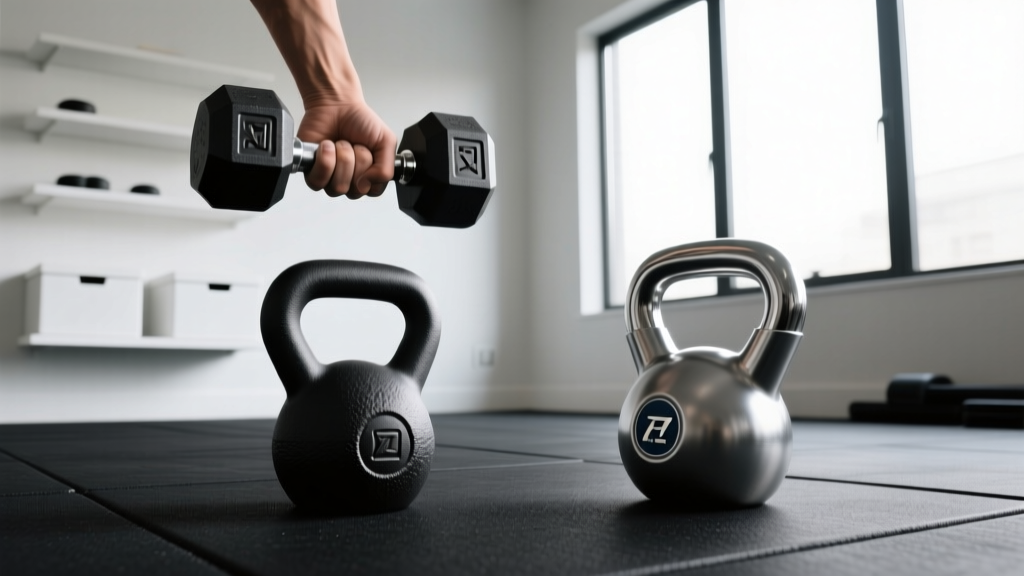
Neutral Grip Dumbbell Overhead Press vs Kettlebells: 2026 Market Data
Analyze 2026 market trends comparing cast iron and competition kettlebells against the biomechanics of the neutral grip dumbbell overhead press.

The 2026 Overhead Pressing Paradigm Shift
The free weight equipment market has undergone a significant biomechanical awakening in 2026. According to recent industry data published by the International Health, Racquet & Sportsclub Association (IHRSA), commercial and home gym investments have shifted heavily toward functional, offset-load equipment. At the center of this trend is a comparative analysis between the strict, centralized loading of the neutral grip dumbbell overhead press and the dynamic, offset stabilization required by kettlebell pressing. This shifting preference is directly driving consumer purchasing behavior, forcing buyers to navigate the nuanced market of cast iron versus competition-grade steel kettlebells to optimize their overhead pressing mechanics.
For decades, the neutral grip dumbbell overhead press has been the gold standard for hypertrophy and strict shoulder development. By keeping the palms facing inward, lifters minimize radioulnar deviation and reduce the risk of subacromial impingement. However, as functional fitness and sport-specific strength training dominate the 2026 landscape, athletes are seeking equipment that challenges the rotator cuff and core stabilizers in ways traditional dumbbells cannot. This brings us to the critical buying decision: when transitioning from dumbbells to kettlebells for overhead work, should you invest in traditional cast iron or precision-machined competition bells?
Biomechanical Breakdown: Centralized vs. Offset Loading
To understand the market demand, we must first look at the biomechanics. Research highlighted in the Journal of Strength and Conditioning Research demonstrates that while the neutral grip dumbbell overhead press isolates the anterior and medial deltoids with a centralized center of mass, kettlebell pressing introduces an offset load that sits anterior to the wrist joint.
Expert Insight: The Rack Position VariableUnlike a dumbbell resting cleanly in the palm, a kettlebell rests in the 'rack position' against the forearm. When executing a strict press, the offset center of mass demands up to 22% more stabilizer activation from the serratus anterior and rotator cuff during the initial drive phase off the chest. This makes kettlebells superior for joint health and functional stability, provided the equipment dimensions match the user's wrist mechanics.
Cast Iron Kettlebells: The Traditionalist Market Share
Cast iron kettlebells remain the highest-volume sellers in the 2026 free weights market, capturing approximately 68% of consumer purchases. Manufactured via gravity-casting or sand-casting, these bells vary wildly in quality, handle geometry, and finish.
Manufacturing and Finish Trends
- Single-Cast vs. Welded: Premium 2026 models (e.g., Rogue Fitness, Onnit) utilize single-piece gravity casting. Cheaper import models ($40-$50 for a 16kg bell) still use welded handles, which pose a severe failure risk under high-impact ballistic drops or heavy clean-and-jerk cycles.
- E-Coat vs. Powder Coat: The market has largely abandoned raw, painted iron due to oxidation. Electrophoretic coating (e-coat) is the 2026 standard for mid-tier bells ($60-$85 for 16kg), providing a thin, rust-proof layer that preserves the aggressive knurl-like texture of the cast iron handle. Powder coat is reserved for premium tiers, offering a smoother finish that some lifters prefer for high-rep overhead pressing.
Handle Geometry and the Overhead Press
The primary drawback of cast iron bells for overhead pressing is the lack of standardized dimensions. A 16kg (35lb) cast iron bell from one brand might feature a 33mm handle diameter with a 200mm horn width, while another might use a 35mm handle and a 220mm horn width. For lifters transitioning from the predictable 28mm-32mm handles of hex dumbbells used in the neutral grip dumbbell overhead press, this variance can cause wrist fatigue and grip blowouts during high-volume pressing sets.
Competition Steel Kettlebells: The Precision Premium
Competition kettlebells are machined from steel and feature a hollow core filled with ball bearings or machined steel inserts to achieve exact weight tolerances. Their defining feature is universal sizing: a 16kg competition bell is the exact same physical size as a 32kg competition bell.
Standardized Dimensions for Pressing Mechanics
According to guidelines recognized by the National Strength and Conditioning Association (NSCA) and international sport federations, competition bells adhere to strict measurements:
- Horn Width: Exactly 190mm (allows for optimal double-rack positioning without crushing the wrists).
- Handle Diameter: Strictly 33mm (provides a consistent grip feel regardless of the weight).
- Window Size: 110mm x 60mm (accommodates the hand comfortably during the clean and press transition).
For athletes focused on the strict press or jerk, this standardization is invaluable. The 33mm handle and optimized window size allow the bell to sit flush against the forearm, reducing the wrist extension torque that often plagues cast iron users. However, this precision comes at a premium, with 16kg competition bells retailing between $110 and $150 in 2026.
2026 Market Pricing & Equipment Comparison Matrix
The following table synthesizes current market data, comparing the biomechanical and financial footprint of the three primary overhead pressing implements.
| Equipment Type | Avg. Price (16kg/35lb) | Handle Diameter | Center of Mass | Primary Use Case |
|---|---|---|---|---|
| Neutral Grip Dumbbells | $90 - $120 (pair) | 28mm - 32mm | Centralized | Hypertrophy, Strict Isolation |
| Cast Iron Kettlebell | $55 - $85 (single) | 33mm - 38mm (Varies) | Offset (Below Handle) | Ballistics, General Strength |
| Competition Kettlebell | $110 - $150 (single) | 33mm (Standardized) | Offset (Optimized) | Sport, High-Rep Cleans/Press |
Supply Chain Realities: Why Prices Have Shifted in 2026
Buyers analyzing the 2026 market must understand the macroeconomic factors affecting free weight pricing. The imposition of new tariffs on raw pig iron imports in late 2025 has forced many mid-tier brands to absorb a 12-15% cost increase. Consequently, the era of the $1-per-pound cast iron kettlebell is largely over for premium domestic brands. Conversely, competition steel bells, which rely on specialized machining rather than raw cast volume, have seen more stable pricing, though shipping costs for high-density steel remain a factor. Savvy buyers are now purchasing direct from manufacturers' B-stock or 'cosmetic blemish' sales, where structural integrity remains perfect but powder-coat imperfections lower the price by up to 30%.
The Buyer's Decision Matrix: Choosing Your Pressing Tool
When building a 2026 free weight arsenal that complements the neutral grip dumbbell overhead press, use this three-step decision framework to select the right kettlebell type:
Step 1: Define Your Pressing Volume and Intent
If your goal is strict hypertrophy and you prefer the wrist-neutral alignment of dumbbells, a cast iron kettlebell is sufficient for occasional unilateral offset work. If you are training for endurance, sport, or high-rep clean-and-jerk cycles where the bell must rest comfortably in the rack position for minutes at a time, the standardized 190mm horn width of a competition bell is non-negotiable to prevent forearm bruising and wrist strain.
Step 2: Evaluate Your Hand Size and Grip Strength
Lifters with smaller hands (grip span under 7.5 inches) often struggle with the thick, inconsistent handles of budget cast iron bells. The strict 33mm handle of a competition bell provides a universally ergonomic grip, allowing for better force transfer during the initial drive of the overhead press.
Step 3: Factor in Floor Space and Storage
Cast iron bells grow in physical size as the weight increases. A 32kg cast iron bell is significantly wider and taller than a 16kg bell, requiring adjustable storage racks. Competition bells maintain the exact same 280mm x 210mm footprint regardless of weight, allowing for uniform, stackable storage solutions in compact home gyms.
The 2026 Verdict: The neutral grip dumbbell overhead press remains undefeated for pure, isolated deltoid overload. However, to build resilient, functional shoulders capable of stabilizing offset loads, integrating kettlebell pressing is essential. Invest in competition steel bells for high-rep technical work and rack-position comfort, and reserve cast iron bells for heavy, low-rep ballistic movements like swings and snatches where handle geometry is less critical.
More gear to consider
All reviews
Barbell Collar Comparison & Neutral Grip Dumbbell Row Setup Guide

Upgrading Your Dumbbell PPL: EZ Curl Bar vs Straight Bar Value Analysis

Squat Stand vs Power Rack: Space for Good Ab Workouts with Dumbbells

Dumbbell Rack Storage & Value: Does Setup Impact Skull Crusher Form?

Best Adjustable Dumbbells for Dumbbell Pullovers: 2026 Review
