Collar Guide for Any Barbell and Dumbbell Leg Workout
Secure your barbell and dumbbell leg workout. Compare spring, lever, and lock-jaw collars, failure modes, and top 2026 models for heavy squats and lunges.

The Hidden Danger in Your Barbell and Dumbbell Leg Workout
When programming a high-volume barbell and dumbbell leg workout, lifters obsess over periodization, tempo, and footwear. Yet, the hardware securing hundreds of pounds of iron to your barbell sleeves is often an afterthought. During heavy compound movements like Romanian Deadlifts (RDLs), walking lunges, and Bulgarian split squats, your equipment is subjected to extreme rotational torque and lateral shear forces. A failed clamp doesn't just ruin a set; it can cause catastrophic plate shifts, leading to severe injury or damaged flooring.
As of 2026, the fitness equipment market offers a wide array of clamping mechanisms, from traditional spring clips to advanced glass-filled nylon lock-jaws. According to gear testing analyses by BarBend, the disparity in clamping force between a $10 spring clamp and a $40 competition-grade collar is staggering. This guide breaks down the exact mechanics, failure modes, and best-use scenarios for every major collar type, ensuring your next leg day is both productive and safe.
⚠️ Safety Callout: The Physics of Plate ShiftDuring a barbell RDL, the bar tilts up to 45 degrees. If your collar lacks sufficient lateral clamping force, gravity pulls the plates down the sleeve. This shifts the barbell's center of mass mid-rep, creating an asymmetric load that can instantly shear your lumbar spine or tear a hamstring. Never use loose-fitting collars for hinge movements.
The 4 Main Barbell Collar Mechanisms & Failure Modes
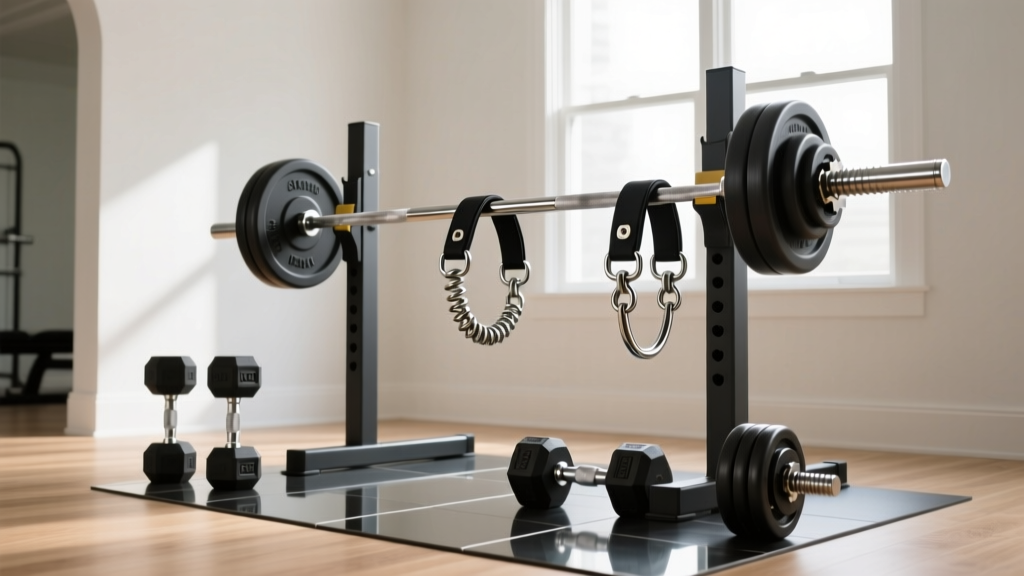
Not all collars are created equal. The mechanism dictates the clamping force, transition speed, and longevity. Here is a deep dive into the four primary designs available on the market today.
1. Spring / Snap-Ring Clamps
The ubiquitous chrome or plastic-coated spring clamps are the default in most commercial gyms. They rely on the tension of a steel spring to squeeze the collar onto the 2-inch Olympic sleeve.
- Best For: High-rep, low-weight accessory work, or quick transitions during supersets.
- Failure Mode: Spring fatigue. Over time, the steel loses its tensile strength. Furthermore, gym chalk acts as a dry lubricant; if chalk dust builds up inside the collar's inner diameter, the clamp will silently slide off the sleeve during a heavy squat.
- 2026 Pricing: $8 - $15 per pair.
2. Quick-Release Lever Clamps
Models like the Rogue HG 2.0 Collars utilize a cam-lever system. You slide the collar onto the sleeve and pull the lever down, which expands an internal nylon or rubber ring against the barbell.
- Best For: Powerlifting, heavy squats, and dynamic leg workouts where you need to change loads rapidly between working sets.
- Failure Mode: Lever pop-off. If the lever is not pulled down completely past the 180-degree cam threshold, the vibration from dropping a barbell after a heavy deadlift can cause the lever to snap open. Additionally, the internal nylon rings can wear smooth after 2-3 years of heavy use, reducing friction.
- 2026 Pricing: $20 - $35 per pair (e.g., Rogue HG 2.0 retails around $24.50).
3. Lock-Jaw / Squeeze Clamps
The Lock-Jaw Pro 2 is the gold standard for many serious home gym owners. Made from glass-reinforced nylon, you squeeze the handles together and push it onto the sleeve, where internal teeth bite into the bar's knurling or smooth steel.
- Best For: Olympic weightlifting, heavy RDLs, and any movement involving high rotational torque. The internal teeth provide immense lateral resistance.
- Failure Mode: Cold-weather brittleness. If you train in an unheated garage gym during winter, the plastic composite can become brittle and crack under the shock of a dropped barbell. The release tab can also snap if forced while the collar is cross-loaded on the sleeve.
- 2026 Pricing: $35 - $45 per pair.
4. Competition Spin-Lock / Screw Collars
Used in IWF-sanctioned weightlifting and IPF powerlifting meets, these heavy metal collars thread onto the barbell sleeve or use a massive screw-down pressure plate (like the Eleiko Olympic Training Collars).
- Best For: Max-effort singles, competition prep, and permanent dedicated deadlift bars.
- Failure Mode: Time and cross-threading. They take 15-20 seconds to secure properly, ruining the flow of a high-volume hypertrophy leg workout. If forced onto a slightly bent sleeve, they can cross-thread and permanently damage the barbell.
- 2026 Pricing: $60 - $120+ per pair.
Comparison Matrix: Top Collars for Heavy Leg Workouts
When selecting gear for a demanding barbell and dumbbell leg workout, you must balance security with transition speed. The table below compares top-tier models based on real-world gym testing.
| Model | Mechanism | Weight / Pair | Lateral Grip | Ideal Leg Exercise |
|---|---|---|---|---|
| Rogue HG 2.0 | Quick-Release Lever | 0.6 lbs | High | Back Squats, Leg Press |
| Lock-Jaw Pro 2 | Squeeze / Teeth | 1.2 lbs | Extreme | RDLs, Good Mornings |
| Harbinger ProClamp | Lever / Pad | 0.8 lbs | Medium | Hip Thrusts, Lunges |
| Eleiko Training | Screw-Down Metal | 5.5 lbs | Absolute | Max Effort Deadlifts |
Note: Always account for collar weight when calculating your total barbell load. A pair of Eleiko collars adds 5.5 lbs to the bar, which matters when tracking progressive overload on micro-plates.
The Dumbbell Hazard: Unilateral Leg Work
While barbell collars get all the attention, the dumbbell component of your barbell and dumbbell leg workout presents unique risks. Movements like dumbbell Bulgarian split squats, goblet squats, and single-leg RDLs require heavy dumbbells. If you are using loadable Olympic dumbbell handles (which feature 2-inch sleeves with end-caps), standard barbell collars like the Lock-Jaw Pro 2 work perfectly.
However, if you are using traditional 1-inch standard dumbbell handles, you face a major engineering hurdle: the lack of a sleeve lip. Standard dumbbell handles are often completely smooth cylinders. Quick-release lever collars will slide right off. For 1-inch dumbbells, heavy-duty star-lock nuts (spin-locks) are the only safe option for heavy RDLs. If you must use spring clamps on 1-inch handles for walking lunges, double up: use two spring clamps per side, placed flush against each other, to increase the friction surface area and prevent the plates from sliding off the smooth steel.
💡 Pro-Tip: The Chalk RuleIf you use liquid or block chalk during heavy leg days, wipe down your barbell sleeves with a damp microfiber cloth before applying your collars. Chalk dust fills the microscopic grooves in the steel sleeve, reducing the friction coefficient by up to 40% and causing even high-end lever collars to slip during asymmetric loads.
Buying Framework: Matching the Collar to Your Training
To build the ultimate equipment rack for leg day, you shouldn't rely on just one type of collar. Based on current industry recommendations from Rogue Fitness and independent testing, here is how to allocate your budget:
- The Daily Driver (Lever Clamps): Invest $25 in a pair of Rogue HG 2.0 or similar lever clamps. Keep these on your primary squat rack for back squats, front squats, and hip thrusts where vertical force is dominant and quick load changes are necessary.
- The Hinge Specialist (Lock-Jaws): Spend $40 on a pair of Lock-Jaw Pro 2 collars. Dedicate these exclusively to your deadlift bar or for RDLs and Good Mornings. The internal teeth will grip the sleeve and prevent any lateral plate migration, no matter how steep the torso angle.
- The Accessory Bin (Spring Clamps): Keep a $10 pair of heavy-duty spring clamps in your accessory bin. Use them only for securing bands, chains, or light isolation work like calf raises where the risk of catastrophic failure is minimal.
Frequently Asked Questions (FAQ)
Do I need to factor collar weight into my leg day tracking?
Yes. If you are tracking progressive overload meticulously, remember that standard lever clamps weigh about 0.6 lbs per pair, while competition spin-locks can weigh up to 5.5 lbs. If you switch from lever clamps to competition collars on your deadlift day, you are inadvertently adding 4+ lbs to the bar.
Can I use barbell collars on an EZ-curl bar for leg extensions?
Most EZ-curl bars feature standard 2-inch Olympic sleeves, meaning lever and lock-jaw collars will fit. However, because the sleeves on EZ-curl bars are often shorter, bulky collars like the Lock-Jaw might not leave enough room to load multiple 45lb plates. Quick-release lever collars are much slimmer and better suited for shorter sleeves.
Why do my quick-release collars pop open during walking lunges?
Walking lunges with a barbell (often done in a back squat position) create immense multi-directional shear force as the barbell rocks side-to-side with each step. If the cam-lever isn't pushed completely flush, this lateral rocking will rattle the lever open. For walking lunges, switch to Lock-Jaw collars or ensure your lever collars have a secondary locking pin.
More gear to consider
All reviews
Barbell Knurling Guide: Olympic Shafts vs Thomas Inch Dumbbell Trick

Dumbbell Rows vs Barbell Rows: 2026 Dumbbell Rack & Storage Guide

Olympic vs Standard Plates: Upgrading Your Pregnancy Dumbbell Workout

Dumbbell Bench Press vs Barbell Bench Press: The Ultimate Plate Guide

One Arm Dumbbell Thrusters Setup: Neoprene Home Gym Guide