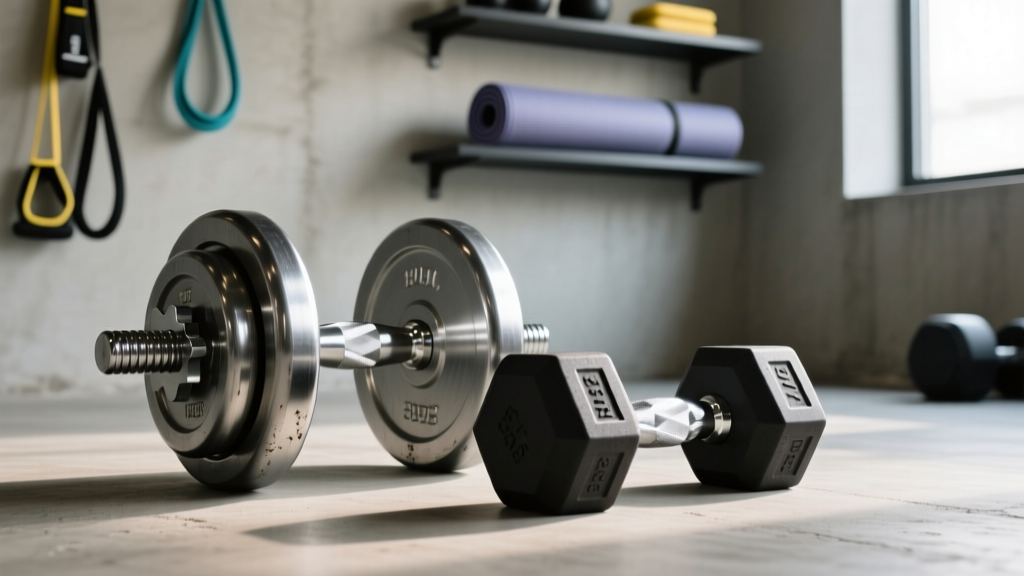
Dumbbell Routine for Women: Olympic vs Standard Plate Mistakes
Troubleshooting your dumbbell routine for women? Discover common Olympic vs standard weight plate mistakes and how to fix your home gym setup today.

The Hidden Saboteur in Your Dumbbell Routine for Women
When programming a highly effective dumbbell routine for women, the focus usually lands on progressive overload, rep ranges, and exercise selection. However, as modular home gyms continue to evolve in 2026, a massive blind spot remains: the physical hardware. Specifically, the widespread confusion between Olympic and standard weight plates when using loadable dumbbell handles. Mixing these two distinct ecosystems or choosing the wrong one for your specific biomechanical needs can lead to stalled progress, compromised form, and even severe injury.
Whether you are executing high-volume Romanian deadlifts (RDLs), unilateral goblet squats, or heavy floor presses, the plates you slide onto your dumbbell handles dictate the equipment's center of gravity, sleeve capacity, and structural integrity. According to equipment safety guidelines highlighted by BarBend, misunderstanding the 1-inch versus 2-inch sleeve dichotomy is the number one cause of home gym equipment failure and wasted capital.
This troubleshooting guide will dissect the most common weight plate mistakes derailing your workouts and provide exact, actionable solutions to optimize your gear.
⚠️ Critical Warning: The 'Wobble' Effect
Never use standard 1-inch threaded spin-lock collars for dynamic movements like dumbbell swings, snatches, or walking lunges. The vibration from dynamic hip hinging routinely backs standard collars off the sleeve, leading to plates sliding mid-rep—a primary cause of wrist and rotator cuff injuries.
The Core Conflict: 1-Inch vs 2-Inch Sleeves
Before troubleshooting your specific routine, we must establish the exact dimensional differences. The fitness industry uses legacy terminology that is technically inaccurate but universally accepted:
- Standard Plates: Feature a center hole of approximately 1 inch (actually 28mm or 1.1 inches). These fit standard, economy-grade dumbbell handles.
- Olympic Plates: Feature a center hole of exactly 2 inches (50.4mm). These fit Olympic barbells and high-end loadable dumbbell handles.
As noted in comprehensive equipment breakdowns by Garage Gym Reviews, the hole diameter is just the beginning. The outer diameter of the plates, the thickness of the cast iron or rubber, and the sleeve length of the dumbbell handle all interact to change how the dumbbell feels in your hand during a targeted routine.
4 Common Mistakes Ruining Your Dumbbell Routine for Women
Mistake 1: Ignoring Plate Thickness During Goblet Squats
A staple in any lower-body dumbbell routine for women is the goblet squat. This movement requires holding a single dumbbell vertically against the chest. If you are using Olympic loadable handles (like the Rogue Loadable Dumbbell Handles) paired with thick Olympic bumper plates, the dumbbell becomes excessively long. A 25lb Olympic bumper plate is 2.5 inches thick. Loading two per side creates a dumbbell over 14 inches long, making it impossible to keep the weight flush against your sternum, thereby shifting the center of mass away from your body and straining the lower back.
The Fix: For vertical holding movements, use standard cast iron plates (which are much thinner) or specialized fractional Olympic plates to keep the overall dumbbell length under 11 inches.
Mistake 2: Exceeding Standard Handle Yield Strength
Standard 1-inch dumbbell handles are typically made from lower-grade steel. While perfectly fine for 20lb or 30lb dumbbell curls, they exhibit dangerous bar flex when loaded past 50 lbs per hand. If your routine involves heavy dumbbell floor presses or weighted step-ups, a bending standard handle will cause the plates to shift inward, pinching your fingers against the knurling.
The Fix: Cap standard dumbbell loads at 45 lbs per hand. For anything heavier, you must upgrade to 2-inch Olympic loadable handles constructed from 190,000 PSI tensile strength steel.
Mistake 3: Miscalculating Sleeve Capacity
Many women following a hypertrophy-focused dumbbell routine for women attempt to micro-load their dumbbells using multiple 2.5lb and 5lb Olympic change plates. Olympic sleeves on dumbbell handles are notoriously short—usually between 6 and 7 inches. Because Olympic change plates are often encased in thick rubber or urethane, you will physically run out of sleeve space before you reach your target weight, leaving no room for the collar.
The Fix: Invest in thin, machined steel Olympic change plates (like those from Fringe Sport or Rogue) rather than rubber-coated change plates for dumbbell loading.
Mistake 4: Assuming 'Standard' Means 'Beginner'
There is a pervasive myth that standard plates are only for beginners, while Olympic plates are for advanced lifters. In reality, standard cast iron plates are vastly superior for adjustable dumbbells if your goal is compact size. A 10lb standard cast iron plate is roughly 0.8 inches thick, whereas a 10lb Olympic bumper plate is 2.25 inches thick. For exercises requiring a tight grip and close center of gravity (like renegade rows or lateral raises), standard plates offer a much more ergonomic profile.
Comparison Matrix: Standard vs. Olympic Plates for Dumbbells
| Feature | Standard Plates (1-Inch) | Olympic Plates (2-Inch) |
|---|---|---|
| Hole Diameter | ~28mm (1.1") | 50.4mm (2") |
| Relative Thickness | Thin (Compact) | Thick (Bulky) |
| Max Safe DB Load | ~45 lbs per hand | 100+ lbs per hand |
| Collar Type | Threaded Spin-Lock | Spring Clips / Pro Locks |
| Best For | Isolation, Goblet Holds, Rows | Heavy Presses, RDLs, Drops |
Troubleshooting Your Current Setup: A Step-by-Step Diagnostic
If your dumbbell routine for women feels 'off'—perhaps the weights feel unbalanced, or your grip is failing prematurely—run through this diagnostic flow:
- Check the Collar Flush: Load your plates and secure the collar. Is the collar sitting flush against the plate, or is there a gap? A gap means your sleeve threads are stripped (standard) or your spring clip is worn out (Olympic). Replace immediately.
- Measure the Overall Length: Measure the total end-to-end length of your loaded dumbbell. If it exceeds 16 inches, you will struggle with exercises that require the dumbbells to pass closely by your torso (e.g., dumbbell snatches or close-grip presses).
- The 'Shake' Test: Hold the loaded dumbbell at arm's length and shake it vigorously. Listen for clanking. Standard spin-locks inherently allow micro-movements between the plate and the sleeve. If the clanking is severe, switch to Olympic handles with precision-machined sleeves.
- Evaluate the Knurling Clearance: Ensure your innermost plate is not overlapping the knurled grip area. Overlapping plates will tear your calluses during high-rep sets.
"The ergonomics of a dumbbell are entirely dependent on the ratio of the handle length to the loaded sleeve width. When women transition from fixed hex dumbbells to loadable handles, they often fail to account for how Olympic bumper plates push the weight distribution outward, increasing the moment arm on the wrist during pressing movements."
— Biomechanics & Strength Equipment Analysis, 2025
Expert Gear Recommendations for 2026
To build a bulletproof home gym that supports a diverse dumbbell routine for women without hardware limitations, consider these specific, field-tested investments:
- For Heavy Compound Lifts (Olympic): Rogue Loadable Dumbbell Handles (~$95.00/pair). Featuring 1.9-inch diameter sleeves and a 6.5-inch loadable length, these accommodate heavy Olympic plates securely. Pair them with Rogue's machined steel change plates to maximize sleeve real estate.
- For Compact Isolation Work (Standard): CAP Barbell 14-inch Cast Iron Spin-Lock Handles (~$35.00/pair). The 1-inch sleeves are perfect for standard cast iron plates, keeping the dumbbell highly compact for lateral raises, tricep extensions, and goblet holds.
- The Hybrid Solution: If you already own Olympic plates but need compact dumbbells, look into Titan Fitness Olympic to Standard Adapters (rare, but occasionally available) or invest in a set of specialized 'Dumbbell Bumpers' which are manufactured with a narrower outer diameter than standard barbell bumpers.
Frequently Asked Questions
Can I use Olympic plates on a standard 1-inch dumbbell handle?
No. The 2-inch hole of an Olympic plate will not fit onto a 1-inch standard sleeve. While cheap plastic adapters exist, they are highly dangerous for dumbbell use due to the lateral torque applied during unilateral movements.
Why do my standard spin-lock collars keep loosening during lunges?
Standard spin-lock collars rely on friction and downward gravity to stay tight. During lunges or swings, the vertical orientation and vibration break this friction. You must re-tighten standard collars every 2-3 sets, or upgrade to Olympic spring-clip handles.
Are rubber-coated standard plates better than cast iron?
For adjustable dumbbells, rubber-coated standard plates are often a poor choice. The rubber casing adds massive thickness, meaning you can only fit a few plates on the short 5-inch sleeves of a standard handle before running out of room. Stick to bare cast iron for standard setups.
More gear to consider
All reviews
Are Iron Grip Dumbbells in KG or LBS? Adjustable Set Troubleshooting

Dumbbell Front Squat Ergonomics: 2026 Rack Market Trends
2026 Dumbbell Racks for Chest Workouts With Dumbbells No Bench

Olympic vs Standard Plates Setup & 30 lb Dumbbell Exercises

Space Guide: EZ Curl Bar vs Straight Bar & Upper Pec Dumbbell
