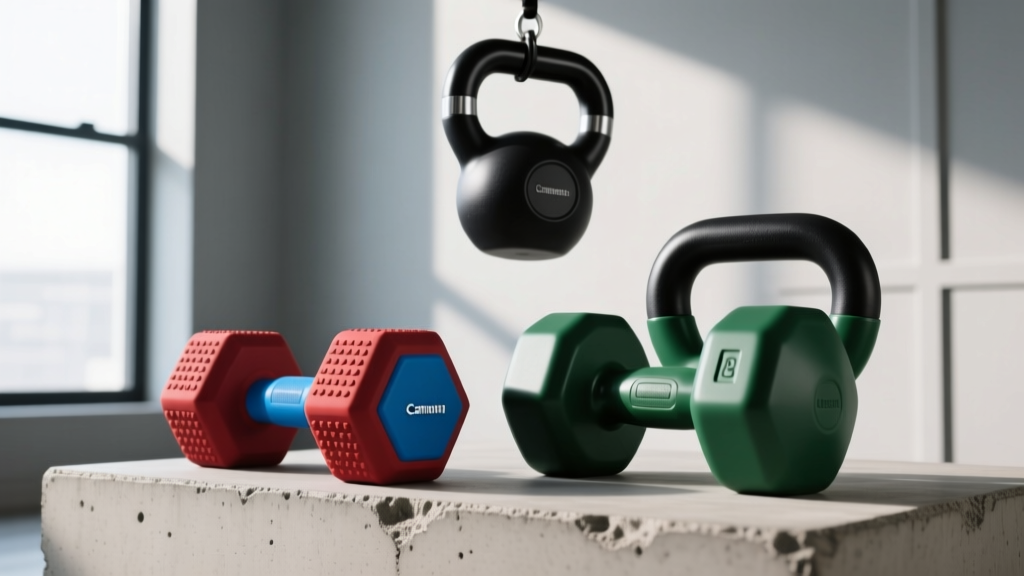
Kettlebell Guide: Better Than Dumbbell Exercises to Reduce Belly Fat?
Discover why kettlebells outperform dumbbell exercises to reduce belly fat. Our 2026 hands-on review compares cast iron vs competition kettlebells.

The Metabolic Truth: Kettlebells vs. Dumbbell Exercises to Reduce Belly Fat
Every January, search engines see a massive spike in users looking for dumbbell exercises to reduce belly fat. The typical routine involves high-rep dumbbell side bends, weighted crunches, and Russian twists. As a fitness equipment reviewer, I need to be blunt: spot reduction is a physiological myth. According to the ExRx exercise directory and foundational sports science research, localized fat loss does not occur simply by working the underlying muscle.
To actually drive systemic fat loss, you need to maximize Excess Post-exercise Oxygen Consumption (EPOC) and recruit maximum motor units. This is where the kettlebell outshines the dumbbell. A landmark study published in the Journal of Strength and Conditioning Research demonstrated that kettlebell swings elicit a cardiovascular and metabolic response comparable to uphill treadmill running, burning up to 20 calories per minute. The offset center of mass in a kettlebell forces your posterior chain, core stabilizers, and grip to work in unison, creating a massive metabolic demand that a standard dumbbell goblet squat or crunch simply cannot replicate.
But if you are pivoting from dumbbells to kettlebells to accelerate your body composition goals, you immediately face a buying dilemma: Cast Iron or Competition?
Cast Iron vs. Competition: The Biomechanical Breakdown
Understanding the physical differences between these two styles of bells is critical for matching the tool to your training methodology. Cast iron bells are poured into molds, meaning their physical footprint grows as the weight increases. Competition bells, governed by international sport standards, maintain identical external dimensions regardless of weight.
| Feature | Cast Iron Kettlebell | Competition Kettlebell |
|---|---|---|
| Dimensions | Varies by weight | Uniform (280x210mm) |
| Handle Diameter | 35mm - 45mm (thicker) | 33mm (standardized) |
| Material | Solid cast iron | Steel shell, hollow core |
| Best For | Grinds, general fitness | Ballistics, sport, flow |
| Avg Price (16kg) | $55 - $75 | $130 - $160 |
Hands-On Review: Top Cast Iron Kettlebells for Home Gyms
Cast iron bells are the workhorses of the home gym. Because of their solid construction, they are incredibly durable but can be unforgiving on the wrists during high-rep cleans if your technique is flawed.
Rogue Fitness Powder Coat Kettlebells
Price Range: $45 (8kg) to $195 (48kg)
Rogue's powder coat finish remains the gold standard in 2026 for rust prevention and chalk retention. The handle features a subtle machining that removes casting seams, preventing the palm tearing common with cheaper Amazon brands. Failure Mode Alert: The flat base on Rogue bells is slightly convex out of the box on some 24kg+ models due to the cooling process. I recommend a quick pass on a belt sander if you plan on doing heavy renegade rows, otherwise, they will wobble on hardwood floors.
Rep Fitness Cast Iron
Price Range: $35 (8kg) to $140 (32kg)
Rep offers a more budget-friendly entry point. The matte black paint is decent, but it will chip if you drop it on bare concrete. Always use 3/4-inch horse stall mats. The handle diameter on their 20kg+ bells crosses the 40mm threshold, which can cause premature grip fatigue during high-rep snatches compared to competition bells.
Hands-On Review: Top Competition Kettlebells for Sport & Flow
Competition kettlebells are engineered to the exact specifications of the World Kettlebell Club. Whether you are holding an 8kg or a 32kg bell, the dimensions remain identical: 280mm height, 210mm width, and a 33mm handle diameter. The weight difference is achieved by filling the hollow steel shell with internal ball bearings or lead.
Kettlebell Kings Competition Series
Price Range: $110 (8kg) to $185 (32kg)
These feature a 33mm handle with a smooth, single-dip powder coat. The thinner handle allows the bell to rest comfortably in the 'rack position' against your forearm without bruising the bone, a critical detail for long-cycle clean and jerks. The color-coded steel shells (Yellow for 16kg, Green for 24kg) make weight identification instant during complex flows.
Eleiko Competition Kettlebell
Price Range: $150 (8kg) to $240 (32kg)
Eleiko's tolerances are unmatched. The base is perfectly flat, and the steel shell is slightly thicker than budget competitors, meaning it produces a dull, satisfying 'thud' rather than a cheap, ringing gong sound when set on the floor. Edge Case: Because the shell is hollow steel, dropping a 24kg Eleiko from overhead onto a thin rubber mat will dent the bottom, potentially compromising its flat base. Treat them like precision instruments, not demolition tools.
Long-Term Maintenance: Protecting Your Investment
Cast iron is porous and prone to oxidation. In 2026, many home gym owners keep their rigs in garages where humidity fluctuates. To maintain a cast iron bell, wipe it down with a microfiber cloth after every sweaty session and apply a light coat of 3-in-One oil or mineral oil once a month. Avoid WD-40, as it strips away the protective layers and leaves a slick residue that ruins your grip during snatches.
Competition bells, made of steel, are less prone to deep rust but will show surface scratches. If the powder coat chips on the base from loading onto metal racks, use a rust-inhibiting enamel touch-up paint to seal the exposed steel immediately. Never store competition bells outside; the hollow core can trap condensation if there is a micro-fracture in the weld, leading to internal rust that adds unpredictable weight variance.
Decision Framework: Which Bell Should You Buy?
Buy Cast Iron If:
- Your budget is under $100 per bell.
- You focus on 'grinds' like Turkish Get-Ups, strict presses, and goblet squats.
- You have larger hands and prefer a thicker handle for grip-strength challenges.
Buy Competition If:
- You train for Kettlebell Sport or high-rep ballistic flows.
- You want consistent muscle memory across different weights (identical dimensions).
- You have smaller hands or experience wrist bruising in the rack position.
FAQ: Kettlebell Training & Fat Loss
Can I just do dumbbell side bends to lose belly fat?
No. Dumbbell side bends build the oblique muscles underneath the fat, but they do not burn enough calories to trigger systemic fat loss. You must pair a caloric deficit with high-metabolic movements like kettlebell swings and snatches to see visible changes in your midsection.
What weight should I start with?
For men transitioning from dumbbells, a 16kg (35lb) bell is the standard starting point for swings. For women, a 12kg (26lb) bell is ideal. For slower grinds like the Turkish Get-Up, drop down to 12kg and 8kg respectively to ensure shoulder stability before increasing the load.
More gear to consider
All reviews
Olympic vs Standard Plates for the CrossFit Dumbbell Push Press

Best Loadable Dumbbells for the Dumbbell Crush Press (2026)

Cast Iron vs Competition Kettlebells & Dumbbell Shoulder Extension

Cast Iron vs Competition Kettlebells & Black Hex Dumbbells Care

How To Start Equip Recovery: A Practical, Evidence-Based Starter Guide