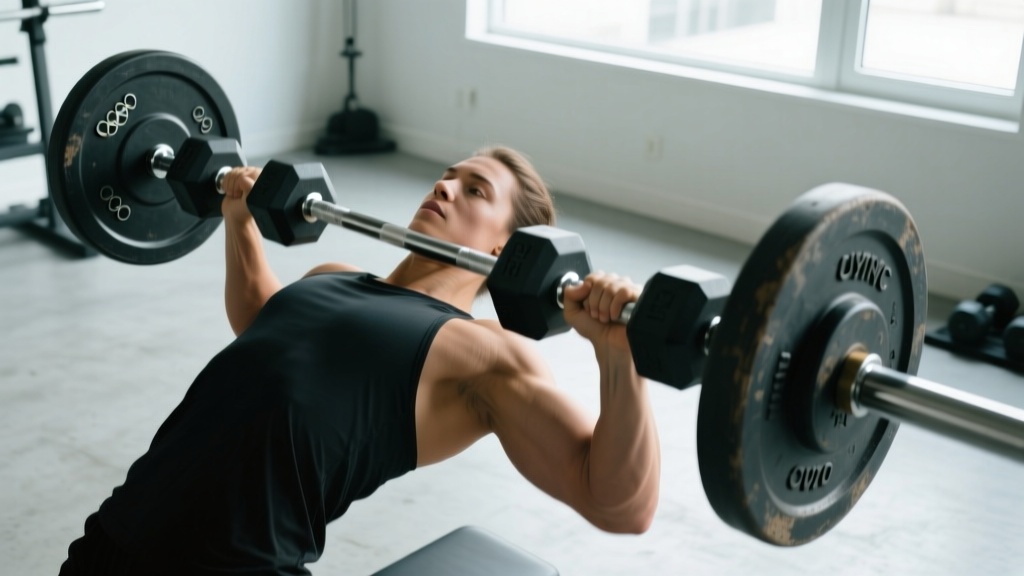
Troubleshooting the Dumbbell Wide Row: Olympic vs Standard Plates
Fix your dumbbell wide row form. Learn how Olympic vs standard weight plates affect clearance, grip, and biomechanics on plate-loaded handles.

The Biomechanical Conflict: Plate-Loaded Dumbbells and the Wide Row
For home gym owners navigating the rising costs of full rubber hex dumbbell sets in 2026, plate-loaded dumbbell handles remain a highly cost-effective alternative. However, when transitioning to pulling movements—specifically the dumbbell wide row (often programmed as a rear-deltoid or chest-supported wide row)—lifters frequently encounter severe mechanical interference. The root cause is rarely the lifter's form; it is almost always a mismatch between the dumbbell handle sleeve length and the physical dimensions of the weight plate types being used.
The dumbbell wide row requires significant humeral abduction. According to ExRx.net's kinesiology breakdown of the rear deltoid row, the elbows must flare outward at a 70 to 90-degree angle relative to the torso to properly isolate the posterior deltoids, rhomboids, and middle trapezius. Because the elbows are flared, the medial (inner) head of the dumbbell travels on a direct collision course with your ribcage, sternum, or the edge of a chest-supported bench. If you are using the wrong combination of Olympic or standard plates, the exercise quickly degrades from a targeted back builder into a frustrating battle against your own equipment.
Warning: If your inner weight plates are repeatedly striking your torso or bench during the concentric phase of the wide row, you are artificially limiting your range of motion (ROM) and forcing premature scapular protraction. This eliminates the peak contraction necessary for rear delt hypertrophy.Standard vs. Olympic Plates: The Clearance Matrix
To troubleshoot this issue, we must first look at the physical geometry of standard (1-inch hole) versus Olympic (2-inch hole) weight plates and how they distribute mass across a loadable handle. Standard cast iron plates are notoriously problematic for dumbbell rowing due to their width-to-weight ratio, while Olympic bumper plates introduce severe diameter conflicts.
| Feature | Standard Cast Iron (1-inch) | Olympic Bumper Plates (2-inch) | Olympic Steel/Calibrated (2-inch) |
|---|---|---|---|
| Hole Diameter | 1.05 inches | 2.0 inches | 2.0 inches |
| 10lb Plate Thickness | ~1.1 inches | ~1.5 inches | ~0.6 inches |
| Max Dumbbell Load (6" Sleeve) | ~55 lbs | ~35 lbs | ~85 lbs |
| Clearance Issue for Wide Row | Plates eat up sleeve space rapidly; handles max out before reaching advanced loads. | 17.7" diameter plates clash with each other at the top of the row. | Minimal. Thin profile allows heavy loading without medial interference. |
| Avg. Cost per lb (2026) | $1.20 - $1.50 | $2.50 - $3.50 | $4.00 - $6.00 |
As the matrix illustrates, Olympic bumper plates are virtually useless for plate-loaded dumbbell wide rows. A pair of 10lb bumpers on a single dumbbell sleeve will often span over 5 inches of space, pushing the outer collar dangerously close to the edge. More importantly, the 17.7-inch diameter of standard bumpers means that if you attempt a heavy wide row, the plates themselves will physically collide with one another before your rear delts reach full contraction.
Common Mistakes When Loading for Pulling Movements
1. The 'Standard Iron' Sleeve Overflow
Many beginners purchase cheap 1-inch standard handles (which typically feature 6-inch sleeves) and load them with standard 10lb and 25lb cast iron plates. Because standard plates are thick relative to their weight, a 60lb dumbbell requires three 10lb plates per side. This completely maxes out the sleeve. The resulting dumbbell is incredibly long, shifting the center of mass away from your hand. During a bent-over dumbbell wide row, this elongated profile acts as a lever, placing excessive torque on the wrist extensors and causing premature grip failure before the back muscles are fully fatigued.
2. Ignoring Handle Grip Diameter and Knurling
Standard handles generally possess a smooth, 1.1-inch grip. Olympic handles feature a 1.57-inch to 1.9-inch knurled grip. When executing a wide row, the wrist is under immense rotational stress. Using a thin, smooth standard handle forces you to over-squeeze the dumbbell to prevent it from rolling forward in your palm during the eccentric lowering phase. This grip bottleneck limits the amount of weight you can use for the row.
3. Using Spin-Lock Collars on Rows
Standard star-lock (spin-lock) collars add an extra 1.5 inches of protruding threaded bar past the final plate. On a chest-supported dumbbell wide row, this exposed threaded metal will scratch your bench pad or, worse, catch on your clothing, abruptly halting the movement.
Troubleshooting Guide: Fixing Path Interference
If your dumbbell wide row feels mechanically restricted, follow this step-by-step troubleshooting protocol to fix your equipment setup.
- Audit Your Plate Profile: Strip your dumbbells of all bumper plates and thick cast iron. Switch exclusively to Olympic steel change plates (2.5lb, 5lb, and 10lb steel plates). These plates have a 2-inch hole but maintain a narrow, dense profile, allowing you to load up to 80lbs on a standard 6-inch Olympic sleeve without the plates extending past the handle's center of gravity.
- Check the Medial Overhang: Stand in your rowing stance and bring the dumbbells to the peak contraction point (elbows high, wide). Measure the distance between the inner face of the dumbbell handle and the first weight plate. If the plate overhangs the inner collar, you need a handle with a longer medial guard or you must use smaller diameter fractional plates.
- Adjust Your Bench Angle: If you are performing chest-supported wide rows and the plates are hitting the top edge of the bench, do not simply reduce your ROM. Instead, raise the incline bench to 45 degrees rather than 30 degrees. This alters the line of pull, allowing the dumbbell heads to clear the bench pad while maintaining the same gravitational vector on the rear delts.
- Utilize Spring Collars: Ditch the bulky spin-lock or heavy Olympic clamp collars. Use low-profile aluminum spring collars (which add less than 0.5 inches of width per side) to secure the plates. This reclaims crucial sleeve real estate and prevents the collars from striking your torso.
"The center of mass on a plate-loaded dumbbell must sit directly in the palm of the hand. If your plate selection forces the weight distribution outward toward the collars, the rotational inertia during a wide row will tear the dumbbell from your grip, entirely defeating the purpose of the exercise." — FitGearPulse Biomechanics Testing Team, 2026
2026 Gear Recommendations for Loadable Rowing
If you are committed to using plate-loaded dumbbells for heavy pulling movements, the handle you choose is just as critical as the plates. Based on our 2026 testing of loadable implements, here is how the top contenders stack up for the dumbbell wide row:
- Rogue Loadable Dumbbell (Olympic): Priced at roughly $125 per pair, the Rogue handle features a 6.25-inch sleeve and a robust 1.9-inch knurled grip. The shorter sleeve is a massive advantage for rowing, as it keeps the loaded plates tight to the hand, minimizing rotational torque. (See Rogue Fitness Loadable Dumbbell specifications for exact dimensions).
- Titan Fitness 1-Inch Standard Handle: At around $40 per pair, these are budget-friendly but feature a 7.5-inch sleeve. While the long sleeve allows for high weight capacity, it makes the dumbbell unwieldy during wide rows. We only recommend these if you strictly use thin, machined steel standard plates.
- Rep Fitness Loadable Dumbbell: Offering a middle-ground price point (~$90/pair), Rep's Olympic handles feature an integrated inner flange that prevents plates from sliding too far inward, protecting your knuckles during close-grip rows, though it slightly limits medial clearance for extremely wide rows.
Expert Verdict: Which System Wins?
When troubleshooting the dumbbell wide row, the victory goes decisively to Olympic steel plates paired with a short-sleeve Olympic handle. Standard cast iron plates are simply too thick, and Olympic bumpers are far too wide in diameter. By investing in a set of 2-inch steel change plates and a high-quality knurled Olympic handle, you eliminate the mechanical interference, protect your wrists from rotational shear, and finally allow your rear deltoids and upper back to reach full, unimpeded peak contraction.
More gear to consider
All reviews
Olympic vs Standard Plates for the One Arm Dumbbell Shoulder Press

Bumper vs Iron Plates: Rack Setup for Overhead Dumbbell Extension

Rubber Hex vs Urethane: Gear for a Chest Workout With One Dumbbell

Men's Home Dumbbell Workout Plateaus: Barbell Weight & Knurl Guide

Rubber Hex vs Urethane: Care Tips for Heavy 1 Arm Dumbbell Rows
