
How to Grow Forearms with Dumbbells vs Kettlebells: Cast Iron or Competition?
Master how to grow forearms with dumbbells and kettlebells. Our hands-on review compares cast iron vs competition bells for ultimate grip hypertrophy.

When searching for how to grow forearms with dumbbells, most lifters inevitably default to the same isolation movements: wrist curls, reverse curls, and farmer’s walks. While dumbbells are exceptional for targeting the flexor carpi radialis and brachioradialis through direct flexion and extension, they possess a critical biomechanical flaw for total forearm development—their center of mass is perfectly balanced in the palm. To unlock elite grip strength, vascularity, and dense forearm hypertrophy, you must introduce an offset load. Enter the kettlebell.
However, not all kettlebells are created equal, especially when your primary goal is grip and forearm taxation. The debate between cast iron and competition kettlebells is usually framed around sport performance or hardstyle swings. But from a pure hypertrophy and grip-endurance perspective, the handle geometry, surface texture, and horn width dictate entirely different stimulus profiles. In this hands-on review, we bridge the gap between traditional dumbbell forearm training and kettlebell selection to help you build unbreakable grip strength in 2026.
The Biomechanical Limitation of Dumbbells for Forearm Growth
According to kinesiology principles outlined by ExRx.net, the forearm musculature is divided into flexors, extensors, and pronators/supinators. Dumbbells allow for heavy, isolated loading of these planes. However, because a dumbbell handle is a uniform cylinder with a centered mass, your fingers simply wrap and lock. The intrinsic muscles of the hand and the deep flexors (flexor digitorum profundus) are rarely pushed to their absolute failure thresholds unless you are using specialized thick-handled dumbbells (like Fat Gripz).
Expert Insight: The offset center of mass in a kettlebell forces the wrist into constant micro-adjustments to prevent the bell from flipping. This 'irradiation' effect, a concept heavily documented by StrongFirst, demands continuous, high-threshold motor unit recruitment in the forearms that a balanced dumbbell simply cannot replicate.Cast Iron vs. Competition Kettlebells: A Grip-Centric Breakdown
If you are transitioning from a dumbbell-heavy forearm routine to kettlebell work, the type of bell you buy will drastically alter your results. Here is how the two main categories compare for forearm hypertrophy.
1. Handle Geometry and Horn Width
Competition kettlebells are standardized globally. Whether you hold a 12kg or a 32kg competition bell, the handle diameter is exactly 33mm, and the window (the gap between the handle and the bell's body) remains uniform. This consistency is great for technique, but the 33mm handle is relatively thick for smaller hands, forcing the fingers to work harder to close the grip.
Cast iron kettlebells, conversely, scale in size with weight. A 16kg cast iron bell might feature a 30mm to 33mm handle, while a 24kg can swell to 35mm. Furthermore, cast iron horns are often wider and more flared, which stretches the webbing of the fingers and places immense eccentric tension on the extensor muscles when controlling the bell on the descent of a swing or snatch.
2. Surface Texture and Chalk Compatibility
Friction is the enemy of grip endurance. Competition bells are typically made of smooth, painted steel. To hold them during high-rep snatches, you must use aggressive amounts of chalk, which dries the skin and forces the forearm flexors to contract maximally to prevent slipping. Cast iron bells from premium brands feature a powder-coat finish. This texture bites into the calluses, providing a 'tacky' grip that can actually reduce forearm fatigue during heavy holds, making them better for maximal load carrying rather than high-rep endurance burnout.
Hands-On Review: Top Kettlebells for Forearm Hypertrophy
We tested the market's leading models specifically for grip taxation, forearm pump, and build quality. As of 2026, pricing has stabilized, but premium competition bells still carry a manufacturing premium.
Rogue Fitness Cast Iron Kettlebell (16kg / 35 lbs)
- Price: ~$65.00
- Handle Diameter: ~33mm (varies slightly by casting batch)
- Finish: Matte black powder coat
- Forearm Stimulus: High. The aggressive powder coat and slightly flattened horns require intense crush-grip strength. Ideal for heavy, low-rep farmer's walks and bottoms-up presses.
Available via Rogue Fitness.
Eleiko Competition Kettlebell (16kg / 35 lbs)
- Price: ~$185.00
- Handle Diameter: 33mm (Strict IUKL/IKMF standard)
- Finish: Smooth steel with color-coded band
- Forearm Stimulus: Extreme Endurance. The slick steel demands constant micro-squeezes. If your forearms are pre-exhausted from dumbbell curls, holding this bell for time will induce a massive lactic burn.
Kettlebell USA Pro Grade Paragon (24kg / 53 lbs)
- Price: ~$135.00
- Handle Diameter: 33mm
- Finish: Bare steel handle, painted body
- Forearm Stimulus: The bare steel handle offers a middle ground—more tactile feedback than Eleiko, but less 'sticky' than Rogue's powder coat. The wider window allows for two-handed grips, enabling heavy overloaded swings for brachioradialis thickness.
Feature Comparison Matrix
| Feature | Rogue Cast Iron (16kg) | Eleiko Competition (16kg) | Standard Hex Dumbbell (35lb) |
|---|---|---|---|
| Handle Thickness | ~33mm (Tapered) | 33mm (Uniform) | ~28mm (Uniform) |
| Center of Mass | Offset (High Grip Tax) | Offset (High Grip Tax) | Centered (Low Grip Tax) |
| Surface Texture | Aggressive Powder Coat | Smooth Painted Steel | Knurled Chrome / Rubber |
| Best Forearm Target | Crush Grip & Extensors | Flexor Endurance & Pinch | Isolated Wrist Flexion |
| Approx. Cost (2026) | $65 | $185 | $45 |
Programming Protocol: The 'Crusher' Forearm Routine
To maximize hypertrophy, you must combine the isolation capabilities of dumbbells with the stabilizing demands of kettlebells. Perform this routine twice a week at the end of your pull or arm days.
- Dumbbell Wrist Curls (Over a Bench): 3 sets x 15-20 reps. Focus on the deep stretch at the bottom to target the flexor carpi ulnaris.
- Kettlebell Bottoms-Up Press (Cast Iron preferred): 3 sets x 6-8 reps per arm. Balancing the bell upside down forces maximum irradiation and grip crushing.
- Dumbbell Reverse Curls: 3 sets x 10-12 reps. Use a thumbless grip to shift tension entirely to the brachioradialis.
- Competition Kettlebell Farmer's Hold: 3 sets x 45-60 seconds. The smooth handle will try to slide out of your sweaty palms; fight the slip using only finger flexion, not wrist hitching.
"Grip strength is the bottleneck of total body power. If your hands fail, your lats and glutes never reach their mechanical limits. Train the hands with offset loads, and the forearms will have no choice but to grow." — Adapted from Hardstyle Grip Principles
Expert Verdict: Which Should You Buy?
If your primary goal is learning how to grow forearms with dumbbells and you are simply adding a kettlebell for variety, the Rogue Cast Iron Kettlebell is the undisputed value champion. Its powder-coat finish allows you to focus on the muscle contraction rather than fighting a slippery handle, and the $65 price point leaves room in the budget for a good set of adjustable dumbbells.
However, if you are an advanced lifter whose forearms have completely adapted to dumbbell work, and you need a high-rep endurance stimulus to break through a hypertrophy plateau, invest in a Competition Kettlebell like the Eleiko or Kettlebell USA Paragon. The standardized 33mm handle and slick finish will expose every weakness in your grip endurance, forcing the deep flexors to adapt and grow. Combine both modalities, and your forearms will become as thick and unbreakable as the iron you wield.
More gear to consider
All reviews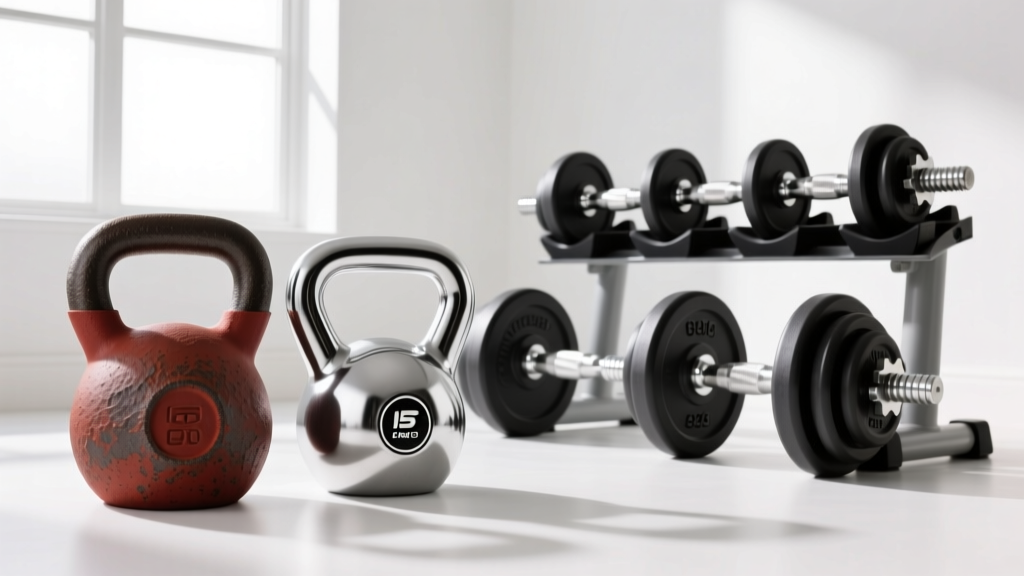
Cast Iron vs Competition Kettlebells & Dumbbell Bent Rows Value

Budget Breakdown: Loadable Bench Flyes Dumbbells vs. Fixed Sets

Breakdown: Equip Bands Essentials — Resistance Band Specifications, Real-World Testing, and Functional Integration
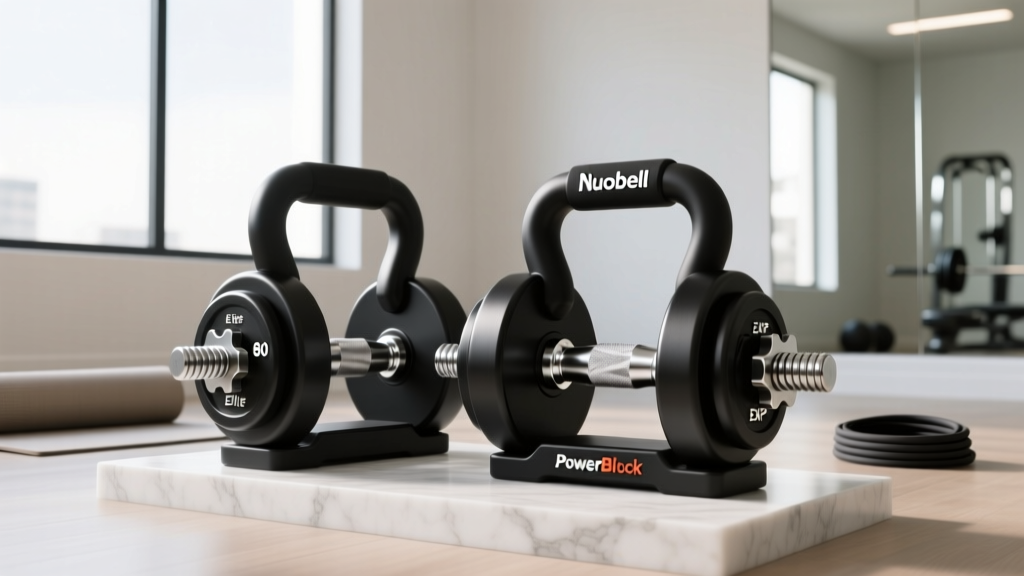
Best Adjustable Dumbbells for a Heavy Trap Dumbbell Workout (2026)
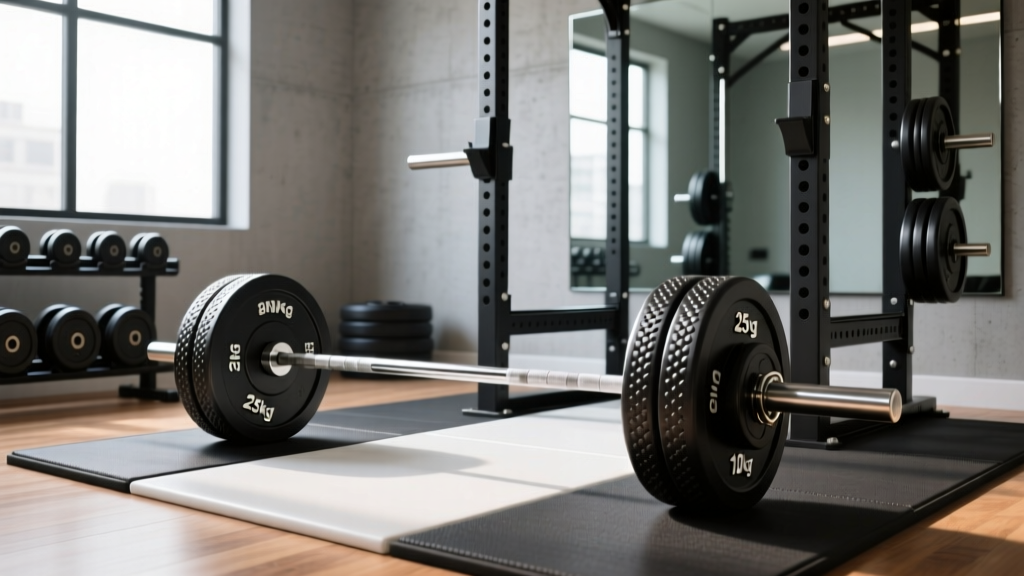
Beyond the Dumbbell Picture: Olympic Barbell Setup & Knurling Guide
