
Olympic vs Standard Plates: Setup & Gorilla Row with Dumbbells
Master your home gym setup with our Olympic vs standard plates walkthrough, including spatial planning for the gorilla row with dumbbells.

The Foundation: Choosing Your Plate Ecosystem
Designing a free weight zone requires a definitive choice between two incompatible ecosystems: Standard (1-inch) and Olympic (2-inch) weight plates. As of 2026, the home fitness market has heavily favored Olympic setups for serious lifters, but Standard plates remain a viable, budget-friendly option for specific spatial constraints. Before you unbox a single weight plate or drill into your studs, you must understand the physical footprint and hardware requirements of your chosen ecosystem.
⚠️ CRITICAL SETUP WARNING: Standard plates feature a 25.4mm (1-inch) center hole, while Olympic plates require a 50.6mm (2-inch) sleeve. Adapters exist to use Olympic plates on standard bars, but they introduce dangerous sleeve overhang and alter the bar's whip and balance. Never mix ecosystems on a single lifting platform.Cost and Capacity Breakdown
Standard cast iron plates typically cost between $1.20 and $1.80 per pound, making them attractive for beginners. However, standard bars max out at roughly 300 to 500 pounds of total load before sleeve space runs out. Olympic setups, utilizing Rogue Fitness or similar domestic brands, cost between $2.50 and $4.00 per pound for virgin rubber or urethane, but accommodate well over 1,000 pounds on a single 7-foot barbell. For any lifter planning to progress beyond intermediate strength standards, Olympic is the only logical installation choice.
Step-by-Step Storage Installation Walkthrough
Proper installation of your plate storage is a safety imperative. A fully loaded plate tree can easily exceed 800 pounds, creating a massive tipping hazard if not secured correctly.
- Locate Structural Supports: Use a magnetic stud finder to locate the center of your wall studs (typically spaced 16 inches on center). Never mount wall-plate pegboards to drywall or MDF alone.
- Pre-Drill Pilot Holes: For heavy-duty wall mounts, drill 3/16-inch pilot holes directly into the center of the studs to prevent splitting the wood.
- Secure with Lag Screws: Use minimum 3/8-inch x 3-inch structural lag screws. Drive them in using an impact driver until the washer is flush against the steel bracket. Torque to approximately 40 ft-lbs.
- Install A-Frames (Freestanding Option):strong> If using a freestanding A-Frame tree, ensure the base footprint is at least 30x30 inches. Bolt the frame to a 3/4-inch plywood subfloor using 1/4-inch carriage bolts if your gym is in a high-traffic or seismic zone.
- Load Heaviest Plates Lowest: Always install 45lb and 35lb plates on the bottom pegs to maintain a low center of gravity, preventing forward tipping when pulling plates off the top pegs.
Spatial Mapping: Clearance for the Gorilla Row with Dumbbells
One of the most common mistakes in home gym installation is placing storage racks too close to the active lifting zone. When mapping your floor plan, you must account for dynamic movement envelopes. This is especially critical if your programming includes the gorilla row with dumbbells.
Unlike a standard unilateral dumbbell row supported by a bench, the gorilla row with dumbbells requires a wide, sumo-like hinge stance with both dumbbells starting on the floor. According to biomechanical guidelines referenced by the National Strength and Conditioning Association (NSCA), dynamic hinging movements require a minimum clearance buffer to prevent joint impingement against hard surfaces.
Calculating Your Lifting Platform Footprint
- Minimum Safe Zone: 8 feet wide by 8 feet deep.
- Storage Buffer: Maintain at least 36 inches of clearance between the edge of your lifting platform and your Olympic plate tree. When executing a gorilla row with dumbbells, your elbows will flare laterally, and a wide stance means your feet will be positioned near the edges of your matting. Striking a steel plate tree with a 70-pound dumbbell mid-rep is a severe hazard.
- Dumbbell Rack Placement: Position your dumbbell rack parallel to your plate storage, leaving a 4-foot 'loading alley' between them. This allows you to load your barbell, step back, and seamlessly transition to accessory movements without navigating a bottleneck.
Equipment Comparison Matrix: Standard vs. Olympic
| Feature | Standard (1-Inch) | Olympic (2-Inch) |
|---|---|---|
| Center Hole Diameter | 25.4 mm (1 inch) | 50.6 mm (2 inches) |
| Max Barbell Load Capacity | 300 - 500 lbs | 1,000 - 1,500+ lbs |
| Average Cost Per Pound (2026) | $1.20 - $1.80 | $2.50 - $4.00 |
| Sleeve Rotation Mechanism | None (Static) | Bronze Bushings or Needle Bearings |
| Resale Value & Liquidity | Low | High |
Integrating Dumbbell Workflows into the Plate Zone
Because the gorilla row with dumbbells is a staple for posterior chain and lat development, your setup must facilitate heavy dumbbell usage alongside your plate ecosystem. According to exercise databases like ExRx.net, the gorilla row demands strict hip-hinge mechanics, meaning the dumbbells must rest on a flat, stable surface between reps to allow the lifter to reset their lumbar spine.
Flooring Installation for Heavy Drops
To support heavy dumbbell resets during the gorilla row, your flooring installation must be robust. 1. Lay down a vapor barrier if installing over concrete. 2. Install a 3/4-inch tongue-and-groove plywood subfloor to distribute point-loads. 3. Top with 3/4-inch vulcanized rubber horse stall mats. This dual-layer setup absorbs the kinetic energy of 100-pound dumbbells being returned to the floor, protecting both your concrete slab and the knurling on your dumbbell handles.
Pro-Tip: When performing the gorilla row with dumbbells near your plate storage, angle your body 45 degrees away from the rack. This ensures that if you lose your grip or fatigue during the eccentric phase, the dumbbell swings into open floor space rather than colliding with your Olympic plate tree.
Frequently Asked Questions (FAQ)
Can I use standard plates for Olympic barbell rows?
No. Standard plates will not fit over the 2-inch sleeves of an Olympic barbell. You must use an adapter, but this is highly discouraged for heavy compound pulls due to the risk of the adapter slipping and altering the bar's center of gravity.
How much space do I need for a complete rowing station?
For a dedicated rowing station that accommodates barbell Pendlay rows, T-bar rows, and the gorilla row with dumbbells, allocate a minimum 10x10 foot area. This includes the lifting platform, the immediate loading alley, and the footprint of your plate and dumbbell storage racks.
Are urethane Olympic plates worth the premium over rubber?
Yes, especially in enclosed home gyms. As of 2026, urethane plates cost roughly 30% more than virgin rubber but emit zero off-gassing odors and are significantly more resistant to UV degradation and edge tearing from repeated drops off the barbell sleeve.
More gear to consider
All reviews
Upgrading from Hip Thrusters with Dumbbells: Barbell Knurling & Weight

Power Rack vs Squat Stand & Beginner Arm Workout with Dumbbells

Iron vs Bumper Plates: Beyond How to Exercise Triceps With Dumbbells

Rubber Hex vs Urethane Dumbbells for Standing Dumbbell Upward Fly
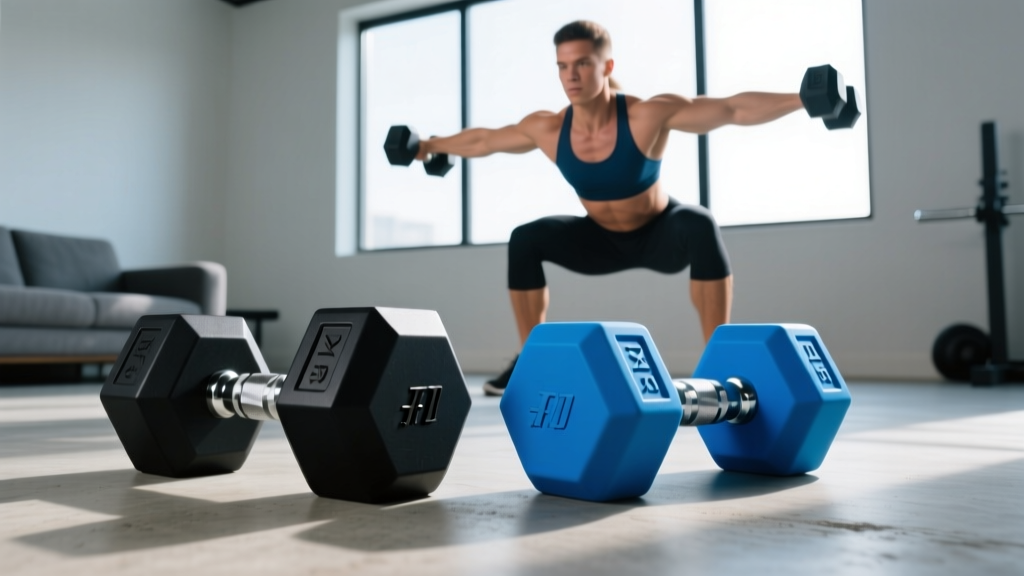
Hex vs Urethane Dumbbells: What Muscles Do Dumbbell Flyes Work?
