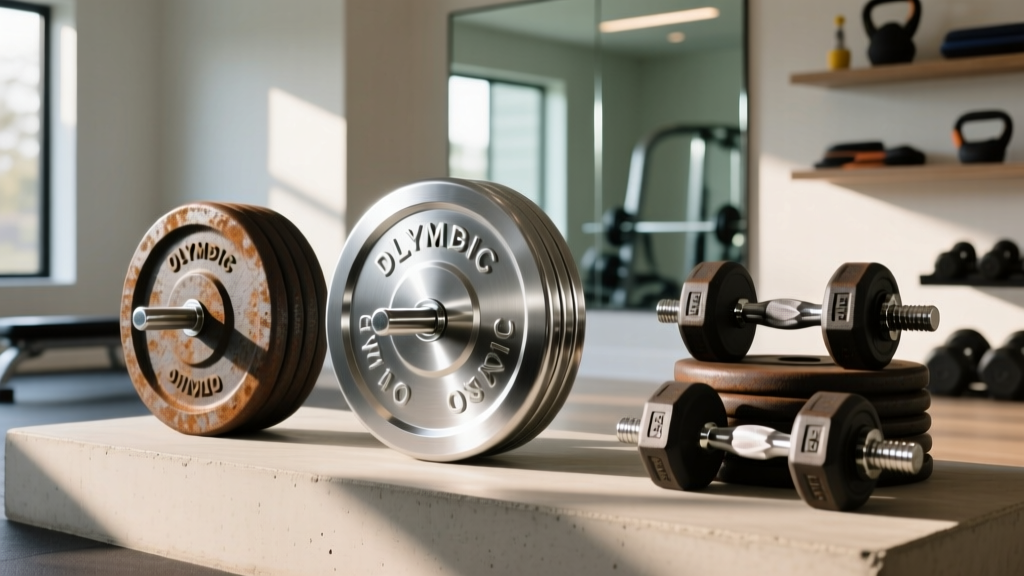
Gold's Gym Dumbbells Value Guide: Rubber Hex vs Urethane
Is the Gold's Gym dumbbells rubber hex set worth it? We break down the 5-year cost, material failure modes, and value vs premium urethane.

The Gold's Gym Dumbbells Baseline: What You Actually Get
When building a home gym on a strict budget, the Gold's Gym 150 lb Rubber Hex Dumbbell Set is almost inevitably the first option that appears in your search results. Widely available through big-box retailers and online marketplaces, this set typically includes pairs of 5, 10, 15, 20, and 25-pound dumbbells. Priced between $110 and $130 depending on seasonal sales, it equates to roughly $0.80 per pound. For a beginner looking to establish a basic resistance training routine, the upfront math is undeniably attractive.
However, as we analyze the free weights market in 2026, the gap between budget-tier recycled rubber and premium virgin urethane has become a critical talking point for long-term value. To determine whether the Gold's Gym dumbbells represent a genuine bargain or a false economy, we must look past the initial price tag and examine material science, degradation timelines, and the true cost of ownership.
2026 Market Snapshot: Budget rubber hex dumbbells currently average $0.80 to $1.10 per pound, while premium urethane commands $3.00 to $4.50 per pound. The price gap is heavily influenced by raw polyurethane supply chain costs and the advanced molding techniques required for commercial-grade fitness equipment.Material Science: Recycled Rubber vs. Virgin Urethane
The core difference between a budget Gold's Gym dumbbell and a premium urethane alternative lies in the chemical composition of the outer shell.
The Recycled Rubber Reality
Budget hex dumbbells are typically coated in recycled rubber, often sourced from vulcanized vehicle tires. This material is ground down, mixed with binding agents, and molded around a cast-iron core. While this process keeps costs low and diverts waste from landfills, it introduces significant drawbacks. Recycled rubber is highly porous and prone to off-gassing. According to the Environmental Protection Agency (EPA), vulcanized rubber products can emit Volatile Organic Compounds (VOCs) that cause the infamous 'tire smell' which can linger in poorly ventilated garages or basement gyms for months.
The Urethane Advantage
Urethane (polyurethane) is a synthetic polymer engineered for extreme durability. Unlike recycled rubber, premium urethane is virtually odorless, non-porous, and highly resistant to UV light and ozone degradation. Brands like Rogue Fitness utilize high-durometer urethane that absorbs impact without permanently deforming. While a 150 lb set of urethane dumbbells will cost between $450 and $600, the material simply does not break down, dry-rot, or chip under normal environmental conditions.
The 5-Year Cost of Ownership Matrix
To accurately assess value, we must project the lifespan and replacement costs of both materials over a 5-year period of consistent, 3-day-a-week use in a standard garage gym environment.
| Feature | Gold's Gym Rubber Hex (150lb) | Premium Urethane (150lb) |
|---|---|---|
| Upfront Cost | $120 ($0.80/lb) | $525 ($3.50/lb) |
| Expected Lifespan | 2 to 4 Years | 15+ Years |
| Off-Gassing (Odor) | High (Requires ventilation) | None (Odorless) |
| Edge Durability | Low (Corners chip and flake) | Exceptional (Impact resistant) |
| 5-Year Replacement Cost | $120 (One full replacement) | $0 |
| Total 5-Year Spend | $240 | $525 |
As highlighted by equipment testing at Garage Gym Reviews, budget rubber dumbbells almost always require replacement within a five-year window if subjected to regular drops, temperature fluctuations, and chalk exposure. While the Gold's Gym set remains cheaper over five years, the gap narrows significantly when factoring in the frustration of replacing degraded gear.
Failure Modes: When Budget Dumbbells Cost You More
Understanding exactly how budget dumbbells fail is crucial for making an informed purchasing decision. Here are the three most common failure modes associated with recycled rubber hex sets:
- Insert Pull-Out: The weakest structural point on a Gold's Gym dumbbell is the junction where the steel handle meets the rubber head. Budget sets use simple press-fit bonding. Dropping a 25 lb dumbbell from shoulder height onto a hard surface can fracture this adhesive bond, leading to a catastrophic failure where the handle slides completely out of the rubber shell during a lift.
- Knurling Degradation: Budget dumbbells feature shallow, machine-cut knurling on chrome-plated handles. Over 2 to 3 years of chalk and sweat exposure, this knurling wears smooth or begins to rust, turning a secure grip into a slipping hazard during heavy goblet squats or dumbbell presses. Urethane sets typically feature deep, medium-aggressive knurling that is hardened to resist wear.
- Hex Corner Chipping: The sharp edges of a hex dumbbell are designed to prevent rolling, but recycled rubber lacks the tensile strength to maintain these edges. Repeated setting down on concrete or hard rubber mats causes the corners to chip, leaving black scuff marks on your gym flooring and eventually exposing the cast-iron core to rust.
'If you are investing in high-density rubber horse stall mats to protect your garage floor, pairing them with cheap recycled rubber dumbbells is counterproductive. The micro-abrasions from chipping rubber hex edges will permanently stain and degrade the surface of your flooring over time.' — Home Gym Flooring Specialist
The Verdict: Budget Breakdown and Final Recommendation
So, who should actually buy the Gold's Gym rubber hex set, and who should invest in urethane?
Buy the Gold's Gym Rubber Hex Set If:
- You are a college student or renter who needs a temporary, low-cost fitness solution for the next 12 to 24 months.
- Your total equipment budget is strictly capped under $200, and you need to allocate funds toward an adjustable bench or squat stand.
- You train in a well-ventilated space (like an open garage) where the initial rubber off-gassing odor will not be a nuisance.
Invest in Premium Urethane If:
- You are building a 'forever' home gym and view your equipment as a long-term investment.
- You train in an enclosed, climate-controlled room (like a spare bedroom or basement) where VOC off-gassing is a health and comfort concern.
- You perform high-intensity interval training (HIIT) or CrossFit-style workouts that involve frequently dropping dumbbells from overhead or shoulder height.
Frequently Asked Questions
Can I leave Gold's Gym rubber dumbbells outside or in a damp garage?
No. Recycled rubber is highly susceptible to UV radiation and ozone exposure. If left outside or in a damp, unclimate-controlled garage, the rubber will undergo dry-rot, becoming brittle and cracking within 12 to 18 months. Furthermore, the internal cast-iron core will rust if moisture penetrates the porous rubber shell.
How do I get rid of the strong tire smell on new rubber dumbbells?
To accelerate the off-gassing process, wash the dumbbells with a mild dish soap and water solution, dry them thoroughly, and leave them outside in a shaded, well-ventilated area for 48 to 72 hours. Avoid leaving them in direct, prolonged sunlight, as UV rays will prematurely age and crack the rubber.
Is urethane completely drop-safe?
While high-durometer urethane is incredibly resilient and will not chip or crack like rubber, it is not indestructible. Dropping urethane dumbbells onto bare concrete can still damage the internal steel insert or chip the urethane itself. Always use them over 3/4-inch thick rubber gym flooring to absorb the kinetic energy and protect both the equipment and your subfloor.
More gear to consider
All reviews
How to Hit Triceps With Dumbbells & Barbell Knurling Buying Mistakes
Beyond Vinyl Dumbbells: 2026 Loadable Plate Market Trends

EZ vs Straight Bar Space Layouts & Dumbbell Equivalent to 225 Bench
Adjustable Dumbbell Review: Fix Your Dumbbell Chest Workout Routine

How to Get Bigger Biceps Without Dumbbells: Bumper vs Iron Plates