
Barbell Knurling Guide: Weight Specs & Body Exercises with Dumbbells
Master your gym setup with our Olympic barbell buying guide covering weight, knurling, and how to integrate body exercises with dumbbells.

Phase 1: Unboxing and Verifying Olympic Barbell Specifications
Setting up a high-performance home gym requires more than just dropping a bar on the floor. The foundation of any serious lifting station begins with selecting and inspecting the right Olympic barbell. When your equipment arrives, the first step in our installation walkthrough is verifying the metallurgical and dimensional specifications.
Weight Tolerances and Shaft Dimensions
A standard men's Olympic barbell must weigh exactly 20kg (44.09 lbs), while a women's competition bar weighs 15kg (33.07 lbs). However, commercial-grade bars can vary by up to 50 grams. For competitive lifters, ensure your bar boasts a +/- 10 gram tolerance. Next, measure the shaft diameter using digital calipers:
- 28mm: Standard for Olympic weightlifting (snatch/clean & jerk) to allow for whip and flexibility.
- 28.5mm: The multipurpose sweet spot, offering a balance of whip and rigidity.
- 29mm: Powerlifting standard, maximizing stiffness for heavy squats and deadlifts.
According to the National Strength and Conditioning Association (NSCA), matching the barbell's tensile and yield strength to your lifting style is critical for safety. Look for a minimum tensile strength of 190,000 PSI (like the renowned Rogue Ohio Bar) to prevent permanent deformation under heavy loads.
Phase 2: Decoding Knurling for Your Lifting Style
Knurling is the machined diamond pattern on the shaft that dictates your grip security. Choosing the wrong knurl can lead to torn calluses during high-volume work or slipped grips during heavy singles. Before installing the bar in your rack, inspect the knurl profile.
| Knurl Type | Shape Profile | Best Application | Example Model |
|---|---|---|---|
| Volcano | Pointed peaks with small valleys | Multipurpose, Olympic, Hypertrophy | Rogue Ohio Bar |
| Mountain | Flat-topped, aggressive peaks | Powerlifting, Heavy Deadlifts | Kabuki New Gen Power Bar |
| Hill | Rounded, shallow dips | High-rep CrossFit, Barefoot lifting | Generic Commercial Bars |
Phase 3: Rack Installation and Safety Setup
With the barbell verified, it is time to install it into your power rack or squat stand. This step is crucial for protecting both the bar's finish and your safety.
- Install UHMW Plastic Protectors: Never rest a bare steel or zinc-coated bar directly on metal J-cups. Attach Ultra-High-Molecular-Weight (UHMW) plastic liners to your J-cups to prevent stripping the bar's knurling and finish.
- Set J-Cup Height: Stand in front of the rack. The J-cups should be positioned exactly at your upper sternum height. This allows you to unrack the bar with a slight forward step rather than a wasteful front squat.
- Configure Spotter Arms: Install safety spotter straps or pin-pipe safeties one inch below your lowest range of motion. For squats, this is the bottom of your hole; for bench press, it is just above your chest.
Phase 4: Configuring the Zone for Body Exercises with Dumbbells
A complete gym setup does not end with the barbell. While the barbell is unmatched for absolute central nervous system overload, integrating targeted body exercises with dumbbells is essential for unilateral symmetry, joint stabilization, and localized hypertrophy. According to biomechanics data from ExRx, dumbbells allow for a greater range of motion and independent limb tracking, which reduces shoulder impingement risks during pressing movements.
Setting Up the Dumbbell Station
To maintain a seamless flow between your heavy barbell compounds and your accessory work, position your dumbbell zone exactly 3 to 4 feet adjacent to the power rack. This minimizes rest-interval disruptions.
- The Adjustable Bench: Invest in a commercial-grade adjustable bench with a 15-degree to 85-degree ladder system. Ensure the seat pad angles upward slightly when the backrest is inclined to prevent glute sliding during heavy incline presses.
- Selecting the Dumbbells: For a space-efficient 2026 setup, adjustable dumbbells are the gold standard. The Nuobell 80 LB Adjustable Dumbbells (retailing around $449) offer a traditional handle feel and rapid 5-lb increments, making them perfect for transitioning from heavy barbell rows to single-arm dumbbell rows without losing your pump.
- Rack Placement: If using fixed hex dumbbells, install a 3-tier A-frame rack angled at 15 degrees to reduce wrist strain when picking up heavier pairs (50+ lbs).
Pro Setup Tip: When transitioning from heavy barbell bench presses to body exercises with dumbbells like chest flyes or Arnold presses, drop the weight by roughly 30% per hand. The stabilization demand shifts entirely to the rotator cuff and serratus anterior, requiring a completely different neurological setup.
Phase 5: Maintenance and Long-Term Upkeep
Your installation is complete, but maintenance is ongoing. Chalk and sweat are the enemies of barbell longevity, particularly on raw steel and black oxide shafts.
- Weekly: Use a stiff nylon brush (never brass or steel, which will strip the coating) to scrub chalk out of the knurling valleys.
- Monthly: Wipe the shaft down with a microfiber cloth lightly dampened with mineral oil or a dedicated barbell oil. This displaces moisture and prevents surface oxidation.
- Sleeve Care: If your bar utilizes bronze bushings (common on power bars), apply a few drops of synthetic bearing oil to the sleeve seams annually to maintain smooth rotation.
Frequently Asked Questions (FAQ)
Can I use a multipurpose bar for heavy deadlifts?
Yes, but be aware that a 28.5mm multipurpose bar will exhibit "whip" (flex) at loads exceeding 400 lbs. While this whip can aid in the lockout, it makes the initial pull off the floor feel less stable compared to a stiff 29mm power bar.
Are adjustable dumbbells safe for drop sets?
Most modern adjustable dumbbells, including dial-based and selector-pin models, are not designed to be dropped. Dropping them can shatter the internal plastic selector mechanisms. For aggressive drop sets on body exercises with dumbbells, traditional fixed rubber hex dumbbells are the safer, albeit more space-consuming, choice.
What is the difference between bushings and bearings?
Bronze bushings provide a slower, more controlled spin, which is ideal for powerlifting (squat, bench, deadlift). Needle bearings offer a rapid, frictionless spin necessary for Olympic weightlifting, where the bar must rotate quickly in the hands during the clean and snatch transitions.
More gear to consider
All reviews
Power Rack vs Squat Rack vs Squat Stand: Rigging Dumbbell Seal Rows
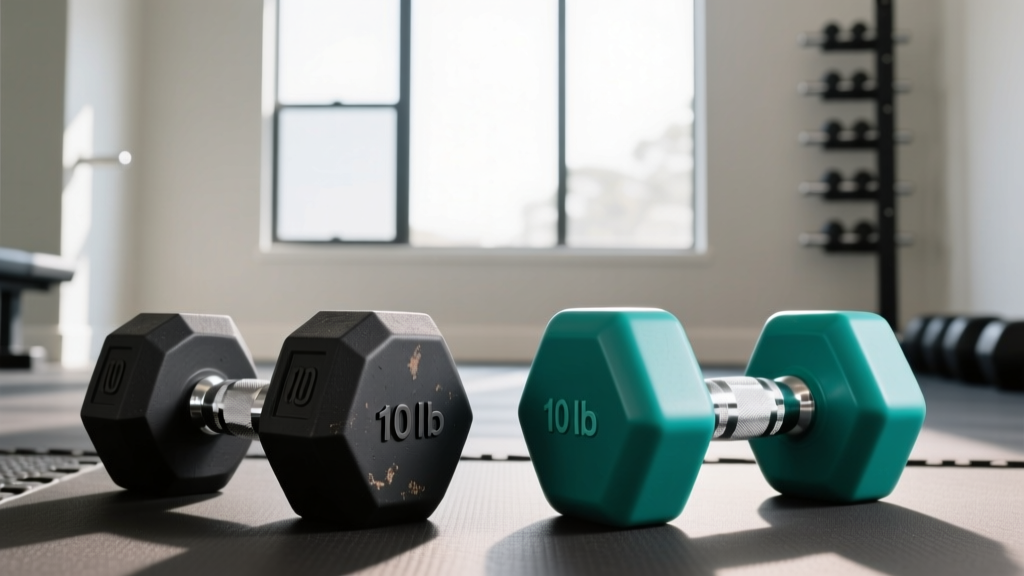
Rubber Hex vs Urethane: Optimizing Exercise for Wings With Dumbbells
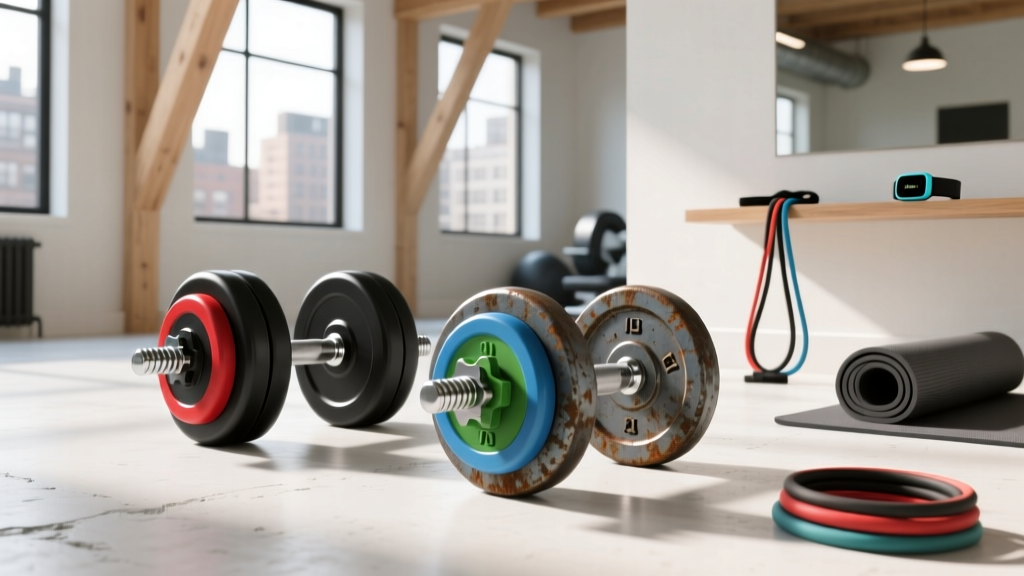
Bumper vs Iron Plates: Upgrading the Beginner Home Dumbbell Workout

Beyond the 30 Minute Full Body Dumbbell Workout: Barbell Buying Guide

Cast Iron vs Competition Bells & Kettlebell Handle for Dumbbells Value
