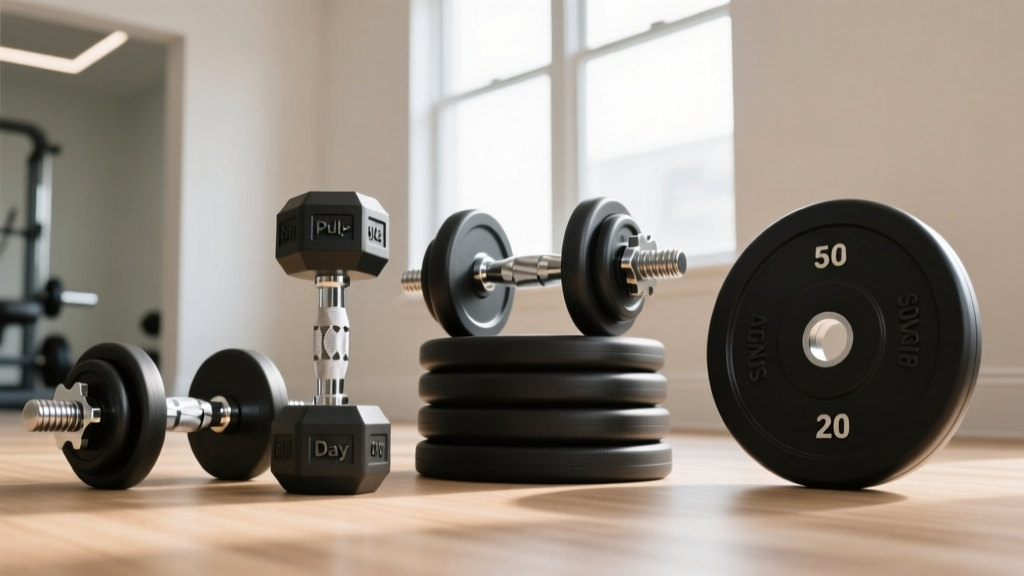
Pull Day Dumbbells & Plates: Olympic vs Standard Mistakes
Troubleshoot your home gym setup. We break down common mistakes with pull day dumbbells and the critical Olympic vs standard weight plate differences.

The Home Gym Pull Day Dilemma: Dumbbells and Plate Compatibility
Building a comprehensive back and biceps routine requires a strategic mix of barbell hinges and targeted isolation work. When outfitting a home gym for heavy rows, deadlifts, and the essential pull day dumbbells exercises, most lifters focus heavily on the barbell or the rack. However, a catastrophic and surprisingly common mistake occurs in the weight plate selection process: confusing Olympic and standard plate sizing. This error not only compromises your barbell work but often leads to a cascading failure in equipment compatibility, budget allocation, and even the selection of your pull day dumbbells.
As of 2026, the secondary market and budget fitness retailers are flooded with 'standard' cast iron plates that look identical to Olympic plates but feature a critical dimensional flaw. This troubleshooting guide will dissect the mechanical failures caused by mixing plate standards, evaluate how this impacts your overall pull day setup, and provide a concrete framework for auditing your free weight arsenal.
Failure Mode 1: The 1-Inch vs 2-Inch Arbor Disaster
The most fundamental difference between weight plate types is the center hole diameter. Standard plates feature a 1.03-inch (approx. 25mm) hole, designed for low-cost, lightweight home gym barbells with 1-inch sleeve diameters. Olympic plates feature a 2.00-inch (50mm) hole, engineered to fit the 1.96-inch sleeves of competitive and commercial-grade barbells.
⚠️ TROUBLESHOOTING ALERT: The Adapter Sleeve TrapMany lifters attempt to bridge this gap by purchasing 1-inch to 2-inch 'Olympic adapter sleeves.' Do not use these for heavy pull day movements. During high-torque exercises like Pendlay rows or heavy barbell shrugs, the rotational shear force causes the adapter to slip inside the plate's center ring. This results in asymmetric loading, barbell whip, and a severe risk of the plate sliding off the sleeve mid-rep.
Olympic vs Standard Weight Plates: The Troubleshooting Matrix
To systematically diagnose your equipment mismatch, reference the matrix below. This data highlights why standard plates are fundamentally incompatible with serious strength progression.
| Specification | Standard Plates (1-Inch) | Olympic Plates (2-Inch) |
|---|---|---|
| Center Hole Diameter | 1.03 inches (25mm) | 2.00 inches (50mm) |
| Weight Tolerance | +/- 5% to 10% variance | +/- 1% (Calibrated: +/- 10g) |
| Max Load Capacity | ~250 lbs (Barbell dependent) | 1,000+ lbs |
| Avg. Cost Per Pound (2026) | $1.20 - $1.80 / lb | $2.50 - $5.00+ / lb |
| Rack Peg Compatibility | Requires 1-inch storage pegs | Fits standard 2-inch horn pegs |
Integrating Pull Day Dumbbells into a Plate-Centric Setup
Why does a guide about weight plate types Olympic vs standard include a deep dive into pull day dumbbells? Because budget allocation and spatial geometry in a home gym are inextricably linked. Lifters who fall into the trap of buying cheap standard barbell plates almost universally pair them with cheap, round rubber-coated dumbbells.
When executing single-arm dumbbell rows or chest-supported rear delt flyes, using round dumbbells is a critical failure mode. If you set a round dumbbell on the floor or a bench between sets, it will roll, creating a tripping hazard and disrupting your rest intervals. Furthermore, cheap standard plate buyers often opt for adjustable spin-lock dumbbell handles. These handles feature thick, threaded collars that dig into your wrists during heavy hammer curls or neutral-grip pull day dumbbells rows.
The Hex Dumbbell Mandate for Pull Days
To properly complement a high-quality Olympic barbell setup, your pull day dumbbells must be fixed-weight, urethane or rubber hex dumbbells. Models like the Rogue Urethane Hex Dumbbells or Rep Fitness Urethane Dumbbells feature a flat edge that prevents rolling and a contoured, knurled chrome handle that mimics the grip mechanics of your Olympic barbell. If budget constraints force a choice between a massive set of standard plates or a targeted set of 40lb to 80lb hex pull day dumbbells, prioritize the dumbbells and buy a smaller, high-quality set of Olympic bumper plates for your barbell work.
Calibration and the Progressive Overload Illusion
According to equipment testing and reviews by BarBend, standard cast iron plates are notorious for severe weight discrepancies. Because they are poured into sand molds with minimal quality control, a standard '45-pound' plate can easily weigh anywhere from 41 to 48 pounds.
When you are tracking progressive overload on heavy barbell rows or deadlifts, this 10% variance destroys your data. You may believe you are adding 10 pounds to your working set, when in reality, you are adding 7 pounds or 14 pounds, leading to stalled progress or unexpected central nervous system fatigue. Conversely, premium Olympic plates—particularly machined steel or calibrated competition plates from manufacturers like Rogue Fitness or Eleiko—are guaranteed to be within 1% of their stated weight, and often within 10 grams. For serious lifters, accurate load tracking is non-negotiable.
'Progressive overload requires precise incremental loading. If your baseline equipment introduces a 5-to-10-pound margin of error per plate, you are no longer training with a calculated stimulus; you are guessing.' — Biomechanics and Equipment Standards, NSCA Guidelines
Step-by-Step Equipment Audit for Your Pull Day
Use this troubleshooting checklist to audit your current free weights and racks before your next heavy back session.
- Measure the Barbell Sleeve: Use digital calipers to measure the diameter of your barbell sleeve. If it reads ~1.96 inches, you strictly require Olympic plates. Discard any 1-inch adapters.
- Audit the Plate Holes: Check the inner ring of your cast iron or bumper plates. If they are 1-inch, they must be permanently retired to a secondary light-duty station or sold. Do not mix them on an Olympic bar.
- Inspect Dumbbell Geometry: Look at your pull day dumbbells. If they are round, budget for an upgrade to hex-style dumbbells to eliminate rolling hazards during single-arm rows.
- Verify Rack Peg Sizing: Standard power racks and squat stands feature 2-inch storage horns. Standard 1-inch plates will rattle, chip the powder coat on your rack, and eventually crack at the center hub due to the uneven weight distribution on the oversized peg.
- Calculate True Load: Weigh your most frequently used plates on a digital floor scale. If your Olympic plates deviate by more than 1%, factor this into your training log or upgrade to calibrated steel plates.
Storage Realities: Rack Pegs and Floor Space
A frequently overlooked troubleshooting issue is weight storage. Olympic plates are dimensionally standardized by the International Weightlifting Federation (IWF). A 45lb Olympic bumper plate is exactly 450mm in diameter, regardless of the brand. This allows for seamless storage on standard rack pegs and weight trees.
Standard plates, however, have zero dimensional standardization. A 25lb standard plate from one brand might be thicker and wider than a 35lb plate from another. When you attempt to store these on a home gym weight tree, they wobble, scrape against each other, and create an unorganized, unsafe training environment. Upgrading to a unified Olympic plate system immediately resolves storage geometry issues and protects your equipment investment.
Final Verdict: Upgrading Your Pull Day Arsenal
Troubleshooting your home gym is about eliminating variables that cause injury or stall progress. The debate between weight plate types Olympic vs standard is not truly a debate; it is a matter of structural integrity and long-term viability. Standard plates and their accompanying 1-inch barbells belong in the realm of light aerobic conditioning or children's fitness rooms.
For a dedicated lifter executing heavy barbell rows, Romanian deadlifts, and high-volume pull day dumbbells work, the 2-inch Olympic standard is mandatory. Ditch the adapters, sell the mismatched cast iron, and invest in precision-calibrated Olympic plates and anti-roll hex dumbbells. Your central nervous system, your training logs, and your gym floor will thank you.
More gear to consider
All reviews
Plate Care: Bumper vs Iron & Alternating Dumbbell Bicep Curls

Rack Guide: Biceps Dumbbell Workout for Beginners & Rig Comparison

Upgrade Home Workout Using Dumbbells: Barbell Weight & Knurl Guide

Back Rows With Dumbbells: Rubber Hex vs Urethane Value Guide
Beyond the Heaviest Dumbbell at Planet Fitness: Home Neoprene Guide
