
Neoprene Dumbbell Rotator Cuff Rehab: 2026 Home Buying Guide
Discover the best neoprene dumbbells for rotator cuff rehab and home workouts. Compare top 2026 models, grip ergonomics, and weight increments.

The Intersection of Joint Longevity and Home Gym Flooring
Building a resilient home gym in 2026 requires balancing heavy compound movements with meticulous joint care. While power racks and urethane barbells dominate the heavy lifting space, the unsung heroes of longevity are light, neoprene-coated dumbbells. When designing a targeted dumbbell rotator cuff protocol, the equipment you choose dictates your recovery trajectory. Neoprene-coated dumbbells offer a unique triad of benefits: they protect hardwood and rubber flooring from micro-drops during fatigue-induced lateral raises, they resist the corrosive nature of sweat during high-repetition prehab sets, and they provide a tactile, secure grip that bare cast iron or knurled steel simply cannot match for isolated stabilization work.
This comprehensive buying guide dissects the exact specifications, material failure modes, and ergonomic nuances of neoprene dumbbells for shoulder rehabilitation and home use, ensuring your 2026 equipment investment yields decades of pain-free pressing and pulling.
Biomechanical Realities: Why the Rotator Cuff Demands Micro-Loading
The rotator cuff is not a prime mover; it is a dynamic stabilizer. Comprising four muscles—the supraspinatus, infraspinatus, teres minor, and subscapularis (often referred to as the SITS muscles)—its primary job is to compress the humeral head into the glenoid fossa during arm elevation. According to the Cleveland Clinic, overloading these small stabilizers with heavy iron dumbbells leads to superior migration of the humerus, causing subacromial impingement and eventual tendinopathy.
Therefore, effective rehabilitation and prehabilitation require micro-loading. We are talking about increments of 1 lb, 1.5 lbs, 2.5 lbs, and 5 lbs. Neoprene dumbbells are the industry standard for these micro-weights because the thick synthetic rubber coating allows for a manageable physical size even at extremely low weights, unlike solid iron which would be too small to grip properly at 2 lbs.
⚠️ Clinical Warning: Impingement SignsIf you experience a sharp, catching pain at the top of a lateral raise or external rotation, stop immediately. This indicates the supraspinatus tendon is being pinched against the acromion. Drop the weight by 50% and shift your movement into the scapular plane (30 degrees anterior to the frontal plane).
2026 Neoprene Dumbbell Comparison Matrix
Not all neoprene is created equal. The market is flooded with cheap imports that suffer from off-gassing and rapid seam delamination. Below is our tested comparison of the top tier neoprene dumbbells available for home rehab in 2026.
| Brand & Model | Weight Range | Handle Diameter | Neoprene Coat | 2026 Price (Pair) | Best Use Case |
|---|---|---|---|---|---|
| Yes4All Neoprene Hex | 1 - 10 lbs | 1.22 inches | 2mm Cast Core | $18 - $38 | Budget Micro-loading |
| SPRI Contoured | 1 - 5 lbs | 1.15" (Tapered) | 3mm Soft Grip | $22 - $45 | Weak Grip / Post-Op |
| CAP Barbell Hex | 5 - 15 lbs | 1.25 inches | 1.5mm Dense | $25 - $55 | Late-Stage Strengthening |
Yes4All Neoprene Hex: The Micro-Loading Standard
Yes4All dominates the home rehab space due to their extensive weight increments. For rotator cuff work, the 1.5 lb (green) and 2.5 lb (grey) pairs are essential. The 1.22-inch handle diameter accommodates most hand sizes without causing excessive forearm flexor fatigue during 20-rep external rotation sets. Edge Case Note: The color-coded neoprene on the 3 lb (red) and 5 lb (blue) models is prone to UV fading if stored in direct sunlight near a home gym window, though this does not affect structural integrity.
SPRI Contoured: Ergonomic Salvation for Post-Op Grip
Post-surgical shoulder patients often experience neural downregulation, leading to a weakened grip. SPRI’s contoured, tapered handle (thicker in the palm, narrower at the fingers) reduces the grip strength required to hold the dumbbell during prone Y-T-W raises. The 3mm soft neoprene coating feels almost velvety, preventing the dumbbell from slipping when palms become diaphoretic (sweaty) during high-rep endurance protocols.
CAP Barbell Dense Neoprene: Late-Stage Strengthening
Once you graduate past the 5 lb threshold, the CAP Barbell hex dumbbells become the superior choice. Their neoprene formulation is denser and thinner (1.5mm), providing a more compact head profile that doesn't clash with your torso during close-quarters movements like internal rotations at the side. The 1.25-inch handle mimics standard Olympic barbell proportions, aiding in neuromuscular transfer back to heavy compound lifts.
Step-by-Step: The 2026 Prehab Protocol
According to the American Council on Exercise (ACE), proper exercise selection and tempo are just as critical as the weight used. Utilize your new neoprene dumbbells with this evidence-based routine, performing it 2-3 times per week before your main upper-body lifting sessions.
- Scapular Plane Elevation (Scaption): Using 2 to 3 lb neoprene dumbbells, raise your arms at a 30-degree angle anterior to your frontal plane. Thumbs up. Tempo: 3 seconds up, 1 second pause, 2 seconds down. Volume: 3 sets of 15 reps.
- Prone External Rotation: Lie face down on a bench or bed, elbow tucked at your side and bent at 90 degrees. Holding a 1.5 to 2.5 lb dumbbell, rotate the weight upward toward the ceiling. Volume: 3 sets of 12 reps per arm.
- Side-Lying Internal Rotation: Lie on your side, top elbow pinned to your ribs. Rotate the dumbbell (2 to 5 lbs) inward toward your stomach. This isolates the subscapularis, a muscle often neglected in standard rehab. Volume: 3 sets of 15 reps.
When performing external rotations with your elbow tucked to your side, place a rolled-up hand towel between your elbow and your ribcage. This prevents compensation from the latissimus dorsi and ensures pure isolation of the infraspinatus and teres minor.
Edge Cases and Material Failure Modes
While neoprene is highly durable, it is not invincible. Home gym owners must be aware of specific failure modes associated with coated dumbbells:
- Sweat Acidity Delamination: Human sweat contains urea, lactic acid, and salts. Over 12 to 18 months, if left unwiped, this acidic mixture will eat through the adhesive bonding the neoprene to the cast iron core, causing the coating to peel at the seams. Solution: Wipe down with a pH-neutral cleaner (like a dilute dish soap solution) after every use. Never use bleach or harsh alcohol-based sanitizers, which dry out and crack the synthetic rubber.
- Knurling Bleed-Through: On budget models under $15, the underlying cast iron handle is sometimes lightly knurled before coating. Over time, the friction of your grip wears the thin neoprene layer down to the metal, creating an abrasive surface that tears calluses. The SPRI and CAP models listed above use smooth-core casting to prevent this.
- Off-Gassing in Enclosed Spaces: Cheap PVC masquerading as neoprene will off-gas volatile organic compounds (VOCs) for months, creating a toxic 'new car' smell in a small, unventilated home gym. Authentic neoprene (polychloroprene) has a mild, temporary odor that dissipates within 72 hours. If your dumbbells smell strongly after a week, return them.
Frequently Asked Questions
Can I use adjustable dumbbells for rotator cuff rehab?
While adjustable dumbbells (like the Bowflex SelectTech 552) start at 5 lbs, 5 lbs is often too heavy for early-stage supraspinatus rehabilitation or post-surgical protocols. Furthermore, the bulky physical dimensions of adjustable dumbbells (often 15+ inches long) make movements like prone external rotation incredibly awkward, as the ends of the dumbbell will hit the bench or your torso. Fixed, compact neoprene dumbbells in the 1-3 lb range are vastly superior for this specific application.
How do I know when to increase the weight?
The Mayo Clinic recommends progressing weight only when you can complete 3 sets of 15 repetitions with perfect form, zero pain, and a controlled 3-second eccentric (lowering) phase. If your form breaks down or you feel a pinching sensation, regress to the previous weight immediately.
Is hex-shaped neoprene better than round?
For home use, absolutely. Hex-shaped heads prevent the dumbbell from rolling off slightly uneven surfaces, carpeted floors, or the edge of a bench. When you are fatigued on the 20th rep of a lateral raise, you want to be able to drop the weight safely without it rolling under your treadmill or power rack.
More gear to consider
All reviews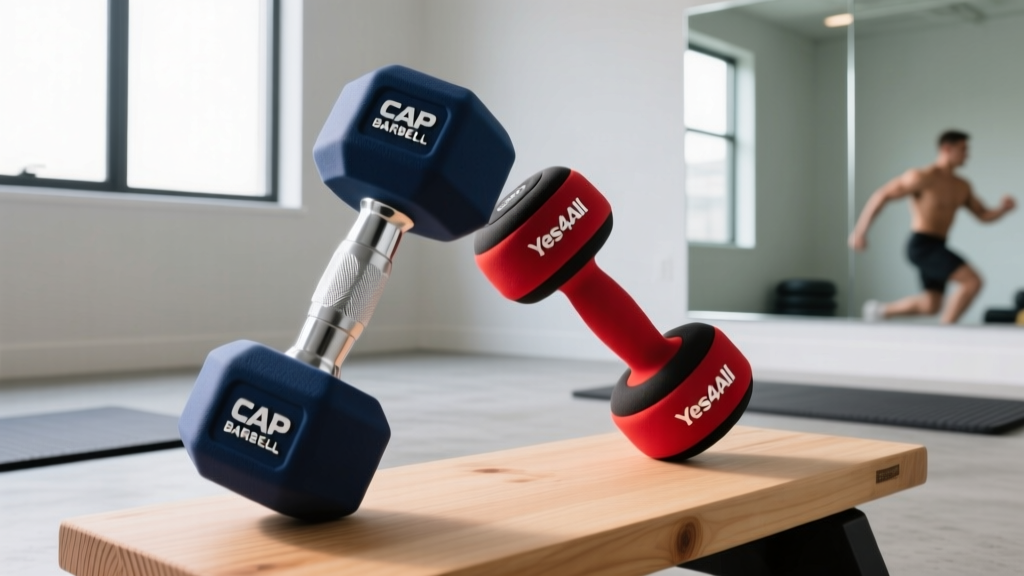
Wood Chop Exercise with Dumbbell: Best Neoprene Picks Compared
Are Dumbbells Better Than Barbells? Adjustable Set Mistakes & Fixes
Single Arm Dumbbell Row Setup: Olympic vs Standard Weight Plates
Cast Iron vs Competition Kettlebells & Bowflex Dumbbell Bench Care

Olympic Barbell Buying Guide: Weight, Knurling & Dumbbell Waiter Curls
