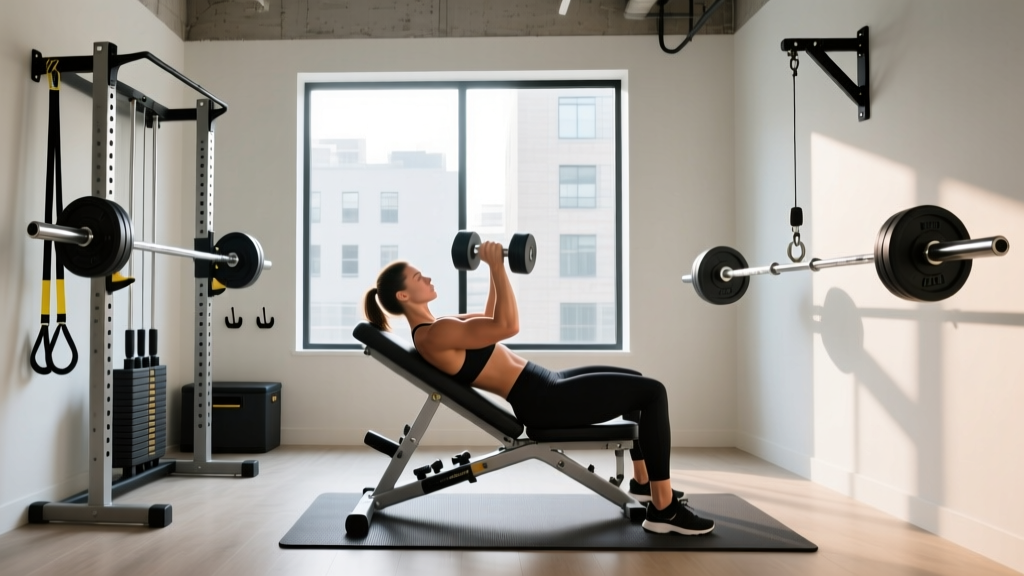
Glutes Workout With Dumbbells Limits: Olympic Barbell Knurl & Weight
Hitting a plateau with your glutes workout with dumbbells? Troubleshoot your training by upgrading to the right Olympic barbell weight and knurl profile.

The Dumbbell Plateau: Why Your Glutes Workout With Dumbbells is Stalling
If you have been running a dedicated glutes workout with dumbbells for more than six months, you have likely hit a frustrating biomechanical wall. Dumbbells are phenomenal for unilateral work, isolation, and establishing the mind-muscle connection. However, when it comes to progressive overload for the gluteus maximus, dumbbells present severe mechanical limitations.
The most common troubleshooting complaints we see at FitGearPulse include:
- Grip Failure Preceding Glute Failure: During heavy Romanian Deadlifts (RDLs), your hands and forearms give out at 100 lbs per hand, long before your glutes and hamstrings reach true muscular failure.
- Awkward Load Positioning: Balancing two 120 lb dumbbells on your hips for a hip thrust is not only dangerous but limits your range of motion and pelvic tilt mechanics.
- Micro-Loading Impossibility: Jumping from 80 lb to 100 lb dumbbells is a 25% load increase, which often breaks down form and shifts tension to the lower back.
The universal troubleshooting fix is upgrading to an Olympic barbell. But simply buying any 45 lb barbell will introduce new problems. To truly optimize your lower-body training in 2026, you must understand the nuanced relationship between barbell weight, shaft whip, and knurling profiles.
Troubleshooting Barbell Weight: Whip, Stiffness, and Shaft Diameter
A common mistake lifters make when transitioning from dumbbells to barbells for glute work is purchasing a specialty deadlift bar or a cheap commercial-grade bar. The physical properties of the barbell shaft directly impact how the load feels during hip thrusts and RDLs.
Understanding Tensile Strength and Whip
Barbell "whip" (the amount the bar bends and oscillates under load) is dictated by the shaft diameter and the steel's tensile strength, measured in Pounds per Square Inch (PSI).
Expert Insight: For heavy barbell hip thrusts, you want a stiff bar (190,000 to 205,000 PSI). A whippy deadlift bar (165,000 PSI) will oscillate as you drive your hips up, causing the bar to dig erratically into your pelvis and destabilize the movement.Barbell Specifications Matrix for Glute Training
| Barbell Type | Shaft Diameter | Weight | Whip / Stiffness | Suitability for Glutes | Avg. Price (2026) |
|---|---|---|---|---|---|
| Standard Power Bar | 29mm | 20kg (44 lbs) | Very Stiff (190k+ PSI) | Excellent (Stable for heavy thrusts) | $250 - $350 |
| Multi-Purpose Bar | 28.5mm | 20kg (44 lbs) | Moderate (185k PSI) | Great (Versatile for RDLs & Thrusts) | $200 - $300 |
| Deadlift Bar | 27mm | 20kg (44 lbs) | High Whip (165k PSI) | Poor (Oscillates during hip thrusts) | $280 - $380 |
| Women's Olympic Bar | 25mm | 15kg (33 lbs) | Moderate Whip (190k PSI) | Fair (Digs into hips without thick pad) | $200 - $250 |
Note: If you are strictly focused on glute hypertrophy and find a 29mm power bar uncomfortable on the hips during thrusts, a 28.5mm multi-purpose bar paired with a high-density foam pad is the optimal troubleshooting solution.
Decoding Knurling: The Secret to Hip Thrust Stability
When troubleshooting a slipping barbell during hip thrusts or a tearing grip during high-rep RDLs, the knurling pattern is your primary variable. Knurling is the diamond-patterned machining cut into the steel shaft to provide friction. However, not all knurls are created equal.
The Three Knurl Profiles
- Hill Knurl: The peaks of the diamonds are rounded off and smooth. It provides a mild grip that won't tear your calluses during high-volume dumbbell-style barbell workouts, but it can feel slippery when sweat accumulates during heavy RDLs.
- Volcano Knurl: The peaks are machined with a tiny crater in the center, creating four smaller, sharper points per diamond. This offers a "bite" that grips the skin securely without tearing it. This is the gold standard for lower-body training.
- Mountain Knurl: The peaks are left sharp and pointed. While excellent for 1-rep max deadlifts, it will aggressively tear your hands during high-rep glute bridges and RDLs.
The Center Knurl: Non-Negotiable for Glute Work
If your primary focus is a glutes workout, you must ensure your Olympic barbell features a center knurl. Many cheap commercial bars omit the center knurl to save manufacturing costs. During a barbell hip thrust, the center knurl bites into the fabric of your leggings or shorts, acting as an anchor. Without it, the bar will inevitably roll down your femurs toward your knees as you reach full hip extension, completely ruining the resistance curve and forcing you to constantly adjust your grip.
"The biomechanical efficiency of the barbell hip thrust relies on a stable pivot point at the pelvic crease. A barbell lacking a center knurl compromises this stability, leading to suboptimal gluteus maximus activation as the lifter compensates for the shifting load." — BarBend Exercise Biomechanics Guide
Top Barbell Recommendations for Glute-Dominant Lifters
Based on our 2026 equipment testing, here are the top Olympic barbells that solve the common troubleshooting issues associated with transitioning from dumbbells to heavy barbell glute work.
1. The Gold Standard: Rogue Ohio Bar
The Rogue Ohio Bar remains the undisputed king of multi-purpose bars. It features a 28.5mm shaft (perfect for grip without being overly thick) and Rogue's signature volcano knurl. The center knurl is present but passive enough not to scratch your back during back squats, yet aggressive enough to grip your shorts during heavy hip thrusts. Price: ~$295 - $345.
2. The Budget-Friendly Gripper: Rep Fitness Colorado Bar
If you are doing high-rep glute circuits and find volcano knurl too aggressive, the Rep Fitness Colorado Bar uses a slightly smoother hill knurl with a 28.5mm shaft. It also features dual knurl marks (both powerlifting and Olympic weightlifting rings), which helps you perfectly align your grip width for RDLs every single set. Price: ~$299.
3. For Smaller Hands: Rogue Bella Bar
Many female lifters transitioning from a glutes workout with dumbbells struggle with the 29mm thickness of standard power bars. The Rogue Bella Bar is a 15kg (33 lb) Olympic bar with a 25mm shaft and a highly effective volcano knurl. Troubleshooting tip: Because the 25mm shaft is thinner, it can dig into the hips during heavy thrusts. You must pair this bar with a premium 3-inch thick hip thrust pad. Price: ~$235.
Common Setup Mistakes When Switching to Barbell Glute Work
Even with the perfect barbell weight and knurl profile, lifters often make critical setup errors when abandoning dumbbells. Avoid these three pitfalls:
⚠️ Warning: The Cheap Foam Pad TrapDo not use standard $15 cylindrical foam pads for heavy barbell hip thrusts. They compress to less than half an inch under 225+ lbs, rendering them useless and causing severe pelvic bruising. Invest in a high-density EVA foam pad (like the Dark Iron Fitness pad) or a specialized thick canvas glute pad that maintains its structural integrity under load.
- Mistake 1: Grip Width on RDLs. When using dumbbells, your hands are naturally at your sides. When switching to a barbell, lifters often grip the bar too wide (outside the knurl rings), which engages the lats and limits the stretch on the hamstrings and glutes. Grip exactly on the smooth rings for optimal biomechanics.
- Mistake 2: Ignoring the Eccentric Phase. Dumbbells allow for easy drop-sets and quick releases. A barbell requires control. Do not bounce the bar off the floor or your hips. Use a 2-second eccentric (lowering) phase to maximize muscle damage and hypertrophy.
- Mistake 3: Footwear Choice. Dumbbell glute work is often done barefoot or in flat shoes to feel the floor. When moving to heavy barbell loads (300+ lbs total), ensure you are wearing flat, zero-drop shoes (like Converse or specialized deadlift slippers) to maintain a stable base and prevent energy leaks through squishy running shoe soles.
Final Thoughts on Upgrading Your Arsenal
Transitioning from a glutes workout with dumbbells to an Olympic barbell is a necessary step for intermediate and advanced lifters seeking maximum hypertrophy. By troubleshooting your equipment choices—specifically prioritizing a 28.5mm to 29mm stiff shaft and a volcano knurl with a center grip—you will eliminate the friction, slipping, and grip fatigue that have been holding your progress back. Stop letting your hands dictate your glute growth; invest in the right steel and let your lower body do the work.
More gear to consider
All reviews
Space-Saving Loadable Dumbbells for a Dumbbell HIIT Workout

Urethane vs Rubber Hex: 2026 Gear for the NYT Dumbbell Workout
Dumbbell Kickbacks Form: Rubber Hex vs Urethane Dumbbells Reviewed

Olympic vs Standard Plates: 45 Dumbbell Mistakes Fixed

Olympic vs Standard Plates for Weight Training with Dumbbells