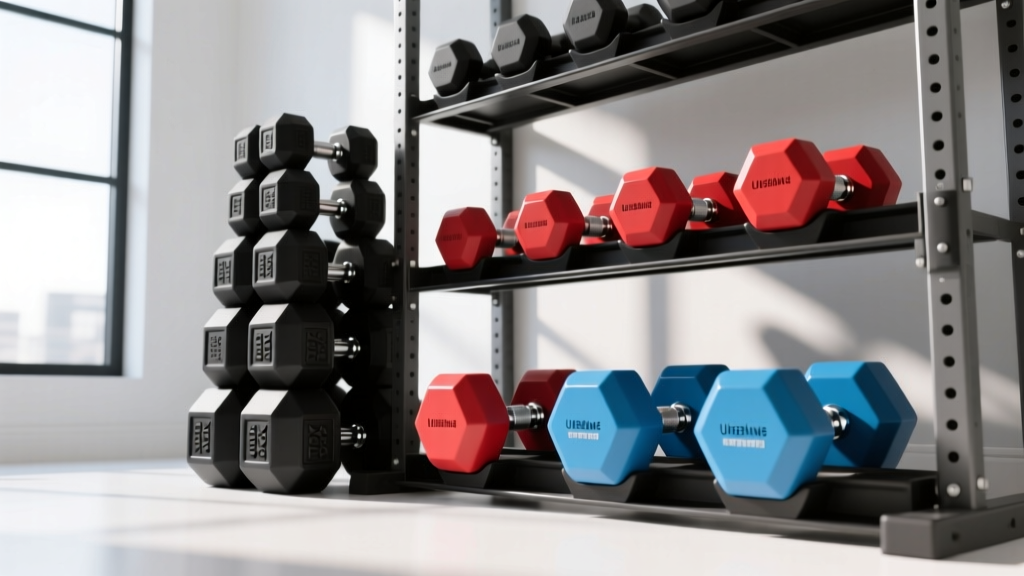
Incline Dumbbell Hammer Curls: Rack vs Stand Setup Errors
Troubleshoot common incline dumbbell hammer curls mistakes. Compare power rack, squat rack, and squat stand setups for optimal clearance and safety.

The Intersection of Biomechanics and Steel: Why Rack Choice Matters for Arm Day
When lifters think about the incline dumbbell hammer curl, they rarely consider the steel cage surrounding them. They focus on the stretch of the long head of the biceps and the activation of the brachialis. However, executing this movement inside a confined space introduces a complex spatial puzzle. The neutral grip required for hammer curls alters your elbow tracking and the lateral arc of the dumbbells, making the choice between a power rack, a squat rack, and a squat stand a critical factor in your range of motion and safety.
According to BarBend's biomechanics breakdown, the hammer curl heavily recruits the brachioradialis and brachialis. To maximize this recruitment on an incline, the dumbbells must travel through a full, unobstructed eccentric phase. If your equipment restricts this path, you will instinctively shorten the range of motion or flare your elbows unnaturally, leading to suboptimal hypertrophy and potential anterior shoulder impingement. This guide troubleshoots the most common setup mistakes lifters make when pairing the incline dumbbell hammer curl with different rack configurations.
The Spatial Dilemma: Calculating Dumbbell Clearance
The most frequent point of failure during incline dumbbell hammer curls inside a rack is the collision between the dumbbell heads and the steel uprights. To understand why this happens, we must look at the mathematics of human wingspan combined with equipment dimensions.
Consider a lifter with a 70-inch wingspan holding 50-pound Rogue Rubber Hex Dumbbells (which measure roughly 14 inches in total length each). At the bottom of the eccentric phase, the total lateral span from the tip of the left dumbbell to the tip of the right dumbbell can easily exceed 50 inches. If you are training inside a rack with a narrow interior footprint, your equipment will physically block your range of motion.
| Rack Type | Example Model | Interior Width | Clearance Risk for Incline Hammer Curls |
|---|---|---|---|
| Standard Power Rack | Titan T-3 Short | 43 inches | High: Tall lifters or those using long-handled DBs will clip the uprights at the bottom of the stretch. |
| Deep Power Rack | Rogue RML-390C | 49 inches | Moderate: Accommodates most lifters, but heavy DBs with wide heads may still graze the 3x3" uprights. |
| Open Squat Stand | Rep Fitness SR-4000 | 48 inches (Open Front) | Low: No side or front enclosures allow for unlimited lateral dumbbell travel and elbow flaring. |
Troubleshooting Setup Mistakes by Rack Type
Each rack category presents unique failure modes when paired with an adjustable bench set to a 30 or 45-degree incline. Below is a troubleshooting matrix to correct the most pervasive errors.
1. Power Rack Mistakes: The "Caged" Eccentric
The Mistake: Placing the adjustable bench dead-center and perfectly parallel to the uprights. During the negative portion of the hammer curl, gravity pulls the dumbbells straight down, but the natural biomechanics of the shoulder joint force a slight lateral arc. In a 43-inch interior rack, the dumbbells smash into the safety straps or the uprights, forcing the lifter to stop three inches short of full extension.
The Fix: Offset the bench. Pull the bench slightly forward so the backrest is closer to the front uprights, allowing the dumbbells to hang outside the rack's footprint at the bottom of the movement. Alternatively, angle the bench 15 degrees off-center. This creates an asymmetric clearance that accommodates the natural rotational path of the humerus during the stretch.
2. Squat Rack Mistakes: Top Crossmember Interference
The Mistake: Using an open-front squat rack (which lacks a front bottom crossbar) but failing to account for the top crossmember. Lifters often slide the incline bench too far back to achieve a deeper stretch. However, the top crossmember of many squat racks sits at 80 to 84 inches. If you are tall and using a steep 60-degree incline, your head or the dumbbells will strike the top bar during the concentric phase.
The Fix: Limit your incline angle to 30 degrees. According to Rogue Fitness rack specifications and general biomechanical consensus, a 30-degree incline provides the optimal stretch for the biceps brachii long head without requiring excessive vertical clearance. Keep the bench pulled forward to ensure your head remains well clear of the top structural supports.
3. Squat Stand Mistakes: The Illusion of Spotter Arms
The Mistake: Relying on squat stand spotter arms for safety during heavy incline dumbbell work. Lifters set the spotter arms at chest height, assuming they will catch the dumbbells if their grip fails. This is a catastrophic misunderstanding of physics. When you fail an incline hammer curl, your elbows drop and your forearms pronate; the dumbbells fall laterally and downward, completely missing the spotter arms and crashing toward the floor—or worse, rebounding into your torso.
The Fix: Abandon spotter arms for this specific exercise. Instead, utilize the "knee-tuck bail-out" protocol (detailed below) or train with a dedicated spotter standing behind the bench head. If you must train alone with heavy loads (e.g., 80+ lb dumbbells), a power rack with low-set pin-and-pipe safeties is the only rig that offers marginal protection, though open stands remain superior for pure movement freedom.
Bench Anchoring: Torque and Stability Failures
A frequently overlooked variable in the free weights and racks ecosystem is the bench itself. The incline dumbbell hammer curl generates immense rotational torque, particularly during the initial "kick-up" phase where you use your thighs to hoist the weights into position.
WARNING: Lightweight Bench Tipping
Using a sub-50 lb adjustable bench on a squat stand or inside a rack without bolting it down is a severe hazard. When you lean back onto a 45-degree incline with two 60 lb dumbbells resting on your knees, the center of gravity shifts dramatically backward. If the bench lacks a long, weighted rear base, it will tip backward, sending you and the weights crashing to the floor.
Solution: Invest in a heavy-duty bench like the Rep Fitness AB-3100 2.0 (weighing over 85 lbs with a wide rear footprint) or ensure your bench is bolted to the rack's crossmembers using manufacturer-specific bench brackets.
Step-by-Step: The Knee-Tuck Bail-Out Protocol
Because spotter arms fail to catch dumbbells during incline curls, you must master the mechanical bail-out. This is essential when training to failure inside any rack or stand setup.
- Recognize Failure Early: Do not attempt one last rep if your brachioradialis is shaking. Failure on an incline is harder to escape than on a flat bench due to gravity's direct pull on the shoulder joint.
- Tuck the Elbows: Instead of letting the dumbbells fall outward, violently tuck your elbows into your ribs. This shortens the lever arm and reduces the torque on your shoulders.
- Bring the Knees Up: Simultaneously drive your knees upward toward your chest.
- The Roll: Use the momentum of your knees and the weight of the dumbbells to roll your entire body forward, transitioning from a supine incline position to a seated, hinged-forward position.
- The Drop: Allow the dumbbells to drop straight down to the floor between your legs, keeping your wrists neutral to avoid sprains upon impact.
Equipment Investment: What You Actually Need
If your primary goal is isolated hypertrophy work like incline dumbbell hammer curls, you do not necessarily need a $1,200 enclosed power rack. In fact, an enclosed rack often hinders the movement. For optimal arm and shoulder isolation work, an open squat stand paired with a heavy, commercial-grade adjustable bench offers the best return on investment. You gain the ability to rack heavy dumbbells safely (using a stand with integrated DB shelves or a nearby rack) while enjoying 100% unobstructed lateral movement for your curls, lateral raises, and incline presses.
Ultimately, understanding the spatial geometry of your rig transforms the incline dumbbell hammer curl from a frustrating, restricted movement into a premier mass-builder for the brachialis and forearm complex. Audit your rack's interior width, adjust your bench angle, and respect the physics of the bail-out to train safely and effectively.
More gear to consider
All reviews
Dumbbell Chest Press Safety: Rack Storage & Maintenance Guide
Arm Raises with Dumbbells: Mistakes & Adjustable Dumbbell Fixes

Dumbbell Workout Plan for Beginners: Neoprene Weight Mistakes

Beyond 200 Pound Dumbbells: Barbell Weight & Knurling Mistakes
Tricep Pushdown Alternative with Dumbbells: 2026 Buyer Guide