EZ vs Straight Bar: Gear Care & Walking Dumbbell Workout Tips
Compare EZ curl vs straight bars for joint longevity and gear maintenance, plus how to integrate a walking dumbbell workout for total arm care.

The Dual Meaning of Longevity in Iron Sports
When dedicated lifters talk about 'longevity,' they are almost always referring to one of two things: the physical lifespan of their joints and connective tissues, or the literal lifespan of the iron they lift. In 2026, with premium home gym equipment prices remaining steep, maximizing both is non-negotiable. Nowhere is this dual-maintenance philosophy more critical than in arm training, where the debate between the EZ curl bar and the straight barbell has raged for decades.
Choosing the right barbell isn't just about bicep peaks; it is about managing torque on the radioulnar joint and preventing medial epicondylitis. Furthermore, the physical maintenance of these specialized bars requires distinct care protocols. Finally, true arm longevity requires active recovery methodologies—specifically, integrating a walking dumbbell workout to flush the joints with synovial fluid without subjecting them to heavy static loads. Here is your comprehensive guide to mastering arm training longevity, from the knurling on your bar to the health of your elbows.
Joint Longevity: EZ Curl Bar vs. Straight Bar Biomechanics
The standard Olympic straight bar forces the wrists and elbows into full supination (palms facing completely up). While this provides a direct line of pull for the biceps brachii, it places immense valgus stress on the elbow and compresses the wrist joint. According to the Cleveland Clinic, repetitive stress in awkward, fully supinated positions is a primary catalyst for tendinopathy and epicondylitis (golfer's and tennis elbow).
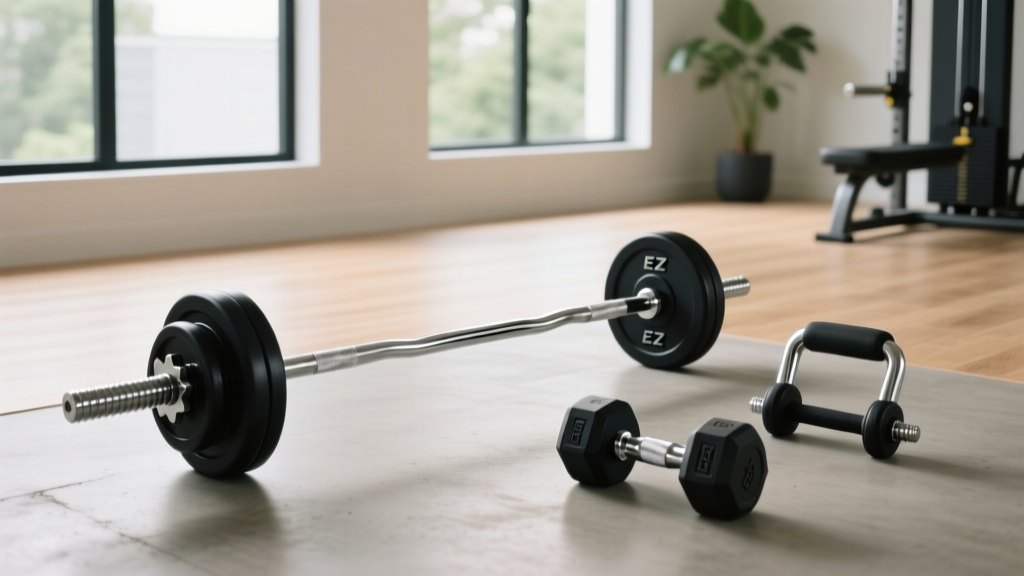
The EZ curl bar was engineered specifically to mitigate this. By offering angled grips—typically set at 15-degree and 30-degree bends—the EZ bar allows for a semi-supinated grip. This neutral-ish wrist position aligns the radius and ulna bones more naturally, drastically reducing elbow torque while shifting a slight amount of the mechanical load to the brachialis and brachioradialis.
| Feature | Olympic Straight Bar | Standard EZ Curl Bar |
|---|---|---|
| Wrist Angle | Full Supination (0°) | Semi-Supinated (15° to 30°) |
| Elbow Torque | High (Valgus Stress) | Low to Moderate |
| Primary Muscle Bias | Biceps Brachii (Short/Long Head) | Brachialis & Brachioradialis |
| Joint Longevity Risk | Higher for aging lifters | Lower; highly recommended for rehab |
| Average Shaft Diameter | 28mm - 29mm | 25mm - 28mm (Varies by brand) |
Gear Maintenance: Preserving Your Bars for Decades
While joint longevity keeps you in the gym, gear longevity protects your wallet. A high-end straight bar like the Eleiko Olympic Straight Bar (retailing well over $900) or a specialized Rogue Curl Bar (around $225) are investments that should outlive your lifting career. However, their maintenance requirements differ vastly due to their physical geometry.
Straight Bar Care: The Standard Protocol
Straight bars are relatively easy to maintain. The primary enemy is oxidized chalk and sweat trapped in the knurling, which leads to rust and pitting. BarBend and other industry experts recommend a weekly maintenance routine: use a stiff nylon brush (never a wire brush, which will strip zinc or Cerakote finishes) to dislodge chalk, followed by a light wipe-down with a microfiber cloth dampened with 3-in-One oil or mineral oil. This displaces moisture and leaves a microscopic protective barrier.
EZ Curl Bar Care: Navigating the Camber Bends
The EZ curl bar presents a unique maintenance nightmare: the camber bends. The sharp 15° and 30° angles act as natural traps for dead skin, chalk dust, and sweat. If left unchecked, rust will form in the crevices of the bends long before the straight shafts show any wear.
⚠️ The Chalk Trap Warning: Never use liquid chalk on an EZ curl bar if you can avoid it. Liquid chalk dries into a hardened resin that cakes into the tight inner angles of the camber bends, requiring a brass wire brush and intense elbow grease to remove—which will inevitably scratch softer zinc coatings. Stick to standard block chalk and brush the bends immediately after your workout.Active Recovery: The Walking Dumbbell Workout
Heavy barbell curling, whether on a straight or EZ bar, creates micro-tears in the muscle and compresses the elbow joint. To promote tissue repair and joint longevity, you must introduce dynamic, low-impact blood flow. This is where a walking dumbbell workout becomes a secret weapon for serious lifters.
Instead of static isolation movements on your rest days, a walking dumbbell workout utilizes dynamic tension and systemic movement to pump nutrient-rich blood into the forearms, biceps, and rotator cuffs without locking the joints under heavy, static loads. Holding dumbbells while in motion forces the stabilizer muscles to fire continuously, promoting synovial fluid production in the elbow and shoulder capsules.
3 Walking Movements for Arm & Joint Health
- Heavy Farmer's Carries (3x60 seconds): Grab a pair of heavy hex dumbbells (e.g., 50-70 lbs each). Walk at a steady pace. This builds immense grip strength and fortifies the wrist flexors without the repetitive flexion/extension that causes tendinitis.
- Overhead Waiter's Walks (3x40 yards): Press a light dumbbell (15-25 lbs) overhead and walk. This stabilizes the shoulder girdle and forces the triceps and elbow joint to maintain a locked, stable position under a dynamic load, strengthening the connective tissue around the olecranon.
- Walking Dumbbell Hammer Curls (3x20 yards): Using light neoprene or urethane dumbbells (10-15 lbs), perform continuous hammer curls while walking forward. The neutral grip completely spares the radioulnar joint while flushing the brachialis with lactic acid and healing blood flow.
The 2026 Longevity Protocol: Training & Care Schedule
To synthesize the biomechanics of the bars, the maintenance of the iron, and the active recovery of the walking dumbbell workout, follow this weekly longevity protocol:
Monday (Heavy Load): Straight Barbell Curls (3x8). Focus on strict form. Gear Care: Post-workout nylon brush and microfiber wipe-down of the entire shaft.
Wednesday (Hypertrophy & Angles): EZ Curl Bar Preacher Curls (3x12). Utilize the 30° bends to spare the wrists. Gear Care: Deep clean the camber bends with a nylon brush and a drop of mineral oil.
Friday (Active Recovery): The Walking Dumbbell Workout (Farmer's carries, Waiter's walks, and light walking hammer curls). Gear Care: Wipe down dumbbell handles; check hex bolts on adjustable dumbbells if applicable.
Investment Breakdown: Cost vs. Lifespan
When outfitting your rack for long-term arm health, understanding the cost-to-lifespan ratio is vital. Budget bars often feature inferior sleeve bushings and thin chrome plating that will flake within three years of heavy use.
| Equipment Tier | Average Cost (2026) | Expected Lifespan | Maintenance Frequency |
|---|---|---|---|
| Budget Straight Bar | $120 - $160 | 3 - 5 Years | Weekly (Prone to rapid oxidation) |
| Premium Straight Bar (e.g., Rogue Ohio) | $295 - $350 | Lifetime | Bi-Weekly |
| Standard EZ Curl Bar | $130 - $180 | 5 - 8 Years | Weekly (Bends trap moisture) |
| Premium EZ Curl Bar (e.g., Rogue Curl Bar) | $225 - $275 | Lifetime | Weekly (Cerakote/Zinc requires care) |
Ultimately, whether you are gripping the aggressive knurl of a straight bar or the ergonomic bends of an EZ bar, your longevity in the iron game relies on a holistic approach. By respecting the biomechanics of your elbows, meticulously maintaining your equipment's finish, and utilizing a walking dumbbell workout to promote active joint recovery, you ensure that both your body and your gear will easily go the distance.
More gear to consider
All reviews
Bumper vs Iron Plates: Gym Layout & Close Grip Row Dumbbell Space
2026 Kettlebell Guide: Cast Iron vs Competition & Dumbbell Side Curl

One Arm Dumbbell Row: Complete Neoprene Setup Guide
Beginner Guide to Dumbbell Scoops Using Neoprene Weights

Bumper Plate vs Iron Plate: Setup for the Single Arm Dumbbell Fly