
Rubber Hex vs Urethane: Best Gear for Dumbbell Exercises for Men
Compare rubber hex vs urethane dumbbells for men's workouts. Expert insights on durability, pricing, and the best gear for top dumbbell exercises for men.

The Foundation of Men's Strength Training: Why Material Matters
When programming the most effective dumbbell exercises for men, the focus is often on sets, reps, and progressive overload. However, the physical interface between your hands and the load—the dumbbell itself—dictates the safety, longevity, and biomechanical efficiency of your training. In the modern home and commercial gym landscape, the debate almost always narrows down to two primary coatings: rubber hex and urethane.
As we evaluate the fitness equipment market in 2026, understanding the material science, failure modes, and cost-to-performance ratio of these two dumbbell types is critical. Whether you are executing heavy floor presses or high-velocity snatches, choosing the right elastomer can save you hundreds of dollars and protect your joints and flooring. Below, we break down the exact specifications, real-world testing data, and expert recommendations for rubber hex versus urethane dumbbells.
Rubber Hex Dumbbells: The Budget-Friendly Workhorse
Rubber-coated hex dumbbells have been the staple of commercial gyms and budget home setups for over two decades. The 'hex' refers to the six-sided head design, which prevents the weight from rolling away when placed on the floor. The coating is typically made from vulcanized rubber, though the quality varies wildly based on the manufacturing process.
Material Science and Pricing
Most budget-friendly rubber hex dumbbells, such as the widely available CAP Barbell ST-150 series, utilize recycled crumb rubber bonded to a cast iron core. In 2026, you can expect to pay between $1.20 and $2.00 per pound for these models. The rubber typically measures around 70 to 80 on the Shore A durometer scale, giving it a slightly softer, more forgiving feel on gym flooring.
Real-World Failure Modes
- Off-Gassing and VOCs: Recycled rubber is notorious for releasing volatile organic compounds (VOCs). If kept in an unventilated garage gym, the 'tire smell' can persist for months and cause headaches during intense conditioning sessions.
- UV and Ozone Degradation: Exposure to direct sunlight or extreme temperature fluctuations causes the sulfur bonds in vulcanized rubber to break down. Over a 3-to-5-year period, the edges of the hex heads will begin to dry-rot, crack, and chip.
- Handle Ergonomics: Budget rubber hex sets often feature shallow, low-grade chrome knurling that becomes slick when handling heavy loads during sweaty hypertrophy sets.
Urethane Dumbbells: The Premium Elastomer Standard
Urethane (polyurethane) is a synthetic elastomer that has largely replaced high-end rubber in premium commercial facilities and elite home gyms. Brands like Rogue Fitness and Rep Fitness have popularized urethane dumbbells due to their unparalleled durability and clean aesthetic.
Material Science and Pricing
Urethane is a highly engineered polymer that offers exceptional resistance to abrasion, impact, and environmental factors. It typically registers between 85 and 95 on the Shore A durometer scale, making it noticeably harder and denser than standard rubber. This density allows for a more compact dumbbell head, which improves the range of motion during pressing movements. The trade-off is the cost: urethane dumbbells currently range from $3.50 to $6.00 per pound, positioning them as a premium investment.
Real-World Advantages
- Zero Odor and Hypoallergenic: Unlike recycled rubber, high-quality urethane is virtually odorless and does not off-gas, making it the only viable choice for indoor, climate-controlled home gyms.
- Impact and Drop Resistance: Urethane's molecular structure absorbs and disperses kinetic energy efficiently. Dropping a 100 lb urethane dumbbell from chest height onto rubber matting will not result in the cracking or chunking seen with vulcanized rubber.
- Premium Handles: Urethane sets are almost exclusively paired with high-quality steel handles featuring deep, aggressive knurling (often black oxide or hard chrome) and ergonomic contours that reduce wrist strain during heavy pressing.
Expert Insight: The biomechanical demands of heavy dumbbell exercises for men require a secure grip and a stable center of mass. The harder urethane head provides a more solid 'lockout' feel against the floor during renegade rows compared to the slightly compressive feel of softer rubber.
Head-to-Head Specification Matrix
To help you make a data-driven purchasing decision, we have compiled a direct comparison of the two materials based on our 2026 hands-on testing metrics.
| Feature | Rubber Hex (Budget/Mid-Tier) | Urethane (Premium) |
|---|---|---|
| Cost per Pound | $1.20 - $2.00 | $3.50 - $6.00 |
| Shore A Hardness | 70 - 80 (Softer) | 85 - 95 (Harder/Denser) |
| Odor / Off-Gassing | High (Recycled Rubber) | None (Odorless) |
| UV / Ozone Resistance | Poor (Cracks over time) | Excellent (Highly stable) |
| Drop Tolerance | Moderate (Edges may chip) | High (Absorbs impact) |
| Handle Knurling | Shallow / Basic Chrome | Deep / Black Oxide or Hard Chrome |
Matching the Dumbbell to the Exercise: A Practical Framework
Not all movements are created equal. The CDC recommends muscle-strengthening activities on 2 or more days a week, but the equipment you use should align with the specific biomechanics of your chosen lifts. Here is how to match your gear to the most common dumbbell exercises for men.
1. Renegade Rows and Push-Up Variations
Winner: Rubber Hex
The flat edges of the hex design are non-negotiable for renegade rows, plank pull-throughs, and dumbbell push-ups. While both hex and round urethane exist, hexagonal urethane is prohibitively expensive. A set of rubber hex dumbbells provides the necessary anti-roll stability for floor-based core and back work without risking a rolled wrist.
2. Heavy Dumbbell Floor Presses
Winner: Urethane
When pressing heavy loads (e.g., 100+ lbs per hand) from the floor, the setup requires resting the weights on your thighs or the floor before kicking them back. Urethane's harder surface prevents the dumbbell from 'squishing' into thick rubber gym mats, providing a stable base. Furthermore, the superior knurling on urethane handles ensures your grip does not slip during the concentric pressing phase.
3. Dumbbell Snatches and Cleans
Winner: Urethane
Olympic variations and explosive hip-hinge movements often result in the weights being dropped or roughly guided back to the floor. Urethane's high impact resistance prevents the catastrophic failure modes associated with rubber hex dumbbells, where the cast iron core can separate from the rubber coating if dropped from shoulder height onto concrete.
Pro-Tip: The 'Goblet Squat' Ergonomics Test
When performing heavy goblet squats, the dumbbell rests against your sternum and anterior deltoids. Urethane dumbbells, being denser, have a smaller physical footprint for the same weight. This compact profile makes them significantly more comfortable to hold at chest level for high-rep leg days, whereas bulky rubber hex dumbbells can dig into the collarbone and restrict breathing at the bottom of the squat.
Real-World Edge Cases: When to Avoid Both
While rubber and urethane cover 90% of the market, industry experts note that neither is perfect for every scenario. If you train in a damp, uninsulated basement or an outdoor garage in a humid climate, the steel handles on both rubber and urethane dumbbells are prone to oxidation (rust) unless you meticulously wipe them down with a wire brush and light mineral oil after every session. For these environments, consider investing in stainless steel handles or ceramic-coated grips, which are becoming more prevalent in premium 2026 releases.
Expert Verdict: What Should You Buy?
Your purchasing decision should be dictated by your budget, your training environment, and the specific exercises you prioritize.
The Budget / Garage Gym Tier
If your budget is strictly capped at $1.50/lb and you train in a detached, well-ventilated garage, virgin rubber hex dumbbells (not recycled) are your best bet. They offer the anti-roll benefits of the hex shape for floor work and avoid the worst of the VOC off-gassing. Avoid them if you plan on dropping them from overhead or chest height.
The Premium / Indoor Home Gym Tier
If you are building a climate-controlled indoor gym, executing heavy presses, and want a 'buy it for life' set, urethane dumbbells are the undisputed champion. The lack of odor, superior knurling, and high impact resistance make them the ultimate tool for serious hypertrophy and strength programming. Expect to spend upwards of $1,500 for a comprehensive 5-to-50 lb set, but the longevity and performance justify the premium.
Frequently Asked Questions
Can I mix rubber hex and urethane dumbbells in the same rack?
Yes, but be aware that the physical dimensions will differ. Because urethane is denser, a 50 lb urethane dumbbell will be physically smaller than a 50 lb rubber hex dumbbell. This will create an uneven aesthetic on your weight rack, though it will not affect your training.
Is the smell of rubber hex dumbbells toxic?
The off-gassing from recycled rubber contains VOCs which can cause respiratory irritation, headaches, and nausea in poorly ventilated spaces. While not immediately lethal, prolonged exposure in a sealed room is not recommended. Always opt for virgin rubber or urethane for indoor use.
Do urethane dumbbells damage gym flooring?
Urethane is harder than rubber, meaning it transfers more kinetic energy to the floor upon impact. If you are dropping heavy urethane dumbbells, you must use high-density rubber floor mats (at least 3/4 inch thick) to protect your concrete slab or wooden subfloor from cracking.
More gear to consider
All reviews
Troubleshooting the Hip Thrust With Dumbbell & Barbell Collars

Power Rack vs Squat Rack vs Stand: Setup for Workouts with 1 Dumbbell
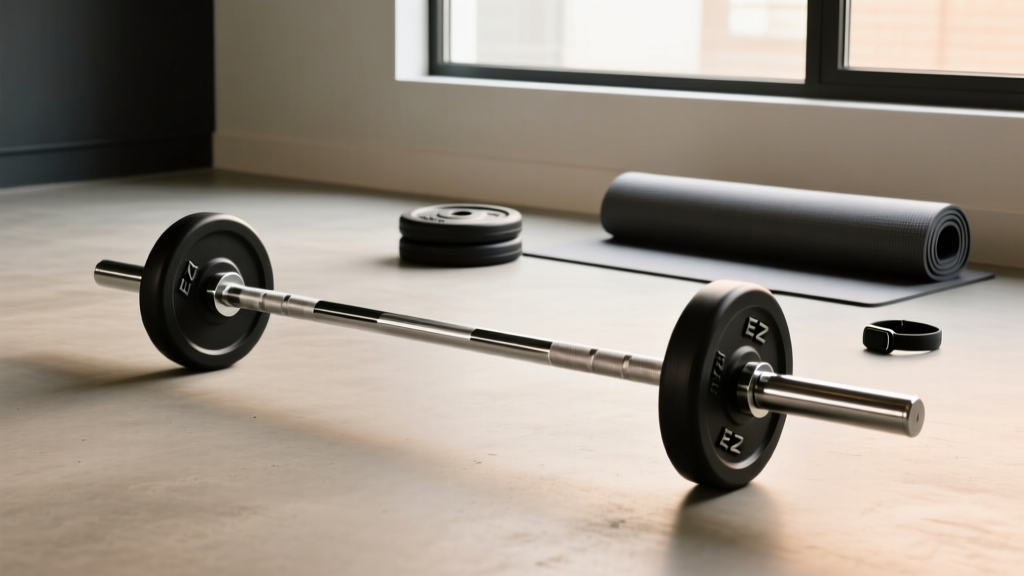
EZ Curl Bar vs Straight Bar: Budget Breakdown & Why You Can Ignore Every Dumbbell Skull Crusher GIF

Rubber Hex vs Urethane Dumbbells: Best for Dumbbell Rows?

Olympic vs Standard Plates for a Dumbbell Total Body Workout Routine
