EZ vs Straight Bar: Care for Bench Dumbbells Exercises
Compare EZ curl and straight bar maintenance. Learn expert care tips to extend gear life and optimize your bench dumbbells exercises in 2026.

The Mechanical Anatomy: Straight Bar vs. EZ Curl Bar
When designing a comprehensive upper-body hypertrophy block, lifters frequently cycle between heavy barbell presses, isolation curls, and targeted bench dumbbells exercises. While the biomechanical differences between a standard straight bar and an EZ curl bar are well-documented, the maintenance and longevity profiles of these two tools are rarely discussed. Understanding how to care for your bars ensures they survive years of high-volume training and seamlessly complement your dumbbell work.
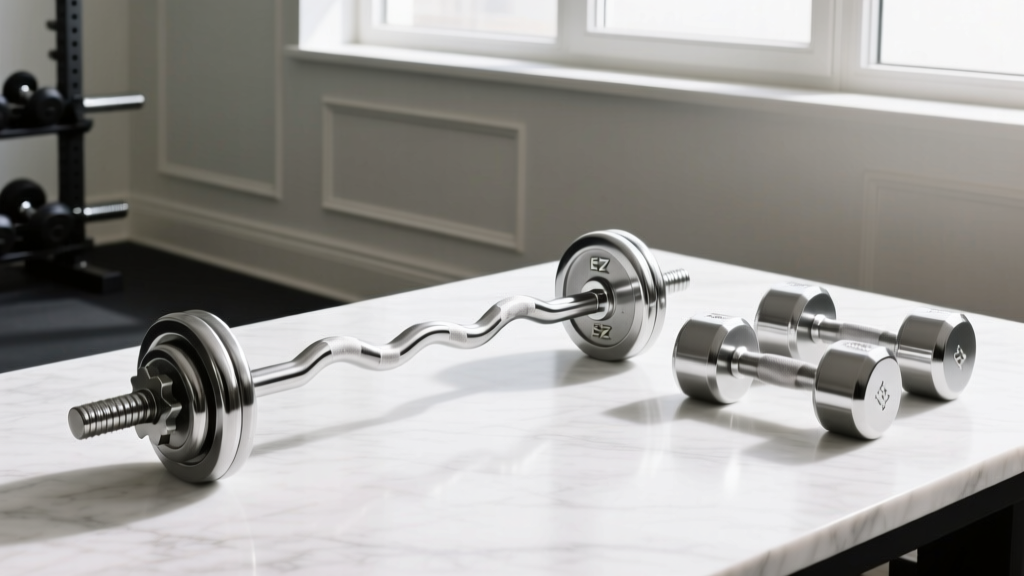
A standard Olympic straight bar (like the Rogue Ohio Bar) features a uniform 28mm to 29mm shaft, 16.4-inch sleeves, and high-capacity bronze or needle bearings. In contrast, a typical EZ curl bar (such as the Cap Barbell Super Curl Bar) features a shorter 47-inch overall length, angled grip segments, and a shaft that often tapers between 25mm and 28mm. This thinner, angled steel is inherently more susceptible to permanent deformation if dropped loaded on a hard surface, making careful handling and storage a primary longevity concern.
The Knurling Trap: Cleaning Angled vs. Straight Grips
The most significant maintenance divergence between the two bars lies in the knurling. Straight bars feature continuous, linear knurling that is relatively easy to sweep with a standard brush. EZ bars, however, feature multi-angled knurling segments separated by smooth, unknurled bends.
These smooth bends act as traps for dead skin, magnesium carbonate (chalk), and sweat. Over time, this acidic mixture accelerates oxidation, particularly on budget bars with basic zinc or bare steel finishes. According to Eleiko's official care guidelines, allowing sweat and chalk to accumulate in the grooves of any barbell will eventually degrade the steel's protective coating and compromise the knurl's bite.
The 3-Step Deep Clean Protocol
- Dry Brushing: Use a stiff nylon or brass brush (never steel wire on zinc or Cerakote finishes) to dislodge dried chalk and skin from the angled grooves. Brush in the direction of the knurl pattern.
- Solvent Wipe: For stubborn grime in the EZ bar's bends, apply a 50/50 mix of white vinegar and water to a microfiber cloth. Wrap the cloth around the shaft and twist back and forth to clean the crevices.
- Neutralization: Wipe the bar down with a lightly damp cloth to remove any acidic residue, followed immediately by a dry towel to prevent flash rusting.
Sleeve Spin and Bushing Longevity
Sleeve rotation is critical for Olympic lifts, but even for strict bodybuilding curls and presses, a seized sleeve places unnecessary torsional stress on your wrists and elbows. Straight bars typically utilize high-quality bronze bushings or needle bearings designed for heavy axial loads. EZ bars, particularly those in the $40 to $80 price range, often rely on basic composite or low-grade brass bushings.
To maintain optimal spin, you must lubricate the sleeves every 3 to 6 months. The Rogue Fitness barbell maintenance guide recommends using a light synthetic oil or 3-in-One oil. If your bar has a removable end-cap (common on higher-end straight bars), remove it, apply a few drops of oil directly to the bushing, and reassemble. For sealed EZ bars, apply a few drops of oil to the seam where the sleeve meets the shaft, then spin the sleeve manually to work the lubricant inward.
Storage Realities: J-Cups vs. Vertical Racks
Improper storage is the leading cause of warped shafts and damaged knurling. Straight bars are easily stored horizontally on standard power rack J-cups or horizontally on wall-mounted gun racks.
EZ curl bars present a unique storage challenge. Their angled bends prevent them from resting flush against standard vertical barbell holders, often causing them to lean awkwardly and scratch adjacent equipment. Furthermore, resting an EZ bar horizontally on standard J-cups often places the hard plastic or metal sleeve directly on the UHMW plastic lining, which can cause wear over time. Invest in a dedicated horizontal wall rack with wide, padded cradles specifically designed to accommodate the shorter, contoured shaft of an EZ bar.
Equipment Maintenance Matrix (2026 Standards)
Use the following matrix to benchmark your current maintenance routine against industry best practices for free weights and racks.
| Equipment Type | Cleaning Frequency | Lubrication Interval | Primary Failure Mode | Est. Lifespan |
|---|---|---|---|---|
| Olympic Straight Bar (Bushing) | Weekly (Brush), Monthly (Wipe) | Every 6 Months | Knurling oxidation, sleeve seizure | 15+ Years |
| Olympic EZ Curl Bar | Bi-Weekly (Deep groove clean) | Every 3-4 Months | Snap-ring rust, shaft bending | 5-10 Years |
| Adjustable Dumbbells (e.g., Nuobell) | After every use (Wipe handle) | Never (Keep dry) | Selector pin jamming, drop damage | 3-7 Years |
| Urethane Hex Dumbbells | Weekly (Mild soap wipe) | N/A | UV degradation, handle rust | 10+ Years |
Transitioning to Bench Dumbbells Exercises: Dumbbell Care
A well-rounded upper body routine doesn't end with barbells. When you transition to bench dumbbells exercises—such as incline presses, flat flyes, or seated Arnold presses—the maintenance paradigm shifts. The NSCA equipment maintenance standards emphasize that free weights requiring complex mechanical adjustments or specific material care demand rigorous facility protocols to ensure user safety and equipment longevity.
Adjustable Dumbbells (Nuobell, PowerBlock, Bowflex)
Adjustable dumbbells are highly space-efficient but incredibly fragile compared to cast iron.
- Nuobell / Dial Systems: The internal selector mechanism is highly sensitive to chalk and moisture. Never use liquid chalk when performing bench dumbbells exercises with adjustable sets. Wipe the handles with a dry microfiber cloth immediately after use to prevent sweat from seeping into the dial housing and corroding the internal steel pins.
- PowerBlock: The open-cage design allows for easy cleaning but exposes the internal weight stack to dust. Use a can of compressed air monthly to blow out debris from the selector pin channel. Check the set screws on the handle assembly every 6 months with an Allen wrench to ensure they haven't vibrated loose during heavy pressing movements.
Urethane and Rubber Hex Dumbbells
If your home gym or commercial facility utilizes fixed-weight hex dumbbells for your bench dumbbells exercises, the primary enemy is environmental degradation. Rubber dumbbells are prone to drying out, cracking, and emitting a strong odor when exposed to direct sunlight or high-ozone environments. Urethane is significantly more durable and UV-resistant, but the steel handles still require care. Wipe down the handles with a mild, non-bleach disinfectant after use, and periodically apply a light coat of mineral oil to the steel handles to prevent surface rust, especially in humid garage gyms.
"The longevity of your free weights is directly proportional to the environment they live in. A $300 barbell stored in a climate-controlled room will outlast a $1,000 barbell left in a humid, unventilated garage. Control the humidity, and you control the rust."
Frequently Asked Questions
Can I use an EZ curl bar for heavy bench presses?
While technically possible, it is highly discouraged. EZ bars have shorter sleeves (often only 5 to 7 inches of loadable space), which limits the number of plates you can safely load. Furthermore, the angled grips force your wrists into an unnatural position for pressing, and the thinner shaft can bend under heavy loads (typically exceeding 200 lbs). Stick to a standard straight bar or transition to bench dumbbells exercises for heavy pressing variations.
How do I remove rust from the bends of my EZ bar?
For light surface rust, create a paste using baking soda and water, apply it to the affected area, let it sit for 15 minutes, and scrub vigorously with a brass brush. For severe pitting, you may need to use a specialized rust dissolver like Evapo-Rust, followed by a thorough re-oiling of the shaft to prevent immediate flash rusting.
Is chalk bad for my dumbbells and barbells?
Magnesium carbonate itself is not corrosive, but it is highly hygroscopic (it absorbs moisture). When chalk mixes with sweat, it forms a mildly acidic paste that clings to knurling and mechanical seams. If you use chalk for your bench dumbbells exercises or barbell curls, you must brush and wipe down your equipment immediately after your workout to prevent accelerated oxidation.
More gear to consider
All reviews
Bumper Plate vs Iron Plate vs a Dumbbell That Changes Weight

Optimize Space: Dumbbell Racks & Shrugs Workout Layouts

EZ Bar vs Straight Bar: The 2026 Alternative Dumbbell Press Trend
Bumper vs Iron Plates & Standing Abs Workout with Dumbbells

Standard vs Olympic Plates: The Dumbbell Curl to Overhead Press Test