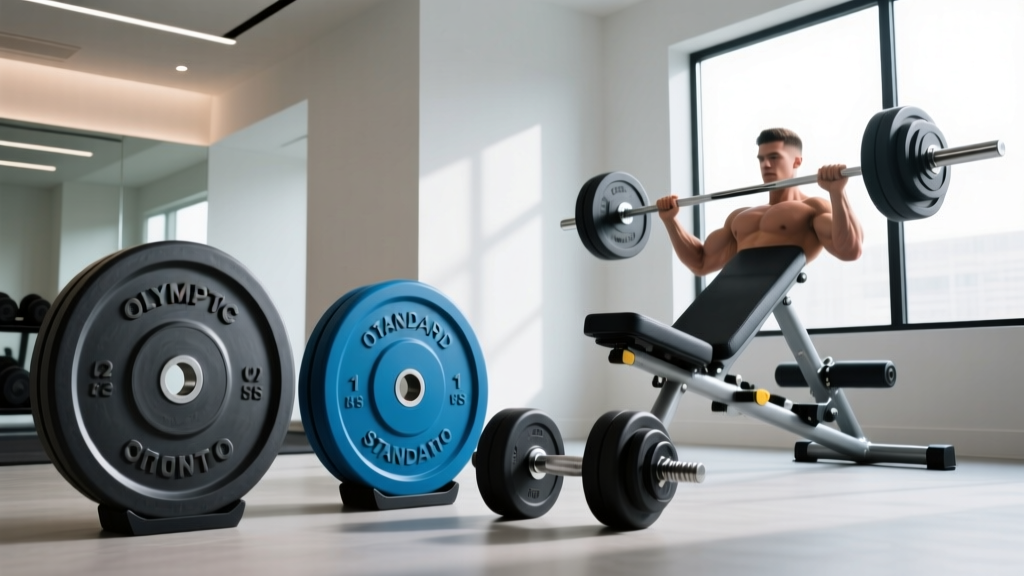
Olympic vs Standard Plates & Incline Dumbbell Fly Alternative Fixes
Troubleshoot home gym mistakes with Olympic vs standard weight plates and learn how to rig a safe, effective incline dumbbell fly alternative.

Building a functional home gym in 2026 requires more than just buying equipment; it requires understanding the mechanical tolerances of your gear. One of the most frequent—and potentially dangerous—mistakes we see at FitGearPulse is the confusion between standard and Olympic weight plates. This mismatch not only damages your equipment but also ruins the biomechanics of specific exercises. Today, we are troubleshooting the 1-inch vs 2-inch plate disaster and exploring how to properly set up a heavy-duty incline dumbbell fly alternative without compromising your shoulder health or your wallet.
The 1-Inch vs 2-Inch Disaster: Standard vs Olympic Plates
The fundamental difference between standard and Olympic plates lies in the center hole diameter and the corresponding sleeve size of the barbells or machines they mount to. While they may look similar from a distance, their structural integrity and load capacities are worlds apart.
- Standard Plates (1-Inch / 25.4mm): Typically made of lower-grade cast iron or cement-filled plastic. These are designed for light-duty home use. The sleeves on standard dumbbell handles or bars are solid steel but thin, meaning they begin to bend or warp under heavy eccentric loads (usually past 150 lbs total).
- Olympic Plates (2-Inch / 50.4mm): The global standard for commercial gyms and serious home setups. Olympic plates feature a 50.4mm center hole and are constructed from high-durometer rubber, urethane, or machined cast iron. They are engineered to withstand massive axial loads and repeated dropping.
The most common troubleshooting ticket we receive involves users purchasing a high-end plate-loaded machine, only to try and save money by using their old standard plates with cheap adapter sleeves. This leads directly into our next critical failure point.
⚠️ TROUBLESHOOTING WARNING: The Adapter Sleeve TrapNever use 1-inch to 2-inch adapter sleeves on plate-loaded isolation machines. These zinc-plated tubes (usually sold for $12-$15 a pair) introduce up to 4mm of radial 'slop' or play. Under heavy tension, this play causes the plates to wobble, shifting the center of mass and creating micro-stutters in the resistance curve. This kinetic stutter is a primary culprit for unexpected pec and rotator cuff strains.
Troubleshooting Plate Wobble and Sleeve Damage
When you mix plate types incorrectly, the failure mode is rarely immediate; it is cumulative. If you force a standard plate onto an Olympic barbell using a snap-on adapter, the adapter acts as a lever arm. During a heavy bench press or fly, the torque applied to the adapter can easily exceed its shear strength, causing the plastic or thin metal to crack.
Furthermore, standard plates lack the precise weight calibration of Olympic plates. A generic 45-lb standard plate might actually weigh 42 lbs, while an Olympic bumper plate from Rogue Fitness is calibrated to within 1% of its stated weight. When performing unilateral movements or precise isolation exercises, this 3-lb discrepancy per side creates an asymmetrical load that forces your stabilizer muscles to overcompensate, leading to joint fatigue.
Rigging the Perfect Incline Dumbbell Fly Alternative
Why are we discussing plate types in the context of an incline dumbbell fly alternative? Because adjustable dumbbells—the staple of most home gyms—are fundamentally flawed for heavy chest flys.
Why Adjustable Dumbbells Fail for Flys
Popular adjustable models like the Nuobell 80lb or PowerBlock Elite USA have bulky, blocky profiles. When you attempt a deep incline dumbbell fly, the physical housing of the dumbbells collides at the bottom of the eccentric stretch, artificially limiting your range of motion. The clavicular head of the pectoralis major requires a deep, unloaded stretch to maximize hypertrophy. If the dumbbells hit each other before your chest is fully stretched, you are leaving gains on the table.
To fix this, experienced lifters turn to a plate-loaded Pec Deck or a dual-cable crossover as their primary incline dumbbell fly alternative. By setting an adjustable bench to a 30-degree incline inside a functional trainer or using a dedicated plate-loaded fly machine (like those from Body-Solid Strength Equipment), you achieve constant tension and a full stretch without the dumbbells colliding.
The Setup Mistake to Avoid
Here is where the plate mistake ruins the exercise. If you use a plate-loaded fly machine as your incline dumbbell fly alternative, but you load it with standard plates using adapters, the rotational inertia is destroyed. Fly machines rely on smooth, frictionless pivots. Wobbling standard plates create lateral drag against the machine's guide rods or pegs, resulting in a 'sticky' feeling at the peak contraction point. The Fix: Ditch the adapters. Invest in a dedicated set of 10-lb and 25-lb Olympic grip plates specifically for your isolation machines. The 2-inch center hole ensures a flush, zero-play fit on the machine's loading pegs, guaranteeing a smooth resistance curve that perfectly mimics the tension profile of a high-end cable system.
Comparison Matrix: Standard vs Olympic Specs
Use this matrix to troubleshoot your current inventory and plan your 2026 equipment upgrades.
| Feature | Standard (1-Inch) | Olympic (2-Inch) |
|---|---|---|
| Center Hole Diameter | 25.4mm (1 Inch) | 50.4mm (2 Inches) |
| Max Load Capacity (Per Sleeve) | ~150 - 250 lbs | 1,000+ lbs |
| Average 2026 Pricing | $1.00 - $1.50 / lb | $2.50 - $6.00 / lb |
| Best Use Case | Light duty, beginner home gyms, storage | Heavy compounds, plate-loaded machines, drops |
| Rotational Inertia Stability | Poor (High wobble risk) | Excellent (Flush fit) |
FAQ: Common Plate and Fly Machine Questions
- Can I use standard plates on an Olympic barbell if I buy thick adapters?
Technically yes, but it is highly discouraged for any exercise where the bar leaves the floor. The adapters shift the weight distribution outward, increasing the whip and bend of the barbell sleeve, which can lead to catastrophic sleeve failure during heavy squats or deadlifts. - What is the best plate type for a chest fly machine?
Urethane or rubber-coated Olympic grip plates. The grip handles make loading the pegs easier, and the 2-inch hole ensures zero lateral play, which is vital for maintaining constant tension during an incline dumbbell fly alternative movement. - Why do my standard plates smell terrible?
Many budget standard plates are manufactured using recycled rubber mixed with industrial adhesives that off-gas volatile organic compounds (VOCs). If your home gym smells like burning tires, switch to virgin rubber or urethane Olympic plates, which are cured differently and emit virtually no odor. - How do I protect my floor when using Olympic plates for flys?
If you are dropping weights or using heavy Olympic plates on a plate-loaded machine, ensure the machine is placed on 3/4-inch thick horse stall mats. Standard plates with sharp cast-iron edges will easily crack home flooring or standard puzzle mats upon impact.
Expert Takeaway: Stop trying to bridge the gap between cheap standard plates and professional-grade Olympic equipment. The $50 you save on adapter sleeves will cost you hundreds in physical therapy when the kinetic stutter of a poorly loaded fly machine causes a pec tear. Invest in proper 2-inch Olympic plates to ensure your incline dumbbell fly alternative is both safe and biomechanically sound.
More gear to consider
All reviews
Olympic vs Standard Weight Plates Guide & Bowflex Dumbbells Review

Rack vs Stand Troubleshooting: Squats and the Dumbbell French Curl

Dumbbell Romanian Deadlift vs. Kettlebell RDL: 2026 Market Trends

Best Adjustable Dumbbells for Dumbbell Rear Delts Setup 2026
Master the Kettle Swing with a Dumbbell: Neoprene Home Guide
