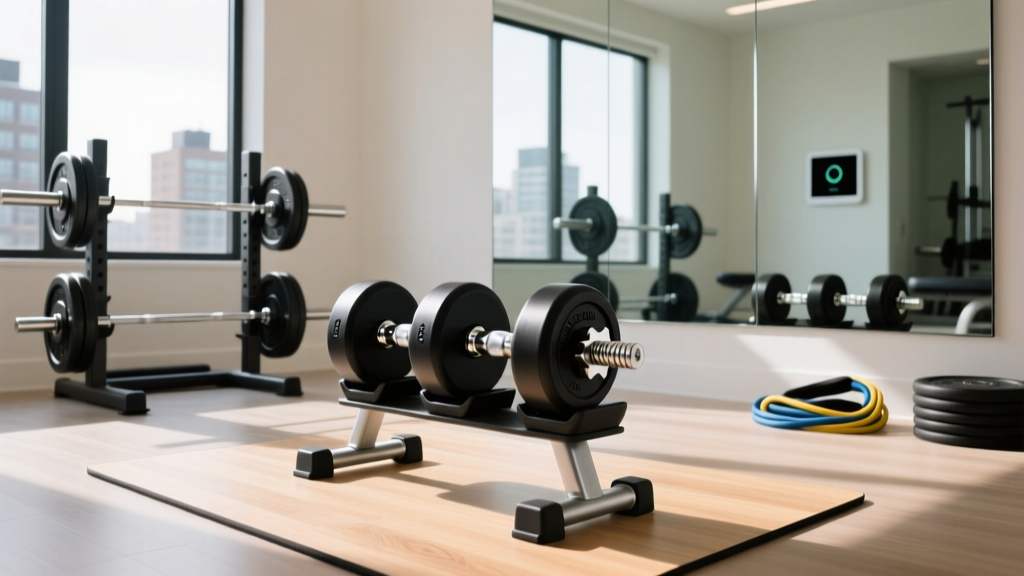
Are Dumbbells Better Than Barbells? Adjustable Set Mistakes & Fixes
Discover if adjustable dumbbells are better than barbells for your home gym. We troubleshoot common equipment mistakes, form errors, and dial failures.

The Home Gym Dilemma: Are Dumbbells Better Than Barbells?
When outfitting a home gym, the debate over whether to invest in a barbell rig or a set of adjustable dumbbells is a universal sticking point. If you are asking, are dumbbells better than barbells? The answer depends entirely on your spatial constraints, budget, and biomechanical needs. For commercial gyms, both are mandatory. But for the home lifter in 2026, a full barbell setup (rack, bar, plates) often clashes with limited square footage and budget caps. This has led to a massive surge in high-end adjustable dumbbells as the primary barbell alternative.
However, transitioning from traditional iron to mechanical adjustable dumbbells introduces a unique set of equipment and form-related mistakes. In this comprehensive troubleshooting guide and review, we will break down the exact failure modes of adjustable dumbbells, compare them directly to barbell training, and provide expert-level fixes to keep your gear functioning flawlessly.
Quick Decision Framework
Choose Barbells If: Your primary goal is absolute maximal load (1RM testing), Olympic weightlifting, or powerlifting specificity, and you have a dedicated garage space with shock-absorbing flooring.
Choose Adjustable Dumbbells If: You prioritize unilateral hypertrophy, joint-friendly ranges of motion, space efficiency, and a budget under $500.
Equipment Matrix: Adjustable Dumbbells vs. Barbell Rigs
Before diving into troubleshooting, it is crucial to understand the quantitative differences between these two modalities. The table below outlines the real-world metrics for a standard home gym setup in 2026.
| Feature | Adjustable Dumbbells (e.g., 5-80 lbs) | Standard Barbell Rig |
|---|---|---|
| Initial Cost | $350 - $600 (per pair) | $900 - $1,500+ (Bar, Plates, Rack) |
| Footprint | ~2 sq. ft. (Crucial for apartments) | ~45 sq. ft. (Minimum safe clearance) |
| Max Load Capacity | 80 lbs per hand (160 lbs total) | 500+ lbs (Limited only by plate math) |
| Biomechanical Freedom | High (Allows natural wrist supination) | Low (Locks wrists into fixed pronation) |
| Durability to Drops | Very Low (Internal mechanisms shatter) | High (Bumper plates absorb impact) |
3 Critical Mistakes When Choosing (and Using) Adjustables
Mistake 1: Treating Polymer Adjustables Like Cast Iron
The most catastrophic mistake home gym owners make is treating adjustable dumbbells with the same reckless abandon as traditional hex dumbbells. Dropping a Bowflex SelectTech or Nuobell from the top of a dumbbell chest press will almost certainly shatter the outer polymer casing, misalign the internal weight plates, and permanently jam the selection dial.
⚠️ Warning: The 'Drop' RuleNever drop adjustable dumbbells. When finishing a set to failure, you must manually lower the dumbbells to your knees or a padded bench before placing them back in their cradles. If you require a drop-set mechanism for high-intensity training, you must use traditional fixed-weight iron or urethane dumbbells.
Mistake 2: Ignoring the Bilateral Deficit
Many lifters switch to a barbell too early in their training journey because they want to move maximum weight, ignoring the phenomenon known as the bilateral deficit. According to research highlighted by the National Strength and Conditioning Association (NSCA), the combined force generated by both limbs working simultaneously (barbell) is often less than the sum of limbs working individually (dumbbells). By rushing to barbells, lifters miss out on the crucial stabilizer muscle recruitment and core anti-rotation demands that adjustable dumbbells naturally enforce. Fix this by keeping unilateral dumbbell work as your primary hypertrophy driver, using the barbell strictly for central nervous system (CNS) overload.
Mistake 3: Overlooking Grip Path Restrictions
Barbells lock your wrists into a fixed, pronated position. For lifters with poor thoracic mobility or previous shoulder impingements, this fixed path during overhead presses or bench presses can lead to severe joint degradation. The American Council on Exercise (ACE) frequently notes that free-moving weights allow for natural joint articulation. Adjustable dumbbells allow you to rotate your wrists into a neutral grip (palms facing each other) during presses, drastically reducing acromioclavicular (AC) joint stress. Failing to utilize this rotational freedom is a massive missed opportunity for joint longevity.
Troubleshooting Guide: Fixing Adjustable Dumbbell Failures
Even with careful handling, mechanical adjustable dumbbells can experience glitches. Here is an expert troubleshooting flowchart for the most common 2026 market models.
1. Bowflex SelectTech 552: Dial Stuck or Refusing to Turn
- The Failure: The dial will not rotate past the 15 lb or 20 lb mark, or it feels 'grinding'.
- The Cause: The 2.5 lb inner plate has become misaligned in the cradle, or a piece of debris (like a torn callous or chalk dust) is wedged in the selection track.
- The Fix: Set both dials to the 5 lb setting. Lift the dumbbell exactly one inch out of the cradle. Gently tap the side of the red polymer casing with the palm of your hand to reseat the inner plates. Lower it back into the cradle and try turning the dial. Never use pliers or excessive force on the dial, as the internal ABS plastic teeth will strip instantly.
2. Nuobell 80: Handle Extends But Plates Don't Lock
- The Failure: You pull the handle out to the desired weight, but when you lift it, the weight stack slides off or feels dangerously loose.
- The Cause: Dust or chalk buildup inside the internal pin track is preventing the spring-loaded locking pin from fully engaging the weight plate grooves.
- The Fix: Use a can of compressed air (keep it under 30 PSI) and blow it directly into the gap where the handle meets the weight stack. Follow up with a dry PTFE (Teflon) lubricant spray. Never use WD-40 or wet silicone sprays, as these will attract gym chalk and create a cement-like sludge inside the mechanism.
3. PowerBlock Elite: Rattling Sound During Presses
- The Failure: A loud metallic clanking or rattling occurs during the eccentric phase of a movement.
- The Cause: The urethane flex bands on the internal weight blocks have degraded, or the add-on kit retention pins are not fully seated.
- The Fix: Inspect the retention pins to ensure the spring-loaded balls are fully clicked into the side rails. If the rattle persists, contact PowerBlock support to order replacement urethane bumpers (typically around $15-$20). The steel-on-steel contact is a sign of worn dampeners, not a structural failure of the welded steel cage.
2026 Adjustable Dumbbell Review: The Best Barbell Alternatives
If you have decided that adjustable dumbbells are the superior choice for your space and goals, here is how the top contenders stack up as barbell replacements this year.
Nuobell 80 (The Closest to Traditional Iron)
Retailing around $445 per pair, the Nuobell 80 uses a twist-handle mechanism that mimics the exact dimensions and knurling feel of a traditional dumbbell. Because it uses solid steel plates rather than polymer-injected shapes, it is significantly more compact. Best for: Lifters who hate the bulky, blocky feel of older adjustable models and want a seamless transition from commercial gym iron.
PowerBlock Elite (The Indestructible Tank)
Priced between $250 and $300 depending on the weight tier, the PowerBlock Elite features a welded steel cage design. While the blocky shape restricts certain movements (like tight-grip curls), it is virtually indestructible compared to dial-based systems. Best for: High-intensity interval training (HIIT) and lifters who are slightly more aggressive with their equipment placement.
Bowflex SelectTech 552 (The Space-Saving Classic)
Still a market leader at $399, the 552 model offers 15 distinct weight increments from 5 to 52.5 lbs. The micro-jumps in weight make it unparalleled for isolation exercises and physical therapy rehab protocols. Best for: Beginners, rehab-focused lifters, and those prioritizing fine-grained progressive overload over heavy maximal loads.
Final Verdict: Which Should You Buy?
So, are dumbbells better than barbells? For the home gym owner constrained by space, budget, and a desire for joint-friendly hypertrophy, a high-quality set of adjustable dumbbells is unequivocally the better investment. A barbell is a specialized tool for absolute load; adjustable dumbbells are a versatile Swiss Army knife for overall physique development. By avoiding the common mistakes of dropping the weights, ignoring unilateral deficits, and failing to maintain the internal mechanisms, your adjustable set will easily outlast a decade of daily training.
More gear to consider
All reviews
How to Maintain Loadable Dumbbells for Dumbbell Oblique Crunches

Barbell Collar Setup for a Safe Dumbbell Workout Program

Olympic vs Standard Plates for the Single Dumbbell Shoulder Raise

Power vs Squat Rack Setup & Inner Thigh Exercises with Dumbbells

Upgrading Chest Workouts With Dumbbells and Bench: Olympic Barbell Weight & Knurling Mistakes
