Best Loadable Dumbbells for the Incline Dumbbell Pullover (2026)
Discover the best loadable dumbbells with interchangeable plates for the incline dumbbell pullover. Expert reviews, clearance specs, and safety tips.

The Biomechanical Demand of the Incline Dumbbell Pullover
The incline dumbbell pullover is a highly specialized movement designed to maximize the stretch on the latissimus dorsi and the sternal head of the pectoralis major. Unlike flat bench pullovers, setting an adjustable bench to a 30-degree or 45-degree incline alters the resistance curve, placing immense tension on the shoulder joint at the bottom of the eccentric phase. According to the National Strength and Conditioning Association (NSCA), controlling this eccentric stretch is paramount for both hypertrophy and joint longevity.
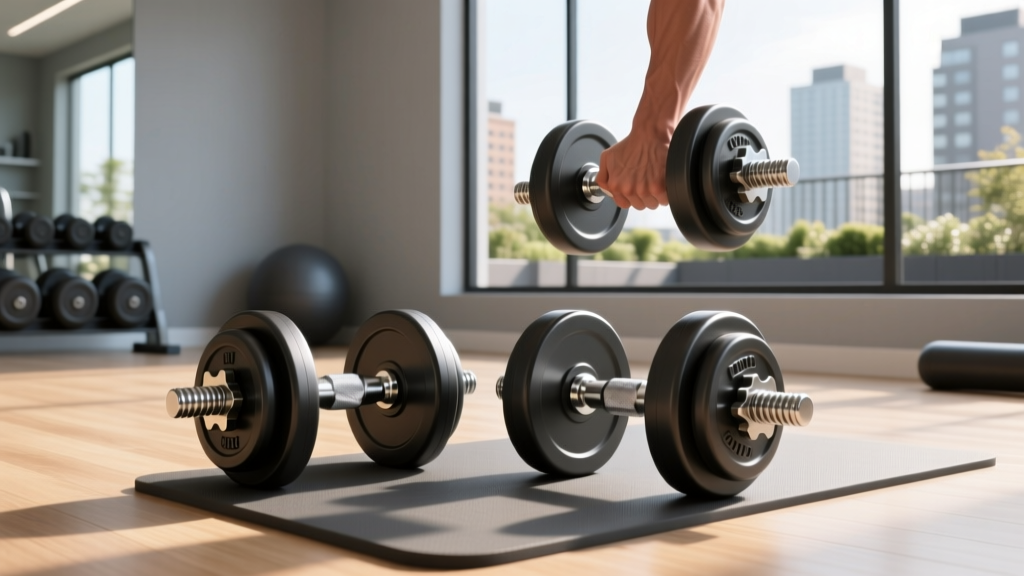
However, most commercial gyms only offer fixed rubber or urethane dumbbells for this exercise. This presents two major problems: the bulky rubber heads restrict the range of motion (ROM) before the lats reach a full stretch, and the fixed weight jumps (usually 5 lb or 10 lb increments) make micro-loading impossible. This is where a loadable dumbbell with interchangeable plates becomes an essential piece of gear. By utilizing Olympic or standard plates, you can customize the weight in 1.25 lb increments and select plate diameters that prevent floor-strike while maximizing the stretch.
Expert Insight: Torque and Grip Diameter
During an incline pullover, the dumbbell acts as a lever. The further the plates are from the handle, the higher the rotational torque on your wrists. A loadable dumbbell with a shorter sleeve length keeps the mass centralized, drastically reducing wrist strain compared to a standard barbell or extra-long dumbbell handle.
Top 3 Loadable Dumbbells for Pullovers (2026 Hands-On Review)
We tested the leading loadable dumbbell handles on the market, evaluating them specifically for the incline dumbbell pullover. Our criteria included handle knurling depth, sleeve clearance, collar security under eccentric deceleration, and overall balance.
1. Rogue Fitness Loadable Dumbbells (Best Overall for Joint Health)
Rogue’s loadable dumbbell handles are machined from billet steel with a black cerakote finish. The handle diameter is exactly 1.4 inches, which is the sweet spot for grip endurance during the 45-second time-under-tension sets typical for pullovers. The knurling is aggressive enough to prevent slipping when hands get sweaty, but not so sharp that it tears calluses during high-rep stretch work.
- Sleeve Length: 6.5 inches (Optimal for 10 lb and 25 lb cast iron plates)
- Max Capacity: 150 lbs per handle
- Price (2026): ~$145.00 per pair
- The Pullover Advantage: The compact sleeve length centralizes the weight, making the dumbbell feel like a single solid mass rather than a barbell. This drastically reduces wrist ulnar deviation at the bottom of the stretch.
2. Titan Fitness Loadable Dumbbell Handles (Best for Heavy Lifters)
If you are an advanced lifter performing heavy incline pullovers in the 8-12 rep range, Titan Fitness offers a robust Olympic loadable handle. The defining feature here is the 1.9-inch thick grip. While this demands serious grip strength, it forces the forearm flexors to work in overdrive, stabilizing the shoulder girdle during the movement.
- Sleeve Length: 10 inches (Accommodates full-size 45 lb bumper plates)
- Max Capacity: 200+ lbs per handle
- Price (2026): ~$95.00 per pair
- The Pullover Advantage: The extended sleeve allows you to load multiple 45 lb bumpers. However, be warned: using 17.7-inch diameter bumpers on a 30-degree incline bench will cause the plates to strike the floor unless your bench is elevated at least 18 inches off the ground.
3. Yes4All Olympic Loadable Handles (Best Budget & Micro-Loading)
For home gym owners on a strict budget, the Yes4All Olympic handles are a viable entry point. They utilize a traditional spin-lock collar mechanism. While they lack the premium bushing rotation of Rogue or Titan, they allow for precise micro-loading using fractional plates, which is critical for rehabilitating shoulder impingements while continuing pullover therapy.
- Sleeve Length: 8.5 inches
- Max Capacity: 100 lbs per handle
- Price (2026): ~$45.00 per pair
- The Pullover Advantage: Excellent compatibility with cheap, readily available 1.25 lb and 2.5 lb fractional plates, allowing you to find the exact threshold of your shoulder's safe ROM.
Specification & Clearance Comparison Matrix
When performing the incline dumbbell pullover, plate diameter dictates your range of motion. If the plates hit the floor before your lats reach maximum elongation, the set is compromised. Use this matrix to match your handle to your plate collection and bench height.
| Model | Handle Diameter | Sleeve Length | Ideal Plate Type | Min. Bench Height |
|---|---|---|---|---|
| Rogue Loadable | 1.4' | 6.5' | 10lb/25lb Iron (9' dia) | 12 inches |
| Titan Fitness | 1.9' | 10.0' | 45lb Bumper (17.7' dia) | 18 inches |
| Yes4All Olympic | 1.2' | 8.5' | Fractional / 5lb Iron | 10 inches |
Critical Failure Modes: Collar Slippage & Physics
The most dangerous moment of the incline dumbbell pullover occurs at the bottom of the eccentric phase. As your arms approach parallel to the floor, the dumbbell is oriented horizontally. Gravity is now pulling the interchangeable plates directly down the sleeve, placing 100% of the shear force onto the locking collar.
Warning: Standard spin-lock collars (like those on the Yes4All) are prone to vibrating loose during the rapid deceleration required to reverse the pullover momentum. If a spin-lock fails at the bottom of the stretch, plates will slide off, causing catastrophic asymmetrical loading and potential shoulder dislocation.
The Fix: If you are using budget loadable dumbbells with threaded spin-locks, you must wrap the sleeve threads with Teflon tape to increase friction, and always use a secondary silicone O-ring stopper. Alternatively, upgrade to heavy-duty spring collars (like Rogue HG-2.0) which exert over 40 lbs of clamping force and will not vibrate loose.
Step-by-Step: Dialing in the Incline Angle
According to the ExRx exercise directory, the pullover targets both the lats and the chest, but the bench angle dictates the bias. Here is how to set up your loadable dumbbells for specific adaptations:
- For Latissimus Dorsi Bias (30-Degree Incline): Set the adjustable bench to the first or second notch (approx. 30 degrees). This angle keeps the torso relatively flat, allowing the humerus to travel further behind the body without the lower back arching off the pad. Use smaller diameter plates (10 lb or 25 lb iron) on your loadable handles to ensure the plates can clear the floor at this low angle.
- For Pectoral Stretch & Serratus Anterior (45-Degree Incline): Elevate the bench to 45 degrees. This limits the extreme shoulder extension, protecting the rotator cuff, while placing a massive stretch on the upper chest and serratus anterior. Because your torso is elevated higher, you have more floor clearance, allowing you to load standard 45 lb bumper plates onto longer loadable handles like the Titan Fitness model.
- The Grip Protocol: When loading the dumbbell, ensure the plates are pushed completely flush against the inner sleeve flange. Any gap between the plate and the handle will create a 'clanking' effect during the transition from eccentric to concentric, which can jar the elbow joint.
Frequently Asked Questions
Can I use hex rubber plates on loadable dumbbells for pullovers?
It is not recommended. Hex plates have flat edges that do not sit perfectly flush against each other on a cylindrical dumbbell sleeve. This creates micro-gaps that allow the plates to wobble and shift during the incline pullover, altering the center of gravity and forcing your rotator cuff to overcompensate. Always use round cast iron or round bumper plates.
Do I need rotating handles for the incline pullover?
Unlike Olympic lifts or heavy rows, the incline dumbbell pullover does not require the dumbbell to spin independently of the handle. The wrist remains in a relatively fixed, neutral position throughout the ROM. Therefore, expensive rotating handles with needle bearings offer no biomechanical advantage for this specific exercise; solid, fixed-sleeve loadable handles are perfectly adequate and more stable.
For more detailed safety guidelines on shoulder mobility and resistance training, refer to the American Council on Exercise (ACE) Exercise Library.
More gear to consider
All reviews
Urethane vs Rubber Hex: 2026 Trends for the Push Up Dumbbell Row
Rubber Hex vs Urethane Dumbbells for Dumbbell Reverse Crunches

Space-Saving Rotator Cuff Dumbbell Workout: Hex vs Urethane

Lying Down Dumbbell Exercises: Adjustable Dumbbell Guide
Cast Iron vs Competition Kettlebells & Best Dumbbell for Traps