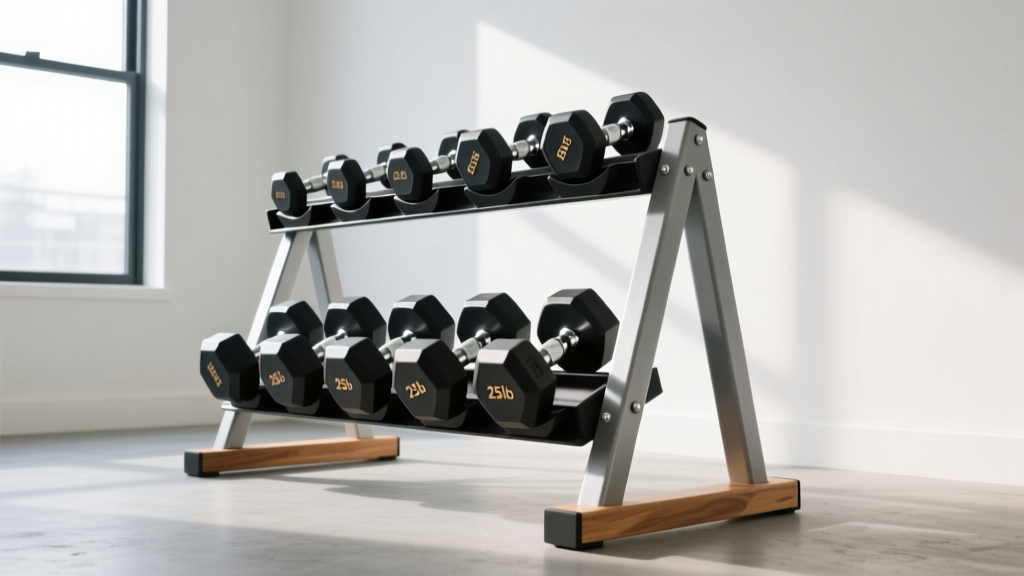
Beyond Dumbbell Snatch Benefits: Beginner's Guide to Barbell Collars
Discover the top dumbbell snatch benefits and learn how to safely transition to heavy barbell work with our step-by-step barbell collar comparison guide.

Many beginners begin their explosive power journey with the dumbbell snatch. The dumbbell snatch benefits are well-documented in strength and conditioning circles: enhanced unilateral coordination, improved shoulder stability, core activation, and a significantly lower barrier to entry than its barbell counterpart. If you fail a dumbbell snatch, you simply drop the weights to your sides. However, as you progress to barbell Olympic lifts, heavy squats, or dynamic compound movements, the equipment requirements and safety protocols change drastically. You can no longer rely on gravity alone to keep your weights in place; you need high-quality barbell collars.
Transitioning from dumbbells to barbells introduces a new physics problem: plate shift. This step-by-step guide will walk you through the essential barbell collar and clamp types comparison, ensuring your home gym setup is safe, secure, and ready for heavy loads in 2026.
Why Plate Security is Non-Negotiable for Beginners
When you load a barbell, the plates rest on the sleeve. During dynamic movements like the barbell snatch, clean and jerk, or even heavy deadlifts, the barbell experiences "whip" (harmonic oscillation). If your collars are loose or inadequate, the plates shift outward. This creates an uneven leverage point. According to the International Weightlifting Federation (IWF) Technical and Competition Rules, collars are strictly mandatory in competition not just for weight calibration, but because asymmetric plate shift during a missed lift can cause the barbell to flip catastrophically, leading to severe wrist, shoulder, or spinal injuries.
⚠️ Safety Warning: Never perform explosive barbell movements (snatches, cleans, push-presses) without collars. The momentum of a 45lb plate sliding just two inches outward can generate enough torque to rip the barbell from your grip.Step-by-Step: Identifying Your Barbell Sleeve
Before buying collars, you must understand your barbell's anatomy. Follow these steps to ensure compatibility:
- Measure the Diameter: Standard Olympic barbells feature a 50mm (approx. 2-inch) sleeve diameter. Standard "home gym" barbells often use 25mm (1-inch) sleeves. Our guide focuses on 50mm Olympic sleeves, the industry standard.
- Check the Sleeve Length: A standard power bar or weightlifting bar has a sleeve length of roughly 16.3 to 16.4 inches. This dictates how many plates you can load before the collar runs out of room.
- Note the Sleeve Finish: Hard Chrome sleeves are highly slick and require collars with aggressive rubber grips. Cerakote sleeves provide more friction but can be scratched by bare metal spring collars.
The Ultimate Comparison: Barbell Collar and Clamp Types
Not all collars are created equal. Below is a structured comparison matrix of the four primary collar types available on the market today.
| Collar Type | Mechanism | Best For | Avg. Price (2026) | Grip Security |
|---|---|---|---|---|
| Spring Collars | Steel wire compression | Light accessory work, budget gyms | $10 - $15 | Low to Medium |
| Clamp / Lock-Jaw | TPR lining with poly latch | Home gyms, CrossFit, general lifting | $25 - $40 | High |
| Spinlock Collars | Threaded metal or nylon screw | Traditional bodybuilding, slow lifts | $30 - $85 | Medium (User dependent) |
| Competition | Precision machined aluminum lever | Olympic weightlifting, meets | $80 - $120 | Maximum |
Deep Dive: Top Collar Categories & Real-World Models
1. Spring Collars (The Budget Starter)
Spring collars, like the Rogue Spring Collars ($12.50), are the most common entry-level option. They consist of heavy-gauge steel wire bent into a circle with two handles. You squeeze the handles to expand the coil, slide it onto the sleeve, and release.
- Pros: Extremely fast to apply; very cheap.
- Cons: Prone to metal fatigue. Over time, the spring loses its tension.
- Failure Mode: On worn hard-chrome sleeves, spring collars will slowly inch outward during high-rep deadlifts or hip thrusts. They also offer zero protection against lateral plate movement during drops.
2. Clamp / Lock-Jaw Collars (The Home Gym Standard)
Clamp collars utilize a rigid outer shell (usually glass-reinforced nylon or polycarbonate) with an inner lining of TPR (Thermoplastic Rubber). The Lock-Jaw Pro 2 ($34.95) is widely considered the gold standard for commercial and home gyms, a fact echoed in BarBend's comprehensive equipment reviews.
- Pros: Exceptional grip on both Cerakote and Chrome sleeves; highly durable; easy to operate with one hand.
- Cons: The TPR lining can degrade after 4-5 years of heavy use in humid environments.
- Pro-Tip: Always ensure the TPR pad is free of chalk dust, which can act as a lubricant and cause the clamp to slip.
3. Spinlock Collars (The Traditionalist)
Spinlocks thread directly onto the barbell sleeve. While older models were heavy cast iron, modern versions like the Eleiko Training Spinlock Collars ($85.00) use precision-machined aluminum and nylon thrust washers to prevent the collar from binding against the plates.
- Pros: Will never accidentally pop off; provides a very tight, flush lock.
- Cons: Very slow to change plates. Not suitable for drop-sets or fast-paced circuit training.
- Failure Mode: Cross-threading. If you force a spinlock on at an angle, you can strip the threads on the collar or the barbell sleeve itself.
4. Competition Calibration Collars (The Elite Tier)
If you are practicing Olympic weightlifting, you need competition collars. The Eleiko Olympic Weightlifting Collars ($95.00) are machined from solid aluminum and feature a heavy-duty lever mechanism. Crucially, each collar weighs exactly 2.5 kg, which is factored into the total competition load.
"While the dumbbell snatch benefits include a safer learning curve for explosive hip extension, transitioning to the barbell snatch requires absolute equipment reliability. A 2.5kg competition collar ensures that the bar's whip is dampened uniformly, protecting the lifter's wrists during the catch phase." — Certified Strength and Conditioning Specialist (CSCS) methodology.
Step-by-Step: How to Properly Secure a Clamp Collar
Even the best clamp collar will fail if applied incorrectly. Follow this sequence for maximum security:
- Load and Settle: Load your plates. Tap the end of the barbell sleeve against the floor (if using bumper plates) to ensure all plates are seated flush against the inner sleeve shoulder.
- Position the Collar: Slide the clamp collar onto the sleeve. Push it completely flush against the outermost plate. Do not leave a gap.
- Engage the Latch: Squeeze the handles together and snap the locking latch into the receiver groove. You should hear a distinct, sharp "click."">
- The Tug Test: Grab the collar and try to twist it left and right. If it rotates freely, the TPR grip is not engaged properly, or the sleeve is too chalky. Wipe the sleeve and reapply.
Budgeting for Your First Set: Cost vs. Longevity
For a beginner transitioning from dumbbells to barbells, we recommend bypassing spring collars entirely. The $20 saved is not worth the risk of a shifted plate during a heavy back squat. Allocate $30 to $45 for a high-quality pair of clamp collars (like the Lock-Jaw Pro 2 or Rogue HG 2.0 Aluminum Collars). According to the National Strength and Conditioning Association (NSCA), establishing strict safety protocols and utilizing proper locking mechanisms is foundational to long-term injury prevention in resistance training.
Frequently Asked Questions (FAQ)
Can I use 1-inch standard collars on an Olympic barbell?
No. Standard 1-inch collars are designed for 25mm sleeves. Attempting to stretch them over a 50mm Olympic sleeve will break the collar and void any manufacturer warranty.
Do collars add to the total weight I am lifting?
Yes. Spring and clamp collars typically weigh between 0.2 lbs and 0.5 lbs each, which is negligible for general fitness. However, competition collars weigh exactly 2.5 kg (5.5 lbs) each, adding 5 kg total to your barbell. Always account for this when calculating your working sets.
Will clamp collars damage my Cerakote barbell?
High-quality clamp collars with TPR (rubber) inner linings will not damage Cerakote. However, bare metal spring collars or damaged spinlocks can scratch and chip the ceramic coating over time.
Final Thoughts
Understanding the dumbbell snatch benefits is a fantastic starting point for developing athletic power, but true strength progression eventually leads to the barbell. When it does, treating your barbell collars as an afterthought is a critical error. By investing in a reliable pair of clamp or competition collars, you ensure that your focus remains on moving the weight, not worrying about it sliding off the sleeve.
More gear to consider
All reviews
Collar Clamp Types Comparison: Beyond Good Forearm Workouts with Dumbbells
Cast Iron vs Competition Kettlebells & Incline Dumbbell Bench Press

EZ Bar vs Straight Bar: Value for a Whole Body Workout with Dumbbells

Neoprene Dumbbells: Best Picks for Dumbbell Upper Body Routines

Bumper Plate vs Iron Plate & Bicep Curl Variations Dumbbells