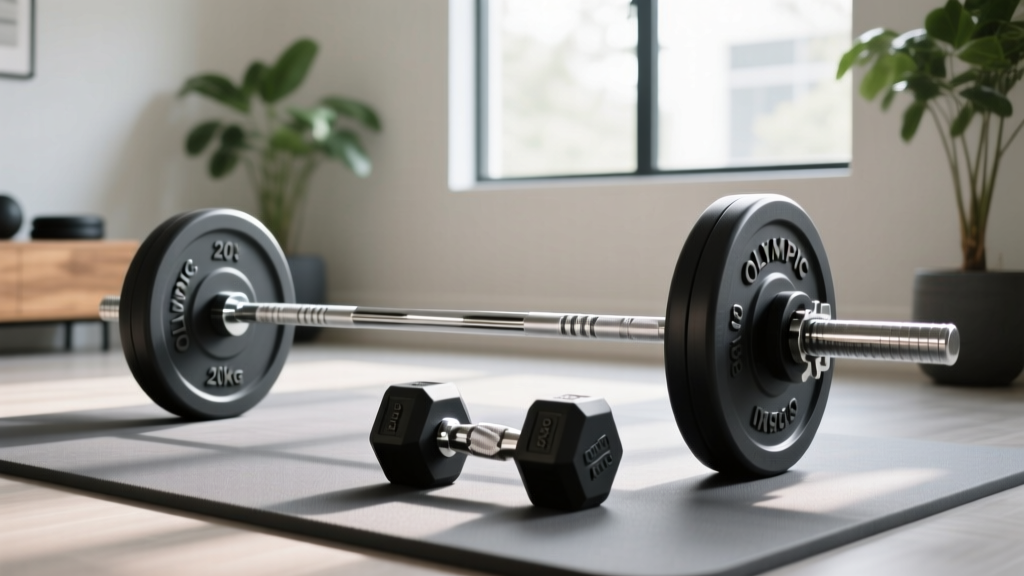
Dumbbell Press vs Barbell Press: Olympic Bar Weight & Knurling Guide
Troubleshoot your dumbbell press vs barbell press mechanics. Learn how Olympic barbell weight, shaft diameter, and knurling impact your bench press.

The Hidden Variable in Dumbbell Press vs Barbell Press Mechanics
The debate surrounding the dumbbell press vs barbell press is a cornerstone of strength training programming. Dumbbells offer an extended range of motion, independent limb stabilization, and reduced shoulder impingement risks due to natural wrist supination. Conversely, the barbell bench press remains the undisputed king for moving absolute maximum loads and overloading the central nervous system. However, when lifters transition from dumbbells to barbells—or attempt to hybridize their pressing routines—they frequently encounter joint pain, grip fatigue, and stalled progress. The culprit is rarely their programming; it is almost always the equipment.
As of 2026, the market is flooded with specialized Olympic barbells, yet most home gym owners and commercial lifters blindly purchase generic bars without considering shaft diameter, tensile strength, or knurling patterns. This troubleshooting guide dissects the common mistakes lifters make regarding Olympic barbell weight and knurling, specifically through the lens of optimizing your pressing mechanics.
Expert Insight: The fixed pronation required in a barbell press places vastly different torque on the radioulnar joint compared to the neutral or semi-supinated grip of a dumbbell press. Your barbell's shaft thickness dictates how well your hand can distribute this load.Troubleshooting Wrist Pain: The 28mm vs 29mm Shaft Mistake
One of the most pervasive complaints when comparing the dumbbell press vs barbell press is wrist and elbow pain during high-volume barbell hypertrophy work. This is usually a biomechanical mismatch caused by using the wrong barbell shaft diameter.
- 28mm Shafts (Olympic Weightlifting Bars): Thinner shafts allow the fingers to wrap more securely, reducing the leverage disadvantage on the wrist joint. Ideal for lifters with smaller hands or those performing high-rep bench pressing.
- 28.5mm Shafts (Multi-Purpose Bars): The gold standard for general strength training. It offers a compromise between the whip of a weightlifting bar and the rigidity of a power bar.
- 29mm Shafts (Powerlifting Bars): Designed for low-rep, maximal load squats and deadlifts. The thicker shaft fills the palm, which is excellent for grip security on pulls, but it forces the wrist into extreme extension during a wide-grip barbell bench press.
The Fix: If your barbell press causes wrist pain that doesn't occur during the dumbbell press, measure your bar's shaft. If it is 29mm, switch to a 28mm or 28.5mm multi-purpose bar. According to BarBend's comprehensive knurling and barbell guide, a thicker shaft increases the moment arm on the wrist joint during pressing movements, directly correlating to flexor tendon strain over a 12-week hypertrophy block.
Knurling Patterns: Why Your Grip Fails on Heavy Presses
Grip slip on the barbell press is a massive troubleshooting issue. Unlike dumbbells, which often feature contoured, rubberized, or heavily textured handles that conform to the palm, a barbell relies entirely on its steel knurling pattern to create friction. Buying a bar with the wrong knurl geometry will force you to over-grip, leading to premature forearm fatigue and a compromised mind-muscle connection with the pectorals.
The Three Primary Knurl Geometries
| Knurl Type | Shape Profile | Best Application | Pressing Suitability |
|---|---|---|---|
| Mountain | Sharp, aggressive peaks | Deadlifts, Powerlifting | Poor: Tears calluses during high-rep benching |
| Volcano | Rimmed edges with a dipped center | Multi-purpose, Hypertrophy | Excellent: Grips skin without tearing |
| Hill | Rounded, shallow mounds | Olympic Lifts, High-Rep | Good: Comfortable, but can slip without chalk |
The Mistake: Purchasing a dedicated powerlifting bar (like the classic Texas Power Bar with its aggressive mountain knurl) for a bodybuilding-style routine heavily focused on the barbell press. You will end up with shredded hands by week three. The Fix: Seek out bars featuring a 'Volcano' knurl. The Rogue Fitness multi-purpose bar lineup utilizes a highly refined volcano knurl that provides exceptional grip security for heavy barbell pressing without destroying the skin, bridging the comfort gap between dumbbell handles and raw steel.
Olympic Barbell Weight & Tensile Strength: Avoiding the 'Whip'
When evaluating the dumbbell press vs barbell press, stabilization is a key differentiator. Dumbbells require the lifter to stabilize two independent objects in three-dimensional space. A barbell connects the hands, but if the bar itself lacks tensile strength, it introduces a fourth dimension of instability: vertical oscillation, or 'whip'.
Many budget barbells sold in 2026 still use 165,000 to 180,000 PSI steel. When you unrack 225 lbs or more, the bar bends and vibrates. This oscillation forces your rotator cuff and stabilizing muscles to fight the bar's kinetic energy rather than focusing on the prime movers (pecs, anterior deltoids, triceps).
2026 Barbell Recommendations for Pressing
Avoid 'Decorative' or Budget Bars: Any barbell priced under $200 in 2026 likely uses low-grade steel with bushings instead of bearings, and lacks proper knurl depth. These are dangerous for heavy bench pressing.| Barbell Model | Tensile Strength | Shaft / Knurl | 2026 Est. Price |
|---|---|---|---|
| Rogue Ohio Bar (Stainless) | 190,000 PSI | 28.5mm / Volcano | $395 - $425 |
| Eleiko Sport Training Bar | 215,000 PSI | 28mm / Moderate Hill | $850 - $920 |
| American Barbell California Bar | 190,000 PSI | 28.5mm / Volcano | $330 - $360 |
For pure pressing mechanics, a 190,000 PSI bar is the sweet spot. It is rigid enough to eliminate distracting whip during the bench press descent, but possesses enough yield strength to prevent permanent deformation if dropped (a common failure mode in cheap bars).
Step-by-Step Troubleshooting Framework for Pressing Pain
If you are struggling with your barbell press form or experiencing discomfort that doesn't exist during the dumbbell press, run through this diagnostic checklist:
- Check the Center Knurl: Does your bar have a center knurl? While meant for back squats, an aggressive center knurl can scrape the chin or neck during low-incline barbell presses. If so, wrap a piece of athletic tape over the center during bench days.
- Evaluate Sleeve Rotation: During the lockout phase of the barbell press, the plates should spin freely. If your bar uses cheap plastic bushings that have warped, the rotational inertia of the plates will transfer into your wrists. Upgrade to a bar with bronze bushings or needle bearings.
- Measure Your Grip Width Against the Knurl Rings: The IPF standard knurl rings are 810mm apart. If you are consistently gripping outside or inside these rings without a tactile reference, your pressing path will become asymmetrical. Use the knurl rings as a mandatory tactile guide for hand placement.
Maintenance Mistakes Ruining Your Knurl
Even a $900 Eleiko bar will feel like a smooth pipe if maintained incorrectly. The most common mistake lifters make is using a stiff steel wire brush to clean chalk out of the knurling. This literally shaves off the peaks of the volcano or mountain knurls, permanently ruining the bar's grip profile.
The Correct Protocol: Use a stiff nylon or brass brush (never steel) and apply a light coat of 3-in-One oil or specialized barbell oil once a month. Wipe it down with a microfiber cloth. This prevents oxidation, which fills the knurl valleys with rust, effectively turning a high-performance pressing bar into a smooth, dangerous hazard.
Final Verdict: Bridging the Gap
The dumbbell press vs barbell press debate will never truly end, as both tools serve distinct physiological purposes. However, your barbell press should never be limited by a poorly manufactured or improperly specified Olympic bar. By prioritizing a 28mm to 28.5mm shaft diameter, selecting a volcano knurl pattern, and ensuring a minimum of 190,000 PSI tensile strength, you eliminate equipment-induced variables. This allows you to focus entirely on progressive overload, safely bridging the gap between the stabilization demands of dumbbells and the absolute strength potential of the barbell.
More gear to consider
All reviews
Beyond the Dumbbell Bracelet: Dumbbell Rack Storage Trends

Stability Ball Dumbbell Exercises: Neoprene Weight Mistakes & Fixes

EZ Curl vs Straight Bar: Neutral Grip Dumbbell Bench Layouts
Cast Iron vs Competition Kettlebells & Hammer Curls with Dumbbells
Cast Iron vs Competition Kettlebells & Dumbbell Pulldown Guide
