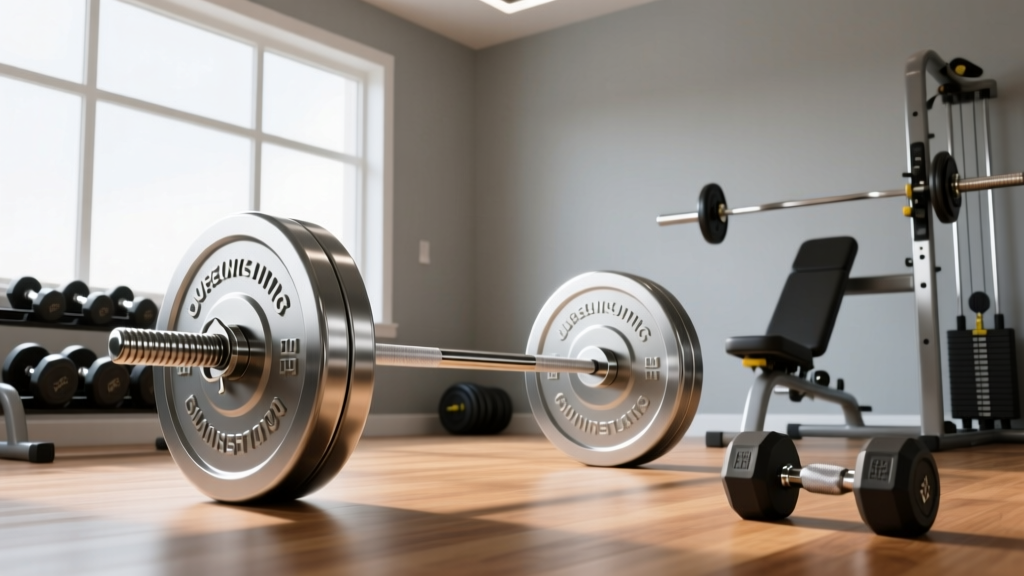
Olympic Barbell Guide: Knurling & Bent Over Dumbbell Row Machine Alts
Master our 2026 Olympic barbell buying guide. Learn weight specs, knurling types, and why free weights beat the bent over dumbbell row machine for back growth.

The Free Weight Advantage: Barbell vs. Bent Over Dumbbell Row Machine
Many beginners start their posterior chain journey on a bent over dumbbell row machine. These chest-supported machines are excellent for isolating the latissimus dorsi and rhomboids without taxing the lower back. However, as you progress in your 2026 fitness journey, relying solely on fixed-path machines leaves massive gaps in your functional strength. Transitioning to an Olympic barbell for bent-over rows, deadlifts, and squats forces your core, erector spinae, and stabilizer muscles to work in synergy. This guide will walk you step-by-step through the exact specifications, steel qualities, and knurling patterns you need to look for when buying your first (or final) Olympic barbell.
Expert Insight: While a bent over dumbbell row machine removes the need for hip-hinge stabilization, a barbell bent-over row builds the exact isometric lower-back strength required to safely deadlift heavy loads. Free weights build athletes; machines build muscles.
Step 1: Selecting Barbell Weight and Shaft Dimensions
The foundation of any home or commercial gym is the standard Olympic barbell. However, 'Olympic' simply refers to the 2-inch (50mm) rotating sleeves that hold bumper plates. The shaft weight and diameter vary based on the intended use case.
| Bar Type | Weight | Shaft Diameter | Best For |
|---|---|---|---|
| Standard Men's | 20kg (44 lbs) | 28.5mm - 29mm | Powerlifting, General Strength, Rows |
| Standard Women's | 15kg (33 lbs) | 25mm | Smaller hands, Olympic Weightlifting |
| Youth / Technique | 10kg (22 lbs) | 22mm - 25mm | Beginners, Form Practice, Rehab |
For general strength training and heavy barbell rows, the 20kg men's bar with a 28.5mm shaft is the gold standard. A 29mm shaft (common in dedicated power bars) can feel too thick for dynamic pulling movements, while a 25mm shaft may dig into the palms during heavy deadlifts.
Step 2: Decoding the Knurling Matrix
Knurling is the cross-hatched pattern machined into the steel shaft. It is the single most important point of contact between you and the weight. According to Garage Gym Labs' comprehensive knurling guide, there are three primary knurl profiles you must understand:
1. Volcano Knurling (The Gold Standard)
Imagine a mountain with the peak sliced off, leaving a sharp, grippy rim. Volcano knurling provides maximum surface area and bite without tearing your calluses. Found on premium 2026 models like the Rogue Ohio Bar.
2. Mountain Knurling (Aggressive)
Sharp, pointed peaks that dig deeply into the skin. Excellent for heavy 1-rep max deadlifts or Olympic lifts where chalk and grip security are paramount, but painful for high-rep bent-over rows.
3. Hill Knurling (Passive)
Rounded, flattened peaks. Often found on budget Amazon barbells or dedicated squat bars. It feels smooth and comfortable but will cause the bar to slip from your hands during heavy, sweaty pulling movements.
Center Knurl Decision: If you plan to back squat, look for a bar with a center knurl to grip your shirt and prevent the bar from sliding down your back. If you primarily do deadlifts, bench presses, and rows, a bar without center knurl will save your shins from getting scraped during the deadlift pull.
Step 3: Tensile Strength, Yield, and Steel Quality
Do not confuse hardness with tensile strength. Tensile strength, measured in PSI (pounds per square inch), dictates how much weight the bar can hold before it snaps. Yield strength dictates how much weight it can hold before it permanently bends.
⚠️ Edge Case Warning: Never purchase a barbell with a tensile strength below 165,000 PSI. If you load 315 lbs onto a budget 130k PSI bar, it will experience plastic deformation—meaning it will bend and stay bent permanently, ruining the sleeve rotation.For a beginner to intermediate lifter in 2026, aim for a minimum of 190,000 PSI. Elite weightlifting bars push 215,000 PSI to allow for the extreme 'whip' (elastic deformation) needed during the clean and jerk. For powerlifting and heavy rows, a stiffer 190k PSI bar is preferred to minimize bar whip.
Step 4: Sleeve Rotation (Bushings vs. Bearings)
The sleeves of an Olympic barbell must rotate independently of the shaft to prevent the rotational force of the weight plates from tearing your wrists during explosive lifts.
- Bronze Bushings: Self-lubricating metal rings that provide a slow, controlled spin. Ideal for powerlifting, heavy rows, and general fitness. They are durable, require zero maintenance, and keep the cost down.
- Needle Bearings: Dozens of tiny steel needles that allow for a lightning-fast, frictionless spin. Mandatory for Olympic weightlifting (snatches, cleans), but overkill and more expensive for general strength training.
2026 Top Olympic Barbell Recommendations
Based on current market pricing, steel quality, and knurling profiles, here are the top three barbells for transitioning away from machines and into serious free-weight training.
1. Rogue Fitness Ohio Bar (Stainless Steel)
Price: ~$395 | Tensile Strength: 190k PSI | Knurl: Volcano
The undisputed king of multi-purpose bars. The stainless steel shaft resists oxidation without the need for harsh chemical coatings, and the composite bushing system provides a smooth, reliable spin. The Rogue Fitness Ohio Bar specifications remain the benchmark against which all other bars are measured.
2. REP Fitness Excalibur Bar
Price: ~$349 | Tensile Strength: 190k PSI | Knurl: Aggressive Volcano
Featuring a unique 4-knurl ring design and a slightly more aggressive bite than the Ohio bar, the Excalibur is phenomenal for lifters who struggle with grip strength during heavy barbell rows and deadlifts.
3. Titan Fitness Elite Olympic Bar
Price: ~$329 | Tensile Strength: 200k PSI | Knurl: Mountain/Volcano Hybrid
A budget-friendly workhorse that punches way above its weight class. At 200k PSI, it offers a slightly higher yield strength than its competitors, making it incredibly resilient to heavy, repeated dropping.
Maintenance and Edge Cases
Even the most expensive Cerakote or Stainless Steel barbell requires basic maintenance to prevent rust, especially in humid garage gyms. Follow this bi-weekly protocol:
- Brush the Knurl: Use a brass or nylon wire brush to scrub out dead skin, chalk, and dirt packed into the knurling valleys. (Never use a steel brush on black oxide or zinc bars, as it will strip the coating).
- Wipe Down: Use a microfiber cloth lightly dampened with a 3-in-1 machine oil or specialized barbell oil.
- Sleeve Lubrication: Once every 6 months, apply a few drops of synthetic grease to the inner sleeve bushings to maintain smooth rotation.
By understanding shaft diameter, knurling profiles, and tensile strength, you can confidently invest in an Olympic barbell that will outlast your fitness journey. Ditch the fixed-path isolation of the bent over dumbbell row machine, chalk up your hands, and build a resilient, functional posterior chain with free weights.
For official competition standards regarding barbell dimensions and knurling ring placements, refer to the International Weightlifting Federation (IWF) technical rulebook.
More gear to consider
All reviews
Barbell Collar Setup & Grip Prep for Dumbbell Curls for Forearms

Dumbbell Rows vs Barbell Rows: 2026 Dumbbell Rack & Storage Guide
Bumper vs Iron Plates: Care & Longevity for Leg Day with Dumbbells

Rubber Hex vs Urethane: Which is Best for the Dumbbell Pull?
EZ Curl vs Straight Bar: Arm Care & PowerBlock Dumbbells Stand Setup
