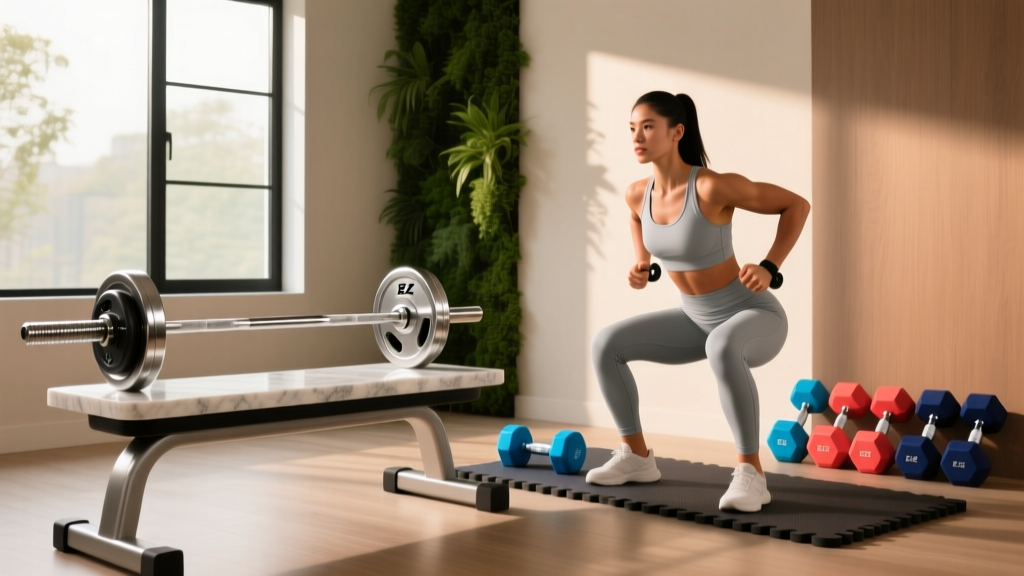
Dumbbell Skull Crusher Exercise: Rubber Hex vs Urethane Budget Guide
Discover the true cost of rubber hex vs urethane dumbbells for the dumbbell skull crusher exercise. We break down durability, grip, and long-term value.

When building a home gym or upgrading commercial equipment, the choice between rubber hex dumbbells and urethane dumbbells is one of the most debated budget decisions in fitness. While both serve the fundamental purpose of providing resistance, their material properties drastically alter the safety, performance, and long-term value of specific isolation movements. Nowhere is this more apparent than during the dumbbell skull crusher exercise, a high-risk, high-reward triceps isolation movement that demands absolute grip security and precise wrist alignment.
As of 2026, the fitness equipment market has seen a widening price gap between premium urethane and budget-tier rubber hex sets. This guide provides a comprehensive budget breakdown and value analysis, helping you determine which material justifies its cost-per-use for your specific training environment.
⚠️ Safety Callout: The Skull Crusher Grip Factor
The dumbbell skull crusher exercise places extreme valgus and varus stress on the wrists at the bottom of the eccentric phase (when the weights are beside your ears). According to ExRx.net's biomechanical database, any slippage in grip or uneven weight distribution can result in severe elbow strain or facial impact. Equipment handle ergonomics are not a luxury here; they are a safety requirement.
Material Showdown: Rubber Hex vs. Urethane
To understand the value proposition, we must first dissect the manufacturing differences that dictate pricing and performance.
1. Rubber Hex Dumbbells (The Budget Standard)
Rubber hex dumbbells are typically constructed with a cast-iron or steel core that is encased in a thick layer of recycled or virgin rubber. The hexagonal heads are designed to prevent rolling, which is theoretically beneficial when resting weights on the floor between sets of skull crushers. However, budget models (often priced between $1.20 and $1.80 per pound) frequently suffer from poor vulcanization, leading to a distinct 'rotten tire' odor and a slick, non-porous handle that becomes dangerous when sweat accumulates.
2. Urethane Dumbbells (The Premium Investment)
Urethane (polyurethane elastomer) is a high-density synthetic polymer that is poured into molds around a solid steel core. It is virtually odorless, UV-resistant (in modern 2026 formulations), and significantly more resistant to abrasion and tearing. Urethane dumbbells command a premium, typically ranging from $2.80 to $4.50+ per pound. The handles on urethane sets are generally thinner, feature aggressive chrome knurling, and offer a much higher tensile strength, directly translating to a safer grip during overhead and supine movements.
Cost & Material Comparison Matrix
| Feature | Rubber Hex (Budget Tier) | Urethane (Premium Tier) |
|---|---|---|
| Average Cost (per lb) | $1.20 - $1.80 | $2.80 - $4.50 |
| Handle Diameter | Thick (35mm - 40mm) | Standard (28mm - 32mm) |
| Knurling Quality | Shallow, often painted over | Deep, aggressive chrome |
| Odor & Off-Gassing | High (months to dissipate) | None / Negligible |
| Estimated Lifespan | 2 - 4 Years (Heavy Use) | 10 - 15+ Years |
| Skull Crusher Safety | Moderate (Slippage risk) | High (Secure lock) |
Budget Breakdown: Upfront Cost vs. Cost-Per-Use
When analyzing the value of free weights, looking solely at the sticker price is a rookie mistake. We must calculate the cost-per-use and factor in the depreciation curve of the materials.
The Rubber Hex Depreciation Curve
Let's assume you purchase a 5-50 lb set of rubber hex dumbbells (10 pairs, 550 lbs total) for your home gym. At an average of $1.50/lb, your upfront cost is $825.
- Year 1-2: The rubber begins to dry out and crack, especially if kept in a garage gym with fluctuating temperatures.
- Year 3: 'Head wobble' emerges. The cast-iron core separates from the rubber casing due to repeated dropping. The hex heads chip, leaving sharp iron edges that tear into your flooring.
- Year 4: The set requires replacement or poses a safety hazard during supine exercises like the dumbbell skull crusher exercise, where a breaking dumbbell head could cause severe injury.
5-Year Cost-Per-Use (assuming 3 workouts/week): $825 / 780 workouts = $1.05 per workout, plus the sunk cost of replacing damaged pairs.
The Urethane Premium: Is It Worth It?
The same 5-50 lb set in premium urethane (e.g., from brands like REP Fitness or Fringe Sport) will cost roughly $3.50/lb, totaling $1,925.
- Year 1-5: Zero degradation. The polyurethane elastomer resists tearing, and the steel cores remain permanently bonded.
- Year 10: The dumbbells may show minor cosmetic scuffing, but structural integrity remains at 100%. Modern UV-inhibitors prevent the yellowing that plagued older urethane models.
10-Year Cost-Per-Use (assuming 3 workouts/week): $1,925 / 1,560 workouts = $1.23 per workout. While the absolute cost-per-use is slightly higher, you eliminate the replacement cycle, secondary floor-repair costs, and the risk of equipment failure mid-set.
Performance Analysis During the Skull Crusher
Why does the dumbbell skull crusher exercise specifically highlight the flaws of budget rubber hex dumbbells? It comes down to three biomechanical and ergonomic factors, supported by guidelines from the National Strength and Conditioning Association (NSCA) regarding grip stability and joint torque.
- Handle Diameter and Wrist Torque: Budget rubber hex dumbbells often feature excessively thick handles (up to 40mm) to accommodate the cheap casting process. During a skull crusher, your wrists are extended and vulnerable. A thicker handle forces the fingers open, reducing crush-grip strength by up to 20% and increasing forearm fatigue before the triceps reach failure. Urethane handles mimic Olympic barbell diameters (28-32mm), allowing for a locked-in, secure grip.
- Knurling Integrity: The dumbbell skull crusher exercise requires a 'neutral' or 'pronated' grip depending on the variation. If the rubber handle is slick, or the chrome knurling on a hex dumbbell is shallow and painted over, sweat acts as a lubricant. Urethane sets feature deep, machine-cut knurling that bites into the calluses, ensuring the weight moves as a single unit with your arm.
- Weight Distribution and Balance: Cheap rubber hex dumbbells are notorious for being off-balance (e.g., a '30 lb' dumbbell might have a heavier left head than right head due to poor quality control). When holding two dumbbells over your face for skull crushers, asymmetrical weight distribution forces the rotator cuff and elbow stabilizers to overcompensate, leading to lateral epicondylitis (tennis elbow).
"When performing isolation movements where the load is suspended directly over the face or joints, equipment tolerances matter. A 5% variance in weight distribution or a 3mm increase in handle diameter can be the difference between targeted hypertrophy and acute joint strain."
— Biomechanical principles referenced in peer-reviewed biomechanical studies indexed on PubMed
Final Verdict: Which Should You Buy?
✅ Buy Urethane If:
- You frequently perform the dumbbell skull crusher exercise, floor presses, or overhead extensions.
- You are outfitting a commercial gym or a high-end home gym where longevity and aesthetics matter.
- You have smaller hands and require a standard 28-32mm handle diameter for proper grip mechanics.
- You want a 'buy it for life' asset that holds its resale value.
✅ Buy Rubber Hex If:
- You are on a strict sub-$1,000 budget for a full dumbbell set.
- Your programming consists mostly of floor-based movements (goblet squats, lunges, RDLs) where grip slippage is less catastrophic.
- You are buying for a low-traffic guest room or apartment gym where heavy abuse and dropping won't occur.
The Bottom Line
While rubber hex dumbbells win the initial spreadsheet battle, urethane dumbbells win the war of long-term value and safety. When your programming includes high-risk, high-precision movements like the dumbbell skull crusher exercise, the aggressive knurling, precise weight calibration, and ergonomic handle diameter of a urethane set are not just premium upgrades—they are essential safeguards for your joints and your face. Budget for urethane, buy once, and train with absolute confidence.
More gear to consider
All reviews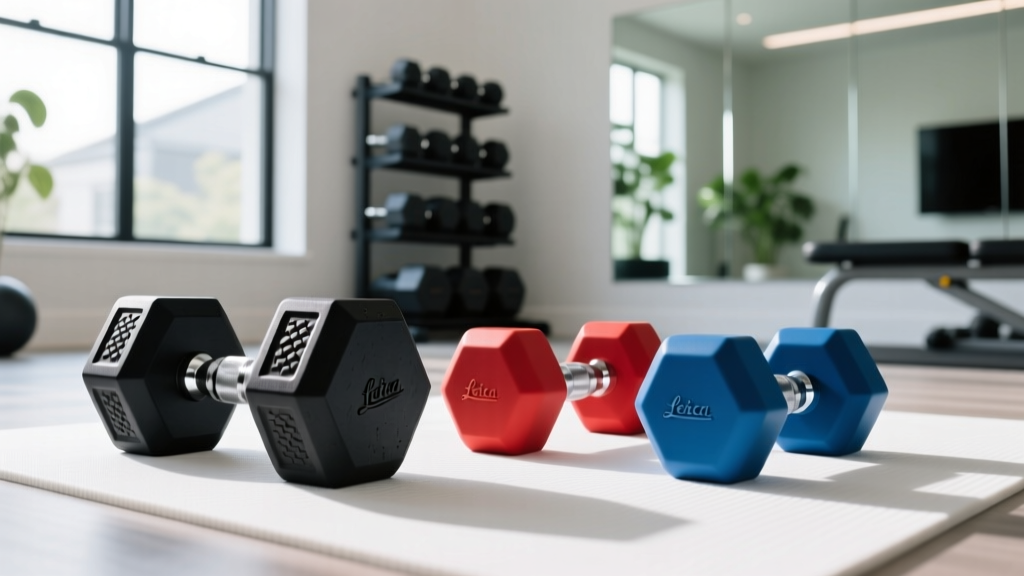
Rubber Hex vs Urethane Dumbbells for Dumbbell Pec Flys: Value Guide
Dumbbell Rack Storage: Layouts & Dumbbell Swings Muscles Worked
Kettlebell Guide: Cast Iron vs Competition & One-Arm Dumbbell Rows

Maintaining Loadable Dumbbells for Bent Over Reverse Dumbbell Flys

Bumper vs Iron Plates: Care for the Dumbbell Deficit Reverse Lunge