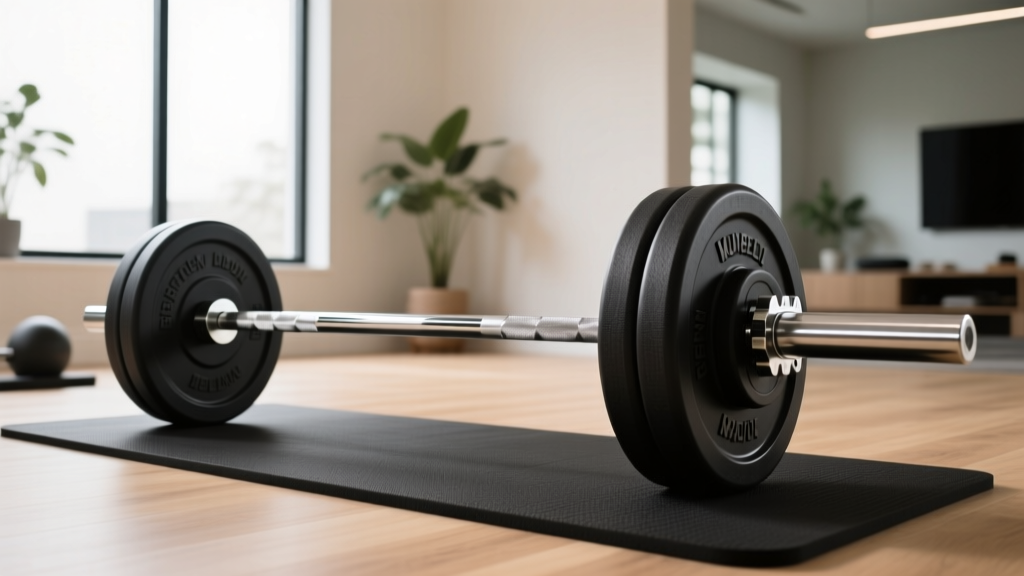
Beyond Lower Body Dumbbell Workouts: Barbell Collar Troubleshooting
Transitioning from lower body dumbbell workouts to heavy barbell lifts? Avoid dangerous plate-shift mistakes with our barbell collar troubleshooting guide.

There comes a distinct turning point in every lifter’s journey when the limitations of lower body dumbbell workouts become undeniably apparent. Holding a pair of 100-pound dumbbells for Bulgarian split squats or heavy goblet squats is an incredible test of grip strength and core stability, but eventually, the loading time, grip fatigue, and sheer awkwardness of maneuvering massive dumbbells force a transition to the barbell. However, moving from dumbbells to heavy barbell back squats, front squats, and deadlifts introduces a critical, often overlooked safety variable: securing the plates. A failing barbell collar during a 315-pound squat isn't just an annoyance; it is a severe biomechanical hazard that can cause catastrophic bar tilt and spinal injury.
Despite its importance, collar selection and application are riddled with common mistakes. This troubleshooting guide and comparison matrix will help you identify why your plates are slipping, which clamp types actually survive heavy axial shocks, and how to properly secure your Olympic sleeves in 2026.
The Plateau: Transitioning From Lower Body Dumbbell Workouts
When you max out your dumbbell rack, the barbell becomes mandatory for progressive overload. Dumbbells require independent stabilization, but a barbell allows you to move absolute maximum loads. The physics change dramatically. With dumbbells, a dropped weight falls straight down. With a barbell, especially during heavy deadlift drops or failed squat bailouts, the bar experiences axial shockwaves—vibrations that travel horizontally through the steel sleeve. If your collar cannot withstand this lateral G-force, the plates shift, altering the bar's center of gravity mid-lift.
Expert Insight: The International Weightlifting Federation (IWF) mandates that competition collars weigh exactly 2.5 kg each. While you don't need competition-caliber weight for a home gym, you absolutely need competition-caliber grip force to prevent plate migration during heavy eccentric loading.
3 Critical Collar Mistakes Lifters Make
Mistake 1: Relying on Spring Clips for Axial Shock
Spring clips (the cheap, wire-handled clamps that come bundled with budget barbells) rely on simple wire tension. They are perfectly adequate for light bench pressing or curling. However, when you drop a loaded barbell from the top of a deadlift, the kinetic energy compresses the spring clip's wire, momentarily breaking its friction against the 50mm sleeve. Over time, the steel wire fatigues, and the clip will slide off the sleeve entirely during a heavy set.
Mistake 2: Ignoring Sleeve Tolerances and Chrome Wear
A standard Olympic sleeve is exactly 50mm (1.968 inches) in diameter. However, budget barbells often feature sleeves that are 49.5mm or suffer from uneven chrome plating. If you use a rigid plastic ratchet clamp on a slightly undersized or worn sleeve, the clamp will not achieve 360-degree contact, leading to micro-slippage that compounds over a 10-rep set of squats.
Mistake 3: Misaligning Lever-Action Clamps
Lever clamps use a cam mechanism to generate immense inward pressure. A common mistake is engaging the lever before the collar is pushed completely flush against the inner plate. If there is even a 2mm gap, the lever will lock onto the sleeve, but the plates will still have room to rattle and shift during the lift, defeating the purpose of the clamp.
Barbell Collar and Clamp Types: A Deep-Dive Comparison
To troubleshoot your setup, you must first understand the mechanical differences between the primary collar types available on the market today. Below is a comparison matrix based on current 2026 pricing, grip mechanics, and real-world failure modes.
| Collar Type | Top Model Example | Avg. Price (Pair) | Grip Mechanism | Best Use Case | Primary Failure Mode |
|---|---|---|---|---|---|
| Spring Clip | Generic Wire Clip | $10 - $15 | Wire Tension | Light isolation, upper body | Wire fatigue; fails under axial shock |
| Lever-Action | Rogue AH-1 Aluminum | $45 - $55 | Cam / Lever Pressure | Heavy squats, Olympic lifts | Lever snapping if dropped on concrete |
| Ratchet / Clamp | Lock-Jaw LNX | $35 - $40 | Plastic/Metal Ratchet | CrossFit, high-rep cycling | Internal teeth stripping in cold garages |
| Screw / Threaded | Bull Clamp | $60 - $75 | Threaded Aluminum Body | Powerlifting, static heavy loads | Cross-threading if forced onto dirty sleeves |
For lifters transitioning from heavy dumbbell work to barbell squats and deadlifts, the Lever-Action and Screw/Threaded collars are the only acceptable choices. As noted in comprehensive equipment breakdowns by BarBend, lever-action collars like the Rogue AH-1 provide the best balance of rapid application and immense clamping force, making them the gold standard for commercial and serious home gyms.
⚠️ Troubleshooting Callout: The Bumper Plate Gap
If you are using urethane or rubber bumper plates, you may notice that even with a tight collar, the plates 'click' during squats. This is because bumper plates have a wider steel inner insert than standard iron plates. The Fix: Always load a thin 2.5lb or 5lb iron 'change plate' on the outside of the bumpers, directly against the collar. The iron plate acts as a rigid bridge, allowing the collar to clamp down on solid steel rather than compressing the rubber edge of the bumper.
Troubleshooting Sleeve Slippage and Plate Shift
If you have upgraded to a high-quality collar from a reputable manufacturer like those found in the Rogue Fitness barbell collar lineup and are still experiencing slippage, the issue is likely environmental or maintenance-related.
- Chalk and Dust Buildup: Gym chalk (magnesium carbonate) acts as a dry lubricant on smooth chrome sleeves. Wipe down your barbell sleeves with a damp microfiber cloth and a mild degreaser weekly to restore the metal's natural friction coefficient.
- End-Cap Loosening: Many hex-bolt barbell end-caps loosen over time. If the end-cap wiggles, it creates a 1-2mm gap at the end of the sleeve, preventing the collar from applying inward lateral pressure. Tighten your end-caps with a hex key monthly.
- Temperature Fluctuations: If you train in an unheated garage gym, plastic ratchet collars become brittle and lose their clamping tension. Switch to anodized aluminum lever collars or threaded steel collars, which are impervious to temperature drops.
Expert Protocol: Securing a 400lb Squat Safely
Follow this exact sequence to ensure your plates are locked in place before stepping under a heavy barbell:
- Load and Ram: Load your plates, pushing each one firmly toward the barbell's inner sleeve shoulder. Do not leave gaps between iron plates.
- Clear the Debris: Run your thumb along the outer 2 inches of the sleeve to wipe away any chalk or metal shavings.
- Align and Seat: Slide the collar onto the sleeve. For lever clamps, ensure the rubberized inner lining is making full, flush contact with the outermost plate.
- Engage the Lock: Push the lever down. You should feel a distinct 'cam-over' resistance in the final 15 degrees of the lever's travel. If it closes too easily, the collar is too loose; adjust the tension bolt.
- The Shake Test: Grab the outermost plate and attempt to violently shake it laterally. If the plate rotates or shifts independently of the barbell sleeve, the collar has failed to bite. Remove and reseat.
Final Safety Standards and Sourcing
Your safety under a loaded barbell is non-negotiable. Just as you wouldn't use a frayed lifting belt, you must not rely on degraded or inappropriate collars. Upgrading from the limitations of lower body dumbbell workouts to heavy barbell training requires respecting the physics of the equipment. According to safety guidelines and manufacturing standards highlighted by premium manufacturers like Eleiko, a proper collar must not only secure the plates laterally but also withstand the repeated impacts of dropping the bar without losing its mechanical tension.
Invest in a pair of machined aluminum lever collars or threaded screw collars, maintain your barbell sleeves, and perform the shake test before every heavy working set. Your spine, and your lifting partners, will thank you.
More gear to consider
All reviews
EZ Curl Bar vs Straight Bar & Dual Dumbbell Front Squat Guide

Power Rack vs Squat Stand: Shoulder and Back Workouts with Dumbbells
Best Adjustable Dumbbells for a Dumbbell Shoulder Workout at Home

Bowflex Dumbbells with Bench & The Standard vs Olympic Plate Mistake

How to Work Out Chest With Dumbbells: Loadable Plate Maintenance
