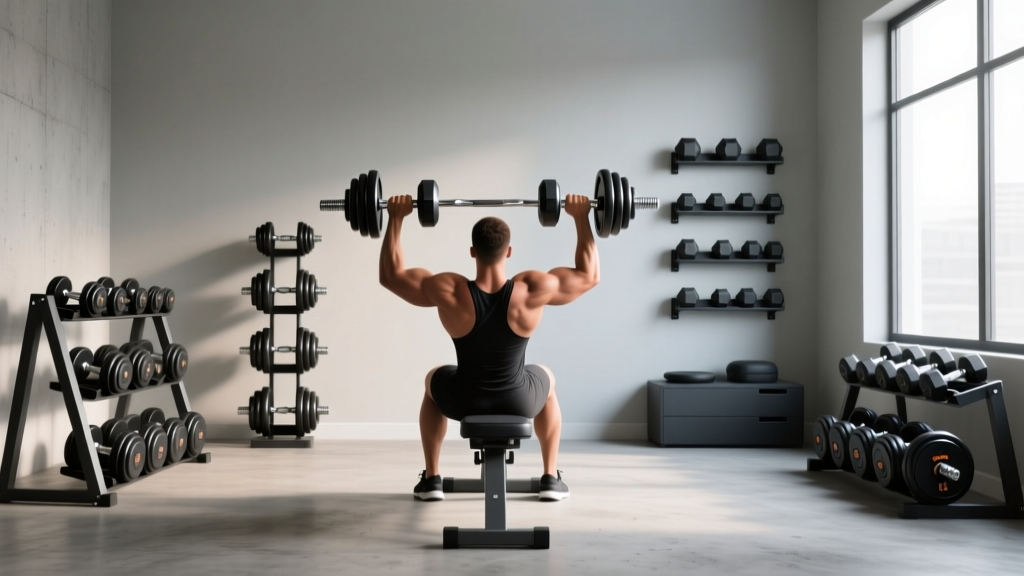
Maximize Your Dumbbell Row Workout: Budget Rack & Storage Analysis
Analyze budget dumbbell racks and storage solutions to optimize your dumbbell row workout. Compare A-frames, 3-tiers, and wall mounts for 2026 home gyms.

The Spatial Demands of a Heavy Dumbbell Row Workout
When you are setting up for a high-volume dumbbell row workout, the logistics of your equipment matter just as much as your biomechanics. A proper back day requires rapid access to multiple weight increments. You might warm up with 40-pound hex dumbbells, hit your primary working sets with 70s, and finish with a mechanical drop set using 50s. If your weights are scattered across the floor, you lose time, break your metabolic tension, and create a severe tripping hazard in your home gym.
According to the ExRx biomechanics directory, maintaining a neutral spine and stable base is critical during bent-over movements. Stepping over or bending down awkwardly to retrieve heavy dumbbells from the floor compromises your lower back before you even initiate the pull. Upgrading your storage is not just about aesthetics; it is a functional necessity for safety and performance. In this 2026 budget breakdown, we analyze the true ROI of dumbbell racks, evaluating cost-per-pound of storage, footprint efficiency, and structural failure modes across three distinct price tiers.
Budget Tier 1: A-Frame & Vertical Trees ($50–$120)
For beginners or those with strictly limited floor space, vertical storage solutions like the CAP Barbell A-Frame Rack or the Yes4All Vertical Dumbbell Tree dominate the sub-$120 market. These racks utilize a small footprint—often less than 3 square feet—making them ideal for apartment gyms or cramped garage corners.
Failure Mode Alert: The Top-Heavy Tipping Point
While budget-friendly, vertical trees and A-frames suffer from a critical engineering flaw when loaded with heavy, modern rubber hex dumbbells. A standard 50-pound rubber hex dumbbell is approximately 14 inches long and highly center-weighted. When you place 50s or 60s on the top tier of a lightweight steel tree, the center of gravity shifts dangerously high. If your gym floor is not perfectly level, or if you pull a dumbbell off the rack with lateral force, the entire unit can tip forward.
Value Verdict: Excellent for neoprene or light urethane dumbbells (5 to 25 lbs) used in high-rep circuit training. However, for a heavy dumbbell row workout requiring 50+ lb increments, the tipping risk makes this a poor long-term investment. Cost-per-pound stored is roughly $0.15, but the safety liability is high.
Budget Tier 2: Horizontal 3-Tier Racks ($200–$350)
The horizontal 3-tier rack is the undisputed gold standard for serious home gyms and commercial facilities. Models like the Titan Fitness 3-Tier Dumbbell Rack (retailing around $249.99 in 2026) and the Rep Fitness 3-Tier Rack (approximately $299.00) offer unparalleled stability and ergonomic staging.
The true value of a 3-tier rack lies in its ergonomic height mapping. The top tier sits at roughly thigh height, the middle at waist height, and the bottom at knee height. When executing a heavy dumbbell row workout, you can stage your heaviest working weights on the top tier, allowing you to deadlift them directly into the rowing position without rounding your lumbar spine. The Mayo Clinic's strength training guidelines consistently emphasize proper lifting mechanics to prevent injury, and thigh-height staging directly supports this by eliminating the initial floor-pull phase.
Expert Callout: Tray vs. Saddle CradlesWhen shopping in this tier, you must match the rack cradle type to your dumbbell shape. Tray racks feature flat, wide shelves with lips, designed specifically for rubber hex dumbbells. If you put round urethane dumbbells in a tray rack, they will roll and stack dangerously. Conversely, saddle racks feature curved, U-shaped metal cradles meant exclusively for round dumbbells. Buying a saddle rack for hex dumbbells will result in the rubber coating tearing against the narrow metal contact points. Always verify your dumbbell geometry before purchasing.
Budget Tier 3: Wall-Mounted & Modular Attachments ($120–$250)
If floor space is at an absolute premium, wall-mounted shelves or modular power rack attachments offer a compelling alternative. The Rogue Monster Wall Mount Dumbbell Shelf (starting around $150 for a single tier) bolts directly into wooden studs or concrete, completely eliminating the floor footprint.
Alternatively, if you already own a power rack, brands like Bells of Steel and Rep Fitness offer bolt-on 3-tier dumbbell rack attachments for $120 to $180. These attach to the uprights of your squat rack. Edge Case Warning: Ensure your power rack uprights are 3x3 inch steel with 5/8-inch or 1-inch hole spacing. Many budget Amazon racks use 2x2 uprights, rendering these modular attachments incompatible. Always measure your uprights and hole spacing before ordering modular storage.
The 2026 Value Matrix: Cost, Footprint, and Capacity
To help you visualize the budget breakdown, we have compiled a comparison matrix based on current 2026 market pricing and standard 5-to-50 lb dumbbell set dimensions. Data aggregated from industry benchmarks and Garage Gym Reviews equipment testing.
| Rack Type / Model | Est. Price (2026) | Floor Footprint | Max Capacity | Best Use Case |
|---|---|---|---|---|
| CAP Barbell A-Frame | $65 - $80 | 2.5 sq ft | 200 lbs | Light neoprene/vinyl sets (5-25 lbs) |
| Yes4All Vertical Tree | $70 - $90 | 2.0 sq ft | 300 lbs | Apartment gyms, light rehab weights |
| Titan Fitness 3-Tier Tray | $249 - $279 | 8.5 sq ft | 1,200 lbs | Heavy hex DBs, serious home gyms |
| Rep Fitness 3-Tier Saddle | $299 - $329 | 8.5 sq ft | 1,200 lbs | Round urethane DBs, commercial use |
| Rogue Wall Mount Shelf | $150 - $220 | 0.0 sq ft (Wall) | 500 lbs/tier | Zero-floor-space garage gyms |
ROI Analysis: Why 'Cheap' Storage Costs More
When evaluating the budget breakdown of gym equipment, it is vital to calculate the hidden costs of inadequate storage. Consider the cost of flooring repair. High-quality 3/8-inch vulcanized rubber gym mats cost approximately $2.50 to $3.50 per square foot. If you leave 100-pound dumbbells scattered on the floor after a grueling dumbbell row workout, the concentrated point-load will permanently compress and eventually crack the rubber matting, or worse, dent the concrete subfloor beneath it.
Furthermore, consider the time-cost of inefficient staging. A standard back workout might involve 4 different exercises, requiring 6 weight changes. If you spend 90 seconds walking across the gym, bending down, and carrying heavy weights back to your bench for every single change, you are wasting over 15 minutes of your workout on logistics. A $250 horizontal rack pays for itself in preserved workout density and protected flooring within the first six months of use.
Final Decision Framework
Choose your storage solution based on your specific dumbbell profile and spatial constraints:
- Choose the A-Frame/Tree ($50-$120) IF: You only own light, compact dumbbells (under 30 lbs) and have less than 4 square feet of available floor space. Never load heavy hex dumbbells on the top tier.
- Choose the Horizontal 3-Tier ($200-$350) IF: You own a full set of rubber hex or urethane round dumbbells up to 70+ lbs, and you prioritize ergonomic lifting and rapid drop-set transitions during your dumbbell row workout.
- Choose Wall-Mounted/Modular ($120-$250) IF: Your floor space is entirely consumed by a treadmill or power rack, and you have the structural ability to drill into wooden studs or own a compatible 3x3 power rack.
Investing in the correct storage tier ensures your equipment lasts longer, your floors remain intact, and your focus stays entirely on muscle contraction rather than gym logistics.
More gear to consider
All reviews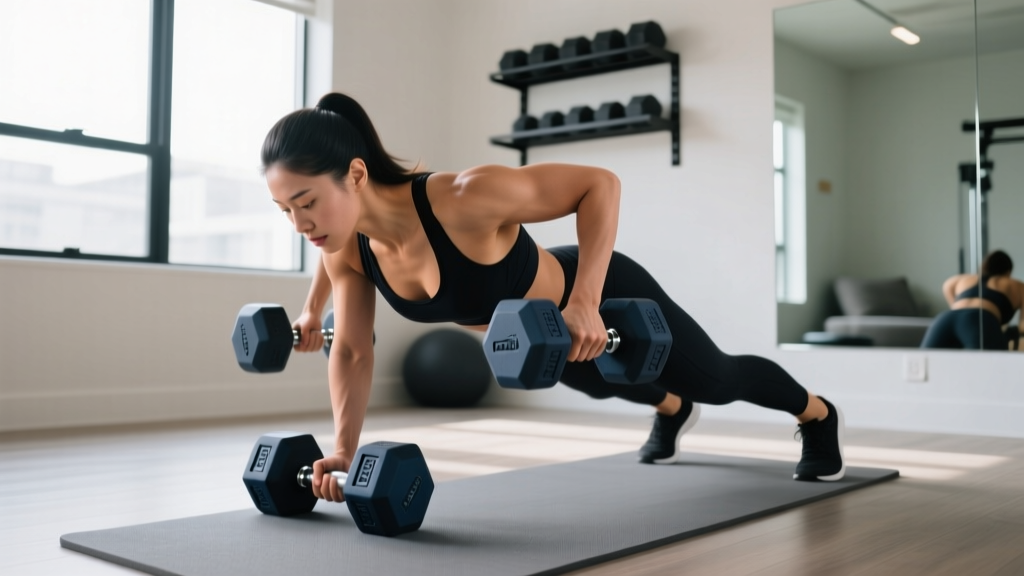
Dumbbell Dead Row Mistakes: Troubleshooting Neoprene Weights
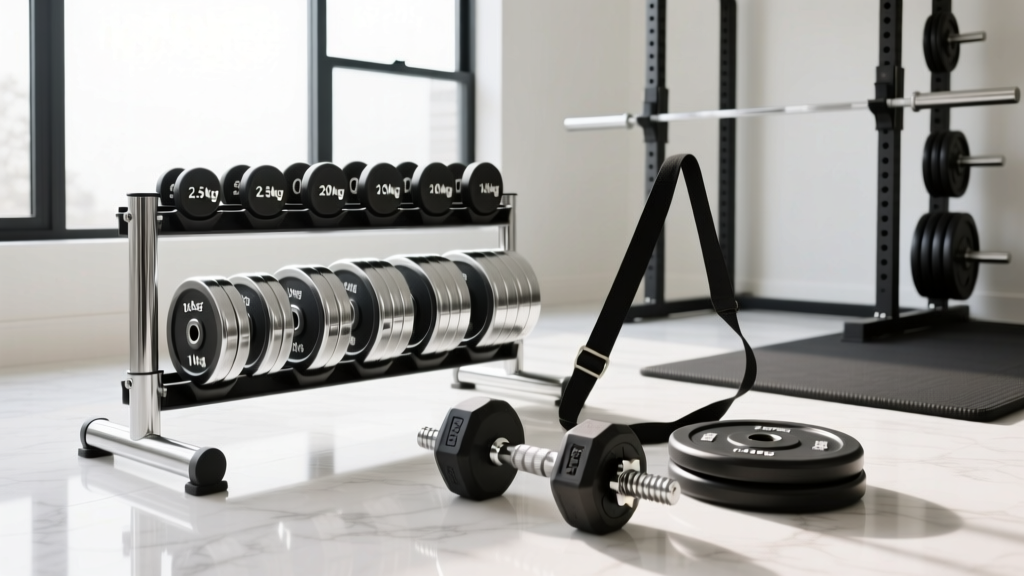
Olympic vs Standard Plates & Cross Body Dumbbell Curl Guide

Beyond 50 lb Dumbbells: Olympic Barbell Weight & Knurling Guide

EZ Curl Bar vs Straight Bar & B Stance Deadlift with Dumbbells

EZ Curl Bar vs Straight Bar: 2026 Trends Beyond All Dumbbell Workouts
