
Olympic vs Standard Plates: Best Setup for Dumbbell Back Rows
Compare Olympic vs standard weight plates and loadable dumbbell handles to build the ultimate heavy-duty setup for high-weight dumbbell back rows.

The Biomechanical Demand of Heavy Dumbbell Back Rows
When you progress past the 90-pound limit of most commercial adjustable dumbbells, your latissimus dorsi and rhomboids are often ready for more resistance than your equipment can provide. Heavy single-arm dumbbell back rows—often referred to as Kroc rows or heavy Meadows-style rows—require exceptional grip strength, core stability, and specialized equipment. According to ExRx.net's biomechanical breakdown, the unilateral dumbbell row places immense sheer force on the grip and requires a deep stretch at the bottom of the movement to fully engage the lower latissimus fibers.
To achieve this heavy overload safely, lifters turn to plate-loaded dumbbell handles. But this introduces a critical fork in the road: do you build your setup around Standard (1-inch center hole) plates or Olympic (2-inch center hole) plates? The choice dictates your maximum load, grip thickness, floor clearance, and long-term equipment viability. In this 2026 in-depth buying guide, we dissect the engineering, cost, and practical application of both plate systems specifically for heavy back rowing.
Standard vs. Olympic Weight Plates: Core Specifications
Before analyzing the handles, we must understand the plates themselves. Standard plates feature a 1-inch (25.4mm) center hole, while Olympic plates feature a 2-inch (50.8mm) center hole. This seemingly small difference cascades into every aspect of your home gym ecosystem.
| Feature | Standard Cast Iron Plates | Olympic Cast Iron / Urethane Plates |
|---|---|---|
| Center Hole Diameter | 1 inch (25.4mm) | 2 inches (50.8mm) |
| Max Load per Dumbbell Handle | Typically 80 - 105 lbs | 150 - 200+ lbs (depending on sleeve) |
| Plate Diameter (45 lb / 20 kg) | ~14.5 inches | 17.7 inches (Standard Olympic) |
| Average 2026 Cost Per Pound | $1.00 - $1.30 / lb | $1.60 - $2.50 / lb (Cast Iron) |
| Resale Value & Durability | Low; prone to rust, low market demand | High; universal fit, holds value |
Loadable Dumbbell Handles: 1-Inch vs 2-Inch Sleeves
The plates are only half the equation. The loadable dumbbell handle you pair them with will directly impact your dumbbell back rows. A standard 14-inch threaded dumbbell handle (like the ubiquitous CAP Barbell model) offers a 1-inch diameter grip and roughly 5.5 inches of loadable sleeve space per side. Conversely, an Olympic loadable handle (such as the Titan Fitness 20-inch Olympic Loadable Dumbbell) features a 2-inch rotating or fixed sleeve and up to 10 inches of loadable space.
The Grip Thickness and Fatigue Dilemma
During heavy dumbbell back rows, grip failure often precedes back muscle failure. The National Strength and Conditioning Association (NSCA) frequently highlights grip endurance as a primary limiting factor in heavy pulling movements. Standard 1-inch handles typically have a grip diameter of 1.0 to 1.1 inches. Olympic loadable handles often feature thicker grips, ranging from 1.3 to 1.5 inches to accommodate the larger internal bearings or brass bushings required for a 2-inch sleeve.
While a thicker grip can build forearm strength over time, it makes holding a 150-pound dumbbell for a set of 15 heavy rows significantly more difficult. If you opt for Olympic handles, you will likely need to integrate lifting straps (like Versa Gripps or Rogue Lifting Straps) into your rowing sessions to ensure your lats reach true muscular failure before your fingers give out.
Floor Clearance and Deficit Rows
Here is a non-obvious edge case that plagues many home gym owners: plate diameter. A standard 45-pound Olympic plate has a diameter of 17.7 inches. If you are performing deficit dumbbell back rows (standing on a platform or blocks to increase the stretch at the bottom), a fully loaded Olympic dumbbell with 45-pound plates on the outside will hit the floor before your arm reaches full extension. Standard plates, or smaller Olympic fractional plates (like 10lb or 25lb plates which have diameters of 9 to 12 inches), allow for a much deeper range of motion without the plates clanging against the floor prematurely.
Expert Callout: The Loading Sequence TrickTo maximize floor clearance during heavy Olympic dumbbell back rows, load your largest diameter plates (like 45s) closest to the handle, and place your smaller diameter plates (10s or 25s) on the outside of the sleeve. This subtly shifts the center of mass and ensures the outer edge of the dumbbell is narrower, granting you an extra 2-3 inches of pulling depth before the weights strike the ground.
Failure Modes: Collars and Sleeve Tolerances
When executing explosive heavy rows, the dumbbell undergoes rapid acceleration and deceleration. This momentum transfers directly to the weight plates and collars.
- Standard Threaded Collars (Star Nuts): These are notorious for loosening mid-set. The repetitive twisting motion of a dumbbell back row can unscrew a standard star nut, leading to plates sliding off the sleeve—a massive safety hazard.
- Standard Spring Collars: While faster to use, cheap 1-inch spring collars lack the clamping force to hold 40+ pounds of iron securely during dynamic rows.
- Olympic Lock-Jaw or Clamp Collars: Olympic systems allow for heavy-duty polymer clamp collars (like Lock-Jaw) or aluminum HG clamps. These bite down on the 2-inch sleeve with hundreds of pounds of clamping force, ensuring zero plate shift during the most aggressive Kroc rows.
2026 Cost Breakdown: Building Your Plate Arsenal
Investing in weight plates is a long-term commitment. Here is what you can expect to spend in the current 2026 market to build a 200-pound set (two 45s, two 25s, two 10s, two 5s) for your rowing setup:
Standard Cast Iron Route
- Plates (200 lbs): ~$220 - $260 (Often found on local marketplaces or budget retailers like Amazon)
- Pair of 14-inch Threaded Handles: ~$35 - $50
- Collars: ~$15
- Total Estimated Cost: $270 - $325
Olympic Cast Iron Route (e.g., Rep Fitness or Rogue Echo)
- Plates (200 lbs): ~$350 - $450 (Priced at $1.75 - $2.25/lb depending on brand and shipping)
- Pair of 20-inch Olympic Loadable Handles: ~$160 - $200 (e.g., Titan Fitness or Bells of Steel)
- Collars (Pair of Lock-Jaws): ~$30
- Total Estimated Cost: $540 - $680
While the standard route is nearly half the price upfront, Olympic plates retain roughly 70-80% of their resale value on the secondary market. Standard plates are incredibly difficult to sell once you upgrade, often ending up as scrap metal or garage door weights.
Step-by-Step: Configuring the Perfect Rowing Dumbbell
Follow this protocol to assemble a plate-loaded dumbbell optimized for heavy back rows:
- Select the Handle: Choose an Olympic loadable handle with moderate knurling. Aggressive knurling will tear your calluses during high-rep rows.
- Load the Inner Plates: Slide your 45-pound plates on first. This keeps the bulk of the weight close to the center of gravity, improving balance during the rowing arc.
- Add Outer Plates: Add 10lb or 25lb plates to reach your target weight. This keeps the outer profile narrow for deficit stretching.
- Secure with Clamps: Use Olympic clamp collars, not spring collars. Push them flush against the outer plate and lock the mechanism.
- Test the Spin: If your handle has rotating sleeves (bushings/bearings), give the plates a spin. Rotating sleeves reduce torque on your wrist during the pronation/supination phases of the row.
Final Verdict: Which System Wins?
If your primary goal is to perform heavy, progressive dumbbell back rows and you plan to lift for years, Olympic plates and loadable handles are the undisputed winner. The ability to safely load past 120 pounds per hand, combined with the superior security of Olympic clamp collars and the long-term resale value of the iron, justifies the higher initial investment. Standard plates and threaded handles should only be considered by beginners on an absolute shoestring budget who are not yet rowing more than 80 pounds per hand.
Frequently Asked Questions
Can I use bumper plates for dumbbell back rows?
You can, but it is generally not recommended. Bumper plates have a massive diameter (17.7 inches even for 10lb fractional bumpers) and are very thick. Loading bumper plates onto a dumbbell handle severely limits the amount of weight you can fit on the sleeve and creates an unwieldy, overly wide dumbbell that can clash with your knees or torso during the rowing path.
Do I need rotating sleeves for dumbbell rows?
Rotating sleeves (found on higher-end Olympic loadable handles like those from Rogue or Eleiko) are a luxury, not a necessity. During a dumbbell back row, the wrist does experience some rotational torque, but it is far less aggressive than during Olympic weightlifting movements like cleans or snatches. Fixed-sleeve Olympic handles are perfectly adequate and much more affordable for heavy rows.
How do I prevent the dumbbell from rolling away between sets?
Plate-loaded dumbbells with standard round cast iron plates will roll. To solve this, either use hex-grip rubber Olympic plates (which feature flat edges to prevent rolling) or invest in a dedicated dumbbell cradle or rack. Never leave a heavy, round-plate-loaded dumbbell on an uneven floor where it could roll and cause a severe foot injury.
More gear to consider
All reviews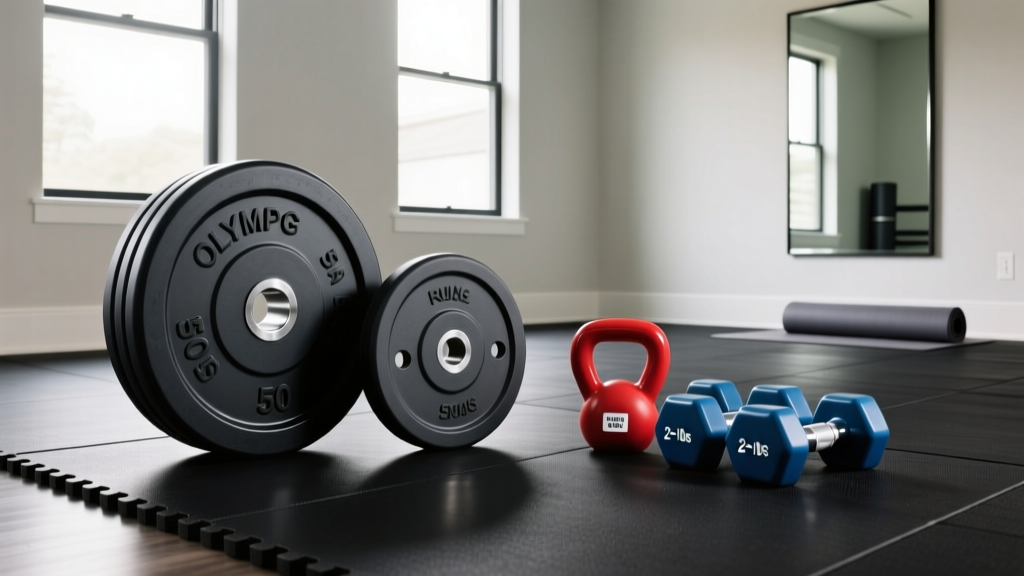
Olympic vs Standard Plates Setup and Light Dumbbell Training Guide
Loadable Dumbbells for Dumbbell Step Ups at Home: 2026 Value Guide
Barbell Clamp Guide: Why a Dumbbell Drawing is Easy for Workout Logs

Neoprene Dumbbell Setup & Dumbbell Shape Water Bottle Guide
Dumbbell Rack Storage & Care for Standing Front Dumbbell Raises
