Dumbbell Lat Pulldown and Kettlebells: Cast Iron vs Competition Budget
Compare cast iron vs competition kettlebells for your home gym. Real pricing, cost-per-pound analysis, and how they complement dumbbell lat pulldown training.

Why Kettlebells Deserve a Spot Alongside Your Dumbbell Lat Pulldown Setup
If you have been building a home gym around dumbbell work — including movements like the dumbbell lat pulldown, dumbbell rows, and floor presses — you already understand the value of versatile free weights. But kettlebells occupy a training niche that dumbbells cannot fully replicate. The offset center of mass, the handle geometry, and the ballistic movement patterns (swings, snatches, cleans) make kettlebells a distinct training stimulus for posterior chain development, grip endurance, and cardiovascular conditioning.
The question for budget-conscious lifters in 2026 is not whether to add kettlebells, but which type to buy. The market splits into two dominant categories: cast iron kettlebells (the traditional, budget-friendly option) and competition kettlebells (steel, standardized dimensions, premium pricing). This guide breaks down the real costs, long-term value, and training implications of each — so you can allocate your equipment budget with precision.
Quick Verdict for Budget Buyers
Cast iron kettlebells cost $1.00–$2.50 per pound and suit 80% of home gym users. Competition kettlebells cost $3.00–$5.50 per pound and are worth the premium only if you compete in kettlebell sport, need uniform dimensions across weights, or train high-rep ballistic movements where handle consistency prevents blistering.
Cast Iron Kettlebells: Pricing, Brands, and Real-World Value
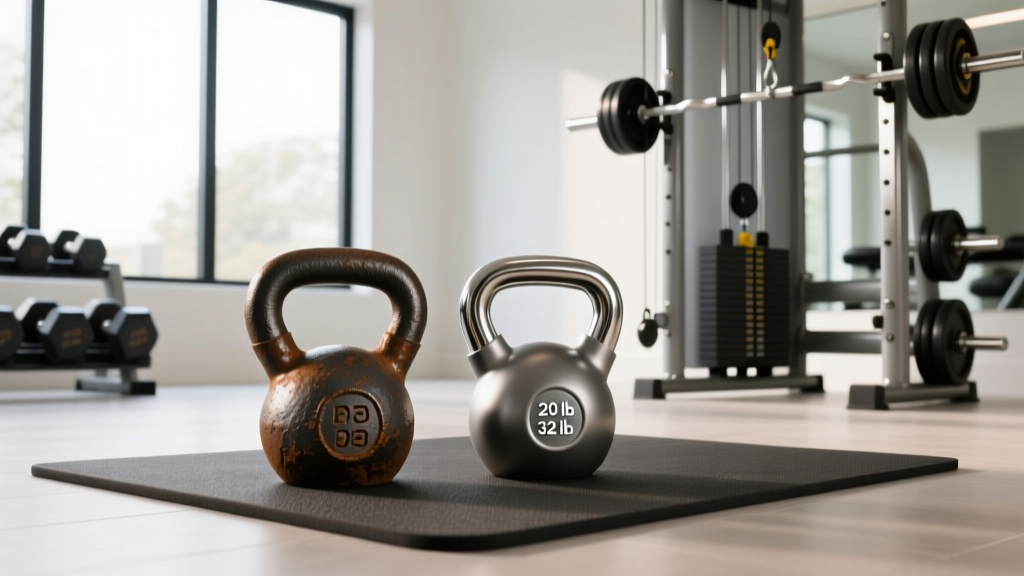
Cast iron kettlebells are manufactured by pouring molten iron into molds. The result is a solid, single-cast bell with a rounded body and a handle that varies in thickness and smoothness depending on the manufacturer. These are the kettlebells you will find in most commercial gyms and home setups.
Current Market Pricing (2026)
Cast iron kettlebell prices have stabilized after the supply chain disruptions of 2021–2023. Here is what you can expect to pay from major retailers:
| Brand | Weight Range | Price Range | Cost Per Pound (Avg) |
|---|---|---|---|
| CAP Barbell Cast Iron | 10–50 lbs | $18–$72 | $1.40–$1.80 |
| Yes4All Vinyl-Coated | 5–40 lbs | $14–$55 | $1.30–$1.70 |
| Rogue Cast Iron | 9–106 lbs (4–48 kg) | $30–$225 | $2.00–$2.50 |
| Amazon Basics Enamel | 10–50 lbs | $20–$65 | $1.20–$1.50 |
What You Get (and What You Sacrifice)
Cast iron bells deliver raw functionality at the lowest entry price. The CAP Barbell A-Frame kettlebell series (model CAPKB-020 through CAPKB-050) remains one of the best-selling lines in North America, with a powder-coated finish that resists rust in humid garage gyms. The handle diameter on the 35 lb model measures approximately 33mm — comfortable for most hand sizes during swings and goblet squats.
However, cast iron bells have inherent limitations:
- Inconsistent dimensions: A 16 kg cast iron bell from one brand may be physically larger or smaller than another brand's 16 kg bell. This matters for exercises like the racked position, where bell size affects forearm contact.
- Handle variance: Cheaper cast bells often have rough casting seams along the handle that cause calluses and blisters during high-rep sets. Budget models from unknown brands on Amazon frequently receive complaints about this in user reviews.
- Size scaling: Heavier cast iron bells grow proportionally larger. A 32 kg cast iron bell is significantly bulkier than a 16 kg bell, which can interfere with movement patterns like double kettlebell front squats.
Competition Kettlebells: When the Premium Is Justified
Competition kettlebells are manufactured from steel (not cast iron) to exact international standards. Regardless of weight — from 8 kg to 48 kg — every competition bell shares identical dimensions: 280mm height, 210mm width, and a 35mm handle diameter. This standardization is governed by organizations like the International Kettlebell Sport Federation and is non-negotiable for competitive lifters.
Current Market Pricing (2026)
| Brand | Weight Range | Price Range | Cost Per Pound (Avg) |
|---|---|---|---|
| Kettlebell Kings Competition | 8–32 kg | $95–$290 | $3.80–$4.50 |
| Rogue Competition Kettlebell | 8–48 kg | $105–$395 | $4.00–$5.00 |
| Onnit Competition Steel | 8–24 kg | $90–$250 | $3.50–$4.20 |
| Kettlebells USA (Pro Grade) | 8–32 kg | $75–$220 | $3.00–$3.80 |
The Hidden Value Proposition
At first glance, paying $180 for a single 16 kg competition kettlebell when a cast iron equivalent costs $45 seems irrational. But the value calculation changes when you consider specific use cases:
- Muscle memory consistency: When training for kettlebell sport (long cycle, snatch, jerk), you perform thousands of repetitions per week. The identical dimensions across weights mean your racked position, clean trajectory, and overhead lockout never need adjustment when you change bells. This accelerates skill acquisition measurably — competitive lifters report 2–3 weeks faster adaptation when switching weights compared to adjusting between differently-sized cast iron bells.
- Handle quality: Competition bells from Rogue Fitness feature a flat-bottomed, 35mm handle with no casting seams. The steel surface develops a smooth patina over time rather than pitting or roughening. For athletes doing 200+ reps per session, this eliminates the hand tearing that plagues cast iron users.
- Longevity: Steel competition bells are essentially indestructible under normal use. They will not crack, chip, or deform. A $200 competition bell purchased in 2026 will still be competition-legal in 2040. Cast iron bells, particularly cheaper models, can develop hairline cracks near the handle junction after years of heavy swings and drops.
Budget Insight: The Hybrid Approach
Many experienced lifters in 2026 use a hybrid strategy: buy cast iron bells for heavier weights (24 kg and above, used primarily for swings and deadlifts where dimension consistency matters less) and invest in competition bells for their working weights (12–20 kg, used for high-rep technical movements). This approach typically saves 30–40% compared to buying a full competition set while preserving training quality where it matters most.
Head-to-Head Comparison Matrix
| Factor | Cast Iron | Competition |
|---|---|---|
| Cost per pound (16 kg / 35 lbs) | $1.30–$2.50 | $3.50–$5.00 |
| Dimensions across weights | Variable (scales with weight) | Identical (standardized) |
| Handle diameter | 30–38mm (varies by brand) | 35mm (standard) |
| Material | Cast iron | Steel |
| Floor contact | Rounded bottom (may roll) | Flat bottom (stable) |
| Durability | Good (may chip/crack over years) | Excellent (lifetime use) |
| Best for | General fitness, beginners, budget builds | Kettlebell sport, high-rep training, serious lifters |
Building a Complete Kettlebell Set: Budget Scenarios
Most home gym owners do not need a full rack of kettlebells. Based on programming recommendations from the American Council on Exercise, a functional set for general fitness includes 3–5 bells covering light, medium, and heavy loads. Here are three budget tiers for a complete setup in 2026:
Tier 1: Budget Cast Iron Build — $150–$220
Bells: 12 kg (26 lbs), 16 kg (35 lbs), 24 kg (53 lbs)
Recommended brand: CAP Barbell or Yes4All
Estimated total: $155–$210 (including shipping from most retailers)
Best for: Beginners, general conditioning, supplementing a dumbbell-focused routine
Tier 2: Hybrid Build — $280–$380
Bells: Competition 12 kg + 16 kg, Cast Iron 24 kg + 32 kg
Recommended brands: Kettlebell Kings (competition) + CAP Barbell (cast iron)
Estimated total: $290–$370
Best for: Intermediate lifters doing technical work at lighter weights and strength work at heavier weights
Tier 3: Full Competition Build — $500–$750
Bells: 8 kg, 12 kg, 16 kg, 20 kg, 24 kg (all competition grade)
Recommended brand: Rogue or Kettlebell Kings
Estimated total: $520–$740
Best for: Competitive kettlebell sport athletes, serious lifters prioritizing consistency
How Kettlebell Training Complements Your Dumbbell Lat Pulldown Routine
The dumbbell lat pulldown — performed lying on a bench or floor, pulling a dumbbell overhead and back to target the latissimus dorsi — is an excellent isolation movement for back development. But it operates in a single plane and at relatively low velocities. Kettlebell training fills the gaps that dumbbell isolation work leaves open:
- Kettlebell rows (single-arm): The thicker handle and offset load of a kettlebell row challenges grip and core stability in ways a standard dumbbell row does not. Use your 16 kg or 24 kg bell for 3×12 per arm.
- Kettlebell swings: Develop explosive hip extension and posterior chain power that translates to better performance in every pulling movement, including your dumbbell lat pulldown sets. Program 4×20 swings with a 16–24 kg bell on non-pulling days.
- Kettlebell pullovers: Performed lying supine with a single kettlebell, this movement mimics the dumbbell lat pulldown range of motion but with an unstable load that recruits additional stabilizer musculature. Use a 12 kg bell for 3×15 to start.
Programming Tip
Alternate dumbbell lat pulldown sessions with kettlebell swing and row sessions within the same training week. Example split: Monday — dumbbell lat pulldown (4×12, focus on slow eccentrics); Thursday — kettlebell swings (5×15) + single-arm kettlebell rows (3×10). This approach develops both hypertrophy and power in the posterior chain without overtraining.
Long-Term Value: Cost Per Session Analysis
The true measure of equipment value is not the sticker price but the cost per training session over the product's lifespan. Here is a realistic projection based on average usage patterns:
| Metric | Cast Iron Set (3 bells) | Competition Set (3 bells) |
|---|---|---|
| Initial investment | $180 | $450 |
| Estimated lifespan | 8–12 years | 20+ years |
| Sessions per week (avg) | 2–3 | 3–4 |
| Total sessions over lifespan | ~1,200 | ~3,500 |
| Cost per session | $0.15 | $0.13 |
The data reveals a counterintuitive finding: when you account for lifespan and usage frequency, competition kettlebells actually deliver a slightly lower cost per session. The premium upfront cost amortizes over decades of use, making competition bells the superior long-term investment for committed lifters who will train consistently for 10+ years.
Frequently Asked Questions
Can I use cast iron kettlebells for kettlebell sport training?
Technically yes, but the variable dimensions between weights will slow your skill development. If you plan to compete in GS (Girevoy Sport), invest in at least your competition-weight bells (typically 16 kg, 20 kg, or 24 kg) in competition grade.
Do competition kettlebells rust?
Steel competition bells can develop surface rust if stored in humid environments without protective coating. Most quality brands apply a powder coat or painted finish. Wipe down after sweaty sessions and store in a dry location. A light coat of 3-in-1 oil quarterly prevents oxidation.
What weight kettlebell should a beginner buy first?
According to strength coach standards referenced by the American Council on Exercise, most men should start with a 16 kg (35 lb) bell for swings and a 12 kg (26 lb) bell for overhead movements. Most women should start with an 8–12 kg (18–26 lb) bell for swings and 6–8 kg (13–18 lb) for overhead work.
Is a single adjustable kettlebell a viable budget alternative?
Adjustable kettlebells (like the Bowflex SelectTech 840 at $199) offer space savings but sacrifice the solid-body feel and smooth handle of a fixed-weight bell. For pure budget optimization, three fixed cast iron bells at $180 total provide a better training experience than one adjustable bell at $199.
More gear to consider
All reviews
Iron vs Bumper Plates & Dumbbell Chest Supported Upright Row Budget

Dumbbell Butterfly Mistakes and Neoprene Troubleshooting Guide

Rubber vs Urethane Care for Dumbbell Workouts for Beginners

Olympic vs Standard Plates: Your Bulgarian Deadlift Dumbbell Guide
Rubber Hex vs Urethane: Budget Guide for Dumbbell Serratus Punch
