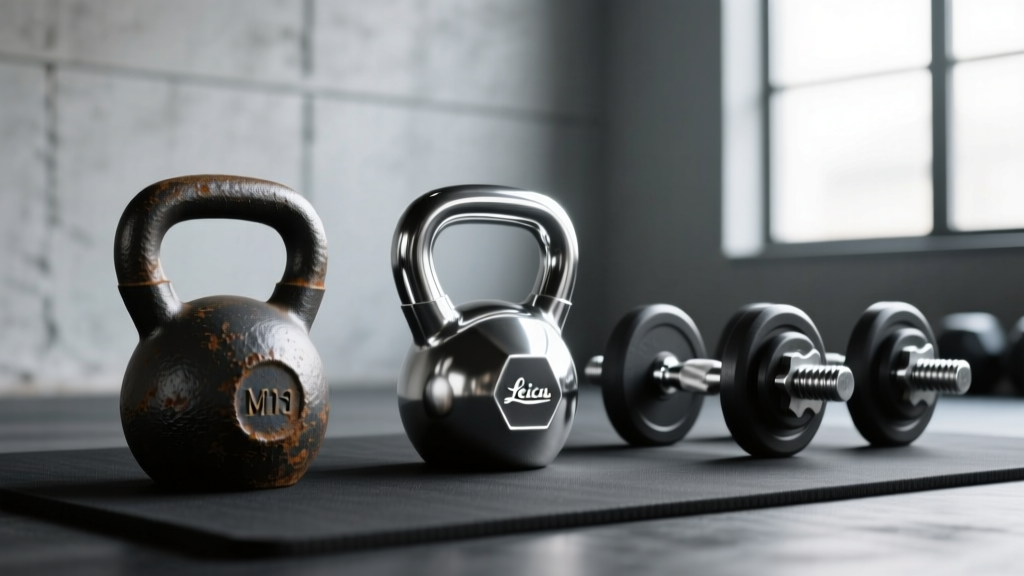
Cast Iron vs Competition Kettlebells & Strict Dumbbell Curls Care
Compare cast iron vs competition kettlebells for your 2026 home gym. Learn coating maintenance, rust prevention, and grip care for strict dumbbell curls.

The 2026 Free-Weights Landscape: Cast Iron vs. Competition Kettlebells
Building a resilient, high-performance home gym requires understanding the metallurgical and geometric differences between your primary implements. When outfitting your space, the debate between cast iron and competition kettlebells is foundational. According to the Kettlebell Kings comprehensive buying guide, the choice dictates not only your biomechanical output but also your long-term maintenance protocols.
Cast iron kettlebells are molded from a single piece of iron, resulting in variable dimensions. A 12kg cast iron bell will have a noticeably smaller bell and handle diameter than a 32kg bell. Conversely, competition kettlebells are forged from steel and maintain identical physical dimensions regardless of weight. A 16kg competition bell is the exact same size as a 32kg bell; the weight difference is achieved by manipulating the hollow core's internal fill (usually steel shot or machining).
Dimensional Standards: Competition kettlebells universally feature a 35mm handle diameter and a wider window to accommodate two-handed racking. Standard cast iron bells typically feature a 33mm handle (scaling up to 40mm+ on heavy weights) and a narrower horn spread. This 2mm difference drastically alters grip fatigue during high-volume snatches and cleans.As of 2026, a premium 16kg cast iron kettlebell (e-coated) averages $75 to $95, while a 16kg competition steel bell commands $125 to $155. However, the initial purchase price is only half the equation; the coating chemistry determines the equipment's lifespan and your ongoing maintenance burden.
Coating Chemistry and Failure Modes
The primary enemy of free weights is oxidation, accelerated by the slightly acidic nature of human sweat (pH 4.5 to 6.5) and the moisture-trapping properties of gym chalk (magnesium carbonate). Understanding your equipment's finish is critical for longevity.
E-Coat (Electrophoretic Deposition)
Popularized by brands like Rogue Fitness, e-coat is an ultra-thin finish (0.5 to 1.0 mils) that electrically bonds paint to the iron. It preserves the aggressive knurling and texture of the handle, providing excellent grip. However, its thinness offers poor UV and moisture resistance. If left in a humid garage or exposed to direct sunlight, e-coated bells will develop micro-corrosion beneath the surface within 12 to 18 months.
Powder Coat and Enamel
Competition kettlebells are traditionally finished in thick, color-coded enamel or powder coat (2.0 to 3.0 mils). The 16kg yellow and 24kg green finishes are not merely cosmetic; they provide a robust barrier against oxidation. The failure mode here is mechanical chipping. When a competition bell is dropped onto concrete, the thick enamel can fracture, exposing the raw steel shell underneath to rapid rusting.
Specifications & Maintenance Matrix
| Feature | Cast Iron (E-Coat) | Competition (Steel/Enamel) |
|---|---|---|
| Handle Diameter | Variable (33mm - 40mm+) | Standard 35mm |
| Finish Thickness | 0.5 - 1.0 mils | 2.0 - 3.0 mils |
| Primary Failure Mode | Surface oxidation / Chalk trapping | Impact chipping / Core exposure |
| Maintenance Protocol | Weekly brushing, monthly oiling | Touch-up painting on chips |
| Avg. Price (16kg) | $75 - $95 | $125 - $155 |
Grip Preservation: From Ballistics to Strict Dumbbell Curls
While kettlebells dominate ballistic movements, your free-weights rack likely houses adjustable or hex dumbbells for isolation work. The same principles of handle maintenance that prevent tearing during snatches apply to the knurled or rubber-coated handles you grip during strict dumbbell curls. When executing strict dumbbell curls, the lifter's grip remains locked in a supinated position, causing sweat to pool exactly where the handle meets the head or along the knurling peaks.
Knurled Steel and Adjustable Dumbbell Care
If you utilize adjustable dumbbells (such as Nuobell or PowerBlock) for strict dumbbell curls, sweat and chalk infiltration are catastrophic. The selector pins and internal dial mechanisms can seize if exposed to moisture. Never use standard WD-40 on adjustable dumbbells; it attracts dust and gums up the internal workings. Instead, use compressed air to blow out the selector tracks weekly, followed by a light application of a dry PTFE (Teflon) lubricant. For fixed knurled steel dumbbells, sweat will rapidly oxidize the knurl peaks, turning them into jagged edges that tear calluses. Wipe them down with a microfiber towel immediately post-workout.
Rubber Hex Dumbbell Degradation
Rubber-coated hex dumbbells are notorious for off-gassing and UV degradation. If your home gym receives direct sunlight, the rubber will dry out, crack, and peel within two years. To extend their lifespan, wash the rubber heads quarterly with a mild dish soap solution, dry thoroughly, and apply a UV-blocking protectant like 303 Aerospace Protectant. This restores the plasticizers in the rubber and prevents the dreaded 'gym smell' caused by degrading volatile organic compounds (VOCs).
Expert Insight: According to StrongFirst handling protocols, chalk should be viewed as a necessary evil for grip, but a primary catalyst for rust. Magnesium carbonate absorbs ambient moisture and holds it directly against the metal. Always use a brass wire brush—not steel—to clean handles, as steel bristles can embed microscopic iron particles into the bell's finish, creating instant rust nodes.
The 4-Step Restoration Protocol for Oxidized Iron
If your cast iron kettlebells or dumbbells have already succumbed to flash rust or chalk-induced micro-corrosion, follow this exact restoration sequence to salvage the equipment.
- Mechanical Agitation: Use a brass-bristle brush attached to a power drill to scrub the affected handle and bell body. Brass is softer than steel and iron, meaning it will strip the rust and embedded chalk without destroying the underlying knurling or base metal.
- Chemical Neutralization: For stubborn flash rust, soak a rag in white vinegar and wrap it around the handle for 30 minutes. The acetic acid dissolves iron oxide. Immediately neutralize the acid by wiping the metal down with a baking soda and water solution, then dry completely with compressed air or a heat gun.
- Protective Sealing: Apply a thin, even coat of Boeshield T-9 or 3-IN-ONE silicone-based protectant. Allow it to penetrate the micro-pores of the cast iron for 15 minutes, then buff off the excess with a clean lint-free cloth. This leaves a hydrophobic barrier that repels sweat.
- Chalk Management Routine: Institute a strict post-workout protocol. Keep a dedicated stiff-bristle brush near your rack. Brushing out the handle crevices immediately after training removes the moisture-trapping chalk before it can initiate the corrosion cycle.
Whether you are swinging a 24kg competition bell or dialing in your grip for heavy strict dumbbell curls, treating your free weights as precision instruments rather than blunt objects ensures they will outlast your lifting career. Invest in the right coatings, respect the metallurgy, and maintain your gear with intent.
More gear to consider
All reviews
Cast Iron vs Competition Kettlebells: Space & Dumbbell Windmill Guide
Best Barbell Collars for the Alt Dumbbell Snatch & Olympic Lifts
Best Neoprene Dumbbells for Dumbbell Curl Exercises (2026 Guide)
Olympic vs Standard Plates for Biceps Exercises Without Dumbbells
Bumper vs Iron Plates: Space Layouts & 10 lb Dumbbell Workout Zones
